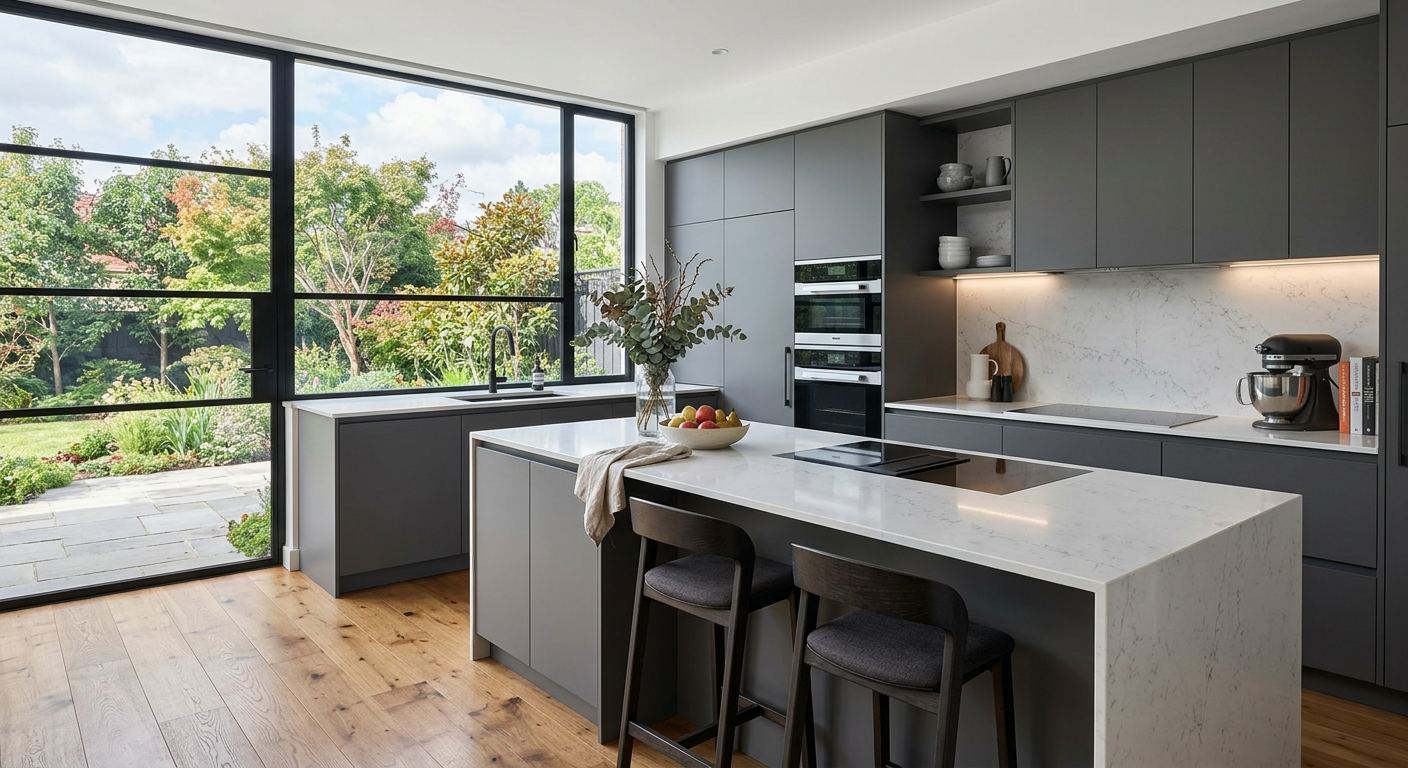
Kitchen renovation options and costs in Falconridge
In Falconridge, Alberta, homeowners typically renovate their kitchens to match the expectations of the broader Calgary market, where buyers often look for clean, bright finishes and durable surfaces—not just “updated” looks. With a population of 10,325 (Statistics Canada, 2021 Census), Falconridge is big enough for you to find reputable trades, but still small enough that scheduling can get tight during peak renovation months. Budget decisions are also tied to household purchasing power; Calgary-area families often set their finish level based on what they can realistically recover at resale, and that usually means better cabinetry and stone/engineered surfaces show up sooner rather than later.
Costs in this region are shaped less by Calgary’s climate and more by the strong local construction market and the finishes homeowners prefer. Skilled labour in Calgary commonly runs around $90–$140 per hour, so design time, project management, and install labour make up a major share of the budget. The result is that even “mid-range” full kitchens often land in the mid five figures, while upgrades that involve custom millwork, moving plumbing/gas, or an island can push into six figures.
Within Falconridge, trade demand is especially steady around the older housing pockets where homeowners tend to keep the core layout but modernize surfaces. That’s why options like semi-custom cabinetry plus quartz counters are so common: they deliver a resale-friendly look without the biggest layout risk. Use the table below to compare typical scopes and price bands, then you can decide which tier fits your timeline and how hands-on you want the project to be.
| Renovation Tier |
What's Included |
Typical Duration |
Price Range |
| Cosmetic refresh (paint, hardware, new appliances only) |
Painting, cabinet hardware swaps, faucet swap (if no plumbing move), and appliance replacements; no cabinet or countertop replacement |
1–2 weeks |
$5,000–$12,000 |
| Mid-range full renovation (new cabinets, counters, sink, tile) |
New semi-custom cabinets, new counters (quartz or quality solid surface), sink and faucet, backsplash tile, and standard sink plumbing connection |
3–6 weeks |
$25,000–$55,000 |
| High-end full renovation (custom cabinets, stone counters, island) |
Custom cabinets, premium stone (granite/natural stone), island with electrical, upgraded lighting, full backsplash coverage, and layout changes (as needed) |
6–10 weeks |
$70,000–$100,000 |
| Cabinet refacing only (new doors + drawer fronts, same boxes) |
Door and drawer-front replacement, re-lamination/overlay of visible surfaces, new pulls/handles, and touch-up trim; counters typically left as-is |
2–4 weeks |
$8,000–$25,000 |
| Countertop swap only (laminate to quartz or stone) |
Remove existing laminate, install new quartz or stone, revise/replace sink cut-outs as required, and seal/finish per product |
3–7 days |
$3,000–$12,000 |
| Backsplash tile installation only |
Tile removal (as needed), prep and install ceramic tile/stone backsplash, grout/seal, and perimeter finishing |
4–8 days |
$2,500–$8,000 |
Prices are estimates only and vary by project scope, site access and material selection.
What affects the price of kitchen renovation in Falconridge
Two homeowners in Falconridge can request “the same kitchen,” yet see quote differences of 30–50% across Calgary and the broader Alberta market. That spread usually isn’t because the province gets more expensive in winter—it’s because the scope changes where you don’t notice at first: cabinet tier, countertop grade, electrical details, and especially layout risk. In higher-value Calgary-area pockets, homeowners tend to default to quartz or natural stone counters and semi-custom cabinetry because the spend is easier to justify on resale; in more modest markets, laminate and stock cabinets often deliver better ROI. For many projects, the finish tier is actually the second-largest driver—layout is the first.
Here are common Falconridge-specific examples that move costs quickly. First, if you’re in an older home with dated rough-ins, bringing plumbing and venting into alignment for a new sink or wider base cabinets can add labour and materials even when walls stay put. Second, when replacing older laminate counters, we sometimes find substandard cabinet tops or inconsistent cabinet squaring; rectifying that “hidden work” can add a few days and several line items. Third, if you add an island or move a gas line for a stove hood setup, you’ll see the budget jump toward the higher end of the $25,000–$55,000 mid-range band or even into the $70,000–$100,000 high-end band, regardless of whether you choose quartz.
Alberta’s strong construction demand also affects availability. When the skilled trade calendar is booked, crews may schedule later, which can prolong “wait time” for cabinets, stone fabrication, and inspections—creating overhead costs that show up in your final quote. So while climate doesn’t directly dictate kitchen materials, it does influence the construction calendar and the pace of permit/inspection flow.
| Price Factor |
Why It Matters |
Cost Impact |
| Cabinet tier — stock vs. semi-custom vs. fully custom millwork |
Door styles, internal drawers, soft-close hardware, and fit/finish precision change labour and material costs |
Often shifts budget by $10,000+ between tiers on full renos |
| Countertop material — laminate vs. quartz vs. granite vs. stone |
Material cost, fabrication complexity, seam layout, and install time vary widely |
Typically adds $2,000–$10,000 depending on grade and layout |
| Layout change — wall removal, island add, plumbing/gas move |
Structural work, rough-in changes, and permitting drive the most unpredictable expenses |
Commonly adds $8,000–$25,000+ for real layout changes |
| Appliance package tier — builder vs. mid-range vs. pro-grade |
Dimensions, electrical requirements, ventilation specs, and finish matching affect installation |
Can swing $2,500–$15,000+ depending on appliance selection |
| Flooring — refinish existing vs. full replacement |
Protection and demolition scope increase labour and disposal; new flooring adds material and trim work |
Often $1,500–$8,000+ depending on flooring choice |
| Backsplash — ceramic tile vs. marble vs. full-height slab |
Cutting complexity, waterproofing prep, and premium materials increase time and material costs |
Typically $2,500–$8,000+ for more extensive installations |
| Electrical — new circuits for island, under-cabinet lighting |
Licensed work, additional boxes/conduit, and lighting integration increase labour and parts |
Often $800–$4,500+ based on how many additions you make |
| Permit fees and licensed trade requirements |
Permitting and inspections add administrative time; licensed trades schedule around inspection windows |
Can add $500–$3,000+ plus scheduling overhead |
Permits & regulations in Alberta
In Alberta, cabinet and countertop swaps generally do not require permits. You can often replace cabinets, change countertops, or install a new backsplash without pulling a permit—assuming you’re not altering major systems. However, Falconridge homeowners should plan for permits when you’re changing plumbing supply/drain lines, relocating gas appliances or running new gas connections (including gas stove and certain hood setups), removing a load-bearing wall, or adding new electrical circuits (for example, wiring an island outlet run or upgrading under-cabinet lighting with new homeruns). Those tasks typically require licensed trades and inspections.
Step 1: Decide what’s “movement” versus “replacement.” Replacement like-for-like is usually simpler; movement—especially plumbing, gas, or structural changes—triggers permitting. Step 2: Ask your contractor to list every regulated scope item in writing (what’s electrical, what’s gas, what’s structural), and confirm who pulls permits and pays permit costs. Step 3: Verify licensing yourself before signing. For electrical, check that the electrician is licensed through the appropriate Alberta licence registry and confirm their certificate of insurance is current. For gas, confirm the gas fitter is licensed and request proof of coverage as well.
Finally, request documentation: certificate of insurance (liability), clearance/coverage confirmation for work site participation, and a written permit/inspection plan if applicable. A reputable contractor will be transparent about responsibility because it reduces risk for you and prevents costly rework after inspections.
Cabinets, countertops and layout decisions in Falconridge
When you’re planning a kitchen renovation in Falconridge, the three decisions that most affect both daily satisfaction and resale value are cabinet tier, countertop material, and whether you change the layout. Cabinet tier determines fit and speed: stock cabinets are usually the fastest and cheapest, semi-custom is the sweet spot in Calgary-area renovations, and custom millwork delivers the best fit but pushes the budget highest. Countertop material affects everyday use: laminate is budget-friendly but can be more sensitive to heat and impact; quartz is engineered for durability and low maintenance; granite/natural stone can look premium but often needs more careful sealing schedules; butcher block adds warmth but requires mindful maintenance around moisture and cleaning; marble is beautiful yet typically less forgiving in a busy household.
Layout is where costs justify themselves—or don’t. Adding an island can be worth it when it improves flow (clearances, work zones, seating), but it increases labour if you add electrical, and it can trigger permits depending on the work. Open-concept wall removal can add value if it modernizes circulation, but it’s also the most risk-heavy path because structural and inspection steps can expand timelines.
In the Calgary resale market, buyers often expect quartz counters and well-finished semi-custom or custom cabinetry at the mid to high end. A concrete example: moving from a standard laminate counter approach to quartz on a mid-range kitchen often shifts budgets into the $25,000–$55,000 range, but it’s a meaningful upgrade viewers notice immediately. Conversely, if you’re keeping the layout and cabinet boxes mostly unchanged, a countertop swap alone (often $3,000–$12,000) is frequently a better ROI than changing cabinets and counters together without a layout reason.
| Option |
Durability |
Maintenance |
Best For |
Price Range |
| Stock cabinets (big-box) |
Good for everyday use, but may have more visible seams and slightly less precise alignment |
Low; wipe-clean surfaces, gentle hardware care |
Fast refreshes and tighter budgets with minimal layout complexity |
$8,000–$18,000 |
| Semi-custom cabinets (local dealer) |
Very durable with better drawer hardware and more storage flexibility |
Low; hinges and slides typically built for heavy use |
Most Falconridge homeowners targeting resale-friendly quality without fully custom pricing |
$15,000–$35,000 |
| Custom cabinets (local millwork shop) |
Highest fit/finish; ideal for awkward corners and custom storage solutions |
Low; quality hardware reduces maintenance and squeaks over time |
High-end designs, unique layouts, and maximum visual impact (including islands) |
$30,000–$60,000 |
| Laminate countertop |
Decent impact resistance; can be vulnerable to heat and edge damage |
Wipe-clean; avoid prolonged heat and treat chips promptly |
Budget-focused refreshes where you want a clean look quickly |
$3,000–$6,000 |
| Quartz engineered countertop |
Highly durable, stain resistant, and consistent for everyday cooking wear |
Low; routine cleaners only, less worry about sealing |
Busy households wanting a premium look with minimal upkeep |
$6,000–$12,000 |
| Granite / natural stone countertop |
Very durable and heat tolerant; variations in pattern and veining |
Moderate; typically periodic sealing and careful stain management |
Homeowners prioritizing distinctive natural appearance |
$8,000–$16,000 |
| Butcher block countertop |
Durable when maintained; can scratch but can be sanded/refinished |
Higher; regular oiling and prompt water management |
Families who like a warm, traditional cooking surface and will maintain it |
$5,000–$11,000 |
| Marble countertop |
Beautiful but more prone to etching/staining than quartz |
Higher; careful cleaners and regular sealing mindset |
Low-to-moderate wear kitchens and statement looks |
$10,000–$20,000 |
How to choose a kitchen renovation contractor in Falconridge
Choosing the right contractor in Falconridge starts with verification. First, confirm Alberta licensing: ask for the licence numbers for any electrical and gas-related trades involved, and verify them through the relevant Alberta registry. Next, request proof of liability insurance and ensure the certificate of insurance matches the scope of work (kitchen renovation installers should be able to provide it without hesitation). For job-site coverage, ask how they handle WSIB/WCB responsibilities—request documentation that coverage is in place and current. If a contractor can’t provide paperwork, treat that as a serious risk.
Second, get 2–3 itemised written quotes. You want labour and materials broken out—cabinet install, countertop install, electrical scope, plumbing hookups, tile prep, demolition/disposal—rather than a single lump sum. That protects you from “surprise” add-ons once the demo is done.
Third, read the scope exclusions carefully: is permit pulling included if needed? Is jobsite waste disposal included? Are you getting floor protection, caulking/trim finishing, and countertop template/fabrication lead times in the schedule? Fourth, check warranties: workmanship warranty length (and what it covers), plus the manufacturer/product warranty for cabinets, countertops, and tile materials. Ask whether warranties are transferable if you sell the home.
For payments, never pay more than 10–15% upfront. Hold back a portion until key milestones—especially countertop fabrication arrival and final trim completion. Finally, get a written timeline with a start date and completion estimate, and ensure the contractor commits to lead times realistically for cabinets and stone.
- Ask for licence numbers for electrical/gas trades and verify before work starts.
- Confirm current liability insurance (with coverage amounts) on request.
- Request WSIB/WCB/coverage confirmation relevant to work site participation.
- Get itemised quotes with labour + materials, not just a total price.
- Ensure permit responsibility is written down for any regulated scope.
- Confirm demolition and disposal are included (and where waste goes).
- Ask who handles cabinet/stones scheduling and fabrication lead times.
- Check how they protect floors, stairs, and adjacent rooms during demo.
- Confirm countertop templating timing and how changes are priced.
- Verify warranty terms: workmanship duration and manufacturer coverage.
- Use a payment schedule capped at 10–15% upfront, with a holdback.
- Demand a start date and completion estimate in writing, including inspection windows where needed.
Red flags I see too often in Falconridge: (1) quotes that omit disposal, electrical, or permit responsibility, (2) vague wording like “allowance” without specifying what materials are included, (3) pressure to pay large deposits early, (4) no written timeline or no detail on lead times for cabinets/counters, and (5) promises that don’t match the scope—especially around plumbing/gas relocations and countertop fabrication assumptions.
Frequently asked questions — kitchen renovation in Falconridge
What's the best countertop material for a busy Falconridge kitchen?
For most busy Falconridge kitchens, quartz is the most practical “best overall” choice. It delivers a high-end look that Calgary-area buyers commonly expect, while staying forgiving for everyday cooking—less fuss than natural stone and typically no routine sealing like some granites. If you’re aiming to control budget, the countertop-only band often lands around $3,000–$12,000, and quartz usually fits that range when layout is straightforward. Laminate can work for a short-term refresh, but it’s more sensitive to heat and can show wear sooner at seams/edges. In Alberta’s seasonal temperature swings, keeping the kitchen well ventilated helps protect any counter surface, but the biggest driver is still your use and maintenance habits.
How do I add an island to my Falconridge kitchen?
Adding an island starts with layout planning: confirm clearances for traffic flow, check cabinet/base widths, and decide whether the island is purely for seating or also for cooking (which affects gas/electrical work). If you want outlets, under-cabinet lighting, or a built-in range hood pathway, you’ll likely trigger electrical and possibly gas-related permitting depending on what changes. That’s why island builds often land toward the higher end of a full kitchen budget—commonly within the $70,000–$100,000 band for high-end redesigns when a layout change and integrated electrical are involved. The most cost-justified islands are those that create a true work zone: prep, cooking, and cleanup that feel better than the original setup.
How much does a kitchen renovation cost in Falconridge?
In Falconridge, kitchen renovation costs typically follow the same banding pattern as the Calgary economic region: basic upgrades can start around $5,000–$12,000 for cosmetic refreshes (paint, hardware, and new appliances only), while mid-range full renovations commonly cluster around $25,000–$55,000 when you’re replacing cabinets and countertops and adding tile. If you’re changing the layout, adding an island with electrical, upgrading to custom cabinetry, and moving into premium stone, the budget can move to $70,000–$100,000. Even when you select similar finishes, quote differences can come from electrical scope, hidden prep, and how the rough-ins in your particular home are handled.
How long does a kitchen renovation take in Falconridge?
Timing in Falconridge usually depends on how much is being replaced and whether your project needs permits and licensed trade inspections. A cosmetic refresh (paint, hardware, appliances only) can often be completed in 1–2 weeks. A mid-range full renovation with new cabinets, counters, sink, and tile typically takes about 3–6 weeks, while higher-end redesigns with custom millwork and islands often run 6–10 weeks. The schedule can stretch if cabinet or stone fabrication lead times slip or if you’re waiting for inspection windows after electrical or plumbing/gas changes. Alberta’s winter weather can slow outdoor deliveries and access, but most kitchen work is indoors; planning for lead times and inspection steps is what keeps the timeline realistic.
Quartz vs granite countertops — which is better?
“Better” depends on how you use your kitchen and how much maintenance you want. Quartz is usually the best fit for busy households because it’s engineered to be stain resistant, consistent in appearance, and typically requires less ongoing care than many natural stones. Granite is durable and heat tolerant and can look spectacular, with unique veining that many buyers love. However, granite often needs periodic sealing and more careful stain management. In Falconridge renovations, quartz also tends to be easier to budget: countertop swaps commonly land in the $3,000–$12,000 band depending on the layout and edge details. If you choose granite, expect the project to trend higher, particularly when seams, cut-outs, and premium slabs are involved.
Should I reface or replace my cabinets?
Refacing is often the right choice when your cabinet boxes are still sound and level, but the faces/doors look dated. It’s also one of the most cost-effective ways to update the look without fully reopening the kitchen. Replacement is better when the boxes are damaged, poorly installed, out of square, or when you want a new internal layout (wider drawers, different heights, pull-out organizers) rather than a face-only update. In Falconridge, many homeowners reface first if they’re planning to later upgrade counters or backsplash, because that lets them spread costs. If you’re already moving into a mid-range full renovation budget—around $25,000–$55,000—replacing cabinets and counters together usually creates a cleaner, more seamless result. The key is inspecting the existing boxes and confirming they can support the new door/drawer systems.