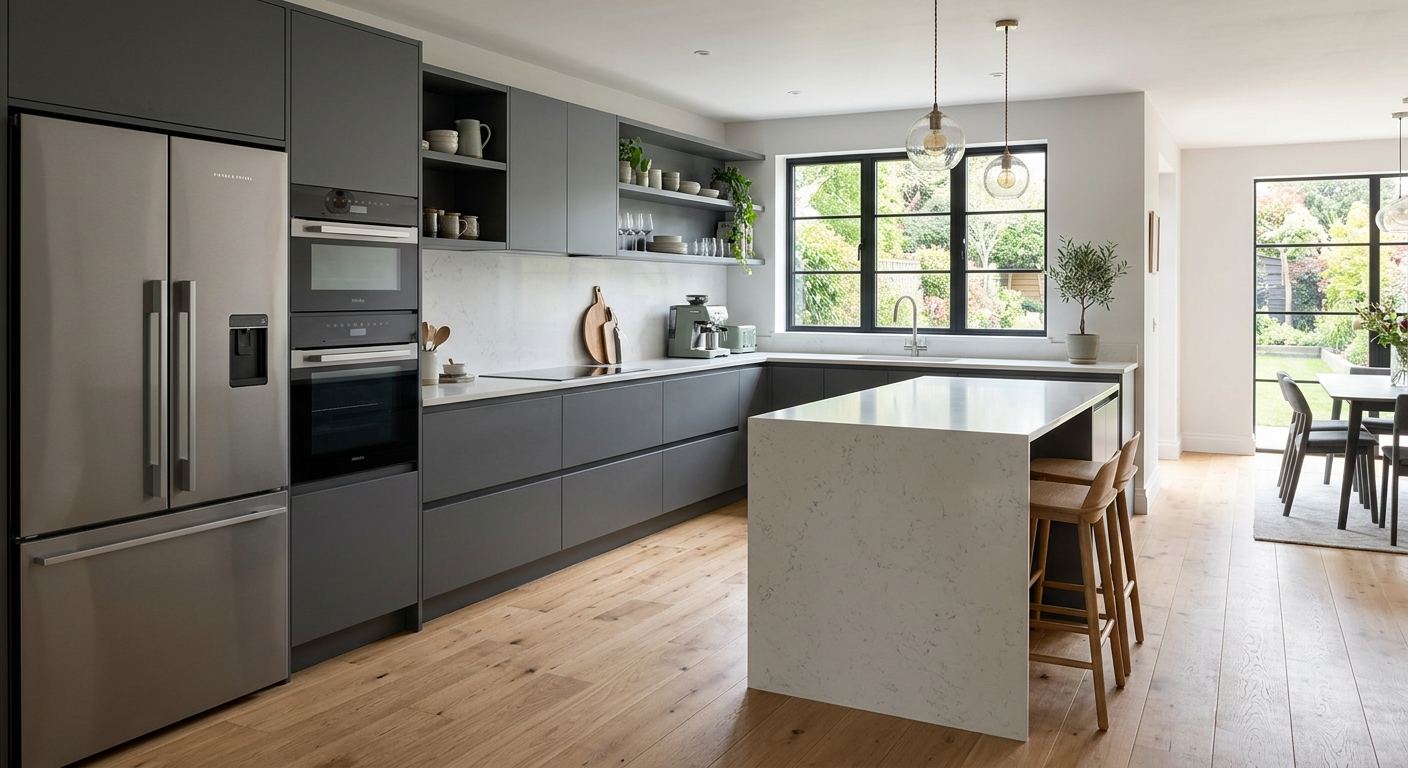
Kitchen renovation options and costs in Wendover
Wendover kitchen renovations are heavily shaped by what homeowners in the Toronto economic region can comfortably spend—not by local weather alone. With a small community population of 1,302 (Statistics Canada, 2021 Census), fewer trades are available than in bigger GTA hubs, so scheduling can be tighter and lead times on popular cabinet styles may be longer during peak renovation seasons. At the same time, Wendover owners typically price their homes in line with nearby GTA buying patterns, where many neighbourhoods lean toward higher-finish expectations. In high-value pockets across the region, kitchens are often treated as a meaningful resale feature, so budgets frequently land around 8–15% of home value—pushing decisions toward custom cabinetry, quartz countertops and upgraded appliances rather than purely “refresh” work.
From a market-and-labour perspective, Toronto-region renovation costs stay relatively consistent across the economic area, but finish choices are where the spread happens. If you choose stock or refaced cabinets with laminate tops, you can stay closer to the low–mid range; if you go fully custom with stone counters and structural changes, the project climbs quickly. Contractor availability can also swing by demand: when Toronto-area renovators are booked, Wendover projects may wait longer for templating, cabinet manufacturing and flooring install.
In Wendover, the trade demand is especially noticeable around the busier residential corridors near the Ottawa-facing access routes, where homeowners often renovate while planning commuting-friendly upgrades. Use that local reality as you compare your options below, because the right tier usually comes down to how much change you want—cosmetic, functional, or fully custom.
| Renovation Tier |
What's Included |
Typical Duration |
Price Range |
| Cosmetic refresh (paint, hardware, new appliances only) |
Prep/paint, hardware replacement, lighting touch-ups, appliance install; no cabinet box changes |
3–7 days |
$25,000–$35,000 |
| Mid-range full renovation (new cabinets, counters, sink, tile) |
New semi-custom cabinets, countertops, sink + faucet, backsplash tile, under-cabinet lighting add-on (if desired) |
4–8 weeks |
$35,000–$65,000 |
| High-end full renovation (custom cabinets, stone counters, island) |
Fully custom millwork, premium stone (quartz/natural), island build, structural/major layout changes (if applicable), upgraded ventilation |
8–14 weeks |
$65,000–$90,000 |
| Cabinet refacing only (new doors + drawer fronts, same boxes) |
Door/drawer front replacement, new finish, trim work; existing boxes remain; typically includes removal/reinstall |
1–3 weeks |
$8,000–$25,000 |
| Countertop swap only (laminate to quartz or stone) |
Removal and disposal of old top, templating, new install (no cabinet box changes) |
1–2.5 weeks |
$3,000–$15,000 |
| Backsplash tile installation only |
Tile supply/installation, layout and prep, grouting and sealing (as required) |
3–7 days |
$2,000–$10,000 |
Prices are estimates only and vary by project scope, site access and material selection.
What affects the price of kitchen renovation in Wendover
Even when two homeowners request the same “full kitchen” scope, quotes in the Toronto region can vary by 30–50% because the budget is driven less by climate and more by home values, finish tier and how complex the site work becomes. In high-value Toronto-region markets, homeowners often lean into quartz or natural stone counters and semi-custom or fully custom cabinetry because the upgrade is easier to justify at resale. In more price-sensitive areas of the region, laminate and stock cabinetry remain common, and the project is shaped to protect resale value without overspending.
In Wendover specifically, the biggest cost driver that unpredictably changes the number is layout and services work: removing a wall, adding an island, or moving plumbing/gas can push labour and permit requirements up fast. Finish tier matters, but layout is where contractors uncover surprises—like older subfloor conditions, undersized supply lines, or wiring that needs upgrading—regardless of whether you choose a mid-range renovation (often landing in the $35,000–$65,000 band) or a high-end build (commonly $65,000–$90,000).
Two concrete examples I see around Wendover: first, older housing stock can hide water-damage near exterior walls, and addressing it during cabinet removal can add days of demolition and subfloor repair. Second, if you want to relocate a sink or cooktop to create a better work triangle, the cost changes dramatically depending on whether the drain route is straightforward or requires additional joist notching, venting and new shutoffs.
Climate plays a smaller role than people expect. Toronto-region seasonal swings can affect materials—especially with humidity-sensitive cabinetry finishes and wood products—but the cost impact usually shows up through longer dry times, not wholesale budget changes. Next, let’s break down the specific price factors that swing bids the most.
| Price Factor |
Why It Matters |
Cost Impact |
| Cabinet tier — stock vs. semi-custom vs. fully custom millwork |
Different build methods affect hardware, fit/finish, interior storage and customization |
Can shift a full kitchen budget by roughly 15–35% |
| Countertop material — laminate vs. quartz vs. granite vs. stone |
Material price, edge profiles, thickness and install complexity vary significantly |
Typical change: $3,000–$15,000 for swap scopes; bigger totals in full renos |
| Layout change — wall removal, island add, plumbing/gas move |
Services relocation, framing adjustments and subfloor work drive labour and risk |
Often the single largest swing; can add 10–25% or more |
| Appliance package tier — builder vs. mid-range vs. pro-grade |
Dimensions, ventilation requirements and power specs affect labour |
Can add several thousand dollars even with similar cabinetry |
| Flooring — refinish existing vs. full replacement |
Kitchen demolition can reveal damaged subfloor and require new underlayment |
Refinish projects can stay near the low end; replacement can move budgets up quickly |
| Backsplash — ceramic tile vs. marble vs. full-height slab |
Tile type affects cutting complexity; slabs add weight and precise wall prep |
Backsplash-only scopes commonly fall in the $2,000–$10,000 band |
| Electrical — new circuits for island, under-cabinet lighting |
Lighting and appliance loads may require new or updated circuits |
Electrical upgrades add cost beyond cosmetic work and may trigger inspections |
| Permit fees and licensed trade requirements |
Certain work must be permitted and performed/inspected by licensed trades |
Costs can increase several thousand dollars depending on scope |
Permits & regulations in Ontario
In Ontario, many kitchen finishing upgrades do not require permits, but several common renovation steps do. A straightforward cabinet or countertop swap—like changing doors/drawer fronts, replacing a laminate top with quartz, or installing a new backsplash—typically does not require a permit because you’re not altering major building systems. The moment you move plumbing supply or drain lines, relocate a gas appliance (such as changing the position of a range or adjusting gas-related range hood venting), remove a load-bearing wall, or add new electrical circuits for things like an island receptacle or under-cabinet lighting, you generally move into permit territory and licensed trade requirements.
In Wendover, I recommend homeowners think in “work categories.” Work that usually does NOT need a permit: painting, hardware changes, backsplash tile, refacing doors/drawer fronts, and replacing counters where connections to plumbing/gas stay in place. Work that commonly DOES require permits and inspections: moving a sink drain/P-trap or supply lines; changing gas cooktop location; removing/altering structural elements; adding or modifying wiring for additional outlets, circuits, or hardwired ventilation.
Step-by-step verification is simple: (1) Ask the contractor for their licence details for electrical and gas-fitting trades (if their crew performs it). (2) Request a certificate of insurance for liability coverage. (3) Ask for evidence of WSIB/WCB coverage for workers. (4) Confirm who is pulling permits and that responsibility is stated in the contract. Finally, insist on receipts/clearance documentation after inspections so you have a paper trail.
Cabinets, countertops and layout decisions in Wendover
For most Wendover homeowners, three decisions determine 80% of the outcome: (1) cabinet tier, (2) countertop material, and (3) layout changes. Start with cabinets. Stock cabinets are usually fastest and cheapest, but fit and storage layouts can be less tailored. Semi-custom cabinets are the most popular mid-range choice in the Toronto economic region because they balance customization with predictable lead times. Custom cabinets cost more, but they’re the best option when you need exact dimensions, special storage (pantry pullouts, angled corners, built-in charging), or an irregular room plan.
Next, choose countertops. Laminate can be an economical option, but it’s less durable against impact and heat than quartz or natural stone. Quartz engineered surfaces are a common “value sweet spot” because they resist staining and hold up well to everyday family use. Granite and other natural stones bring premium look and edge options, but require mindful sealing and care. If you’re considering butcher block, it’s workable and warm, yet it needs ongoing oiling and attention to moisture exposure. Marble is beautiful and timeless, but it’s typically the highest-maintenance natural option.
Layout changes should be justified by the space gain. If you’re adding an island to improve circulation and seating, it can be worth moving plumbing or relocating an outlet. But avoid unnecessary structural changes if you’re only chasing style. A practical example: moving a sink to build a better workflow can add several thousand dollars versus keeping it in place; if your budget is closer to $35,000–$65,000, that money is often better spent on upgrading cabinet interiors and installing quartz rather than paying for complex drain rerouting.
Toronto-region buyers often expect clean lines, durable surfaces and modern storage—so in Wendover, selecting mid-range cabinets plus quartz usually performs best at resale. If you want to push into the $65,000–$90,000 band, custom millwork and a stone-forward design typically make that extra spend easier to see and easier to market.
| Option |
Durability |
Maintenance |
Best For |
Price Range |
| Stock cabinets (big-box) |
Good daily durability; limited customization for wear points and storage needs |
Low; just routine cleaning and hardware adjustments |
Quick renovations, tighter budgets, straightforward layouts |
$8,000–$20,000 |
| Semi-custom cabinets (local dealer) |
Very good durability with better door/drawer options and more interior upgrades |
Low to moderate depending on finishes and soft-close hardware |
Most Wendover kitchens targeting a resale-friendly upgrade |
$20,000–$40,000 |
| Custom cabinets (local millwork shop) |
Excellent durability; best for heavy-use storage and perfect fit |
Low; long-life hinges and finishes when built correctly |
Irregular rooms, premium design, full island/pantry integration |
$40,000–$65,000 |
| Laminate countertop |
Moderate durability; susceptible to chipping at edges and heat marks if misused |
Low; avoid standing water on seams and use trivets for hot items |
Budget-conscious refreshes and rental-style timelines |
$3,000–$7,000 |
| Quartz engineered countertop |
High durability; resists staining and handles everyday impacts well |
Low; wipe clean, minimal special care |
Busy households wanting a premium look without natural-stone upkeep |
$7,000–$12,500 |
| Granite / natural stone countertop |
Very durable with strong heat tolerance; varies by stone type |
Moderate; sealing and prompt spill cleanup recommended |
Premium aesthetic and clients who will maintain stone properly |
$9,000–$14,000 |
| Butcher block countertop |
Moderate to good durability; can dent if cookware impacts are frequent |
Moderate; regular oiling and moisture control |
Home chefs seeking warmth and a lived-in look |
$4,000–$10,000 |
| Marble countertop |
Moderate durability; can etch or stain more easily than quartz |
Higher maintenance; careful with acidic foods and regular sealing |
Statement kitchens where appearance matters most |
$10,000–$15,000 |
How to choose a kitchen renovation contractor in Wendover
Choosing the right contractor in Ontario comes down to proof and process. First, verify Ontario licensing and coverage. If the contractor is performing electrical or gas-related work, confirm the specific licensed trade credentials for those scopes. Then request liability insurance documentation and evidence of WSIB/WCB coverage for their workers. If a contractor can’t provide clear documents, that’s a major warning sign—especially for kitchens where plumbing, electrical and venting are common.
Next, get 2–3 itemised written quotes that separate labour and materials rather than one lump sum. You want a line for demo, framing or subfloor repairs (if needed), cabinet installation, countertop fabrication/install, plumbing changes, electrical changes, flooring and disposal. Ensure the scope is explicit about exclusions: What happens if the cabinet wall is out of square? Is disposal included? Who handles permit applications if required? Is dust protection part of the job? Those details are where “same scope” bids often diverge.
Warranty matters too: ask for the workmanship warranty length and what it covers, plus the product/manufacturer warranty for cabinets and countertops. Confirm whether warranties are transferable if you sell the home. For payment, follow a conservative schedule—typically no more than 10–15% upfront, then progress payments as milestones are completed, with a holdback until final walkthrough and punch list completion. Finally, insist on a written timeline with a start date and a completion estimate.
- Provide licence and insurance proof for the exact scopes they’ll perform.
- Ask for WSIB/WCB coverage documentation (not just “we’re insured”).
- Use itemised quotes: labour vs materials, including specific brands/models.
- Clarify what’s included in demo, disposal and site protection.
- Confirm who pulls permits and who pays permit fees if required.
- Ask how changes are priced mid-project (change order process).
- Get a written schedule for templating and cabinet/countertop lead times.
- Confirm countertop templating measurements and who is responsible for re-cuts.
- Verify cabinet installation method (leveling, shimming, anchor types).
- Request warranty terms in writing, including workmanship coverage.
- Set a realistic payment schedule with a holdback until completion.
- Ensure the contract includes scope drawings or an approved plan.
Red flags I see in Wendover include: quotes that omit disposal and permit responsibility, vague “allowances” for cabinets/countertops with no specs, no written start/completion timeline, refusing to show insurance/WSIB/WCB proof, and insisting on large upfront payments that exceed about 10–15%.
Frequently asked questions — kitchen renovation in Wendover
Can I live at home during a kitchen renovation in Wendover?
Yes, many Wendover homeowners can live at home during a renovation, especially if you’re doing a cosmetic refresh or a cabinet refacing scope. For a cosmetic refresh (paint/hardware and new appliances), you may be dealing with 3–7 days of disruption, so daily routines usually continue with a temporary setup. For a mid-range full renovation, plan for a more active work zone for several weeks, particularly when cabinets are being installed and countertops are templated and set. If your budget is moving toward the $35,000–$65,000 band, it’s common to keep a functional “backup kitchen” with a kettle, microwave and a small cook area while demolition and installation happen in phases.
Should I renovate my kitchen before selling in Wendover?
Often, yes—if the renovation lifts key buyer expectations: durable counters, clean finishes, functional storage and a layout that feels modern. In the Toronto economic region, kitchens frequently influence perceived value, and in higher-value areas owners tend to invest more heavily. That said, you don’t want to over-improve compared to the rest of the property. If you’re considering a budget upgrade, a targeted approach like mid-range cabinets plus quartz (rather than high-end custom millwork) usually offers a strong resale argument without taking on unnecessary risk. For example, a full project in the $65,000–$90,000 range can work for some homes, but if your goal is buyer-ready polish, sticking closer to the $35,000–$65,000 band often delivers the “value-visible” improvements while controlling uncertainty like hidden subfloor issues.
What's the most popular kitchen style in Wendover right now?
In Wendover, and across much of the Toronto economic region, the most commonly requested look blends modern lines with warm materials: simple shaker-style fronts, flat or lightly textured cabinet doors, and quartz countertops in neutral tones. Many homeowners choose a semi-custom cabinet tier because it offers better internal storage options—soft-close drawers, upgraded corner storage, and drawers instead of just shelves. Pair that with an updated backsplash (often tile in a clean pattern) and contemporary lighting, and you get a kitchen that photographs well for listings and feels current on move-in day. If you’re budgeting around the $35,000–$65,000 range, this style usually lands well because you can upgrade to quartz and still keep most work predictable.
How do I know if I need to update my kitchen plumbing in Wendover?
Look for symptoms and also plan for age-related surprises. If your taps are older, water pressure is weak, you’re seeing staining under sinks, or you have slow drains or recurring leaks at the trap and supply lines, it’s a strong sign plumbing updates may be needed. During renovation, we often see additional needs once cabinets come off—hidden shutoff valves may be outdated, or drain routes may not match current best practices. If you’re leaving your sink where it is, the plumbing scope can be limited to replacing shutoffs and cleaning up connections; but if you want to move a sink or change the dishwasher location, expect a bigger plumbing scope and likely permit/inspection involvement in Ontario. For homeowners aiming for a $35,000–$65,000 project, it’s wise to discuss an allowance for potential plumbing remediation early.
What is the difference between a galley and open-concept kitchen?
A galley kitchen is a narrow, passage-style layout with counters on two parallel walls. It can be efficient, but it often feels tight and limits seating space. An open-concept kitchen connects to a living or dining area, usually by removing a wall or reworking circulation so sightlines improve and the room feels larger. In Ontario renovations, layout changes are where risk and cost jump: removing a wall can require permit steps and engineered review if structural elements are involved, and electrical/plumbing adjustments are commonly needed. In Wendover, many homeowners start with a galley layout and decide whether an island or minor reconfiguration can provide the “open” feel without major structural work—especially if they want to stay closer to the mid-range $35,000–$65,000 band.
How do I get accurate kitchen renovation quotes in Wendover?
Accurate quotes start with a clear, comparable scope. In Wendover, ask for 2–3 itemised quotes that break down labour and materials, and include what’s covered for demo, disposal, permits (if needed), and any allowance items (like flooring repairs or plumbing updates). Provide your contractor with photos, measurements, and your intended layout plan—especially if you want to relocate a sink, cooktop or add an island. Request confirmation of countertop templating responsibilities and who handles rework if measurements shift. Also confirm the payment schedule (avoid large upfront payments beyond about 10–15%) and the written timeline. When you compare bids, use the regional budget bands as a reality check: cosmetic refresh projects won’t usually move you into $65,000–$90,000 territory, while major changes tend to land in the full-reno ranges ($25,000–$90,000 depending on finish and structural work).