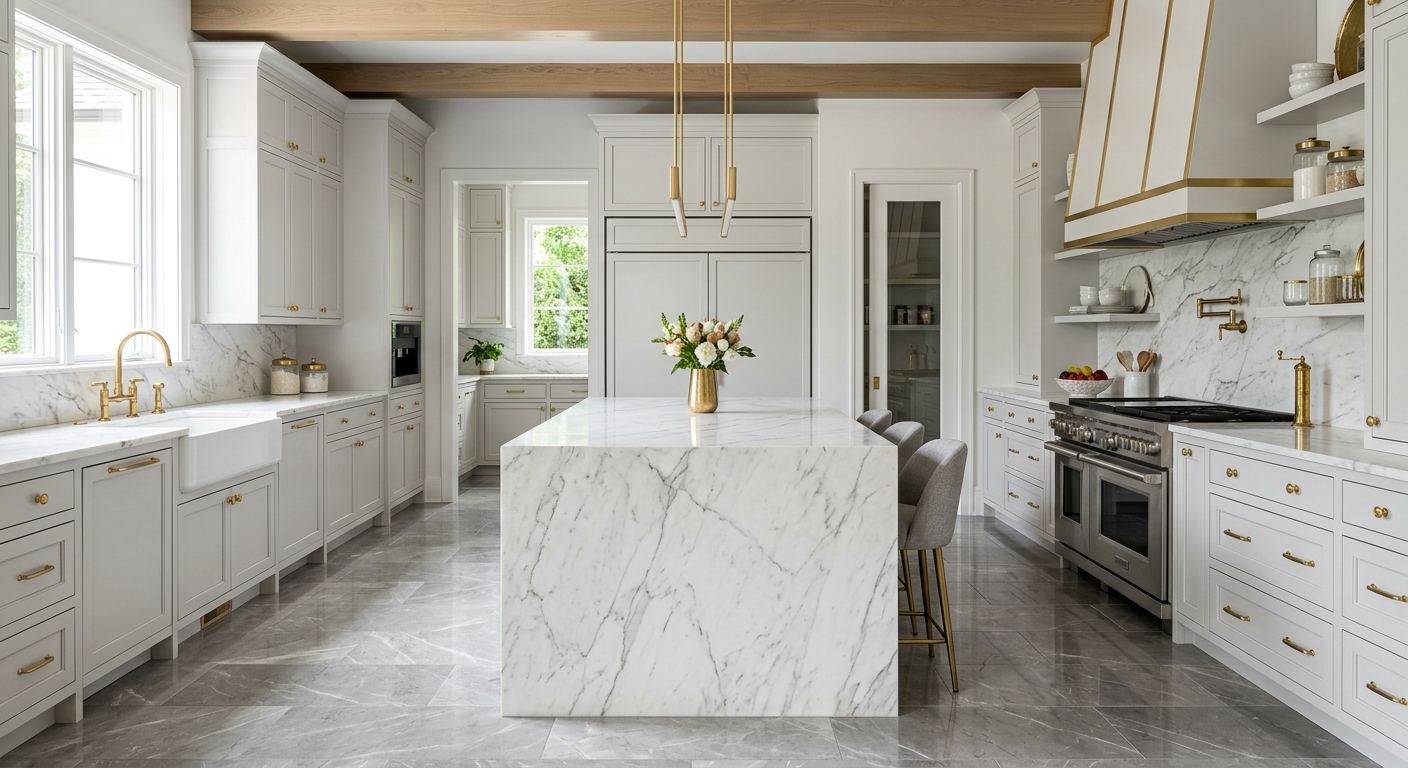
Kitchen renovation options and costs in Parkdale
Parkdale kitchen renovations usually start with a clear decision: are you refreshing what you have, or building something new. With a Parkdale population of 1,404 (Statistics Canada, 2021 Census), most homeowners renovate in a “target the buyers” mindset—meaning the look has to feel current, but the project also needs to respect tight urban access, older housing layouts, and frequent condo- or semi-detached-style constraints. In the broader Toronto area, renovation expectations also track home values and household capacity; when buyers expect a more premium kitchen, it’s common to move toward quartz and semi-custom cabinetry because the spend can be easier to justify on resale.
In the Toronto economic region, pricing is driven less by climate and more by market demand and finish tier. Still, winter freeze–thaw and damp basements in older buildings can expose weak subfloors and wall issues once cabinets come down—so some “starter” budgets can grow when moisture or out-of-level conditions are discovered. Contractor availability can also affect pricing: Parkdale’s trade demand tends to cluster around spring and early summer installs, which is why scheduling matters if you want to control labour costs. For example, around Queen Street West and the west side of Parkdale where many homes are older and narrower, we see higher demand for efficient layout planning and cabinet installs that minimize job-site disruption.
Below are the typical options and realistic budget ranges homeowners use as a backbone before final measurements and selections—then we compare your scope against the table.
| Renovation Tier |
What's Included |
Typical Duration |
Price Range |
| Cosmetic refresh (paint, hardware, new appliances only) |
Prep and paint (walls/ceiling), cabinet hardware change, appliance swap (no plumbing/gas moves), basic caulking and touch-ups |
3–7 days |
$8,000–$18,000 |
| Mid-range full renovation (new cabinets, counters, sink, tile) |
New cabinets (stock or semi-custom), countertop install, sink and faucet swap, backsplash tile, new flooring section where required |
2–4 weeks |
$25,000–$55,000 |
| High-end full renovation (custom cabinets, stone counters, island) |
Custom millwork, quartz or natural stone counters, island with enhanced finishes, upgraded appliance package, coordinated plumbing/electrical changes, full backsplash upgrade |
4–7 weeks |
$60,000–$90,000 |
| Cabinet refacing only (new doors + drawer fronts, same boxes) |
Door/drawer fronts replacement, new veneer panels, hardware, basic trim adjustments, re-level and caulk, typically no countertop replacement |
1–2 weeks |
$8,000–$25,000 |
| Countertop swap only (laminate to quartz or stone) |
Removal and disposal of existing top, new countertop fabrication and install, sink cut-out transfer or replacement (if scope allows) |
3–7 days |
$6,000–$15,000 |
| Backsplash tile installation only |
Demo of existing backsplash (if needed), wall prep, tile installation, grout/caulking, finishing trim |
2–5 days |
$2,000–$10,000 |
Prices are estimates only and vary by project scope, site access and material selection.
What affects the price of kitchen renovation in Parkdale
Even when two homeowners in the Toronto economic region request “the same” kitchen, quotes can swing by 30–50% because builders price risk differently: hidden site conditions, trade scheduling, and how much structural or utility work gets bundled into “labour.” In practice, the finish tier you choose tends to move faster than any other single line item. Local home values and household capacity strongly influence the typical finish level—homeowners in higher-value pockets more often default to quartz or natural stone counters and semi-custom cabinetry because it’s a buyer-recognizable upgrade. In more price-sensitive situations, laminate and stock cabinets are used to keep the budget closer to the mid-range while still improving function and cleanliness of the layout.
Layout changes are the cost wild card regardless of finish: removing a wall, adding an island, or moving a gas line/plumbing run can push labour, permits, and inspection timelines upward. For Parkdale specifically, older Toronto housing stock often means uneven walls, dated venting routes, and occasional subfloor moisture—conditions that aren’t obvious until demolition. If your current cabinets are sitting on a slightly out-of-level base, reinstallation may require additional shimming and floor prep; if moisture is present near exterior walls, you may need remediation before new flooring or cabinetry goes in.
Concrete examples we see locally: (1) upgrading from laminate to quartz usually moves you within the countertop pricing band, but if the sink opening needs redesign, the install time and material waste increase; (2) adding an island can require new electrical for under-cabinet or island lighting, plus potential changes to circulation that affect cabinet ordering and lead times; (3) full-height backsplash tile costs rise when walls aren’t plumb, because additional prep and skim work is needed. These factors are why many Parkdale projects start between $25,000–$55,000 for mid-range full renos but can move into $60,000–$90,000 once custom millwork, stone counters, and utility work are included.
| Price Factor |
Why It Matters |
Cost Impact |
| Cabinet tier — stock vs. semi-custom vs. fully custom millwork |
Material quality, door styles, internal organizers, and fit accuracy (especially on older or uneven walls) |
Often the largest driver: cabinet spend can separate low–mid budgets from high-end budgets |
| Countertop material — laminate vs. quartz vs. granite vs. stone |
Fabrication complexity, edge profiles, and longevity; natural stone can require more template time and care |
Can shift a project by several thousand dollars within the $3,000–$15,000 countertop band |
| Layout change — wall removal, island add, plumbing/gas move |
Requires trades coordination, permits/inspections, and can uncover structural or rerouting challenges |
Often adds the biggest unpredictability; can push labour and timelines upward quickly |
| Appliance package tier — builder vs. mid-range vs. pro-grade |
Value/efficiency features, fit requirements, and ventilation needs |
Can change your budget materially while affecting electrical/gas rough-in scope |
| Flooring — refinish existing vs. full replacement |
Older subfloors may need prep; replacement also expands demolition/disposal |
Refinish keeps costs closer to the mid-range; full replacement can raise total project cost |
| Backsplash — ceramic tile vs. marble vs. full-height slab |
Material cost and installation labour scale with height, pattern matching, and substrate prep |
Typically lands in the $2,000–$10,000 backsplash & tile band |
| Electrical — new circuits for island, under-cabinet lighting |
Licensed work, load calculations, and inspection timelines |
Usually increases labour and permit coordination; can add both cost and schedule risk |
| Permit fees and licensed trade requirements |
Work that touches plumbing/gas, load-bearing structures, or electrical circuits triggers permitting and inspections |
Small fees can still add large admin time and coordination costs |
Permits & regulations in Ontario
In Ontario, not every kitchen upgrade requires a permit—but moving or altering key systems usually does. A cabinet or countertop swap generally does not require a permit when you’re keeping existing connections as-is. Likewise, simple changes like swapping hardware, repainting, or installing a backsplash on the surface typically fall into the “no permit” category.
Where permits are commonly required is when you change how utilities pass through the room: relocating plumbing supply/drain lines (sink or dishwasher moves), relocating a gas stove or making changes to gas-fired appliances and venting, removing a load-bearing wall, or adding new electrical circuits (for an island outlet or new lighting layouts). Gas work must be done by a licensed gas fitter, and electrical work must be done by a licensed electrician—both with required inspections.
Step-by-step for a Parkdale homeowner to verify before signing: (1) ask the contractor for their Ontario licence details and check the trade status via the appropriate provincial online registry; (2) request a current Certificate of Insurance showing general liability—verify dates and that they cover renovation work at your address; (3) confirm WSIB/WCB coverage (or the equivalent compliance) and ensure the paperwork is current; (4) confirm in writing who will pull permits and schedule inspections; (5) keep the documentation with your contract so responsibility is clear if anything is questioned.
Always confirm permit responsibility before any work begins—those obligations should be spelled out in your written scope, not assumed.
Cabinets, countertops and layout decisions in Parkdale
In Parkdale, the “three decisions” that most affect both daily use and resale appeal are: (1) cabinet tier, (2) countertop material, and (3) layout changes. Cabinet tier determines how quickly you’ll hit a cohesive look: stock cabinets are the fastest and cheapest, semi-custom is typically the sweet spot for Toronto buyers, and custom millwork is best when you’re working with awkward dimensions or want a truly tailored solution. Countertops do the same job visually, but durability and maintenance matter too—especially in a city where winter melt can mean more indoor humidity and older homes may have occasional subfloor movement. Finally, layout changes (open-concept wall removal, island addition, or plumbing/gas relocation) should only be justified by real space gain; otherwise, you pay for complexity without getting the functional payoff.
From a Toronto resale lens, mid-tier kitchens often perform best when they look “finished” rather than “temporary.” That’s why many homeowners in the $25,000–$55,000 range choose semi-custom cabinets plus quartz, and reserve stone upgrades for projects that land closer to $60,000–$90,000. Here’s a practical dollar example: if your current laminate top is stained or chipped, upgrading to quartz is usually a noticeable improvement for both look and wear. The countertop band for installation is typically $3,000–$15,000, but if your sink opening and edge profile require additional template changes (common in older Parkdale layouts), the “base” number can climb—still often worth it compared with doing a half-fix that will feel outdated at resale.
Plan around how buyers perceive modern kitchens: clean lines, durable surfaces, and sensible circulation. In Toronto, that usually means prioritizing cabinets and countertops first, then adding the island or moving plumbing only when the room genuinely benefits.
| Option |
Durability |
Maintenance |
Best For |
Price Range |
| Stock cabinets (big-box) |
Good everyday durability; fit can be less forgiving on older floors/walls |
Low maintenance; wipe-down and keep hardware tightened |
Speed and budget control with a straightforward layout |
$8,000–$20,000 |
| Semi-custom cabinets (local dealer) |
Very solid for daily use; better interior options and more sizes/finishes |
Low maintenance; align and adjust hinges annually if needed |
Most Parkdale homeowners balancing cost and a more tailored look |
$15,000–$35,000 |
| Custom cabinets (local millwork shop) |
Excellent fit; built for unusual dimensions and premium hardware |
Low day-to-day care; expect longer service life |
Complex footprints, framed features, and high-end styling |
$30,000–$60,000 |
| Laminate countertop |
Decent surface strength but more susceptible to chips at edges |
Easy cleaning; avoid prolonged heat exposure |
Budget refresh when cabinet fronts and hardware are the main upgrade |
$3,000–$6,500 |
| Quartz engineered countertop |
Highly durable for kitchens; resistant to stains and everyday wear |
Low maintenance; simple wipe-down with non-abrasive cleaner |
Best “Toronto resale” choice for most full renos |
$7,000–$12,000 |
| Granite / natural stone countertop |
Very durable and heat tolerant; natural variation means each slab is unique |
Occasional sealing depending on stone and finish |
Premium look where homeowners want natural character |
$10,000–$15,000 |
| Butcher block countertop |
Strong but vulnerable to cuts and water sits at seams if not sealed well |
Needs regular oiling/sealing; clean and dry promptly |
Warm aesthetic for family kitchens, if you’re committed to care |
$6,500–$11,000 |
| Marble countertop |
Luxurious and durable in use, but more sensitive to etching/staining |
Higher maintenance; requires careful cleaning habits |
Showpiece kitchens where aesthetics outweigh heavy wear |
$12,000–$18,000 |
How to choose a kitchen renovation contractor in Parkdale
Choosing the right contractor is the fastest way to protect your budget in Parkdale, where tight site access and older Toronto housing details can turn small scope gaps into delays. Start with licensing and compliance: confirm they’re properly registered for the trades they perform, then verify liability insurance and WSIB/WCB coverage. For insurance, ask for a Certificate of Insurance naming you (or showing they carry coverage for customer job sites), and check the policy is current. For WSIB/WCB, request proof of coverage and ensure it’s active for the duration of your project.
Next, get 2–3 itemised written quotes. You want a labour + materials breakdown (not one lump sum) so you can compare cabinet supply, countertop fabrication/installation, tile prep, disposal, and any allowance items. Carefully read the exclusions: demolition? dust control? permit pulling? inspection fees? If these aren’t listed, assume they’re not included. Scope clarity is especially important for projects that may require electrical circuits for island outlets or under-cabinet lighting.
Demand clear warranty terms. A workmanship warranty should specify length and what’s covered (e.g., cabinet installation, caulking/trim alignment, tile adhesion). Product warranties belong to the manufacturer, and you should confirm whether coverage is transferable to future owners.
On payment schedule, avoid large upfront payments—aim for no more than 10–15% at the start, and use holdback until key milestones are complete. Finally, lock in a timeline: get the start date and a completion estimate in writing, including lead times for cabinets and countertops.
- Provide licence details for relevant trades and confirm who pulls permits (if required).
- Show current general liability insurance and job-site coverage details.
- Confirm WSIB/WCB coverage (or equivalent compliance) before work begins.
- Use itemised quotes: labour, materials, disposal, protection, and allowances separated.
- Clarify exclusions (what happens if the subfloor is out of level or moisture is found).
- Ask who is responsible for measurements and template accuracy for countertops.
- Confirm cabinet lead times in writing (and what happens if they change).
- Require warranty details for workmanship and product—include duration and process for claims.
- Set a payment schedule with a holdback until final walkthrough and punch-list completion.
- Get dust control and site protection methods stated (especially in Parkdale’s dense streetscapes).
- Request a detailed start-to-finish schedule with demolition, install, and inspection steps.
- Verify subcontractors are included in the scope and covered by insurance/coverage.
Red flags we see with kitchen renovators in Parkdale: (1) quotes that don’t state who pulls permits or who pays for inspections; (2) a “low price” lump sum with no demolition/disposal line items; (3) refusal to provide insurance proof or WSIB/WCB documentation; (4) vague warranty language (no start/end dates or claim process); and (5) asking for high upfront payments without a signed milestone schedule.
Frequently asked questions — kitchen renovation in Parkdale
How long does a kitchen renovation take in Parkdale?
In Parkdale and the wider Toronto area, most kitchen renovations take about 2–4 weeks for a mid-range full scope (new cabinets, counters, sink, and tile), assuming materials are ready on time. Cosmetic refresh projects can be as quick as 3–7 days. High-end builds—especially those involving custom cabinetry, stone counters, and island layout changes—often run 4–7 weeks due to lead times and more trades coordination. Winter timing can add risk in older homes if subfloor moisture or uneven framing is discovered after demolition. If permits are required for electrical, plumbing, or gas changes, scheduling inspections can also affect the completion date, even when labour crews are available.
Quartz vs granite countertops — which is better?
Both are strong choices, but “better” depends on how you use the kitchen. Quartz engineered countertops are very popular in Ontario because they’re low maintenance and resistant to staining, and they typically fit well in the mid-to-high range budgets (often falling within the broader countertop install band of $3,000–$15,000). Granite/natural stone offers unique character and excellent heat tolerance, but it may need periodic sealing depending on the slab and finish, and natural variation means pattern selection matters. In Parkdale’s older housing, the stone choice can also be influenced by template accuracy and how flat the base is; if the cabinet system needs extra prep, both options still work, but fabrication coordination is key.
Should I reface or replace my cabinets?
Refacing is usually worth it when your cabinet boxes are still sound—sturdy frames, straight faces, and no major swelling or water damage. It’s also a good option if you want to keep costs and timelines tighter, since cabinet refacing typically lands around $8,000–$35,000 depending on door style, hardware, and prep needs. Replacing is the better call if boxes are sagging, the layout is dated and you want new internal organizers, or you’re planning changes that require new framing for plumbing/electrical. In Parkdale, older kitchens sometimes have subtle water exposure near exterior walls; if moisture has affected the box substrate, replacing tends to be safer long-term than refacing over compromised material.
Do I need a permit for a kitchen renovation in Ontario?
Often, a simple kitchen refresh in Ontario—like swapping cabinets, changing countertops, repainting, or installing backsplash tile on existing surfaces—does not typically require a permit. However, permits are usually required when you move plumbing supply or drain lines, relocate gas appliances or make gas-related changes, remove a load-bearing wall, or add new electrical circuits (for example, island receptacles or new lighting circuits). For Parkdale homeowners, the important thing is to separate “cosmetic” from “systems work.” Gas work must be done by a licensed gas fitter, electrical by a licensed electrician, and inspections are commonly part of the process. Confirm who is responsible for permits in your written contract before signing.
What's the ROI on a kitchen renovation?
ROI varies a lot based on your starting point, finish tier, and how the update matches buyer expectations in Toronto. In higher-value areas of the Toronto market, homeowners often invest a meaningful share of home value into the kitchen, which can support resale appeal—especially when the renovation includes quartz/stone surfaces and a cleaner cabinet look. In more budget-sensitive scenarios, a smart refresh with stock or refaced cabinetry and good-looking counters can still add value because buyers respond to functional improvements and modern aesthetics. Practically, many Parkdale renovations land in the mid-range (for example $25,000–$55,000) when homeowners want strong buyer perception without over-customizing. The key is to avoid high-cost structural changes unless the space gain is real and defensible.
How do I budget for a kitchen renovation?
Start with your renovation tier, then build a buffer for the “unknowns” typical in older Parkdale homes. For a full kitchen, realistic Toronto-region budgets commonly range from the mid-$20k into the $80k+ territory; for budgeting, use backbone bands like $25,000–$90,000 depending on whether you’re doing a mid-range refresh or a high-end custom build. Add line-item allowances for cabinets, countertops, tile, plumbing/electrical changes, and disposal. When layout changes are on the table—moving a sink, adding an island, or relocating gas/electrical—plan extra contingency, because permits and trade coordination can raise both cost and timeline uncertainty. Get itemised quotes so you can compare apples-to-apples, and keep a holdback for completion/punch-list items.