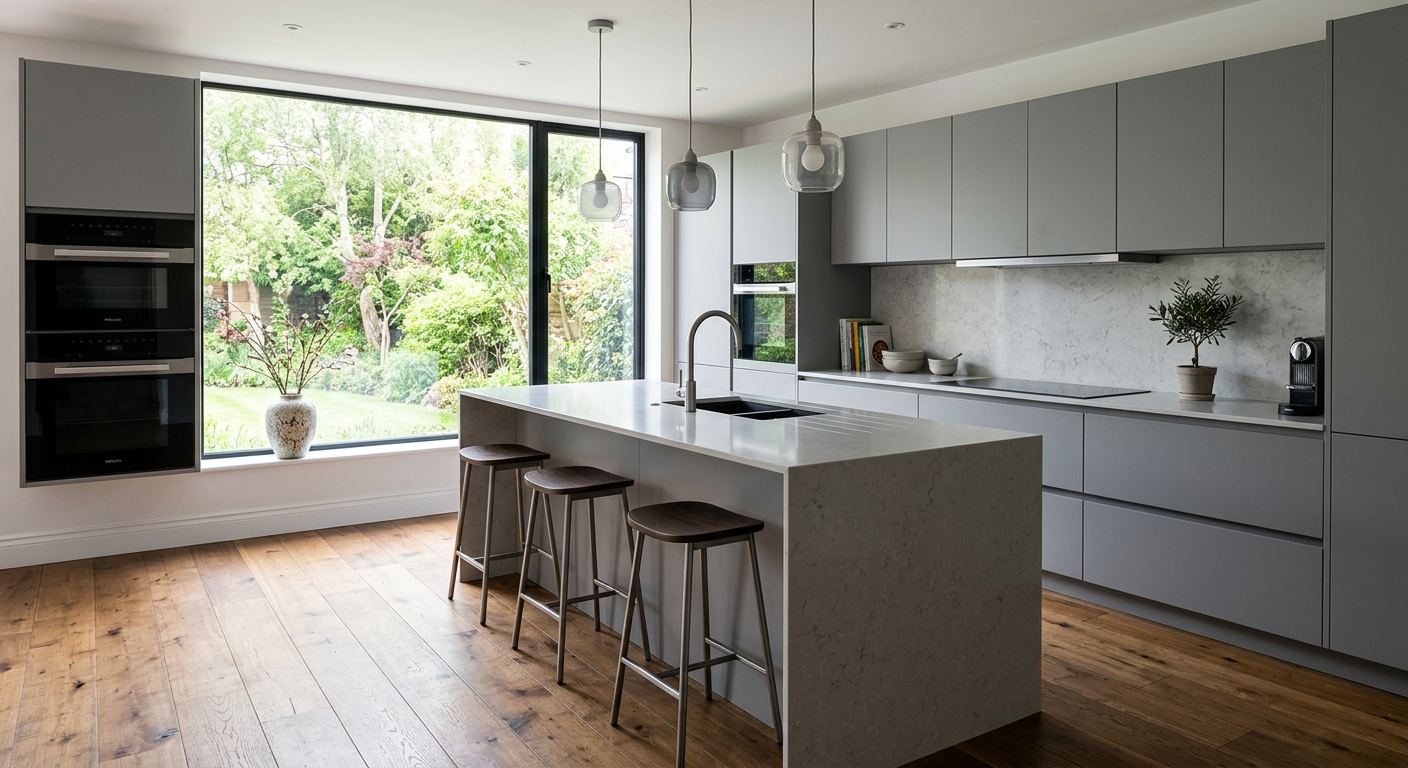
Kitchen renovation options and costs in Laurelwood
In Laurelwood, a kitchen renovation is usually about more than upgrading finishes—it’s about matching today’s buyer expectations while respecting how your home is built. With a 2021 population of 5,150 in Laurelwood (Statistics Canada, 2021 Census), the local contractor pool is smaller than in the GTA’s core, so scheduling can tighten during peak spring and early summer. In the Toronto economic region, kitchen budgets also track closely to home values and household incomes, which is why homeowners in higher-value pockets tend to choose more custom cabinetry and quartz or natural stone instead of “good enough” upgrades.
That market reality matters because Toronto’s pricing pressure isn’t driven by weather the way it is in some parts of Canada; it’s driven by demand, labour availability, and material choices. Kitchens in Laurelwood commonly include updated electrical and under-cabinet lighting, and the labour cost for licensed trades remains consistent across the Toronto region—what changes is whether the project is treated as a mid-range refresh (easier to sell and easier to finance) or a full custom rebuild.
Local demand is especially strong around established residential pockets near the Laurelwood/South Barrie corridor where older homes often need modern layout tweaks, better storage, and durable surfaces for day-to-day use. As a result, homeowners typically start by picking an option tier, then dial in the details before the final quote. Use the table below to compare realistic ranges for common kitchen project scopes.
| Renovation Tier |
What's Included |
Typical Duration |
Price Range |
| Cosmetic refresh (paint, hardware, new appliances only) |
Cabinet paint or repaint, new hardware/pulls, install new appliances (no cabinet/counter replacement), touch-up flooring as needed |
1–3 weeks |
$8,000–$20,000 |
| Mid-range full renovation (new cabinets, counters, sink, tile) |
Semi-custom or stock cabinets, new countertops, sink + faucet, backsplash tile, minor electrical refresh, disposal hook-up, updated trim/finishes |
3–6 weeks |
$30,000–$65,000 |
| High-end full renovation (custom cabinets, stone counters, island) |
Fully custom millwork, quartz/stone counters, island build, upgraded appliances, upgraded lighting/electrical, full backsplash, higher-end tile and finish carpentry |
6–12+ weeks |
$70,000–$90,000 |
| Cabinet refacing only (new doors + drawer fronts, same boxes) |
Refaced cabinet fronts, new doors/drawer fronts, veneer/laminate finish, new hardware, optional new crown/rails |
1–3 weeks |
$8,000–$35,000 |
| Countertop swap only (laminate to quartz or stone) |
Remove old top, new countertop install, new undermount sink install (if selected), caulking, countertop-to-tile edge finishing |
3–7 days |
$3,000–$15,000 |
| Backsplash tile installation only |
Surface prep, cement board/adhesive as needed, tile install, grout/seal, caulk at changes of plane |
3–10 days |
$2,000–$10,000 |
Prices are estimates only and vary by project scope, site access and material selection.
What affects the price of kitchen renovation in Laurelwood
In Toronto and across Ontario, even “the same” kitchen renovation can swing by 30–50% because quotes reflect how you build and finish—cabinet tier, countertop choice, and whether the layout needs structural or service work. A basic update may use stock cabinets and laminate counters, while another homeowner in the same area chooses semi-custom millwork and quartz with a more modern appliance package, pushing the project into a much higher finish tier. In high-value Toronto-area markets, homeowners more often default to quartz or stone counters and semi-custom cabinetry because the renovation cost tends to be easier to recover on resale. In more price-sensitive areas, laminate and stock cabinets dominate because they balance resale value with affordability.
Local conditions in Laurelwood also matter in a practical way. Many older homes have dated electrical runs and older plumbing routing, so when contractors open walls, they often find undersized junctions, knob-and-tube remnants, or narrow service cavities—these can add labour even when you’re staying in the mid-range. Floor plans that were designed around smaller appliances can also require careful rework: adding an island frequently means relocating plumbing supply/drain and/or gas considerations, which is where unpredictability lives. Even if your finishes target the $25,000–$90,000 full kitchen band, layout changes can push a “mid-range” plan toward the upper end.
Two common Laurelwood examples: (1) an island that requires moving a water line can add significant labour and demo time, even if cabinet tier stays semi-custom; (2) upgrading from laminate to quartz often sounds like a simple swap, but slab choice, edge profile, and sink cut-outs can affect cost enough that homeowners sometimes adjust the cabinet plan to stay within a preferred budget.
| Price Factor |
Why It Matters |
Cost Impact |
| Cabinet tier — stock vs. semi-custom vs. fully custom millwork |
Material quality, fit tolerance, interior options (organizers), and lead times drive pricing |
Can shift a full renovation by roughly $10,000–$30,000 within the same layout |
| Countertop material — laminate vs. quartz vs. granite vs. stone |
Per-square-foot price, fabrication complexity, and finishing details (edges, seams) vary widely |
Laminate stays low; quartz/stone can add about $2,500–$12,000 to totals |
| Layout change — wall removal, island add, plumbing/gas move |
Structural, plumbing, and trade coordination adds demo, inspection, and rework risk |
Often the biggest swing factor; add $5,000–$25,000 depending on scope |
| Appliance package tier — builder vs. mid-range vs. pro-grade |
Electrical/gas requirements and trim kits differ by brand tier; install labour can change |
Typical swing: $1,500–$8,000+ |
| Flooring — refinish existing vs. full replacement |
Matching existing materials, subfloor prep, and transitions can be costly |
Refinish usually lowest; full replacement can add $2,000–$10,000 |
| Backsplash — ceramic tile vs. marble vs. full-height slab |
Material cost and installation complexity rise with larger panels and harder stone |
Add about $2,000–$10,000 depending on coverage and material |
| Electrical — new circuits for island, under-cabinet lighting |
Licensed electrician work and panel capacity checks affect time and cost |
Commonly $800–$4,000+ for meaningful kitchen updates |
| Permit fees and licensed trade requirements |
Any required permits/inspections and coordination add admin and trade time |
Often a few hundred to a few thousand dollars; can also delay schedules |
Permits & regulations in Ontario
In Ontario, many kitchen “surface” upgrades are straightforward from a permitting standpoint. Cabinet and countertop swaps typically do not require permits when you keep the existing plumbing, gas, and electrical locations the same. That includes replacing cabinets with new cabinets of similar footprint, swapping laminate for quartz, installing a backsplash, or repainting—assuming no changes are made to service lines or to a load-bearing condition.
Permits and licensed trades are usually required when you change the kitchen’s services or structure. Common permit-triggering work includes moving plumbing supply or drain lines (for sink relocation or dishwasher rerouting), relocating a gas stove or gas components, removing a load-bearing wall, and adding new electrical circuits (for islands, additional outlets, or heavier under-cabinet/pendant lighting loads). Gas work must be performed by a licensed gas fitter, and electrical work by a licensed electrician, with inspections as required.
For Laurelwood homeowners, the easiest verification is step-by-step before you sign: (1) ask for the contractor’s licence details and check the trade licence status through the province’s online resources; (2) request a current certificate of insurance and confirm the work is covered (liability for the renovation); (3) ask for WSIB/WCB clearance documentation; and (4) confirm in writing who is responsible for permits and inspections. Always read the contract line that states who pulls the permits—responsibility should never be a surprise after the job starts.
Cabinets, countertops and layout decisions in Laurelwood
If you want a Laurelwood kitchen renovation to feel “right” for years—and to read well to Toronto-area buyers—focus on three decisions: cabinet tier, countertop material, and whether the layout change is worth the disruption. First, cabinet tier: stock cabinets are usually the fastest and cheapest, semi-custom is the sweet spot for most homeowners, and custom cabinets provide the best fit and storage but cost the most. Second, countertops: laminate is budget-friendly and easy to maintain, quartz gives you a durable, low-maintenance surface with consistent appearance, and natural stone (granite or marble) brings visual variety but may require more care depending on the stone and finish. Third, layout: open-concept wall removal, island additions, and moving plumbing or gas can substantially increase complexity. In the Toronto resale market, buyers often expect clean lines, practical storage, and a countertop finish that looks upscale—so the “most visible” spending (cabinets and countertops) usually matters more than minor hardware swaps.
For Laurelwood’s housing stock, many kitchens are in homes with older service runs. That can make plumbing/gas relocation expensive, even if cabinets stay mid-range. A practical example: if you price a kitchen around the mid-range band (for many projects, roughly $30,000–$65,000), moving the sink to support an island may add thousands in demo and licensed trade work; in contrast, upgrading from laminate to quartz for the same footprint often lands in the countertop-only band (commonly $3,000–$15,000) and keeps most of your cost predictable.
Toronto buyer expectations also reward durability: kitchens see heavy winter-to-spring use, from cooking to tracking in salt from entryways nearby. While “climate” isn’t the driver, traffic and moisture exposure are. Quartz and sealed stone generally handle daily wear better than lower-tier surfaces, and well-installed tile backsplashes reduce long-term edge failures.
| Option |
Durability |
Maintenance |
Best For |
Price Range |
| Stock cabinets (big-box) |
Solid for everyday use; hinges and drawer hardware quality varies by brand |
Low; avoid overloading shelves and keep hardware tightened |
Budget-first refresh with shorter lead times |
$8,000–$18,000 |
| Semi-custom cabinets (local dealer) |
Better interior options and more consistent finishing |
Low; periodic hardware adjustment and proper cleaning |
Most Laurelwood renovations targeting a strong mid-range ROI |
$15,000–$35,000 |
| Custom cabinets (local millwork shop) |
Highest build quality and best fit for unusual layouts |
Low; hinges/drawer slides depend on chosen hardware brand |
Complex layouts, ceiling-to-floor storage, and premium finishes |
$30,000–$60,000 |
| Laminate countertop |
Good for light-to-mid use; can chip at edges if impacted |
Easy—wipe clean; avoid standing water at seams |
Cost control while refreshing the look |
$2,500–$6,000 |
| Quartz engineered countertop |
Very durable; resists staining and daily wear well |
Very low—typical cleaners; protect from extreme heat near seams |
Busy households and buyer-friendly upscale appearance |
$4,500–$12,000 |
| Granite / natural stone countertop |
Highly durable; can be sensitive to improper sealing depending on stone |
Moderate—requires sealing and careful maintenance |
Homeowners who want natural veining and premium character |
$6,000–$15,000 |
| Butcher block countertop |
Durable but can scar; sensitive to prolonged moisture |
Higher—regular oiling and immediate wipe-up of spills |
Warm, casual look; households willing to maintain it |
$3,000–$9,000 |
| Marble countertop |
Beautiful but more porous; can etch or stain if not protected |
Higher—requires careful cleaning and maintenance |
Lower-traffic kitchens or buyers prioritising luxury look |
$8,000–$18,000 |
How to choose a kitchen renovation contractor in Laurelwood
Choosing the right contractor in Laurelwood is mostly about verifying credentials, then confirming the details that protect you from budget overruns. In Ontario, you should verify three items: (1) licensing for the trades involved (especially electrical and gas work), (2) liability insurance, and (3) WSIB/WCB coverage where applicable. Ask to see the certificate of insurance and clearance letter/documentation before work begins, and request licence details for any subcontractors. For electrical and gas-related tasks, don’t rely on “we have someone”—confirm the licensed provider and that inspections are included if required.
Next, get 2–3 itemised, written quotes. You want breakdowns showing labour and materials separately—cabinets, countertops, tile, demolition, disposal, electrical allowances, and any permit costs. Be cautious of lump sums that don’t list scope. Read the contract for exclusions: is disposal included? Is drywall patching included? Who handles permit pull and inspection coordination? Warranty matters too: ask about the workmanship warranty length, how product warranties are handled, and whether warranties are transferable if you sell the home.
For payment schedule, keep it controlled: never pay more than about 10–15% upfront, and use holdback until completion and final walkthrough. Also demand a written start date and a realistic completion estimate—kitchen timelines stretch when material lead times (cabinets/quartz) don’t align with demolition and rough-in.
- Confirm Ontario licensing and trade coverage for any electrical/gas work.
- Request and verify a current certificate of liability insurance.
- Ask for WSIB/WCB clearance documentation before demolition starts.
- Get 2–3 itemised quotes with a labour/materials breakdown.
- Ensure allowances are clear (appliances, flooring, grout/tile choices).
- Ask whether permit pull and inspections are included, and who pays.
- Confirm disposal/removal is included (demo debris and packaging).
- Verify the cabinet install warranty and who supplies vs installs.
- Confirm countertop template, fabrication timeline, and install scheduling.
- Ask about electrical scope: outlets, island circuits, and under-cabinet lighting.
- Review the payment schedule: target 10–15% upfront max.
- Get a written timeline with milestones (demo, rough-in, cabinet install, counters, finish).
Red flags in Laurelwood include contractors who won’t provide licence/insurance documents on request, vague scopes that don’t specify disposal and patch/paint responsibilities, “all-in” pricing with no itemised allowance structure, and timelines that ignore cabinet/quartz lead times. Also watch for payment demands above 15% upfront or refusing to put permit responsibility and warranty details in writing.
Frequently asked questions — kitchen renovation in Laurelwood
How do I budget for a kitchen renovation?
Start by choosing your renovation tier and then pricing the “big three”: cabinets, countertops, and layout. In Laurelwood/Ontario, a full kitchen typically lands in the $25,000–$90,000 range depending on whether you’re doing a cosmetic refresh, mid-range rebuild, or high-end custom work. If you want predictable costs, consider a mid-range plan (often around $30,000–$65,000) with semi-custom cabinets and quartz or a good laminate where appropriate. Separately budget for trade work you might not notice at first—electrical outlets for an island, sink/disposal connections, and any permit-required changes. Finally, add a contingency for hidden conditions (older plumbing/electrical runs) because that’s where most budget surprises happen.
Can I move my kitchen sink or stove?
You can, but whether you’ll need permits and licensed trades depends on what you’re moving and how far. Moving a sink usually means changing plumbing supply/drain routing, which commonly requires a permit and professional plumbing work (and coordination with the electrical and backsplash/tile schedule). Moving a stove may be simple if it’s electric, but if you have gas, relocating the range or hood with gas often triggers licensed gas fitter work and inspections. In practice, many Laurelwood homeowners keep the sink location or only make minor adjustments to stay closer to the $25,000–$65,000 mid-range budget. If the move is tied to adding an island or improving traffic flow, it can be worth it—but it’s the part of the project with the biggest schedule and cost uncertainty.
What's the most cost-effective kitchen upgrade?
For most Laurelwood homes, the most cost-effective upgrade is often a countertop refresh paired with hardware changes, because you get a major visual impact without full demolition. If you’re working within the mid-range full renovation band ($30,000–$65,000), a targeted countertop swap can help you “spend smarter”: laminate to quartz or stone can commonly fall in the $3,000–$15,000 range depending on size and edge profiles. Another high-value option is cabinet refacing (new doors/drawer fronts on existing boxes), which can land around $8,000–$35,000 and avoids the cost and mess of full cabinet removal. The key is to confirm the cabinet boxes and wall condition first—refacing and countertop installs only look great if the base is straight and secure.
Custom vs stock cabinets — is custom worth it?
Custom cabinets are worth it when your layout is unusual or you want very specific storage and fit—like ceiling-to-floor height, difficult corners, or an island with specialized drawer/pull-out systems. In Laurelwood and the broader Toronto area, many homeowners choose semi-custom to get most of the functionality without fully stepping into high-end custom pricing. Stock cabinets are the fastest and cheapest, but they can require more compromises with space usage and finish matching. If your full project is targeting the upper end of the $70,000–$90,000 range, custom can help the kitchen look integrated and upscale. If you’re aiming for the mid-range, semi-custom or even refacing with new fronts often delivers the strongest “look for the money” outcome.
How do I choose a kitchen contractor in Laurelwood?
Begin with verification. Ask for licensing details relevant to the work (especially for electrical and any gas-related tasks), proof of liability insurance, and WSIB/WCB clearance documentation. Then request 2–3 itemised quotes that separate labour and materials and clearly list what’s excluded. Make sure the scope states who handles permits and inspections (if needed) and whether disposal and patch/paint are included. In a busy renovation market, contractors who provide a written timeline with milestones (demo, rough-in, cabinet install, countertop template/install, finish) are usually more reliable. For warranty, confirm workmanship coverage, product warranty terms, and whether the warranty transfers if you sell the home. This approach protects you in Ontario far better than a single lump-sum estimate.
What order do kitchen renovation steps happen in?
A typical kitchen sequence starts with site prep and demolition, followed by rough-in work (electrical, plumbing, and any gas-related changes if applicable). If permits are required in Ontario for service moves, inspections usually happen after rough-in and before closing walls. Next comes drywall/patching and the installation of underlayment or flooring adjustments needed for cabinet bases. Cabinets are then installed, followed by countertop template and fabrication timing; quartz/stone requires careful templating so installs land clean. After countertops are set, the backsplash goes in, and then trim/finishing touches are completed. Finally, appliances are installed and function-tested. In Laurelwood projects, cabinet and countertop lead times are the main schedule drivers, so a contractor should map dates up front to avoid downtime.