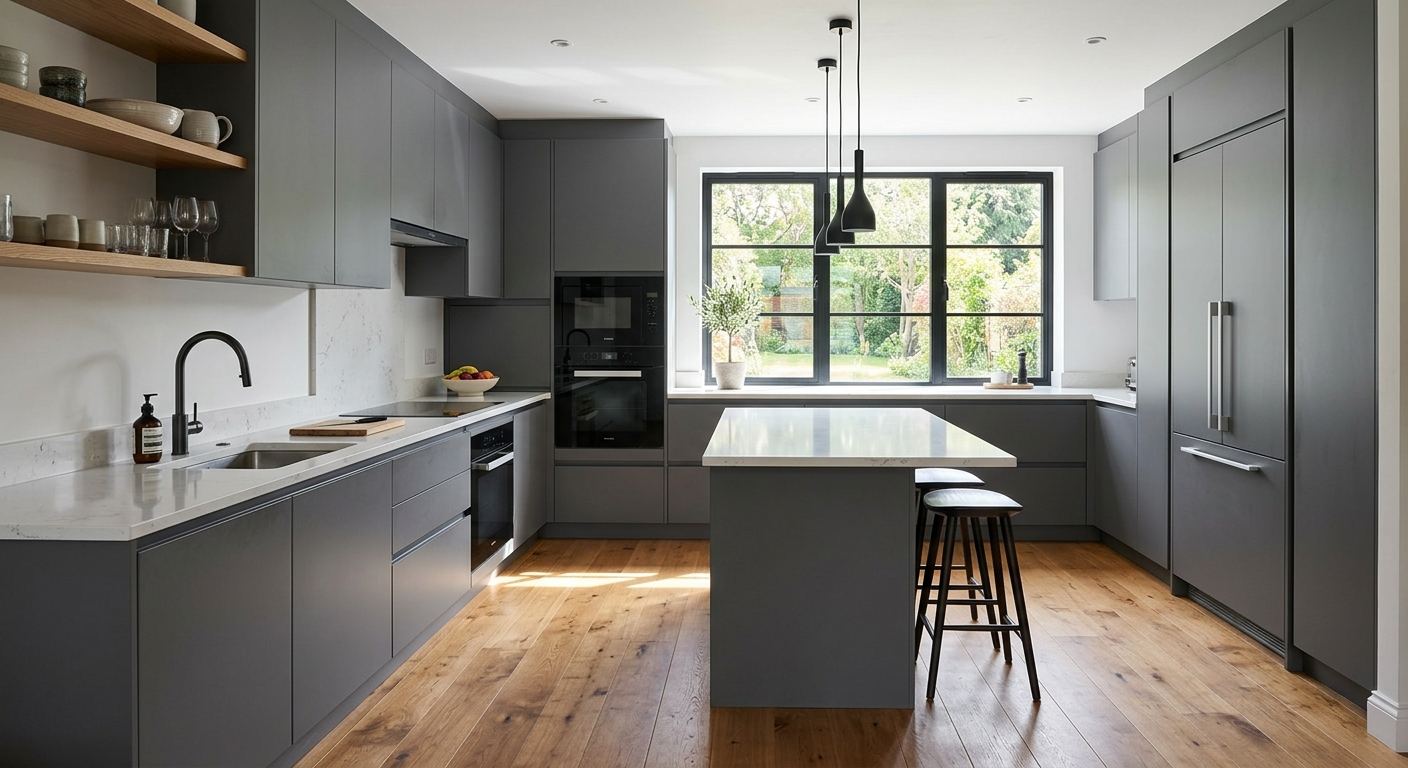
Kitchen renovation options and costs in 108 Mile Ranch
In 108 Mile Ranch, homeowners usually start with a question that’s both simple and expensive: what level of kitchen renovation makes sense for your home and your resale goals. With a population of just 1,043 people (Statistics Canada, 2021 Census), the local trades community is smaller than the major centres, so scheduling can be tighter in peak renovation months. That said, the Lower Mainland–Southwest market expectation still shapes the finishes you’ll see—owners often choose more durable, design-led upgrades when they plan to recoup value on resale. In higher-value parts of British Columbia, the same kitchen can shift from a refresh into a full rebuild quickly because buyers expect “move-in ready” kitchens, not dated surfaces.
Costs in our region aren’t driven primarily by climate; we see fewer cost swings from weather than we do from material availability, finish tier, and the complexity of cabinetry installs. Still, the practical reality in British Columbia homes—seasonal humidity changes, older ventilation setups, and sometimes dated plumbing runs—can increase labour time for patching, sealing, and bringing the kitchen up to modern standards. Areas with steady renovation demand tend to be the more established residential pockets near town services, where contractors and installers are often booked for cabinet and countertop timelines.
If you’re comparing options, the table below breaks typical scopes, durations, and cost bands so you can map your budget to the level of change you want before you request quotes.
| Renovation Tier |
What's Included |
Typical Duration |
Price Range |
| Cosmetic refresh (paint, hardware, new appliances only) |
Cabinet paint or trim touch-ups, new pulls/knobs, faucet (if no plumbing move), appliance swap (no cabinet redesign), basic caulking and cleanup |
2–5 days |
$8,000–$20,000 |
| Mid-range full renovation (new cabinets, counters, sink, tile) |
New cabinet fronts or full replacement, new countertops, sink and faucet install, backsplash tile, updated lighting where needed, flooring refresh at transition points |
3–6 weeks |
$40,000–$75,000 |
| High-end full renovation (custom cabinets, stone counters, island) |
Custom cabinetry/made-to-fit millwork, stone counters, island with premium hardware, upgraded backsplash (often to slab detail), deeper electrical plan (undercabinet + island circuits) |
6–12 weeks |
$75,000–$120,000 |
| Cabinet refacing only (new doors + drawer fronts, same boxes) |
Remove and replace doors/drawer fronts, refinish or upgrade face frames, hardware, re-seal edges; countertops typically remain unless you bundle a swap |
1–3 weeks |
$8,000–$35,000 |
| Countertop swap only (laminate to quartz or stone) |
Template and install new countertops, sink cut-out and reseal, optional backsplash top-up at counter line |
5–10 business days |
$3,000–$12,000 |
| Backsplash tile installation only |
Tile supply and install, waterproofing/adhesive prep, grout, caulking at edges, allowance for outlet openings and trim |
3–7 business days |
$1,500–$6,000 |
Prices are estimates only and vary by project scope, site access and material selection.
What affects the price of kitchen renovation in 108 Mile Ranch
In the Lower Mainland–Southwest, you can see the same kitchen concept come in 30–50% apart because the market values drive finish expectations. Homes in higher-value pockets more often move straight to quartz or stone counters, semi-custom cabinetry, and upgraded hardware—buyers can’t “wait” for a future upgrade, so contractors price for that end result. In more modest segments of British Columbia, laminate and stock cabinets still dominate, and the ROI argument is stronger because the budget remains predictable. Climate plays a smaller role in cost than people think; the real swing factors are cabinet complexity, countertop type, and trades coordination.
To make it concrete for 108 Mile Ranch, here are common examples. First, if your kitchen cabinets need made-to-fit modifications due to older walls that aren’t perfectly square, you may pay an extra round of labour and material for adjustments—often pushing a “refresh” closer to a mid-range job that typically sits around $40,000–$75,000. Second, if you add an island and move plumbing or a gas line, the layout change drives the most unpredictable costs regardless of whether you choose laminate or quartz; the work is about relocation, permits, and matching finishes back to the new footprint. Third, flooring changes: refinish at transitions is cheaper, while full replacement and subfloor prep after demolition can add cost quickly.
Price bands also help you interpret what you’re buying. For instance, a standalone countertop swap can land in the $3,000–$12,000 range, but once you add new cabinet heights, sink work, and a backsplash rebuild, the same “counter change” becomes part of a full renovation scope. In British Columbia homes that were built with older ventilation or earlier plumbing layouts, we often spend more on sealing, duct/vent verification, and leak-proofing, which affects both schedule and cost.
| Price Factor |
Why It Matters |
Cost Impact |
| Cabinet tier — stock vs. semi-custom vs. fully custom millwork |
Custom sizes, integrated panels, soft-close hardware, and build tolerances increase fabrication and install labour |
Small kitchens can swing by tens of thousands when moving from stock to custom; expect ~+$5,000 to +$40,000 depending on scope |
| Countertop material — laminate vs. quartz vs. granite vs. stone |
Material price and templating/installation complexity vary; thicker slabs and special edges cost more |
Typically ~+$1,500 to +$12,000 across common upgrades |
| Layout change — wall removal, island add, plumbing/gas move |
Demolition, framing, electrical/gas/plumbing coordination, and permit steps create the biggest schedule risk |
Often the largest variable: ~+$5,000 to +$35,000 (or more) depending on moves |
| Appliance package tier — builder vs. mid-range vs. pro-grade |
Higher-end units may require different cut-outs, ventilation specs, and stronger delivery/handling |
Usually ~+$2,000 to +$10,000 |
| Flooring — refinish existing vs. full replacement |
After demolition, subfloor condition and moisture protection requirements determine labour and materials |
~+$1,500 to +$8,000 |
| Backsplash — ceramic tile vs. marble vs. full-height slab |
Precision cuts around outlets and the heavier setting system increase time, waste, and installer skill requirements |
~+$800 to +$6,000 |
| Electrical — new circuits for island, under-cabinet lighting |
More wiring, new boxes, and inspection steps raise labour and scheduling coordination costs |
~+$1,000 to +$6,000 |
| Permit fees and licensed trade requirements |
Work that triggers permits adds administrative time, inspection scheduling, and licensed-trade labour |
Often ~+$500 to +$5,000 depending on scope |
Permits & regulations in British Columbia
In British Columbia, not every kitchen change requires a permit, and that’s why it’s important to separate “cosmetic” from “system” work. Cabinet and countertop swaps generally do not require permits when you’re not changing plumbing, gas lines, load-bearing structures, or electrical circuits. For example, replacing cabinet doors, refacing fronts, installing new countertops, and adding a backsplash tile usually stays in the no-permit lane.
Permits and licensed trade requirements typically are required when you change the kitchen’s systems or structure. Moving plumbing supply or drain lines, relocating a gas stove or changing a range hood that vents into a different configuration, removing or altering a load-bearing wall, or adding new electrical circuits (such as for an island receptacle or under-cabinet lighting plan) usually requires permits and inspections. Gas work must be performed by a licensed gas fitter; electrical work must be performed by a licensed electrician. Both trades will be accountable for inspections tied to the permit.
Step-by-step verification for a homeowner in 108 Mile Ranch: first, ask your contractor for their current British Columbia licence details (where applicable for the trade they’re performing), then request proof of liability insurance and the right coverage documentation. Next, ask for certificates of insurance and a clearance letter where available/appropriate for the trades involved. Finally, confirm who is pulling permits in writing—contractors should state which items they’re responsible for before you sign, and you should verify that the permit responsibility matches the written contract scope.
Cabinets, countertops and layout decisions in 108 Mile Ranch
In a 108 Mile Ranch kitchen renovation, three decisions drive most of the cost and the “wow factor”: (1) cabinet tier, (2) countertop material, and (3) layout changes. Start with cabinet tier. Stock cabinets are typically the fastest and cheapest, because components are standardized and installation is straightforward. Semi-custom cabinets are the most popular mid-range choice in Lower Mainland–Southwest projects—more sizing options mean better fit around imperfect walls, without the premium of fully custom millwork. Custom cabinets deliver the best fit and storage design, but the labour and fabrication time increase quickly.
Second, countertop material. Laminate is budget-friendly and durable for day-to-day use, but it can be more susceptible to heat and seam visibility. Quartz is a strong “best value” option for British Columbia kitchens—consistent look, low maintenance, and excellent everyday stain resistance. Granite and other stone options add natural variation and premium appeal, but they can require more careful sealing and heavier handling during installation. In British Columbia’s seasonal humidity swings, stable material choices and good sealing around sinks and seams matter as much as aesthetics.
Third, layout changes. Removing a wall, adding an island, or moving plumbing/gas lines is when kitchens jump tiers. If your layout improvement creates a practical circulation path—think better access to the fridge, sink, and cooking zone—then the cost can be justified. As a dollar example, a countertop swap only can land in the $3,000–$12,000 range, but if you add an island and require plumbing relocation, the project can shift into a broader mid-range rebuild (often $40,000–$75,000) even if cabinet quality stays mid-range. In this region, resale expectations also encourage “clean lines” and consistent finish packages, so planning your storage and lighting alongside the layout change typically prevents expensive rework.
| Option |
Durability |
Maintenance |
Best For |
Price Range |
| Stock cabinets (big-box) |
Durable for normal use; limited sizing can reduce perfect fit |
Minimal; tighten and adjust hinges as needed |
Fast projects and straightforward layouts |
$8,000–$25,000 |
| Semi-custom cabinets (local dealer) |
Good build quality; better fit and more functional storage options |
Minimal; soft-close hardware reduces wear |
Most homeowners aiming for a strong mid-range result |
$20,000–$50,000 |
| Custom cabinets (local millwork shop) |
Highest fit and detailing; best for awkward spaces and special storage |
Minimal; premium hardware and finish systems tend to wear well |
Design-led kitchens and complex layouts |
$40,000–$90,000 |
| Laminate countertop |
Practical for everyday tasks; seams and heat tolerance vary by product |
Easy cleaning; use trivets for hot pans |
Budget refreshes and rentals where ROI matters |
$3,000–$6,000 |
| Quartz engineered countertop |
Very durable surface; consistent performance across the whole slab |
Low maintenance; avoid harsh cleaners but generally easy to care for |
Move-in-ready kitchens with everyday family use |
$6,000–$12,000 |
| Granite / natural stone countertop |
Natural resilience; variation gives a premium look |
May need periodic sealing; handle heavy installs carefully |
Premium finishes and homeowners who value natural character |
$7,000–$14,000 |
| Butcher block countertop |
Durable with proper oiling; can scratch and needs protection near water |
Regular oiling/maintenance to prevent drying and swelling |
Warm, casual design and homeowners who enjoy upkeep |
$4,500–$10,000 |
| Marble countertop |
Premium feel but more prone to etching/staining vs quartz |
More frequent care; protect from acids and spills |
Showpiece kitchens where maintenance is acceptable |
$9,000–$16,000 |
How to choose a kitchen renovation contractor in 108 Mile Ranch
Choosing the right contractor in 108 Mile Ranch is about risk control: licensing, insurance, scope clarity, and whether the schedule is realistic. In British Columbia, insist on proof of the contractor’s liability insurance and that the relevant trades (gas fitter, electrician, and any other licensed trades involved) carry appropriate coverage. How to check: request the certificate of insurance (COI) from each contractor and subcontractor, verify effective dates and coverage limits, and keep a copy for your records. For licensed trades, ask for licence numbers and confirm them through the appropriate online registry or by requesting documentation directly from the trade. For work involving injuries or jobsite coverage, make sure the contractor’s worker coverage documentation is provided as applicable (you want to avoid you becoming the default payer).
Next, get 2–3 itemised written quotes. You want labour and materials broken out—not a single lump sum—so you can compare like-for-like. Read the scope line by line: what’s excluded (old cabinet removal? disposal? minor drywall patching?), whether permit pulling is included, and whether demolition dust control is part of the plan. Warranty matters too: ask for workmanship warranty length, the manufacturer warranty on cabinets/countertops, and whether the warranty is transferable if you sell the home.
Payment schedule should be conservative. A common rule of thumb is never paying more than 10–15% upfront; hold back a portion until key milestones are complete and the punch list is addressed. Finally, demand a written start date and completion estimate tied to lead times, especially for cabinetry and countertop templating.
- Use itemised quotes: labour, demolition, carpentry, electrical, plumbing/gas coordination, materials, and disposal
- Confirm who pulls permits and who pays permit fees
- Ask for the schedule in writing, including template and install dates for countertops
- Check that quoted cabinet tiers match what’s on the plan (stock vs semi-custom vs custom)
- Verify that electrical scope includes island receptacles and lighting circuits if shown
- Confirm whether old cabinets and materials are removed and how disposal is handled
- Require a documented change-order process (no verbal “add-ons”)
- Request photos or references for similar kitchen reno scopes in British Columbia
- Ensure caulking/sealing details around sink and backsplash are included in the finish scope
- Ask for a punch list process and when final payment is released
- Review warranty wording for both workmanship and product
- Confirm site protection measures (floor covering, dust containment) are included
In 108 Mile Ranch, red flags I often see include: a contractor who offers only a lump-sum quote without exclusions, refuses to provide insurance/COI documentation, starts work without a written schedule and lead-time plan, won’t specify who is responsible for permits, or pressures you to pay too much upfront before any materials are ordered.
Frequently asked questions — kitchen renovation in 108 Mile Ranch
How do I choose a kitchen contractor in 108 Mile Ranch?
Start with licensing and proof of coverage in British Columbia. Ask for liability insurance (COI) and confirm the involvement of the correct licensed trades for gas and electrical work, because that’s where inspection risk sits. Then compare 2–3 itemised quotes so you can see what’s included (demo, disposal, drywall patching, permit pull responsibility, and electrical/plumbing scope). For budget-fit, ask how their suggested scope maps to common price bands: a cosmetic refresh is often far below a full remodel, while full renovations commonly land in the $40,000–$120,000 range depending on cabinet tier and countertop choice. Finally, confirm warranty terms in writing and whether the finish details (sealing around sink, caulking at backsplash edges) are explicitly part of their scope.
What order do kitchen renovation steps happen in?
A typical kitchen sequence in 108 Mile Ranch starts with measurements and layout confirmation, then demolition and rough-in work. If you’re relocating plumbing/gas or adding electrical circuits, the licensed trades usually complete rough inspections before cabinet installs. After rough work is signed off, you’ll see drywall patching and priming (as needed), then cabinetry installation and leveling. Countertops come after cabinets are secure and heights are confirmed; countertop templating often happens once cabinets are in place, followed by fabrication and install. Flooring transitions and backsplash tile are commonly scheduled after cabinets/counters are set to ensure clean alignment. Finally, finish work completes: caulking, hardware adjustments, trim, and a punch list. This order matters because one missed step can delay countertop scheduling and push labour costs.
Can I live at home during a kitchen renovation in 108 Mile Ranch?
Often you can live in the home during part of the project, but it depends on scope and how disruptive the demolition is. A cosmetic refresh or a backsplash-only install can be workable with minimal disruption. If you’re moving into a full renovation—especially where cabinets are removed, flooring is opened, or electrical and plumbing are altered—most households plan a partial move or at least a “kitchen downtime” period. In the Lower Mainland–Southwest, labour scheduling and trades coordination can extend the timeline when permits and inspections are involved, so plan meals accordingly. If you’re aiming for a standalone countertop swap, you may only be without a full working kitchen briefly; those projects can often fit into the $3,000–$12,000 band. Always ask your contractor for a step-by-step schedule and identify which days your sink, cooktop, and fridge will be unavailable.
Should I renovate my kitchen before selling in 108 Mile Ranch?
Usually, you renovate before selling only if the kitchen’s improvements match what buyers are paying for in British Columbia: clean finishes, functional storage, and countertops/cabinets that don’t look dated. If your current kitchen has worn surfaces, outdated cabinet hardware, or counter wear that makes the kitchen look older than the rest of the home, a refresh or mid-range update can help. But if you’re starting from a severely compromised layout (bad traffic flow, poorly planned island space, or major plumbing issues), it can be better to plan a full scope so you don’t leave buyers with a half-finished impression. In practice, many homeowners choose either a refresh or a mid-range rebuild approach rather than a high-end custom install, unless their home’s overall value supports premium finishes. Consider budgeting within the common $40,000–$75,000 mid-range band if you’re trying to balance ROI and buyer appeal.
What's the most popular kitchen style in 108 Mile Ranch right now?
In 108 Mile Ranch and across British Columbia’s broader market influence, the most common direction homeowners take is bright, modern neutrals: shaker-style fronts or simple slab looks, quartz countertops, and a clean backsplash that ties into the rest of the home’s finishes. Homebuyers tend to respond well to layouts that feel open and efficient, typically with a peninsula or island that improves access between fridge, sink, and cooking zone. Hardware is also trending towards understated finishes (matte black, brushed nickel, or brushed brass accents depending on the rest of the home). From a budget perspective, many kitchens land in the mid-range tier where semi-custom cabinets and quartz are a popular balance—often aligning with the broader full-renovation pricing band of $40,000–$120,000 depending on whether you’re doing layout changes or adding an island.
How do I know if I need to update my kitchen plumbing in 108 Mile Ranch?
Look for functional signals first: slow drains, recurring leaks under the sink, corrosion at shutoff valves, or water stains behind the toe-kick area. Also consider the age of your home’s plumbing layout—older installations may not match today’s sink and dishwasher needs, especially if you’re upgrading appliance types or changing cabinet heights. If you’re planning layout changes (moving the sink, relocating the dishwasher, or adding an island with a drain), that’s a strong reason to evaluate plumbing replacement, not just minor repairs. In British Columbia, when plumbing supply or drain lines move, it typically triggers permit steps and licensed trade work, so confirm responsibility with your contractor before signing. The cost impact is why homeowners sometimes bundle plumbing updates during a renovation so you’re not paying to open walls twice.