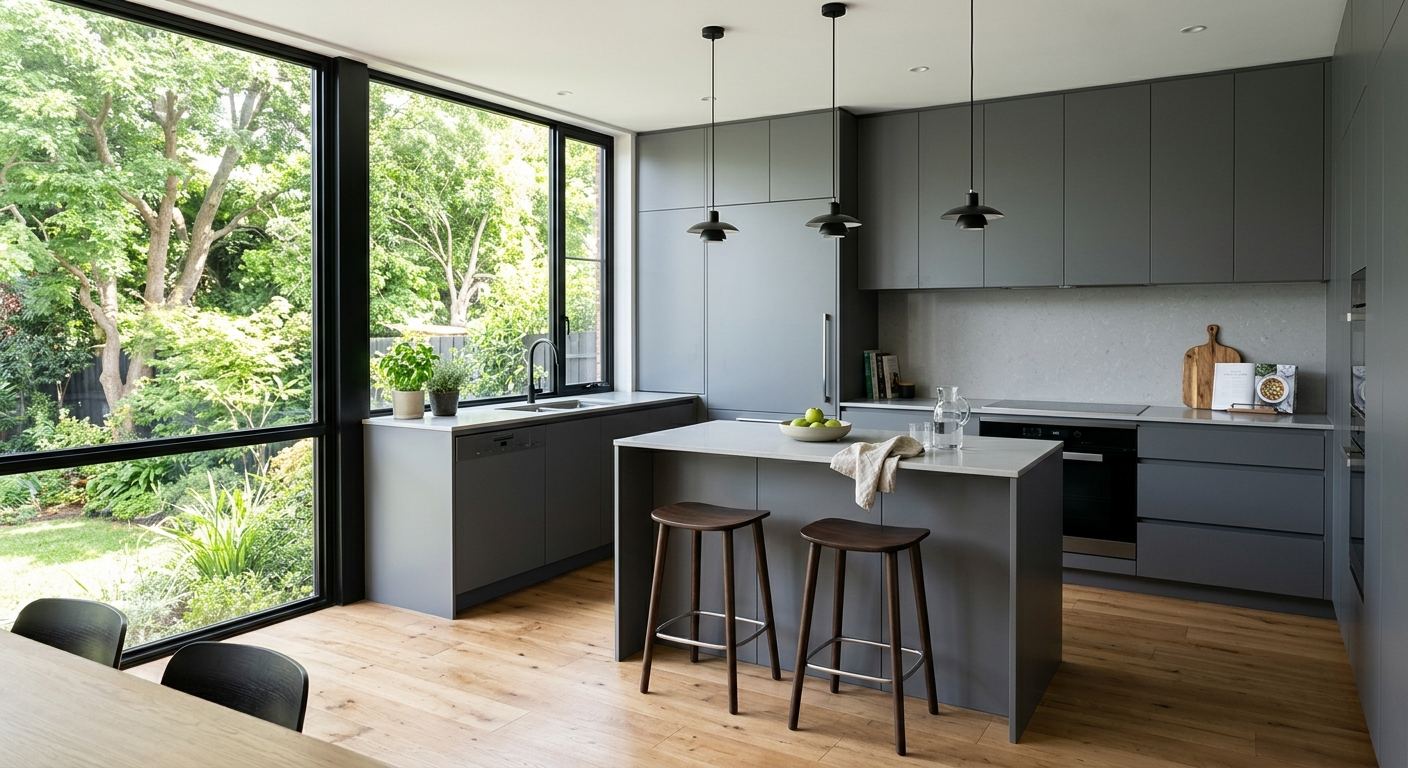
Kitchen renovation options and costs in Ogden
Kitchen renovation in Ogden is shaped by what homeowners expect to see when they walk into a Calgary-area home—clean lines, durable finishes, and cabinetry that looks “built-in,” not temporary. With Ogden’s population at 8,315 (Statistics Canada, 2021 Census), you’ll find fewer trades competing per job than in bigger centres, which can affect scheduling when multiple kitchens are running in the same season. It also means many homeowners shop finish packages and labour availability together, not separately.
In the Calgary economic region, pricing tends to track home values and the resale payoff of upgrades more than climate. That matters because most people in this market don’t treat the kitchen like a “weatherproof” room—they treat it like a long-term investment, often aiming for quartz or natural stone counters and semi-custom cabinetry, even for mid-range refreshes. Higher-value pockets typically spend a larger share of home value on kitchens (commonly 10–15% for refreshes and up to 20–25% for full redesigns), which pushes the average full renovation into the mid five-figures. As Alberta’s strong construction market keeps skilled labour busy, contractor rates in Calgary commonly run about $90–$140 per hour, so design time, project management, and millwork installation noticeably influence total cost.
Demand is especially high around family-oriented pockets and new-infill areas near major commute routes into Calgary, where homeowners often renovate soon after purchasing. If you’re planning your scope now, the tiered estimates below help you compare options before you request quotes.
| Renovation Tier |
What's Included |
Typical Duration |
Price Range |
| Cosmetic refresh (paint, hardware, new appliances only) |
Cabinet paint or stain touch-up, new pulls/knobs, new appliance install (no plumbing/gas relocation), minor caulking and trim, basic cleanup and walkthrough |
3–7 days |
$8,000–$22,000 |
| Mid-range full renovation (new cabinets, counters, sink, tile) |
Stock or semi-custom cabinet installation, new countertop, sink and faucet swap, backsplash tile, flooring tie-ins, removal/disposal, updated trim and sealant |
3–6 weeks |
$25,000–$60,000 |
| High-end full renovation (custom cabinets, stone counters, island) |
Fully custom cabinetry, stone countertops, island build, integrated sink setup, upgraded backsplash (including premium tile or slab), often upgraded lighting and a fuller electrical plan, coordinated appliance package |
6–12 weeks |
$60,000–$100,000 |
| Cabinet refacing only (new doors + drawer fronts, same boxes) |
Remove and replace doors/drawer fronts, refinish existing frames, new hardware, new toe-kick and trim where needed, install/adjust soft-close hardware |
1–3 weeks |
$8,000–$35,000 |
| Countertop swap only (laminate to quartz or stone) |
Template and install new solid-surface, seam planning, sink cut-out and reseal, optional backsplash tie-in at the same line (tile typically separate) |
5–10 days (plus template lead time) |
$3,000–$12,000 |
| Backsplash tile installation only |
Surface prep, install ceramic/porcelain tile, grout and seal, finishing at corners and outlets, caulking and final clean |
3–7 days |
$2,500–$8,000 |
Prices are estimates only and vary by project scope, site access and material selection.
What affects the price of kitchen renovation in Ogden
Even when neighbours in Calgary ask for the “same” kitchen, quotes can land 30–50% apart because contractors price for risk, sequencing, and the finish tier you choose—not just the visible upgrades. In high-value areas of the Calgary region, homeowners often default to quartz or stone counters and semi-custom cabinetry because the renovation cost is easier to recoup on resale. In more modest segments, laminate and stock cabinets dominate since the budget is easier to protect and the ROI target is tighter. Climate plays a smaller role than people assume; the bigger drivers are Alberta’s labour market and how quickly your project can be scheduled, plus the complexity of trade work like plumbing, gas, and electrical.
Layout changes are the most unpredictable cost regardless of finish level. Removing a wall, adding an island, or moving plumbing (or relocating a gas line) typically triggers extra framing, inspection, and longer build times. That’s why two kitchens with identical cabinet styles can diverge sharply: the one that keeps existing plumbing usually stays closer to the $25,000–$60,000 mid-range band, while the one that reworks services often pushes into the $60,000–$100,000 high-end range even if material quality is similar.
In Ogden, a few concrete situations commonly raise cost: older homes may require more wall repair and drywall patching behind cabinets after removal, and upgraded outlet/lighting plans (especially for under-cabinet lighting and island power) add electrician time. On the other hand, cost can drop when measurements are straightforward and the layout is kept intact—choosing a counter swap within the $3,000–$12,000 band for a straight run, for example, is usually far cheaper than a full redesign.
| Price Factor |
Why It Matters |
Cost Impact |
| Cabinet tier — stock vs. semi-custom vs. fully custom millwork |
Higher tiers require longer fabrication lead times, more design/layout work, and more labour for precise fit |
Often shifts the job by several tens of thousands |
| Countertop material — laminate vs. quartz vs. granite vs. stone |
Material price, edging complexity, and weight/handling change installation labour and risk |
Can add roughly $3,000–$20,000 depending on scope |
| Layout change — wall removal, island add, plumbing/gas move |
Triggers structural work, permit pathways, and service relocation costs |
Commonly the biggest driver of surprise cost (30%+ swings) |
| Appliance package tier — builder vs. mid-range vs. pro-grade |
Pro-grade units often require ventilation detailing, stronger electrical specs, and premium installation |
May add $2,000–$15,000 |
| Flooring — refinish existing vs. full replacement |
Cut-in transitions, baseboard adjustments, and subfloor prep can expand scope |
Typically varies by $1,500–$8,000 |
| Backsplash — ceramic tile vs. marble vs. full-height slab |
Premium surfaces increase material cost and require more skilled installation |
Often $2,500–$8,000+ |
| Electrical — new circuits for island, under-cabinet lighting |
Designing outlets/lighting correctly affects labour time and inspection requirements |
Can add $1,000–$6,000 depending on runs |
| Permit fees and licensed trade requirements |
Work that touches plumbing/gas/electrical or structural elements adds paperwork and scheduling |
Usually incremental, but it can increase project duration and admin cost |
Permits & regulations in Alberta
In Alberta, not every kitchen upgrade needs a permit. Straight swaps—like cabinet and countertop replacements where you’re not changing plumbing locations, not altering gas lines, and not moving electrical work—typically do not require permits. That’s why countertop swaps and cabinet refacing are often the fastest “visible upgrade” options. However, if your plan changes how the room functions, permits become more likely and licensed trades become mandatory.
Work that commonly does require permits includes: moving plumbing supply or drain lines; relocating gas appliances or gas piping (for example, moving a stove or dealing with a gas range hood); removing or altering a load-bearing wall; adding new electrical circuits or relocating/adding significant outlets/lighting around an island; and any electrical or gas-related changes that trigger inspection. Gas work must be done by a licensed gas fitter, and electrical work must be done by a licensed electrician. Both require inspections before walls are closed and final approval is provided.
For an Ogden homeowner, verify the contractor this way: (1) ask for their Alberta licence details and confirm they match the trades you’re hiring; (2) request a current certificate of insurance—look for liability coverage and proof the policy is active for your project dates; and (3) ask for WSIB/WCB clearance or equivalent coverage documentation, depending on how the company operates. Make sure permit responsibility (who pulls the permit, who schedules inspections) is written into your contract before the first payment, so you’re not left chasing documents mid-project.
Cabinets, countertops and layout decisions in Ogden
In Ogden and the broader Calgary resale market, three decisions drive both day-to-day satisfaction and resale appeal: cabinet tier, countertop material, and whether you change the layout. Cabinet tier sets the speed and the look: stock cabinets are fastest and least expensive, semi-custom is the most popular balance for mid-range renovations, and custom cabinetry delivers the best fit—especially for older wall lines or unique pantry needs. Countertop choice matters for maintenance and durability: laminate is budget-friendly but more prone to damage at seams; quartz is engineered for consistency and stain resistance; granite or other natural stone looks premium but can require more careful sealing and maintenance depending on the stone; butcher block can be beautiful and warm but needs ongoing care; and marble is dramatic yet more sensitive to etching.
Layout changes—open-concept wall removal, island addition, and plumbing/gas relocation—are where cost becomes justified only if the space gain solves a real problem. If you’re currently short on workspace, an island addition can be worth it because it improves function without necessarily upgrading every finish. But moving plumbing or relocating a gas line is rarely “cheap,” even if the cabinet style stays the same.
Here’s a practical dollar example: if your current counters are dated and the layout is staying put, a countertop swap within the $3,000–$12,000 band is often a better ROI than a full redesign. If you keep plumbing where it is but upgrade from laminate to quartz and add a simple backsplash, you typically target that mid five-figure renovation feel without ballooning scope into the $60,000–$100,000 range. Conversely, if you want a stone island, new electrical runs, and service relocation, you should plan for high-end pricing from the start so lead times and trade sequencing don’t derail your schedule.
| Option |
Durability |
Maintenance |
Best For |
Price Range |
| Stock cabinets (big-box) |
Good overall for standard use; limited flexibility for unusual wall conditions |
Low—keep hardware adjusted and clean with gentle products |
Fast timelines and budget-controlled refreshes |
$8,000–$22,000 |
| Semi-custom cabinets (local dealer) |
Very strong for everyday cooking; better fit and better door/drawer options |
Low to moderate; consistent cleaning and occasional hardware tightening |
Most Ogden homeowners targeting a modern look with dependable performance |
$18,000–$45,000 |
| Custom cabinets (local millwork shop) |
Highest build quality and fit; ideal for awkward dimensions and full functionality planning |
Low—built for longevity, but hinges/soft-close systems should be serviced if needed |
When you need tailored storage, curved spaces, or a premium designer finish |
$35,000–$75,000 |
| Laminate countertop |
Moderate durability; seams are the weak point if heavily used or poorly sealed |
Low—avoid prolonged standing water and use cutting boards |
Budget-first upgrades where the layout stays the same |
$3,000–$6,000 |
| Quartz engineered countertop |
High durability; resistant to stains and everyday impacts better than many laminates |
Low—typical wipe-down; avoid extreme heat and follow fabricator guidance |
Busy households wanting a “set it and forget it” surface |
$6,500–$11,500 |
| Granite / natural stone countertop |
High durability; varies by slab density and finish |
Moderate—sealing is often recommended and staining prevention matters |
Premium look with a unique, natural pattern |
$8,000–$14,500 |
| Butcher block countertop |
Moderate to high when maintained; surface can wear with daily use |
Moderate—regular oiling/maintenance to protect against moisture |
Home cooks wanting warmth and a repairable surface |
$5,000–$10,000 |
| Marble countertop |
Moderate; more susceptible to etching and staining than quartz |
Higher care—use mats, clean promptly, consider sealing |
Low-abuse kitchens focused on luxury aesthetics |
$10,000–$18,000 |
How to choose a kitchen renovation contractor in Ogden
Choosing the right contractor in Ogden starts with verification and then moves to how clearly they price and manage the work. In Alberta, you should confirm the contractor’s Alberta coverage for the trades they’re coordinating, and verify both liability insurance and WSIB/WCB status. Ask for the documents directly: certificate of insurance (active dates that overlap your project), and clearance/coverage proof for workers. If they can’t provide paperwork quickly and clearly, that’s a process risk, not a small inconvenience.
Next, request 2–3 itemised, written quotes. The best quotes separate labour and materials (and ideally break down cabinetry install, counter templating/installation, tile/backsplash work, demo/disposal, and electrical/plumbing/gas coordination). Be especially careful about what’s excluded: is permit pulling included, is disposal included, and is drywall repair included if cabinet removal reveals damage? Also confirm warranty terms—what workmanship warranty length is provided, what manufacturer warranties apply to cabinets/counters, and whether those warranties are transferable if you sell your home.
Payment schedule matters too. For kitchen renovations, never allow more than about 10–15% upfront; structure the rest in stages and hold back until the job is fully completed and cleaned. Finally, get your start date and completion estimate in writing, including a realistic lead-time allowance for cabinets and stone since delays in templating or material availability can shift the timeline.
- Confirm Alberta trade licences for any crew doing electrical, gas, or plumbing work (ask who is licensed and who is pulling permits).
- Request certificate of insurance and verify coverage dates overlap your renovation.
- Provide WSIB/WCB clearance (or equivalent documentation) before work begins.
- Insist on an itemised scope: labour, materials, demo/disposal, and finish allowances.
- Verify whether countertop templating and scheduling are included, and who pays for remake costs if measurements change.
- Check warranty length for workmanship and ask for it in writing.
- Confirm manufacturer warranty terms for cabinets/counters and whether it’s transferable.
- Confirm permit responsibility in the contract: who pulls it and who pays associated fees.
- Ensure the quote states what happens with damaged drywall/subfloor discovered during demo.
- Ask about dust control and site protection plan (especially if you’re living in the home).
- Clarify appliance installation responsibility, including required electrical/gas hookups coordination.
- Use a staged payment schedule with a holdback until punch-list items are complete.
Red flags in Ogden kitchens include: (1) a quote that’s “lump sum” with no material allowances or exclusions; (2) no proof of insurance/coverage when asked; (3) promising a timeline without discussing cabinet/stone lead times; (4) asking for large upfront payments (well above 10–15%); and (5) refusing to put permit responsibility and warranty terms into the contract.
Frequently asked questions — kitchen renovation in Ogden
What's the most cost-effective kitchen upgrade?
In Alberta, the most cost-effective upgrade is usually one that changes the look without triggering plumbing, gas, or electrical permits. In Ogden, many homeowners get strong results with a cabinet hardware + paint refresh, or by upgrading just the countertops. If your layout is already working, a countertop swap within the $3,000–$12,000 band (for example, moving from laminate to quartz) often delivers a bigger “wow” per dollar than starting with demolition. Pair that with a simple backsplash tile install for a cohesive finish, which commonly falls into the $2,500–$8,000 range. The key is to keep the sink and major services where they are, so you’re not paying for service relocation, inspection scheduling, and extra labour sequencing.
Custom vs stock cabinets — is custom worth it?
Custom cabinets can be worth it in Ogden when you have unusual wall dimensions, need specialized storage (pantry systems, appliance garages, or pull-out organization), or want a precise designer fit that stock units can’t match. But if your walls are relatively straight and you’re keeping the same layout, stock or semi-custom often achieves the best value. Stock is typically the quickest and cheapest path; semi-custom is the most popular mid-range option because it balances style, fit, and lead time. A full high-end project in the region commonly lands in the $60,000–$100,000 band when custom millwork and stone counters are included, while a more streamlined full renovation often clusters in the $25,000–$60,000 band. If you’re trying to manage budget, consider semi-custom for the cabinets and reserve “custom” only for problem areas.
How do I choose a kitchen contractor in Ogden?
Start by confirming Alberta requirements and documentation, not just reviews. Ask the contractor to show their liability insurance certificate and WSIB/WCB coverage proof before you sign anything. Then verify that the trades handling gas or electrical are licensed for that work. In the Ogden area, a common failure mode is assuming cabinetry and counters are “the whole job” while the real risk is the coordinating trades—plumbing, gas fitter, and electrician timelines. Next, request 2–3 itemised written quotes (labour and materials separated). Watch for inclusions like disposal, permit pulling responsibility, and whether drywall repairs are covered after demo. Finally, use a payment structure that stays around 10–15% upfront and includes a holdback until punch-list completion. A contractor who won’t provide scope clarity or warranty terms is a higher risk, regardless of price.
What order do kitchen renovation steps happen in?
A typical kitchen renovation in Ogden follows a predictable sequence, especially when permits and licensed trades are involved. First comes demolition and rough layout confirmation (and measurements for cabinets/counters). If any plumbing, gas, or electrical changes are planned, those rough-in trades usually happen early, after demo and before walls are closed. Next is framing/patching where needed, followed by installing cabinets (or cabinet frames), then templating and installing counters, and finally backsplash, trim, and finishing details. Appliances and fixtures come last, once electrical and plumbing are ready and surfaces are sealed. Stone and quartz lead times can shift the calendar, so a contractor should build template dates into the schedule. If your scope is a smaller upgrade—like a countertop swap in the $3,000–$12,000 range—the order is still template first, then install, then sink adjustments and sealing.
Can I live at home during a kitchen renovation in Ogden?
Yes, many homeowners in Ogden renovate while staying in the home, but it depends on how disruptive the scope is. Cosmetic refreshes and targeted work like backsplash or countertops are usually easier to live through because they don’t require major service changes. For mid-range or full renovations—especially those involving cabinet removal, plumbing/gas updates, or layout changes—it’s more challenging. Expect dust and noise during demo and cabinet installation, and plan for at least one temporary food prep area. A contractor should include dust control, site protection, and a clear staging plan for using bathrooms and access routes safely. If you need to move plumbing or add an island, the schedule tends to be longer, and living-in can become uncomfortable. The bigger question is whether the contractor can maintain a reasonable work zone and communicate daily progress, not just whether it’s technically possible.
Should I renovate my kitchen before selling in Ogden?
Often, yes—when the renovation matches what buyers expect in the Calgary region. Kitchens sell homes, but they also set resale expectations through finishes, storage, and layout. If your current kitchen has outdated countertops, tired cabinetry, or an inefficient layout, a renovation can improve buyer confidence and reduce negotiation pressure. That said, you should avoid overspending on changes that don’t match your home’s market tier. For example, a full redesign that lands in the $60,000–$100,000 range may be better suited to higher-value homes where the finishes align with buyer expectations; a more modest full renovation in the $25,000–$60,000 band or a targeted countertop upgrade within the $3,000–$12,000 range can be a more practical strategy. Alberta’s market also rewards kitchens that feel clean and durable, because maintenance expectations are high for everyday living.