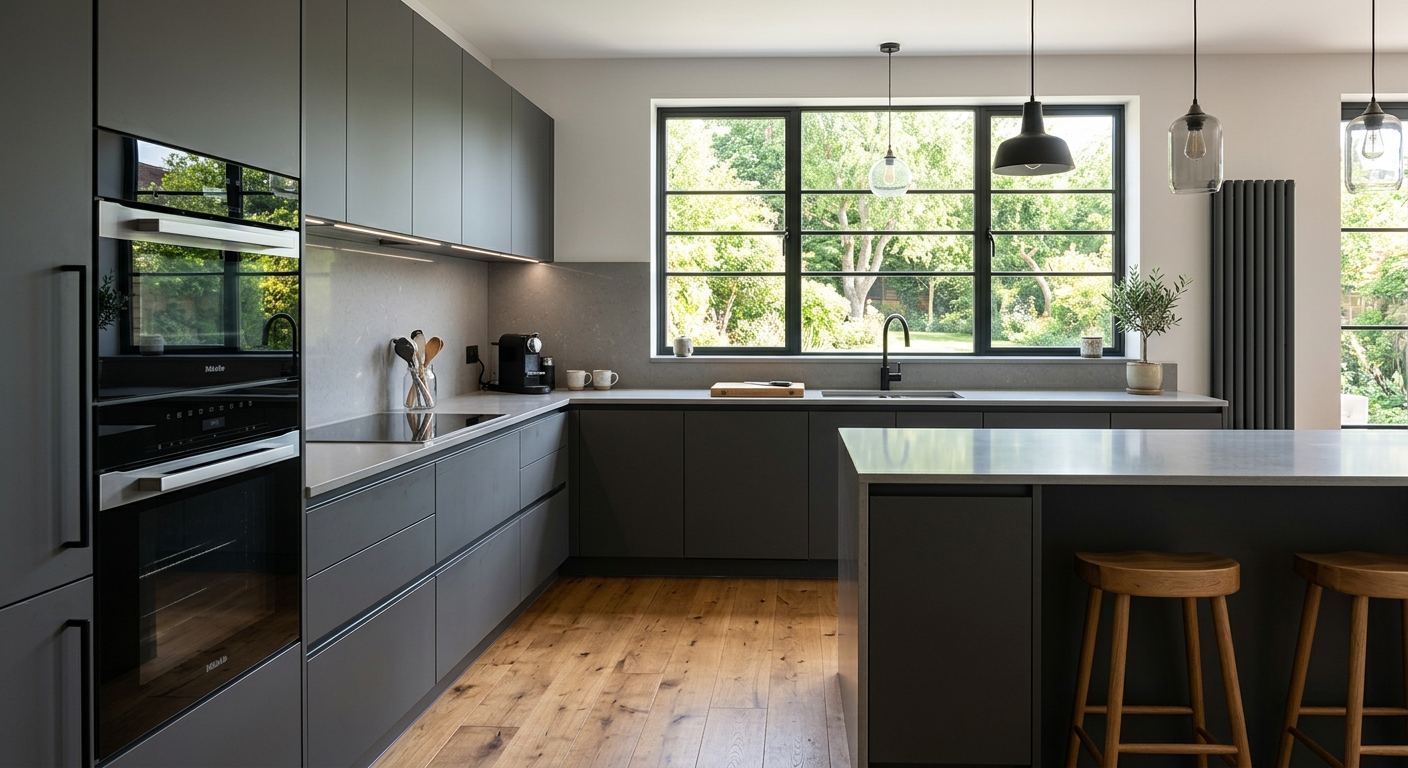
Kitchen renovation options and costs in Pincher Creek
Pincher Creek homeowners typically renovate kitchens in a few predictable tiers—mainly driven by what buyers expect in the Lethbridge–Medicine Hat region and the finish level that fits the local resale market. With a median household income of $74,000 (Statistics Canada, 2021 Census) and 77.0% of households owning (Statistics Canada, 2021 Census), many upgrades are planned as long-term improvements rather than quick flips. That often pushes projects toward mid-range quartz, updated cabinet hardware, and practical layout tweaks—especially in the older housing stock, where 69.2% of homes were built before 1981 (Statistics Canada, 2021 Census).
Renovation pricing in this part of Southern Alberta is also shaped by how materials and labour availability land in smaller centres. Even when the scope is identical, contractors may price differently depending on transport to Pincher Creek, the mix of trades required (plumbing, electrical, gas), and scheduling availability in peak seasons. Climate matters too: Alberta freeze–thaw cycles can stress older caulking, grout, and subfloor transitions around exterior walls, so kitchens with exterior-grade plumbing runs or older walls sometimes require additional prep before new cabinets and tile go in.
In Pincher Creek, the trade is especially active around the downtown core and older residential pockets where homeowners update dated cabinets and countertops while staying within a realistic resale budget. From there, it becomes easier to compare options by cost tier.
| Renovation Tier |
What's Included |
Typical Duration |
Price Range |
| Cosmetic refresh (paint, hardware, new appliances only) |
Wall/ceiling paint, new cabinet hardware, appliance swap (no move), minor caulk/touch-up |
3–7 days |
$6,000–$18,000 |
| Mid-range full renovation (new cabinets, counters, sink, tile) |
New stock or semi-custom cabinets, new counters, sink + faucet, backsplash tile, new under-cab lighting (optional) |
2–4 weeks |
$25,000–$50,000 |
| High-end full renovation (custom cabinets, stone counters, island) |
Fully custom millwork, stone counters, island (electrical/plumbing as needed), upgraded backsplash (often full-height) |
4–7 weeks |
$50,000–$70,000+ |
| Cabinet refacing only (new doors + drawer fronts, same boxes) |
Reface with new doors/drawer fronts, new trim, hardware, re-seal and touch up cabinet boxes, no cabinet reframe |
1–2 weeks |
$8,000–$22,000 |
| Countertop swap only (laminate to quartz or stone) |
Remove existing counters, install new quartz/stone, new sink cut-out as needed, silicone/trim |
4–10 days |
$3,500–$12,000 |
| Backsplash tile installation only |
Surface prep, tile install (ceramic/porcelain), grout/seal, finishing around outlets |
2–5 days |
$2,000–$8,000 |
Prices are estimates only and vary by project scope, site access and material selection.
What affects the price of kitchen renovation in Pincher Creek
In Lethbridge–Medicine Hat and across Alberta, it’s common to see the “same” kitchen renovation quoted 30–50% apart. The biggest drivers aren’t climate alone—they’re the finish tier buyers gravitate toward in a given neighbourhood, plus the unpredictability of what’s hidden behind older cabinetry. In higher-value pockets of the region, homeowners more often choose quartz or natural stone counters and semi-custom cabinetry because the upgrade is easier to recover on resale. In more price-sensitive pockets, laminate and stock cabinets remain popular since they deliver a modern look while keeping total spend closer to the lower end of the $20,000–$70,000 full-renovation range.
Layout changes create the most variance regardless of finish level. Moving or adding an island, removing a wall for open concept, or relocating a gas line and plumbing frequently turns a straightforward renovation into a coordinated multi-trade job. For example, an $25,000–$35,000 mid-range renovation can rise quickly when you add electrical for an island and shift the sink drain/venting. Conversely, a homeowner who stays in the same footprint and upgrades from laminate to quartz sometimes keeps the project closer to the countertop-only band of about $2,500–$12,000, with fewer surprises behind the drywall.
Pincher Creek’s older housing stock (69.2% built before 1981) also matters. Cabinets may be mounted to out-of-level framing, and you may find dated plumbing routes or uneven subflooring that need correction before tile or new cabinet bases can be set. In practice, those fixes can add hundreds to several thousand dollars depending on how extensive the rework is—especially near exterior walls where freeze–thaw cycles can worsen sealant failure and grout cracking.
| Price Factor |
Why It Matters |
Cost Impact |
| Cabinet tier — stock vs. semi-custom vs. fully custom millwork |
Determines material quality, door/drawer options, internal organization and fit/finish |
Can shift the job by roughly $5,000–$25,000+ |
| Countertop material — laminate vs. quartz vs. granite vs. stone |
Material cost + fabrication complexity + edge/finish options |
Often adds about $2,500–$10,000+ versus laminate |
| Layout change — wall removal, island add, plumbing/gas move |
Triggers structural work, new lines, inspections and schedule changes |
Typical jump: $5,000–$20,000+ |
| Appliance package tier — builder vs. mid-range vs. pro-grade |
Impacts cost and installation requirements (venting, power/gas specs) |
Often varies $1,500–$8,000+ depending on the package |
| Flooring — refinish existing vs. full replacement |
Old floors can hide damage; replacement affects cabinet placement and transitions |
Can move $1,000–$6,000+ |
| Backsplash — ceramic tile vs. marble vs. full-height slab |
Complexity, material fragility and pattern matching labour intensity |
Can shift by $1,000–$6,000+ |
| Electrical — new circuits for island, under-cabinet lighting |
Requires licensed work and adds fixtures, switches and wiring |
Commonly $800–$4,500+ |
| Permit fees and licensed trade requirements |
Changes paperwork, inspection timing and trade scheduling |
Often $300–$2,500+ plus indirect schedule costs |
Permits & regulations in Alberta
In Alberta, a cabinet-and-countertop swap that doesn’t change the building services often does not require permits. That means replacing cabinets in the same location and swapping countertops over existing supports typically stays permit-light. However, when you start changing how the kitchen is serviced, you’re usually in permit-and-inspection territory—especially in Pincher Creek where many renos involve older plumbing and electrical setups that need bringing up to current standards.
Work that typically requires permits and licensed trades includes moving plumbing supply or drain lines, relocating a gas appliance (like a stove), adding or changing electrical circuits (for example, wiring an island and under-cabinet lighting), removing a load-bearing wall, and changing structural openings. Gas work must be performed by a licensed gas fitter, and electrical by a licensed electrician; both trades require inspections as part of compliant installation.
How to verify before you sign: (1) ask for the contractor’s certificate of insurance (general liability, and WSIB/WCB clearance letter or coverage proof as applicable), (2) confirm licensed trades where required, and (3) request permit responsibility in writing. If permits are needed, the contractor should clearly state who pulls them and how inspections are scheduled—so you don’t get stuck waiting on trade availability after materials arrive.
What’s the fastest way for a homeowner in Pincher Creek to confirm a contractor’s licence and coverage?
Start with documentation. Ask the contractor for (a) their liability insurance certificate and (b) WSIB/WCB clearance or proof of coverage if they employ trades/crew covered under those systems. Then verify the specific licensed trades for gas and electrical through the appropriate provincial licensing channels (the contractor should name the licensed individuals or firms on the work). Finally, make sure the quote clearly states who applies for any required permits and schedules inspections. If a contractor can’t provide insurance/coverage proof or won’t put permit responsibility in the contract, that’s a strong warning sign.
Cabinets, countertops and layout decisions in Pincher Creek
For Pincher Creek kitchens, three decisions consistently make or break both the budget and the day-to-day usefulness: (1) cabinet tier, (2) countertop material, and (3) whether you change the layout. In the Lethbridge–Medicine Hat resale market, buyers often “shop with their eyes” first—cabinet style, counter colour, and a clean backsplash line do a lot of the selling. At the same time, the underlying build quality still matters because many local homes are older (69.2% built before 1981), so a renovation that corrects wonky framing and supports wears better and looks more uniform.
Cabinets: Stock cabinets are fastest and usually the lowest cost, while semi-custom hits the popular middle ground for families who want better internal organization. Fully custom millwork fits irregular walls and offers the tightest finish control—but it’s the highest-cost route.
Counters: Laminate is budget-friendly and can still look sharp with the right edge profile. Quartz is the practical upgrade for most households—less maintenance and high resistance to staining. Granite/natural stone is beautiful and durable, but it can cost more and typically needs more careful sealing/maintenance practices.
Layout: If you keep the sink and stove in roughly the same locations, projects tend to align with the mid-range $25,000–$50,000 band. If you add an island or relocate plumbing/gas, you may shift into the $50,000–$70,000+ territory because you’re paying for multiple trades and the extra demo/rebuild work. A concrete example: upgrading cabinets + counters within the existing footprint might land around the $25,000–$40,000 range, while adding an island and moving a vented hood can push that same space several thousand dollars higher.
| Option |
Durability |
Maintenance |
Best For |
Price Range |
| Stock cabinets (big-box) |
Good for standard spans; can show less flexibility on out-of-square walls |
Wipe clean; check hinges after installation |
Fast timelines and tighter budgets |
$5,000–$20,000 |
| Semi-custom cabinets (local dealer) |
Strong everyday durability; better fit options and upgraded hardware |
Low upkeep; adjust/clean hardware as needed |
Most homeowners aiming for solid resale appeal |
$12,000–$35,000 |
| Custom cabinets (local millwork shop) |
Highest build quality and best fit to your specific room |
Low upkeep; depends on door finish type |
Irregular layouts, premium style goals, maximum longevity |
$25,000–$55,000+ |
| Laminate countertop |
Resists everyday wear, but edges can chip if abused |
Easy wipe-down; avoid prolonged standing water at seams |
Budget-conscious upgrades that still modernize the look |
$2,500–$6,000 |
| Quartz engineered countertop |
Very durable for Southern Alberta kitchens; resists staining and most impacts |
Low maintenance; generally no sealing |
Families who want a “set it and forget it” upgrade |
$4,500–$11,000 |
| Granite / natural stone countertop |
Extremely durable, with natural variation and statement veining |
Typically requires periodic sealing and careful spill management |
Premium look for long-term owners |
$6,000–$14,000 |
| Butcher block countertop |
Durable with proper care; can mark or dent if rough-used |
Needs oiling; protect from standing water near seams |
Warm, casual style and regular use |
$4,000–$10,000 |
| Marble countertop |
Hard but more porous and more prone to etching from acids |
Requires more sealing and careful cleaning habits |
Statement look where you’ll maintain the surface |
$7,500–$16,000+ |
How to choose a kitchen renovation contractor in Pincher Creek
Choosing the right contractor in Pincher Creek comes down to proof and process. First, verify Alberta licensing and coverage: ask for the contractor’s general liability insurance certificate and, if they have employees or subcontractors covered, their WSIB/WCB clearance or coverage proof (many reputable contractors can provide this within minutes). For the work that legally requires licences, confirm which licensed electrician and licensed gas fitter will be on your job—don’t rely on “we’ll handle it” unless they can name the parties and provide documentation.
Next, get 2–3 itemised written quotes. The best quotes break out labour and materials (cabinets, countertops, tile, plumbing/electrical allowance, demolition, disposal, and finish carpentry), not just a single lump sum. Check that permits (where required) are clearly included or clearly excluded, along with who pulls them, and whether disposal/dump fees are in the price. For a kitchen in older Pincher Creek homes, disposal and protection of finishes around demo can matter.
Warranty should be specific: ask for the workmanship warranty length, what it covers, and whether it transfers to future homeowners. Products usually have manufacturer warranties that may require registration or proof of purchase—so keep your paperwork.
Payment schedule: keep the upfront deposit to about 10–15% and use staged payments tied to milestones (demo complete, cabinets installed, counters templated and installed). Finally, require a start date and completion estimate in writing, including key decision dates like countertop templating.
- Ask for an itemised quote (labour + materials), not a single total.
- Confirm who provides and installs cabinets, countertops, and tile (named scope).
- Check insulation/air-sealing and vapour barrier attention where walls are opened.
- Require a demolition and disposal line item.
- Confirm electrical plan details for under-cabinet lighting and island outlets.
- Verify gas work is quoted separately and will be done by a licensed gas fitter.
- Verify electrical changes are quoted and installed by a licensed electrician.
- Request permit responsibility in writing (who pulls it, who pays, inspection timing).
- Get a written finish schedule: paint, caulking, grout cure time, and final clean.
- Make sure warranties are in writing and include workmanship duration.
- Never agree to pay more than 10–15% upfront; hold back until closeout.
- Ask for prior kitchen photos from similar budgets and similar home ages.
Red flags in Pincher Creek: quoting without explaining what’s included/excluded, refusing to itemise labour and materials, vague timelines that don’t match countertop templating realities, asking for large upfront payments, and “handling permits later” without putting responsibility in the contract.
Frequently asked questions — kitchen renovation in Pincher Creek
How much does a kitchen renovation cost in Pincher Creek?
In Pincher Creek, most full kitchen renovations land in the $20,000–$70,000+ range, depending on whether you do a cosmetic refresh, a mid-range refresh, or a high-end rebuild. If you’re staying within the existing layout and choosing mid-range finishes, many homeowners target the $25,000–$50,000 band for new cabinets, counters, a sink, and tile. If you want custom millwork, stone counters, and an island (with electrical/plumbing upgrades), budgets commonly climb toward the $50,000–$70,000+ tier. Keep in mind Pincher Creek’s older housing stock—opened walls can reveal uneven framing or plumbing that adds cost even when the finish is unchanged. (Statistics Canada, 2021 Census)
How long does a kitchen renovation take in Pincher Creek?
Timelines in Alberta kitchens usually depend on trade scheduling and countertop fabrication. A cosmetic refresh (paint, hardware, and appliance swaps) is often 3–7 days. A mid-range full renovation commonly takes 2–4 weeks, while a higher-end job with custom cabinets and stone counters often runs 4–7 weeks. The countertop templating and fabrication window is often the pacing item—so start dates should reflect when measurements occur. In older Pincher Creek homes (many built before 1981), demo can expose hidden issues that require extra prep before cabinets and tile are installed, which can add several days to a week. (Statistics Canada, 2021 Census)
Quartz vs granite countertops — which is better?
Quartz is usually the “best practical choice” for busy households because it’s engineered to be consistent, resists staining, and typically doesn’t require the same sealing routines that natural stone often needs. Granite is also very durable and can look exceptional, with unique veining, but it generally requires more attentive maintenance (often periodic sealing) and can be more sensitive to acidic substances that could etch certain surfaces. Cost-wise, quartz is commonly in the $4,500–$11,000 range, while granite/natural stone often comes in higher, roughly $6,000–$14,000+ depending on slab and fabrication. For most Pincher Creek kitchens aiming at resale appeal, quartz delivers a strong mix of durability and predictable maintenance.
Should I reface or replace my cabinets?
Refacing can be a great option when your cabinet boxes and framing are solid, doors and drawers are the main issue, and you want a faster refresh without full demolition. It typically fits the $8,000–$22,000 range and can keep your project closer to a shorter timeline. Replacement is the right move if boxes are sagging, water-damaged, or if you want major changes to layout and interior storage. With Pincher Creek homes built before 1981 in many cases (Statistics Canada, 2021 Census), we often see hinges, drawer slides, and box stability that determine whether refacing will hold up long-term. If the footprint is staying the same and your boxes are true, refacing is often the smarter ROI.
Do I need a permit for a kitchen renovation in Alberta?
Often, you don’t need a permit for swapping cabinets and countertops when you aren’t changing plumbing, gas, structural elements, or electrical circuits. However, in Alberta you typically need permits (and licensed trades) when you move plumbing supply/drain lines, relocate gas appliances (including certain hood/venting scenarios), remove a load-bearing wall, or add/change electrical circuits (like wiring an island or new under-cabinet lighting). In Pincher Creek, older homes may have wiring or plumbing that needs updates before new fixtures can be installed safely. Always confirm in your contract who pulls any required permits and who is responsible for inspections. Gas work must be done by a licensed gas fitter, and electrical by a licensed electrician.
What's the ROI on a kitchen renovation?
ROI varies by finish tier and by the buyer pool in your neighbourhood—not just the amount you spend. As a practical benchmark used by many homeowners in Southern Alberta, some people align major kitchen budgets to roughly 10–20% of property value for a full reno, but what you choose matters more than the total. Upgrades that typically support resale—like better cabinet layout and mid-grade to premium quartz or natural stone—tend to perform better than purely cosmetic changes. In Pincher Creek, where many homes are older (Statistics Canada, 2021 Census) and buyers often scrutinize functional storage and surface durability, keeping the layout sensible while moving from laminate to quartz can be a high-impact ROI move. If you change plumbing/gas extensively, ROI depends on whether the final layout matches typical buyer expectations.