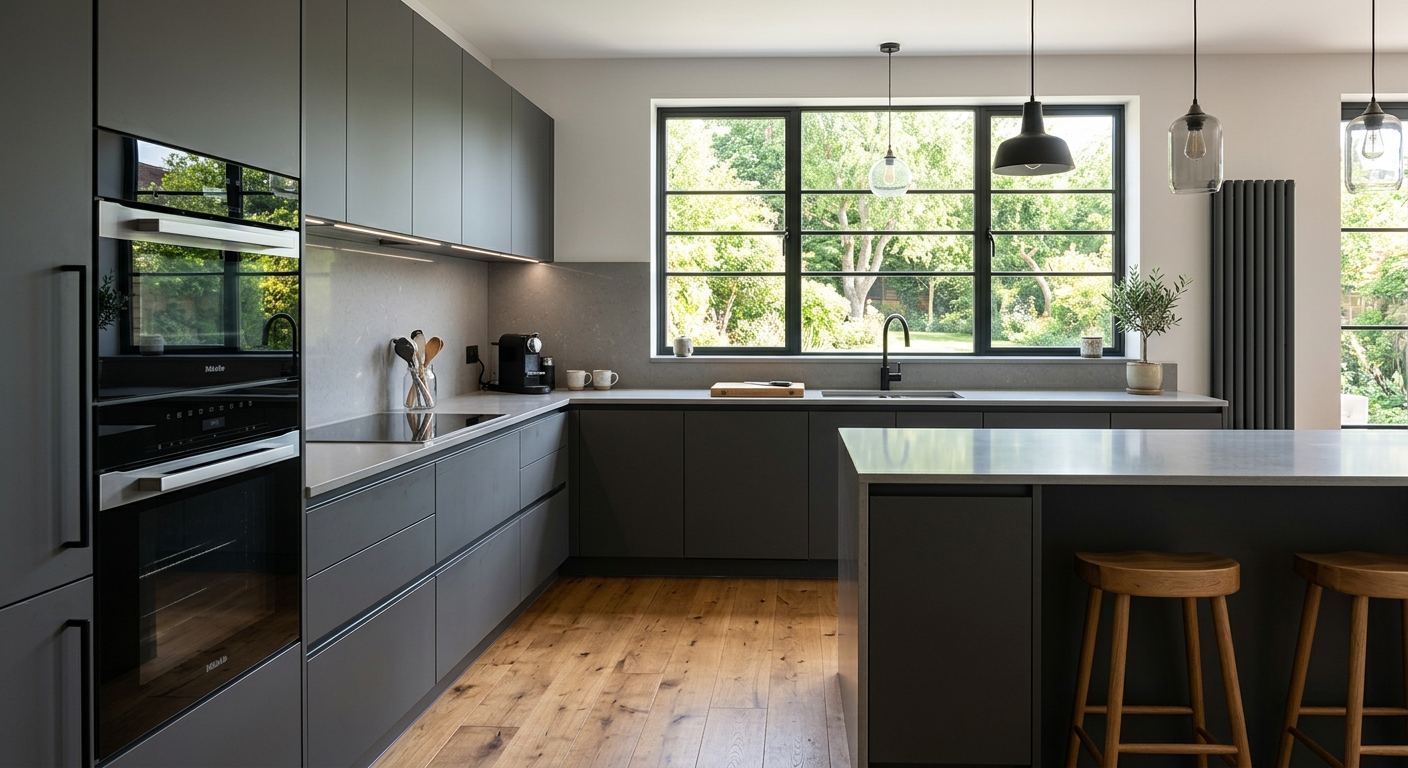
Kitchen renovation options and costs in Spruce Avenue
Kitchen renovations in Spruce Avenue, Alberta usually start with one of three paths: a cosmetic refresh, a mid-range full renovation, or a higher-end redesign with upgraded finishes. Because Spruce Avenue sits inside the Calgary economic region, local homeowners tend to compare options based on what buyers will pay for updated kitchens, not on whether Alberta winters are “hard” on materials. With a population of 2,120 (Statistics Canada, 2021 Census), Spruce Avenue is small enough that many trades book from Calgary, so availability can affect timelines during busy spring and summer build cycles.
Cost expectations also track home values and income levels across the broader Calgary market. In higher-value areas of the Calgary region, many homeowners lean toward quartz or natural stone counters and semi-custom cabinetry because the renovation cost is more easily recovered at resale, often aligning spending with the “mid five-figure to six-figure” range seen in redesigns (depending on layout changes). In more modest-value pockets, laminate and stock or builder-grade cabinets dominate because the return is easier to justify—especially when you keep the plumbing and gas locations in place.
Even though Alberta climate isn’t the main driver, it does influence workmanship logistics: winter shutdowns, dryer/venting coordination, and the need to protect floors and cabinetry during late-season installs. If you’re near the busier demand pockets along the Calgary–area commuting corridor, contractor scheduling is especially tight because crews serve multiple neighbourhoods back-to-back. That’s why the same scope can price differently by 30–50% across Calgary and surrounding communities. Below is a practical comparison to help you benchmark your quote before you talk to a contractor.
| Renovation Tier |
What's Included |
Typical Duration |
Price Range |
| Cosmetic refresh (paint, hardware, new appliances only) |
Cabinet paint or refinish, new hardware, caulking, new appliances (dishwasher/range/fridge as selected), labour for installation, basic cleaning and touch-ups |
1–2 weeks |
$8,000–$18,000 |
| Mid-range full renovation (new cabinets, counters, sink, tile) |
Semi-custom or upgraded stock cabinets, new countertops (often quartz), sink + faucet, backsplash tile, under-cabinet caulking/finishing, demo and haul-away, floor refinishing or replacement as needed |
3–6 weeks |
$25,000–$55,000 |
| High-end full renovation (custom cabinets, stone counters, island) |
Custom cabinetry, premium stone (quartz/stone/granite), island with upgraded lighting, integrated appliance package coordination, more extensive tile/backsplash detailing, higher-end electrical and finishes |
6–10 weeks |
$60,000–$100,000 |
| Cabinet refacing only (new doors + drawer fronts, same boxes) |
New door/drawer fronts, new hardware, refinish/face upgrade, labour to remove/replace fronts and install, optional new backsplash support prep |
2–4 weeks |
$8,000–$35,000 |
| Countertop swap only (laminate to quartz or stone) |
Remove existing counters, prep, template and install new countertops, seam planning, sink cut-out adjustments as needed, disposal for countertop materials |
3–7 days |
$3,000–$12,000 |
| Backsplash tile installation only |
Tile supply (selected grade) and installation, surface prep, caulking at edges, grout + seal where required, cleanup |
3–6 days |
$2,500–$8,000 |
Prices are estimates only and vary by project scope, site access and material selection.
What affects the price of kitchen renovation in Spruce Avenue
In Spruce Avenue and the wider Calgary economic region, it’s common to see quotes for the “same” kitchen land 30–50% apart once you break down finish tiers, labour hours, and what trades must do for permits and reroutes. The biggest reason isn’t Alberta weather—it’s that buyers in higher-value Calgary-area markets often default to quartz or natural stone counters and semi-custom cabinetry, while more value-conscious projects stick to laminate and stock boxes. That finish shift changes material cost and also the labour time for precise templating, installation, and detailing around openings.
Local housing value and median income levels shape the typical finish tier far more than climate. Where homeowners expect a stronger resale, a mid-range full renovation can quickly move toward the $25,000–$55,000 band, and if the layout changes, costs can creep into the $60,000–$100,000 range for high-end upgrades. In more modest-value markets, you often see better budgeting discipline: keep plumbing and gas lines where they are, choose durable mid-tier materials, and focus money on cabinets that look custom without fully customizing the carcasses.
Layout changes are the most unpredictable cost regardless of finish level. For example, adding an island can mean new electrical circuits and sometimes moving a venting path; removing a wall can require structural review and deeper demo. Two concrete Spruce Avenue examples contractors commonly price differently: (1) older homes may have dated wiring runs, so adding under-cabinet LED lighting or island pendants increases electrical labour; (2) kitchens with original cast or offset plumbing can require more pipe work than homeowners expect, which moves you toward the higher bands quickly. Housing age can matter too: the older the rough-in, the more likely you’ll see drywall patching, floor re-levels, and additional subfloor work—costs that show up even in “mid-range” builds.
| Price Factor |
Why It Matters |
Cost Impact |
| Cabinet tier — stock vs. semi-custom vs. fully custom millwork |
Higher tiers require more precise build/fit and often more hardware and finishing labour |
$8,000–$50,000+ |
| Countertop material — laminate vs. quartz vs. granite vs. stone |
Material and fabrication/templating differences drive total countertop labour and waste |
$3,000–$12,000 |
| Layout change — wall removal, island add, plumbing/gas move |
Rerouting plumbing/gas, adding structural considerations, and rework behind walls is time-intensive |
$5,000–$30,000+ |
| Appliance package tier — builder vs. mid-range vs. pro-grade |
Higher tiers can require electrical/venting changes and premium trim kits |
$2,000–$15,000+ |
| Flooring — refinish existing vs. full replacement |
If cabinets are lifted and the base changes, subfloor repairs and matching becomes labour-heavy |
$1,500–$10,000 |
| Backsplash — ceramic tile vs. marble vs. full-height slab |
Complex patterns, heavier stone, and vertical transitions increase installation time and materials |
$2,500–$8,000 |
| Electrical — new circuits for island, under-cabinet lighting |
New receptacles, GFCI/requirements, and lighting wiring add licensed electrician time |
$1,000–$6,500 |
| Permit fees and licensed trade requirements |
Plumbing/gas relocation, structural wall removal, and electrical circuits typically trigger permits/inspections |
$500–$5,000+ |
Permits & regulations in Alberta
In Alberta, a countertop swap or a like-for-like cabinet replacement usually does not trigger a permit because you’re not changing major systems. However, as soon as your renovation moves into the “behind the walls” world—plumbing supply/drain reroutes, gas relocation, structural changes, or new electrical circuits—permits and licensed trade work become the rule. For Spruce Avenue homeowners, the practical takeaway is simple: cabinet and countertop upgrades are often permit-light, but anything involving plumbing, gas, or load-bearing walls can add time and inspections.
Work that typically requires permits and licensed trades includes: moving plumbing supply or drain lines; relocating a gas stove; changing the range hood ducting/venting when gas appliances are involved; removing a load-bearing wall (or altering structural beams); and adding electrical circuits for island outlets, under-cabinet lighting, or new major appliances. Gas work must be performed by a licensed gas fitter, and electrical work must be done by a licensed electrician—then inspections follow.
To verify your contractor in Spruce Avenue step-by-step, do three things before signing: (1) ask for licence details and confirm eligibility through the appropriate Alberta online licence registry; (2) request a certificate of insurance showing liability coverage—ideally with kitchen-project-specific endorsements—plus WSIB/WCB coverage proof (or exemption documentation where applicable); and (3) keep copies of those documents in your contract folder. Finally, confirm in writing who pulls permits and pays permit fees—responsibility should be spelled out in the agreement, not left as “handled by the contractor.”
Cabinets, countertops and layout decisions in Spruce Avenue
Your three most consequential decisions in a Spruce Avenue kitchen renovation are cabinet tier, countertop material, and whether you change layout. (1) Cabinet tier drives the look and fit: stock cabinets are fastest and usually cheapest; semi-custom is the most popular mid-range choice because you can adjust sizes and add options without fully custom lead times; custom cabinets are the highest cost but can match odd wall conditions and ceiling heights precisely. (2) Countertops set durability and maintenance expectations. Laminate is budget-friendly but less “premium” to buyers; quartz is a strong balance of stain resistance and easy care. Natural stone (granite or other stone) is beautiful but can require more attentive sealing and is priced by slab and fabrication complexity. (3) Layout changes create the biggest value—or the biggest cost spike. Opening an area by removing a wall, adding an island, or relocating plumbing/gas can justify the cost when it improves flow and creates better storage, but it’s hard to “hide” in the budget because it brings electrical and plumbing scope along with it.
In the Calgary resale market, buyers often expect quartz or stone at the higher end and integrated lighting choices as you move beyond the cosmetic band. A concrete example: if you keep your plumbing/gas where it is, a countertop swap can land in the $3,000–$12,000 range. If you add an island at the same time and need new electrical circuits and minor plumbing coordination, you may drift toward the mid-range $25,000–$55,000 band even without “custom” cabinets—because labour and reroutes rise. Alberta winters also mean people use the kitchen hard year-round, so choosing durable, easy-to-clean surfaces and solid cabinet build reduces maintenance complaints.
| Option |
Durability |
Maintenance |
Best For |
Price Range |
| Stock cabinets (big-box) |
Good for everyday use; durability depends on door/core quality |
Low; protect from water at seams |
Budget refreshes and quick turnarounds |
$8,000–$20,000 |
| Semi-custom cabinets (local dealer) |
Very strong; better options for hardware and fit |
Low; hinges and slides depend on selected grade |
Mid-range full renovations aiming for a “custom look” |
$18,000–$35,000 |
| Custom cabinets (local millwork shop) |
Best fit and finish; supports premium storage upgrades |
Low when installed well; built for longevity |
Higher-end redesigns with non-standard layouts |
$30,000–$60,000+ |
| Laminate countertop |
Moderate; can chip at edges with impact |
Easy daily cleaning; avoid standing water at seams |
Cost-sensitive projects that prioritize function |
$3,000–$6,000 |
| Quartz engineered countertop |
High; resists staining and everyday wear |
Very low; no sealing required for most selections |
Busy kitchens and resale-friendly finishes |
$6,000–$12,000 |
| Granite / natural stone countertop |
High; durable surface with unique patterns |
Usually moderate; sealing schedules depend on stone type |
Premium look for homeowners who want natural variation |
$8,000–$14,000+ |
| Butcher block countertop |
Moderate to high; good for chopping surfaces when cared for |
Higher; oiling and protection from moisture required |
Warm farmhouse or casual kitchens |
$4,000–$10,000 |
| Marble countertop |
High beauty; more susceptible to etching than quartz |
Higher; requires careful cleaning and sealing |
High-end aesthetic where you’ll manage maintenance |
$10,000–$20,000+ |
How to choose a kitchen renovation contractor in Spruce Avenue
Choosing the right contractor in Spruce Avenue comes down to proof, paperwork, and clarity. Start by verifying Alberta licensing: ask for the contractor’s licence information for the specific trades they provide (or confirm their subcontractors). Then check liability insurance—request a certificate of insurance and ensure the policy covers renovation work at your address/timeframe. For work exposure, you should also confirm WSIB/WCB coverage (or the proper exemption documentation where applicable). If they can’t produce these items quickly, that’s a process failure before you even demo a cabinet.
Next, get 2–3 itemised written quotes instead of a single lump sum. A good quote breaks out labour and materials line-by-line: demo and disposal, electrical/plumbing work (if included), cabinet supply, countertop fabrication/templating, tile/backsplash labour, and finish carpentry. Read the scope carefully—what’s excluded? For example, is permit pulling included? Is drywall repair included after electrical/plumbing changes? Is there allowance for floor patching where cabinets meet subfloor irregularities? Also confirm warranty terms: ask for workmanship warranty length (often separate from product/manufacturer warranty), and whether the warranty is transferable to future buyers—this matters in Calgary resale scenarios.
Payment schedule should protect you. Never pay more than about 10–15% upfront, and keep a holdback until completion and snagging. For timelines, request a start date and completion estimate in writing, including when template and countertop fabrication will happen so you’re not stuck waiting on stone or cabinetry lead times.
- Verify Alberta licence details and match them to the trade scope in your contract.
- Request certificate of insurance before work begins (confirm coverage is active for the project period).
- Confirm WSIB/WCB coverage or exemption documentation in writing.
- Get 2–3 itemised quotes with labour and materials separated (no “mystery lump”).
- Ensure disposal/haul-away is included for demo debris, not charged separately.
- Confirm permit responsibility and inspection scheduling in the contract, where applicable.
- Ask who does drywall repair and paint touch-ups after plumbing/electrical work.
- Confirm countertop templating and install dates, especially for quartz or stone.
- Check cabinet lead times and what the contractor does if products are delayed.
- Confirm backsplash substrate requirements (flatness, moisture board) are included.
- Write in workmanship warranty length and what’s covered (and what isn’t).
- Use a clear payment schedule with 10–15% max deposit and a holdback until sign-off.
Red flags I see in Spruce Avenue kitchen renovations include: (1) quotes that don’t list quantities or allowances for tile, plumbing trim, or electrical; (2) contractors who won’t share insurance/WSIB/WCB documents up front; (3) “we’ll handle permits” language without specifying who pulls them and when; (4) only offering verbal timelines without dates for template/fabrication/installs; and (5) asking for large upfront payments with no holdback tied to completion.
Frequently asked questions — kitchen renovation in Spruce Avenue
How do I get accurate kitchen renovation quotes in Spruce Avenue?
To get accurate quotes in Spruce Avenue and avoid budget surprises, give contractors a consistent scope and ask for itemised pricing. Start with a site visit, then share measurements, appliance sizes (especially if you’re keeping existing gas/electrical rough-ins), and whether you want to keep the sink and range where they are. Request a labour + materials breakdown: demo and disposal, cabinetry supply, countertop fabrication, tile/backsplash labour, and any electrical or plumbing changes. If you’re considering a mid-range full renovation, expect many bids to cluster around the $25,000–$55,000 band when plumbing/gas stays put, while layout reroutes often push totals upward. Finally, confirm in writing who pulls permits and who is responsible for licensed trade inspections in Alberta.
What's the best countertop material for a busy Spruce Avenue kitchen?
For most busy Spruce Avenue households, quartz engineered countertops are the “best balance” of durability and low day-to-day effort. It resists staining and holds up well to the heavy winter routines Alberta families fall into—more meal prep, more wipe-downs, and fewer chances to baby surfaces. Quartz typically fits well into the practical renovation bands, often landing in the $6,000–$12,000 range depending on slab choice and complexity. Granite/natural stone looks premium and can be very durable, but it may require more maintenance attention (sealing schedules vary by stone). Laminate can work for tight budgets, but it generally won’t deliver the same resale “premium” impression as quartz for Calgary-area buyers. If you want low hassle and strong resale appeal, quartz is usually the safest call.
How do I add an island to my Spruce Avenue kitchen?
Adding an island is doable, but the cost depends on what you change behind the walls. If you’re keeping plumbing where it is and only adding an island for seating and extra storage, the main work is usually cabinet framing/installation plus electrical for outlets and lighting. Where people get surprised is when the island requires new circuits, additional ventilation coordination, or adjustments to existing supply/drain lines. In Alberta, any new electrical circuits require a licensed electrician, and you should confirm whether permits are needed before work starts. Budget-wise, the island can move you out of “countertop-only” thinking quickly: a countertop swap might be $3,000–$12,000, but island electrical and extra finish carpentry often push mid-range full renovations toward the $25,000–$55,000 range even if the cabinets are semi-custom rather than fully custom.
How much does a kitchen renovation cost in Spruce Avenue?
Kitchen renovation cost in Spruce Avenue commonly lands within the broader Calgary-region bands used by contractors because labour and finish selections track market expectations. For a cosmetic refresh, you can often stay closer to the low end of renovation budgets; for a full kitchen with new cabinets and counters, mid-range projects frequently cluster in the $25,000–$55,000 range. If you’re doing a high-end redesign—custom cabinets, premium stone, an island, and more extensive electrical/finishes—totals more often land in the $60,000–$100,000 range. The biggest cost drivers are cabinet tier and layout changes, not climate. Even in Alberta’s seasonal cold, costs are mainly about trade scheduling, lead times for stone/cabinets, and any permit-required work for plumbing/gas/electrical changes.
How long does a kitchen renovation take in Spruce Avenue?
Typical timelines depend on scope, material lead times, and how many trades are involved. A cosmetic refresh (paint, hardware, new appliances only) is often completed in 1–2 weeks. A mid-range full renovation usually takes about 3–6 weeks, assuming cabinet and countertop lead times line up and there aren’t hidden issues in older rough-ins. High-end redesigns can run 6–10 weeks, especially if you’re waiting on custom millwork and stone fabrication plus additional electrical and lighting details. Alberta winters can slow drywall finishing and flooring work if moisture control and heating aren’t planned early—so a good contractor sequences work to keep spaces stable. To tighten your schedule, ask for written dates for demo completion, cabinet delivery, countertop templating, and install day.
Quartz vs granite countertops — which is better?
Quartz is often the “better” choice for most Spruce Avenue homeowners who want consistent performance with minimal maintenance. It’s engineered for stain resistance and usually doesn’t require the same sealing routines as natural stone, which is valuable in real-life busy kitchens. Granite is also durable and can look exceptional, but it’s natural and varies by slab, and it typically calls for periodic sealing depending on the specific stone. In Calgary-area resale expectations, quartz frequently matches what buyers see as modern, clean, and easy-care. Price-wise, both can fit into the $6,000–$12,000+ neighbourhood depending on size and complexity, but granite often trends higher once slab selection and fabrication are considered. If you prioritize low-maintenance everyday use and a predictable finish, quartz is usually the safest recommendation; if you want unique natural character and are comfortable with maintenance, granite can be a great upgrade.