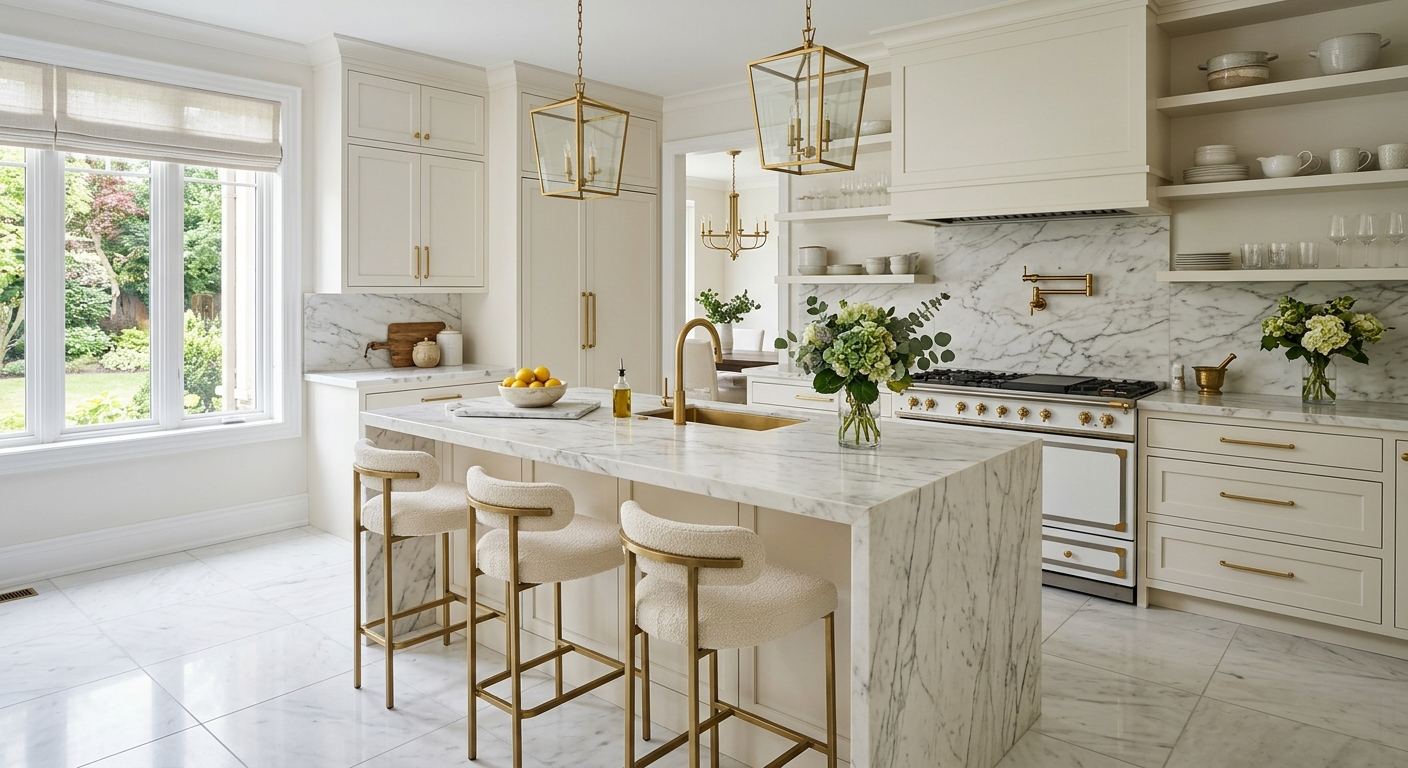
Kitchen renovation options and costs in Medicine Hat
Medicine Hat homeowners usually shop for kitchen renovations based on how long they plan to stay in their home and how the upgrade will read at resale—especially in a community where 70.9% of homeowner households own their homes (Statistics Canada, 2021 Census). With a median household income of $78,000 (Statistics Canada, 2021 Census), many projects land in the mid-range finish tiers rather than purely budget updates. That aligns well with the Lethbridge–Medicine Hat market context: higher expectations in busier resale pocket areas often push buyers toward semi-custom cabinetry and quartz or natural stone, while more value-conscious homeowners still choose stock or semi-custom cabinets with laminate or entry-level quartz to stay within budget.
Climate also plays a role, but it’s more “knock-on effects” than direct cost. In Southern Alberta winters and dry shoulder seasons, humidity swings can stress older caulking, drawer slides and some cabinet joints; that’s why proper ventilation, shimming, and quality installation matter. Older housing is common here—48.4% of homes were built before 1981 (Statistics Canada, 2021 Census)—so many jobs include hidden surprises like uneven subfloors, dated electrical, or drain routing that affects cabinet base sizing and countertop templating. Contractor availability is strongest for full renovations around central demand pockets such as the River Flats and downtown-adjacent neighbourhoods, where trade scheduling and delivery staging tends to be smoother.
Use the price bands below to compare your renovation path, then match the tier to the level of finish you want and the layout changes you’re willing to fund.
| Renovation Tier |
What's Included |
Typical Duration |
Price Range |
| Cosmetic refresh (paint, hardware, new appliances only) |
Cabinet paint or refinish (no new boxes), hardware swap, new appliance install, touch-up flooring/trim as needed |
3–7 days |
$5,000–$12,000 |
| Mid-range full renovation (new cabinets, counters, sink, tile) |
New cabinet boxes (stock to semi-custom), new countertops, sink + faucet, backsplash tile, minor plumbing adjustments, basic lighting checks |
3–6 weeks |
$25,000–$45,000 |
| High-end full renovation (custom cabinets, stone counters, island) |
Fully custom millwork, stone counters (granite/stone), island with seating, upgraded backsplash, more complex electrical/plumbing coordination, flooring replacement or upgrades |
6–10 weeks |
$50,000–$70,000+ |
| Cabinet refacing only (new doors + drawer fronts, same boxes) |
New door/drawer fronts, veneer or wrap material, adjusted hardware, repaint where boxes allow, limited countertop/backsplash work if needed |
1–3 weeks |
$8,000–$18,000 |
| Countertop swap only (laminate to quartz or stone) |
Remove old counters, template and install new quartz/stone, cut-outs for sink and cooktop, basic sealing/finishing |
2–5 days (plus template time) |
$2,500–$12,000 |
| Backsplash tile installation only |
Surface prep, tile install, grout/seal, trim/silicone detail, cleanup |
3–7 days |
$2,000–$8,000 |
Prices are estimates only and vary by project scope, site access and material selection.
What affects the price of kitchen renovation in Medicine Hat
In Medicine Hat (and across the Lethbridge–Medicine Hat economic region), it’s common to see quotes for the “same” kitchen come in 30–50% apart, even when the square footage is similar. The biggest driver isn’t climate—it’s what homeowners in your local resale range typically expect to see: finish tier, cabinet style, and countertop quality. Where the market supports higher-value resale expectations, owners are more likely to choose quartz or natural stone and semi-custom cabinetry, because the spend can be recovered more easily on resale. In more modest pockets, laminate and stock cabinets often win for ROI, while still delivering a modern look.
Layout changes also inject uncertainty regardless of finish level. Removing a wall, adding an island, or moving a gas line can add labour, coordination time and permit steps that don’t show up when the work stays “in place.” As a rule, cabinet and countertop changes alone might sit closer to the $20,000–$50,000+ band, but once you start relocating plumbing or upgrading electrical for an island, budgets can jump toward the upper tier.
Here are concrete Medicine Hat examples we see often: (1) Older homes built before 1981 (Statistics Canada, 2021 Census) frequently have out-of-level floors, so cabinet base shimming and longer leveling time can add cost before anyone touches finishes. (2) Dry seasonal air can expose small gaps around older window sills and wall edges; if the wall prep is rushed, tiles or backsplashes may require rework—usually at the contractor’s expense if it wasn’t properly assessed. (3) If you’re upgrading from builder-grade laminate to quartz, costs also shift with overhangs, cut-outs for undermount sinks and the complexity of the backsplash transition.
That’s why we compare your plan against the relevant bands—mid-range upgrades near $25,000–$45,000 and high-end projects at $50,000–$70,000+—and confirm which parts of your scope are “moving” versus “swapping.”
| Price Factor |
Why It Matters |
Cost Impact |
| Cabinet tier — stock vs. semi-custom vs. fully custom millwork |
Higher tiers increase material cost, build accuracy, and options like soft-close, height variations, and internal organizers |
Can swing the total project by $8,000–$25,000 |
| Countertop material — laminate vs. quartz vs. granite vs. stone |
Stone fabrication, edge profiles, and templating complexity vary; heavy stones also affect logistics and install time |
Often adds $2,500–$15,000 depending on material and size |
| Layout change — wall removal, island add, plumbing/gas move |
Structural, permit and trade coordination increases risk and time; plumbing/gas relocation is the least predictable |
Can add $5,000–$20,000+ even before finishing upgrades |
| Appliance package tier — builder vs. mid-range vs. pro-grade |
Pro-grade appliances raise supply cost and may require extra venting, power specs, and cabinet modifications |
Typically shifts $1,500–$8,000+ |
| Flooring — refinish existing vs. full replacement |
Cabinet removal exposes subfloor condition; replacement extends drying/installation lead times |
Can add $2,000–$10,000+ |
| Backsplash — ceramic tile vs. marble vs. full-height slab |
Material and detailing (wainscot height, niches, and slab joints) drive labour and risk of rework |
Commonly $2,000–$8,000, with slab upsizing higher |
| Electrical — new circuits for island, under-cabinet lighting |
New circuits require licensed work, inspections, and coordination with cabinet install timing |
Often $800–$3,500+ depending on changes |
| Permit fees and licensed trade requirements |
When plumbing, gas or electrical changes are involved, inspections and scheduling add direct costs |
May add $300–$2,500+ plus scheduling impacts |
Permits & regulations in Alberta
In Alberta, swapping out cabinets and countertops typically does not require a building permit because you’re not altering the building systems. However, permits and licensed trades usually come into play when you change plumbing, gas, structural elements, or add electrical circuits. For a Medicine Hat kitchen renovation, the clearest dividing line is: “in-place cosmetic work” is usually straightforward, while “system changes” are not.
Examples of work that generally does NOT require a permit: replacing countertops with the same sink/cooktop locations, installing a new backsplash, painting cabinets, replacing cabinet boxes where no plumbing or wiring routes change, and swapping electrical fixtures only where no new circuits are created. Work that generally DOES require permits and licensed trades includes: moving plumbing supply lines or drain lines (even within the sink footprint), relocating or modifying gas connections for a stove or range area, removing or altering a load-bearing wall, and adding new electrical circuits for island receptacles, under-cabinet lighting hookups (when they require new wiring), or substantial rewiring. Gas work must be performed by a licensed gas fitter, and electrical work by a licensed electrician, with inspections completed as required.
Step-by-step verification: (1) Ask for the contractor’s licence info (where applicable by trade) and confirm certificate details before work starts. (2) Request a current certificate of insurance naming you/your property appropriately, and verify coverage stays active during the job. (3) Ask for proof of WCB/WSIB-style coverage documentation for workers and subtrades—then check that it matches the scope. (4) Confirm in writing who pulls the permit(s) and who is responsible if inspection delays occur—this belongs in the contract before you pay large deposits.
Cabinets, countertops and layout decisions in Medicine Hat
The three most consequential decisions in a Medicine Hat kitchen renovation are cabinet tier, countertop material, and layout changes—because those choices strongly affect both daily usability and resale expectations in the Lethbridge–Medicine Hat market. Cabinetwork sets the “frame” of the room: stock cabinets are the fastest and cheapest, semi-custom is the most common sweet spot, and custom millwork delivers the best fit when you have unusual wall angles or want specific storage layouts. Countertops are the visual anchor and the hardest surface to “hide” if you choose the wrong material for a busy household.
Durability and maintenance matter more in Southern Alberta than people expect. Quartz engineered counters resist staining and are generally low-maintenance for everyday cooking, while natural stone like granite can be excellent but may require periodic sealing depending on the stone and finish. Laminate is budget-friendly and still looks sharp, but seams and edge wear can show faster in high-use kitchens. Layout changes—especially opening up space for an island or relocating plumbing/gas—are where costs rise unpredictably, but they can be justified when the improvement is real: better traffic flow, more seating, or improved workspace ergonomics.
Example: If you’re comparing a mid-range full renovation near $25,000–$45,000 with and without a modest island, keeping plumbing in the current sink zone might keep you in that band. But if you relocate plumbing and add an island with power outlets and venting coordination, you can quickly drift toward the $50,000–$70,000+ high-end range, even before you upgrade finishes.
For homes built before 1981 (48.4% in the area, Statistics Canada, 2021 Census), careful measurement and floor/ wall correction also help your cabinets sit correctly—preventing tile cracking at backsplash transitions and avoiding countertop stress later.
| Option |
Durability |
Maintenance |
Best For |
Price Range |
| Stock cabinets (big-box) |
Good for everyday use; hinges and alignment depend on installer quality |
Low; clean and tighten hardware occasionally |
Budget-focused remodels with straightforward wall lines |
$5,000–$15,000 |
| Semi-custom cabinets (local dealer) |
Very solid; better internal options and more flexible sizing |
Low; soft-close hardware typically reduces wear |
Most Medicine Hat renovations targeting strong value and resale appeal |
$12,000–$28,000 |
| Custom cabinets (local millwork shop) |
Excellent fit and strength; tailored storage for your exact layout |
Low; built for longevity with quality components |
Complex spaces, specialty storage, or a high-end “built-in” look |
$25,000–$45,000+ |
| Laminate countertop |
Moderate; edges and seams can wear with heavy cutting |
Easy; avoid prolonged standing water at seams |
Cost-controlled upgrades that still modernize the look |
$2,500–$6,000 |
| Quartz engineered countertop |
High; resists staining and daily wear well |
Low; wipe clean, use gentle cleaners |
Busy households wanting a “set it and forget it” surface |
$6,000–$12,000 |
| Granite / natural stone countertop |
High; very durable but varies by stone and finish |
Moderate; sealing and careful handling recommended |
Upscale looks when you want natural variation and premium edges |
$8,000–$16,000+ |
| Butcher block countertop |
Good; can scratch but is repairable with refinishing |
Higher; needs periodic oiling |
Family kitchens where warmth matters and you’ll maintain it |
$5,000–$10,000 |
| Marble countertop |
Good; can etch with acids and heat—great look, requires care |
Higher; sealing and cautious cleaning needed |
Design-forward kitchens prioritizing appearance over toughness |
$10,000–$20,000+ |
How to choose a kitchen renovation contractor in Medicine Hat
Choosing the right contractor in Medicine Hat comes down to proof: licensing/coverage, clear scope, and a realistic schedule that respects lead times for cabinets and countertops. First verify Alberta coverage and trade legitimacy. Ask your contractor for documentation of liability insurance and worker coverage (WCB/WSIB-style coverage), and confirm who the licensed trades are for gas and electrical work when your scope includes those changes. To check: (1) request certificates of insurance and ensure the coverage is current and appropriate for the job period; (2) ask for WCB/WSIB-style clearance documentation and verify it covers the workers/subtrades who will be on site; (3) for any work involving gas or electrical, confirm the licensed contractor details for those trades and request evidence of current credentials; (4) if you’re working through a permit-required path, ensure the contractor explains who is pulling permits and what inspections are expected.
Next, get 2–3 itemised written quotes—not a single “all-in” number. A proper kitchen quote breaks labour and materials out separately and shows inclusions and exclusions: demo, hauling/disposal, cabinet install, countertop templating timing, backsplash substrate prep, and whether electrical/plumbing permits are included. Warranty matters too: confirm the workmanship warranty length and whether product warranties are directly from the manufacturer and transferable to you.
Payment schedule should protect you. Never pay more than 10–15% upfront; a reasonable holdback is released after the job is complete and deficiencies are corrected. Finally, require a start date and completion estimate in writing—kitchen timelines often depend on cabinet delivery and countertop templating, and the contractor should plan for that.
- Ask for licence/coverage documents before signing (liability insurance + worker coverage).
- Ensure gas and electrical work is assigned to the appropriate licensed trades.
- Require itemised quotes (labour vs materials) with unit allowances where needed.
- Confirm who pulls permits and what inspection fees are included.
- Verify disposal/hauling is included for demo materials.
- Get a detailed inclusions list for backsplash prep and substrate waterproofing.
- Confirm countertop templating dates and who coordinates sink/cooktop cut-outs.
- Ask how they handle out-of-level floors common in older Medicine Hat homes.
- Review warranty: workmanship coverage length and exclusions.
- Confirm warranty claims process and whether it’s honoured in Alberta.
- Check payment milestones against actual completion stages (no big final payment early).
- Get a written timeline with contingency for material delays.
Red flags in Medicine Hat include: (1) vague “we’ll figure it out later” scopes, (2) lump-sum quotes with no allowance for countertop templating changes or flooring prep, (3) asking for more than 15% upfront without a signed, detailed agreement, (4) no clear answer on who is responsible for permits/inspections, and (5) warranty terms that only cover “materials” but not workmanship.
Frequently asked questions — kitchen renovation in Medicine Hat
What's the most popular kitchen style in Medicine Hat right now?
In Medicine Hat, the most requested look is a clean, modern transitional style: shaker-style or flat-panel cabinet doors in warm whites, soft greys, and two-tone combinations (for example, lighter uppers with a deeper lower cabinet colour). Buyers commonly pair that with quartz countertops and a simple, practical backsplash (subway or large-format ceramic) because it’s easy to maintain in daily cooking. On budgets, a mid-range full renovation often lands around $25,000–$45,000, which is where semi-custom cabinets and mid-grade quartz are typical. In older homes built before 1981, homeowners also like styles that mask uneven wall conditions—cabinet installation quality and shimming become part of the “look” at the end.
How do I know if I need to update my kitchen plumbing in Medicine Hat?
You don’t always need a full plumbing replacement, but you should plan for updates if your kitchen has slow drains, inconsistent hot water at the sink, visible leaks under the sink, or frequent garbage disposal or faucet issues. Medicine Hat’s older housing stock matters too—many homes were built before 1981 (Statistics Canada, 2021 Census), and outdated supply lines or drain layouts can complicate new cabinet base sizing. If you’re moving the sink location or adding an island with a new sink, plumbing changes are almost guaranteed and that’s where costs climb. A contractor should inspect shutoffs, trap conditions, venting basics, and provide a clear allowance in the quote for minor repairs versus full line replacement.
What is the difference between a galley and open-concept kitchen?
A galley kitchen is a corridor-style layout with counters on two opposing walls; it’s efficient for cooking but can feel tight for socializing. An open-concept kitchen removes barriers between kitchen and living areas, which usually means a different traffic pattern, different lighting needs, and sometimes structural work if walls are involved. In Medicine Hat, homeowners often start with a galley or closed layout and then consider opening it up for resale appeal, especially when families want an island for seating. Cost wise, keeping services in place typically sits in the mid-range, but wall removal, plumbing/gas coordination and new electrical for island receptacles can push projects toward the higher bands (for example, into the $50,000–$70,000+ tier depending on scope).
How do I get accurate kitchen renovation quotes in Medicine Hat?
Accurate quotes come from scope clarity and site measurement. Ask for 2–3 itemised written quotes that separate labour from materials and include line items for demo, cabinet install, countertop templating, backsplash prep and disposal/hauling. Ensure the quote states what’s excluded—like changes due to out-of-level floors, electrical upgrades, or countertop cut-out adjustments. In Alberta, confirm who is responsible for permits when you’re moving plumbing supply/drain lines, relocating gas, adding electrical circuits, or removing a load-bearing wall. Also ask for a timeline that reflects lead times; cabinets and countertops are often the pacing items. With a good quote, you can compare like-for-like within the same $20,000–$50,000+ planning band and avoid surprises.
What's the best countertop material for a busy Medicine Hat kitchen?
For most busy households in Medicine Hat, quartz is a top choice because it handles daily cooking well with minimal maintenance. It resists staining and doesn’t require the same sealing routine as many natural stones. If you want a more budget-friendly upgrade, laminate can modernize the look at a lower upfront cost, but seams and edges may show wear faster in high-traffic kitchens. Natural stone like granite is durable and beautiful, but maintenance depends on the specific stone finish and sealing schedule. Your “best” option also depends on how often you cook and how you cut food—if you frequently cut directly on counters, quartz is generally more forgiving than marble. Budget-wise, a countertop-only swap often fits within $2,500–$12,000, while full high-end stone projects typically move you toward the upper renovation tiers.
How do I add an island to my Medicine Hat kitchen?
Adding an island is less about the cabinet itself and more about services and layout. First, confirm where the island will sit relative to existing plumbing, venting, and electrical pathways. If the island will include a sink or dishwasher, you’ll need plumbing changes—likely requiring permits and licensed work. If you want power outlets or under-cabinet lighting, plan for electrical circuits, which also require licensed electrical installation and inspections in Alberta. In older Medicine Hat homes (many built before 1981), subfloor conditions can affect cabinet base stability, so expect leveling and careful anchoring. Cost-wise, an island can keep you closer to mid-range if plumbing stays in place, but adding new services often pushes projects upward—commonly into the $50,000–$70,000+ band for full kitchen scopes.