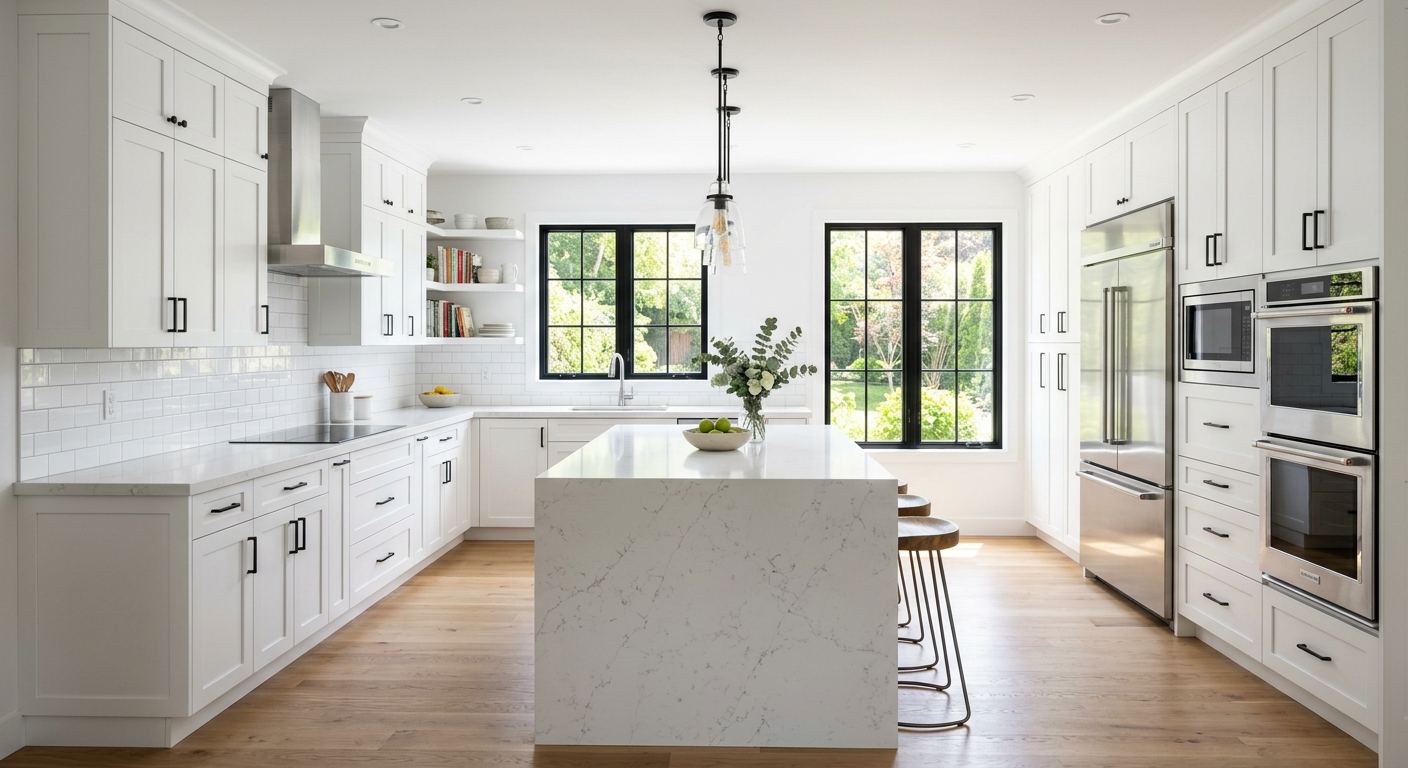
Kitchen renovation options and costs in Bon Accord
Bon Accord kitchens are usually renovated in two waves: homeowners refresh what they see first, then upgrade the systems and finishes when they’re ready to invest. With a median household income of $102,000 (Statistics Canada, 2021 Census), many households can comfortably move beyond “paint-and-appliances,” especially in Edmonton’s economic region where renovation budgets track closely with what homes can resell for. At the same time, Bon Accord’s housing mix matters—about 63.1% of homes were built before 1981 (Statistics Canada, 2021 Census), so you’ll often see older plumbing layouts, dated electrical, and cabinets that may not be level or square without rework.
In this part of Alberta, the biggest cost swings don’t come from winter weather as much as they do from market expectations and labour availability. Edmonton-area shoppers often prefer durable surfaces and cleaner lines—quartz, tiled floors, and updated lighting—so a “mid-range” job tends to land in the mid–upper five-figures rather than the low end. If you’re doing meaningful layout work (like adding an island or moving a gas appliance), your cost also depends on whether trades can access materials and schedule demolition, plumbing, and electrical in a tight sequence.
In Bon Accord, trades tend to stay busiest around the older residential core and the established neighbourhoods where many homes are 40+ years old—these jobs often require extra prep before new cabinets and countertops can sit correctly. Use the tiers below to line up your priorities and budget before you compare contractor quotes.
| Renovation Tier |
What's Included |
Typical Duration |
Price Range |
| Cosmetic refresh (paint, hardware, new appliances only) |
Cabinet paint or stain touch-up, new pulls/hinges, updated lighting fixtures (no rewiring), new fridge/range/dishwasher (if replacing like-for-like), basic caulking and trim |
3–7 days |
$8,000–$18,000 |
| Mid-range full renovation (new cabinets, counters, sink, tile) |
Semi-custom or quality stock cabinets, quartz counters, sink and faucet, tile backsplash, LVP or tile flooring, new under-cabinet lighting, plumbing refresh (no major relocation), disposal and trim finish |
3–5 weeks |
$25,000–$55,000 |
| High-end full renovation (custom cabinets, stone counters, island) |
Custom cabinetry, granite or upgraded stone counters, island with proper electrical/plumbing routing (where applicable), pro-grade lighting, full-height backsplash or feature wall, premium flooring and finishes |
6–10 weeks |
$60,000–$90,000 |
| Cabinet refacing only (new doors + drawer fronts, same boxes) |
Door/drawer replacement, new hardware, new toe-kicks, re-sealing and alignment, backsplash patch-in as needed, countertop can be included only if scope states |
2–4 weeks |
$8,000–$25,000 |
| Countertop swap only (laminate to quartz or stone) |
Remove laminate/old surface, install quartz/stone, new sink cut-out (if same footprint), basic edging update, re-caulk and polish, disposal connection as needed |
3–7 days |
$6,000–$20,000 |
| Backsplash tile installation only |
Remove old backsplash (light demo), prep and waterproofing where required, install ceramic tile, grout and seal, caulking to cabinets and countertops |
4–8 days |
$2,000–$8,000 |
Prices are estimates only and vary by project scope, site access and material selection.
What affects the price of kitchen renovation in Bon Accord
Two contractors can price the “same” kitchen renovation in Bon Accord and still be 30–50% apart because their assumptions differ—especially around cabinet tier, electrical/plumbing routing, and how much demolition reveals. In Edmonton and the wider Alberta market, homeowner expectations usually correlate more strongly with local home values and income than with climate alone. Even in a cold-weather province, winter doesn’t automatically raise costs; what changes costs is that many older kitchens (and about 63.1% of homes in the area were built before 1981) often hide out-of-level framing, older subflooring, and wiring upgrades needed for modern lighting and appliance loads.
In higher-value Edmonton-area pockets, homeowners more often select quartz or stone counters and semi-custom cabinetry because the upgrade costs are easier to recover on resale. In more cost-sensitive scenarios, laminate or stock cabinets with minimal layout change dominate to keep the project within a controlled range—think $25,000–$55,000 for a mid-range full renovation rather than $60,000–$90,000 when you add custom millwork or an island.
Concrete examples from Bon Accord pricing: (1) moving a sink 6–10 feet usually triggers both drain and supply work, which is typically where budgets jump even if finishes stay the same; (2) adding under-cabinet lighting can require new circuits and careful patching of ceilings or soffits; (3) kitchens with older venting or limited chase space can cost more when we need to re-route a range hood vent properly. If you’re also upgrading flooring, subfloor conditions can shift labour up or down quickly depending on how flat the surface is.
| Price Factor |
Why It Matters |
Cost Impact |
| Cabinet tier — stock vs. semi-custom vs. fully custom millwork |
Materials, build tolerances, interior storage options, and install time rise sharply from stock to custom |
Typically +$8,000 to +$30,000 depending on scope |
| Countertop material — laminate vs. quartz vs. granite vs. stone |
Material cost and fabrication/templating vary; some stones require more edge profiles and longer lead times |
Laminate-to-quartz often adds about +$2,500 to +$7,500; stone can add more |
| Layout change — wall removal, island add, plumbing/gas move |
Structural and route changes drive demo, permits, and trade coordination risk |
Frequently the biggest unpredictable line item: +$5,000 to +$25,000 |
| Appliance package tier — builder vs. mid-range vs. pro-grade |
Higher tiers add ventilation requirements, electrical needs, and premium installation details |
May swing +$2,000 to +$10,000+ |
| Flooring — refinish existing vs. full replacement |
Older floors may need subfloor prep; full replacement adds removal, disposal and underlayment |
Often +$1,500 to +$8,000 |
| Backsplash — ceramic tile vs. marble vs. full-height slab |
Complexity, waterproofing, pattern matching, and finish type increase labour and material |
Typically +$1,000 to +$5,000 |
| Electrical — new circuits for island, under-cabinet lighting |
New circuits add licensed electrician labour, potential panel work, and inspection steps |
Often +$1,500 to +$6,500 |
| Permit fees and licensed trade requirements |
Required permits and inspection scheduling affect both cost and timeline |
Commonly +$500 to +$3,000+ |
Permits & regulations in Alberta
In Alberta, swapping cabinets and countertops by themselves typically does not require a permit, especially when you’re keeping plumbing and electrical in the same locations. However, permits and licensed trades become essential when the project touches the building’s systems—moving plumbing supply or drain lines, relocating gas appliances (for example, the stove), removing a load-bearing wall, or adding new electrical circuits (like for an island or under-cabinet lighting that requires new wiring). Gas work must be performed by a licensed gas fitter, and electrical work by a licensed electrician, both with required inspections.
For a homeowner in Bon Accord, the simplest way to verify compliance is to make the contractor provide three things before work starts: (1) who is pulling permits (and for what scope), (2) proof of relevant trade licences, and (3) proof of insurance and workers’ coverage. Then, ask for the contractor’s insurance certificate of liability and their WSIB/WCB clearance letter (or documentation consistent with provincial coverage rules) so you know you’re protected if something goes wrong.
Step-by-step: request the contractor’s licence information, then confirm it using the appropriate online registry for Alberta trades; verify the certificate of insurance has the correct business name and active coverage dates; and check WSIB/WCB clearance documentation before demolition. Finally, keep permit responsibility in writing—don’t assume it’s included. If you’re unsure, have the contractor break the scope into “no-permit” vs “permit required” items in your quote.
Cabinets, countertops and layout decisions in Bon Accord
The three biggest decisions in a Bon Accord kitchen renovation are cabinet tier, countertop material, and whether you’ll change the layout. Cabinet tier affects price and how “custom” the kitchen feels day-to-day: stock cabinets go in fastest and keep budgets tight, semi-custom is the most common mid-range choice because it balances storage and cost, and fully custom millwork costs the most but can correct awkward older dimensions found in pre-1981 homes. Countertop choice affects both durability and maintenance: laminate is budget-friendly and repairable for small chips, quartz is a strong all-around option for busy households, and granite/stone brings natural variation and higher-end appeal. Butcher block can warm a kitchen’s look—just plan for sealing and mindful care around moisture and hot pans.
Layout changes are where you justify spend. Open-concept wall removal or adding an island can be worth it when it improves circulation and creates functional zones for cooking and family life. Yet moving a sink, relocating a gas appliance, or rerouting plumbing/gas is the portion of the budget that can grow quickly—labour coordination plus inspection steps add both cost and schedule pressure. In Edmonton-area resale expectations, many buyers at the mid-range level expect quartz counters and updated lighting, while higher-price buyers more often look for custom cabinetry details and statement stone work. That’s why a mid-range full renovation typically targets $25,000–$55,000, while a high-end renovation with custom millwork and an island commonly pushes into $60,000–$90,000.
Example: if your plan includes upgrading from laminate to quartz and keeping the layout, you might see a reasonable step-up in durability without the biggest system changes. But if you also move the sink and add a new circuit for an island, the added plumbing/electrical scope can make the “upgrade” feel less affordable—even when the cabinet and counter choices are otherwise similar.
| Option |
Durability |
Maintenance |
Best For |
Price Range |
| Stock cabinets (big-box) |
Solid for normal household use; may be less forgiving with out-of-square walls |
Low—handle cleaning and routine hardware tightening |
Fast schedules and tight budgets; straightforward layouts |
$8,000–$18,000 |
| Semi-custom cabinets (local dealer) |
Good strength and better sizing options for uneven spaces |
Low to moderate—regular cleaning, occasional hinge/hardware adjustment |
Most homeowners aiming for durable, resale-friendly storage |
$15,000–$30,000 |
| Custom cabinets (local millwork shop) |
Highest build fit; best for unique dimensions and premium finishes |
Low—focus on keeping hardware aligned and counters protected |
Design-specific upgrades and “one-of-a-kind” kitchens |
$30,000–$55,000 |
| Laminate countertop |
Practical for everyday cooking; can chip at edges if heavy impacts occur |
Wipe-clean; avoid standing water at seams |
Value-first renovations where layout changes are limited |
$2,500–$6,000 |
| Quartz engineered countertop |
Very durable; resists stains and daily wear well |
Low—normal cleaning, protect against extreme heat |
Busy households and buyers who expect a modern, maintenance-light surface |
$6,000–$12,000 |
| Granite / natural stone countertop |
Extremely durable; natural character and edge options |
Moderate—periodic sealing depending on the stone |
Premium look for higher-tier renovations |
$8,000–$14,000 |
| Butcher block countertop |
Durable with care; surface wear is part of its character |
Higher—regular oiling and prompt drying |
Warm, traditional kitchens where owners enjoy maintenance |
$4,000–$9,000 |
| Marble countertop |
Beautiful but more sensitive to etching and staining than quartz |
Higher—requires careful cleaning, sealing and stain prevention |
Statement kitchens for lower wear patterns and premium upkeep |
$10,000–$18,000 |
How to choose a kitchen renovation contractor in Bon Accord
Choosing the right contractor in Bon Accord starts with proof. Ask for their Alberta trade licence details where applicable, then verify them using the relevant online registry and ensure the company name matches the quote. Request a certificate of liability insurance (active coverage, correct legal name, and sufficient limits). Also confirm WSIB/WCB coverage with a clearance letter or equivalent documentation—this matters for your protection if a worker is injured on site. Don’t accept “we’ll take care of it” answers; ask for documents.
Next, get 2–3 itemised written quotes that separate labour and materials rather than one lump sum. The scope should show what’s included (cabinet supply, cabinet install, countertop templating and install, disposal/trim, flooring prep, backsplash prep, lighting allowances). Check whether permits are included and who is responsible for them, and confirm disposal and dump fees are in the price if demo is required. For warranties, ask for both workmanship warranty length and product/manufacturer warranty details, and whether warranties transfer to you if you sell the home.
Finally, use a sensible payment schedule: don’t pay more than about 10–15% upfront, and hold back a meaningful portion until completion items are verified. Get a start date and completion estimate in writing, and confirm material lead times so you’re not waiting on cabinets or stone after demolition.
- Confirm licence(s) and trades involved for gas and electrical work before signing.
- Verify liability insurance certificate and active coverage dates.
- Request WSIB/WCB clearance letter before work begins.
- Get itemised quotes: labour line items, material allowances, and disposal/dump fees.
- Ensure the scope states whether permits are included and who pulls them.
- Check exclusions: drywall repairs, subfloor leveling, tile underlayment, and backsplash patching.
- Ask who supplies and installs appliances and whether rough-in requirements are included.
- Confirm countertop templating timing and what happens if measurements differ.
- Request a project schedule with milestones (demo, rough-in, install, finish).
- Require a written warranty for workmanship and a separate manufacturer warranty summary.
- Use a conservative payment schedule (10–15% max upfront; holdback for punch-list).
- Inspect the contract for change-order rules and how price differences are documented.
Red flags in Bon Accord kitchens include: vague “all-in” pricing without allowances or exclusions; no proof of insurance/WSIB/WCB before kickoff; skipping written timelines; changing terms midstream without formal change orders; and promising “no permits required” when you’re moving plumbing, relocating a gas range, adding circuits, or opening walls.
Frequently asked questions — kitchen renovation in Bon Accord
Can I move my kitchen sink or stove?
In Bon Accord, you can often move a kitchen sink or stove, but whether it changes cost and paperwork depends on how far and what’s behind the walls. Moving a sink usually means drain and water supply adjustments, which typically triggers licensed plumbing work and may require permits—especially if you’re altering the way waste lines run. Moving a stove is even more sensitive: if it’s a gas range, gas relocation must be completed by a licensed gas fitter, and inspections will apply. If you’re trying to keep budget close to the mid-range band, aim for minimal relocation—many homeowners can stay within the $25,000–$55,000 range by refreshing cabinets/counters and keeping rough-in positions, then only doing modest plumbing touch-ups.
What's the most cost-effective kitchen upgrade?
For most Bon Accord homeowners, the most cost-effective upgrade is updating what you see daily while avoiding major demolition and system moves. In practice, that often means either a cabinet refresh (paint + new hardware, or refacing if your boxes are still solid) or a countertop swap only. For example, backsplash tile installation only can be one of the quickest visual improvements and typically lands around $2,000–$8,000. If your cabinets are dated but structurally fine, cabinet refacing can give a “new kitchen” look without the full tear-out. If the layout and plumbing are already serviceable, a countertop installation—like moving from laminate to quartz—can also deliver a high impact per dollar, often fitting within the broader countertop-only bands noted in Edmonton-area quotes (and then you can reserve the bigger spend for later).
Custom vs stock cabinets — is custom worth it?
Custom cabinets can be worth it in Bon Accord when your kitchen has awkward dimensions, you want specific storage solutions (pantries, appliance garages, pull-outs), or you want a perfect fit around older framing. That said, most homeowners choose semi-custom because it balances fit and cost. If you’re working with a budget that’s closer to the $25,000–$55,000 full-renovation tier, stock or semi-custom is usually the most realistic path—especially in kitchens built before 1981 where walls can be slightly out of square. Custom millwork often pushes total budgets toward the $60,000–$90,000 range, particularly when combined with stone counters and an island. The best approach is to price custom for the one “hero” run (like a pantry wall or island) and keep the rest semi-custom if you want the look without overextending the project.
How do I choose a kitchen contractor in Bon Accord?
Start with documentation. In Alberta, ask for the contractor’s Alberta licence details where relevant, their liability insurance certificate, and their WSIB/WCB clearance letter. Then verify the licence using the online registry and ensure the certificate of insurance is in the contractor’s legal name and active for the project dates. Get 2–3 itemised written quotes so you can compare labour, material allowances, permit responsibility, and disposal. In Bon Accord, scope clarity matters because older homes can require extra prep—like leveling cabinets for uneven subfloors or updating wiring for new lighting. Red flags include lump-sum quotes without exclusions, no written timeline, and no explanation of what triggers permits. A reliable contractor will walk you through the sequence, confirm warranty terms, and put change-order rules in writing.
What order do kitchen renovation steps happen in?
A typical order in Bon Accord is: design/measurements and material confirmation first, then demolition and site protection. After demo, trades do rough-ins (electrical and plumbing updates as needed) before drywall/patching and insulation repairs. Next comes flooring prep and install, followed by cabinet install (with careful shimming and alignment). Counters are templated only after cabinets are set, then countertop fabrication and install happens before final caulking and sealing. After that, you complete backsplash tile, install appliances, and finish with trim, lighting, and final adjustments. If permits and inspections are required (for gas, electrical circuits, or structural changes), inspections typically occur between rough-in and close-up stages. Keeping this sequence tight is what prevents delays when your cabinets and counters arrive on schedule.
Can I live at home during a kitchen renovation in Bon Accord?
Often yes, but it depends on the scope and whether you’re doing demolition plus plumbing/gas/electrical changes. A cosmetic refresh or backsplash-only project can usually be completed with minimal disruption, and you may keep a functional kitchenette. For mid-range full renovations, many homeowners can stay home by setting up a temporary prep area (microwave, kettle, small fridge) while cabinets and counters are installed. However, if you’re relocating the sink or stove, adding circuits, or opening walls, expect the kitchen to be non-functional during key rough-in and inspection windows. Good contractors coordinate dust control, protect floors, and create a clear schedule so you’re not without basic services longer than necessary. If you’re budgeting within $25,000–$55,000, plan for a few “heavy demo” days where living arrangements need to be flexible.