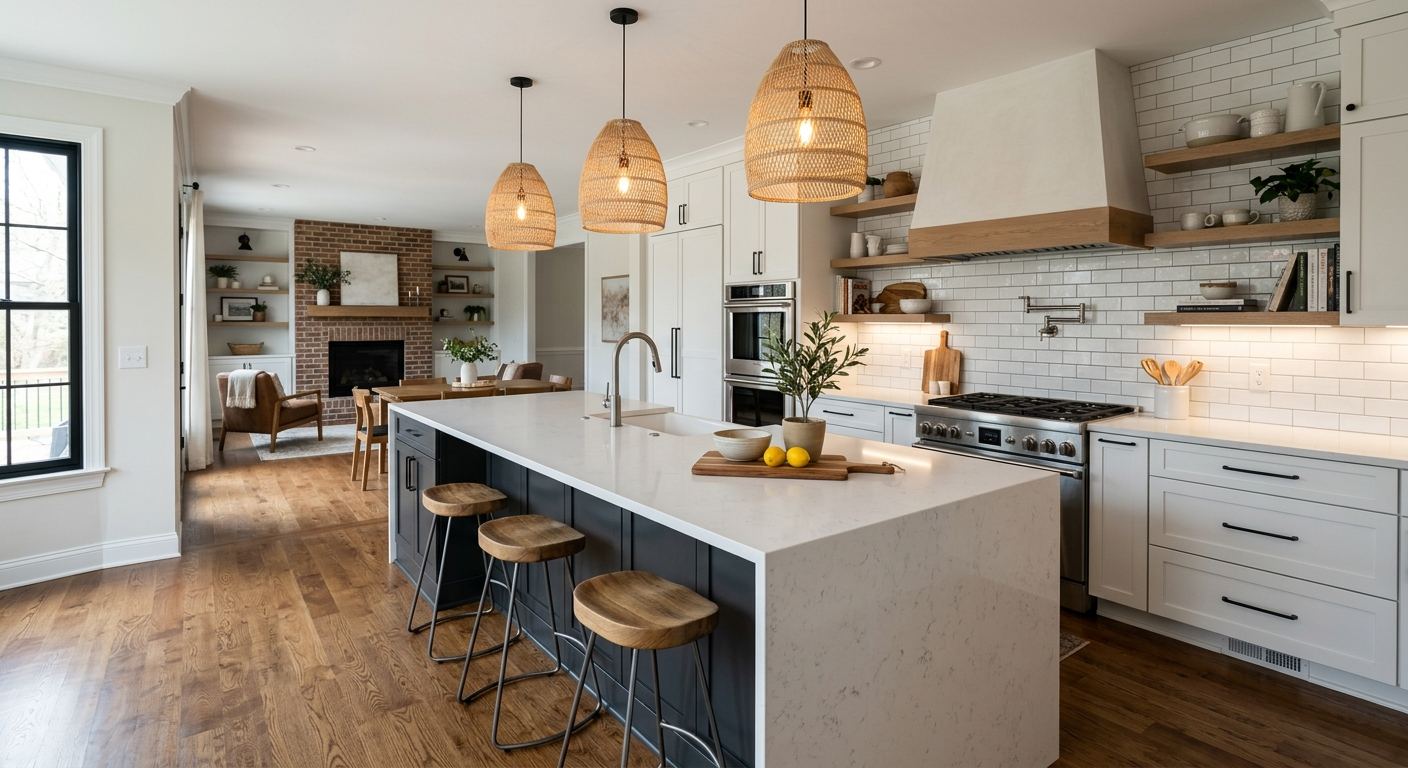
Kitchen renovation options and costs in Riverdale
In Riverdale, Alberta, homeowners usually start by choosing how “big” the renovation should be—because that decision drives everything from labour hours to material pricing. With only 2,004 residents in Riverdale (Statistics Canada, 2021 Census), many projects are planned with Calgary trades, and that tends to concentrate demand in certain neighbourhood pockets where homeowners are upgrading resale-ready finishes. Also, the Calgary economic region’s demand for durable, modern kitchens is shaped by buyer expectations tied to household purchasing power; in the wider area, residents often prioritise finishes that hold value when homes change hands (Statistics Canada, 2021 Census). That’s why, even when the scope is modest, many quotes land at a mid-range tier once you include solid-surface counters and upgraded cabinetry hardware.
Alberta’s winter conditions don’t directly dictate material prices the way market demand does, but they can affect timing and site readiness. Cold snaps can slow down drying times for paint and some adhesives, and winter site access can extend scheduling if snow removal and protection planning are needed. In Calgary’s strong construction market, skilled labour availability and scheduling efficiency also influence costs; trades often price higher for tight timelines. If you’re working around older housing stock common to established inner-city areas near downtown Calgary-adjacent corridors, expect more time for electrical make-up, subfloor inspection, and plumbing updates.
For Riverdale homeowners, kitchen trade demand is especially noticeable when neighbours in the newer infill pockets and mature bungalow streets plan spring and early-summer upgrades. From there, the next step is comparing typical renovation tiers and what each usually includes.
| Renovation Tier |
What's Included |
Typical Duration |
Price Range |
| Cosmetic refresh (paint, hardware, new appliances only) |
Cabinet paint or touch-ups, new hardware, minor trim/caulking, appliance swap, disposal allowance |
3–7 days |
$6,000–$18,000 |
| Mid-range full renovation (new cabinets, counters, sink, tile) |
Semi-custom or quality stock cabinets, laminate or quartz counters, sink/faucet, backsplash tile, labour for plumbing/electrical set-up as needed |
2–4 weeks |
$25,000–$60,000 |
| High-end full renovation (custom cabinets, stone counters, island) |
Custom millwork, natural stone (granite/marble or premium slab), island with upgraded lighting, full-height feature backsplash options, upgraded appliance package |
4–8 weeks |
$65,000–$100,000 |
| Cabinet refacing only (new doors + drawer fronts, same boxes) |
Refacing system, new hardware, internal reconfiguration where feasible, paint-ready prep, optional new countertop labour coordination |
1–2 weeks |
$8,000–$22,000 |
| Countertop swap only (laminate to quartz or stone) |
Template and install for quartz/stone, seam layout, sink cut-outs (where applicable), basic finishing and caulking coordination |
3–7 days |
$6,500–$18,000 |
| Backsplash tile installation only |
Tile supply (typical ceramic/porcelain), mortar/adhesive, grout, trimming to outlets, sealing where appropriate |
3–6 days |
$2,500–$8,000 |
Prices are estimates only and vary by project scope, site access and material selection.
What affects the price of kitchen renovation in Riverdale
In Riverdale, Alberta, even when two homeowners request “the same kitchen,” quotes can swing by 30–50% across the Calgary economic region and the wider province. The main reason isn’t climate—it’s how finishes, trade time, and home value expectations stack up. In higher-value Calgary-area pockets, many owners target a kitchen refresh that feels like a full redesign: quartz or natural stone counters, semi-custom cabinetry, and integrated lighting. In practice, homeowners in these markets often justify the spend because the cost is easier to recover on resale; in more modest segments, laminate and stock cabinets dominate because ROI needs to stay closer to the “refresh” range. Calgary’s strong construction market also keeps labour demand high, so project management and installation scheduling become a larger share of the budget.
Layout changes are the biggest wild card regardless of finish tier. Removing a wall to open the space, adding an island, or moving a gas line/plumbing runs typically adds the most unpredictable cost—because it triggers demolition complexity, new framing/electrical runs, and sometimes permit requirements. For example, a countertop-only swap may land around the $6,500–$18,000 band, but if you also shift the sink or add an island with new plumbing and electrical, many projects quickly move into the mid-range full renovation band of $25,000–$60,000. Conversely, if you keep plumbing where it is and focus on replacing worn finishes, you can often stay much closer to the refresh numbers.
Two Riverdale-specific cost realities also matter: older interior wall finishes and rough-in locations can add labour during drywall repair, and winter timing can extend cure/dry windows for paint and some tile set-ups. In established neighbourhood streets with older framing, we also routinely see hidden electrical updates and subfloor inspection that adjust scope mid-project.
| Price Factor |
Why It Matters |
Cost Impact |
| Cabinet tier — stock vs. semi-custom vs. fully custom millwork |
Higher tiers have better fit, finish options, and internal organisation, often requiring more carpentry labour |
Can move a project by roughly $8,000–$30,000+ |
| Countertop material — laminate vs. quartz vs. granite vs. stone |
Material price, edge/seam complexity, and install difficulty (especially natural stone) drive cost |
Often $3,000–$12,000 difference within the countertop budget |
| Layout change — wall removal, island add, plumbing/gas move |
Demolition, new rough-in, potential structural work, and schedule impacts |
Commonly adds $10,000–$25,000 to full-scope projects |
| Appliance package tier — builder vs. mid-range vs. pro-grade |
Brand tiers affect cabinetry fit tolerances and electrical/gas requirements |
Can shift $1,500–$8,000+ depending on package |
| Flooring — refinish existing vs. full replacement |
Remove/replace rates increase with tile, LVP, and hardwood refinishing readiness |
Typically $2,000–$7,000+ swing |
| Backsplash — ceramic tile vs. marble vs. full-height slab |
Stone and full-height installations require more precision cutting and seaming |
Often $2,500–$8,000, with full-height adding more |
| Electrical — new circuits for island, under-cabinet lighting |
Licensed work, panel capacity checks, and wall/ceiling access time |
Can add $800–$4,000+ depending on scope |
| Permit fees and licensed trade requirements |
Permits affect timelines and add compliance steps for plumbing/gas/electrical changes |
Usually $300–$2,000+ plus scheduling lead time |
Permits & regulations in Alberta
In Alberta, not every kitchen update triggers permits, but homeowners need to know what does—because layout or utility changes are where inspections and licensed trades come in. In most cases, cabinet and countertop swaps do not require a permit. That includes replacing upper/lower cabinets, refacing doors and drawer fronts, and installing new counters if plumbing and gas connections aren’t moved.
However, permits and licensed work are typically required when you move plumbing supply or drains (for example, changing sink location), relocate gas appliances or make gas-related changes (including moving a gas stove, or altering a range hood connection with gas), remove a load-bearing wall, or add new electrical circuits (like for an island cooktop, new under-cabinet lighting runs, or additional receptacles that weren’t previously there). Electrical and gas work require the appropriate licensed trades, and inspections follow.
For a Riverdale homeowner, verify contractor credentials before signing. Step 1: ask for proof of Alberta licence for the relevant trade (gas fitter for gas scope, electrician for electrical scope) and confirm it on the applicable online registry. Step 2: request a certificate of insurance (liability) and ensure coverage aligns with the project scope and value. Step 3: confirm coverage documentation for workplace injury insurance obligations—commonly shown via WSIB/WCB clearance paperwork depending on the contractor type and jurisdictional status. Step 4: ensure the contract clearly states who pulls permits (and who pays them) before work begins.
Cabinets, countertops and layout decisions in Riverdale
When you’re planning a kitchen renovation in Riverdale, Alberta, three decisions matter more than anything else: (1) cabinet tier, (2) countertop material, and (3) whether you change the layout. Cabinet selection is the fastest way to change your kitchen’s look and usability. Stock cabinets are usually the quickest and least expensive, semi-custom is the most common “sweet spot” for fit and storage, and custom cabinetry costs the most but can correct awkward spaces or ceiling height issues. For countertops, laminate can be budget-friendly, quartz is a popular middle-to-upper choice because it’s durable and lower maintenance, granite/natural stone adds character but can require more upkeep, and butcher block brings warmth that needs ongoing care. Marble is high-end and visually striking, but it’s more susceptible to etching and staining in a busy kitchen if you don’t maintain it.
Layout changes are where you either create value or spend without payoff. If you can open sightlines by removing a non-load-bearing wall and still keep plumbing/gas lines where they are, you often get the “wow” factor that Calgary buyers like without ballooning labour and rough-in costs. Adding an island can be justified if your space supports proper circulation and you can place it without moving plumbing or gas. As a concrete example, upgrading from laminate counters to quartz may add a few thousand dollars within the countertop swap band (often $3,000–$12,000 depending on size and edge detail). But if you upgrade counters and also move the sink and add an island with new electrical, the project can shift into a mid-range full renovation scope ($25,000–$60,000) because of demolition, licensed electrical work, and new rough-in.
In Calgary’s real-world buyer market, the durability story matters year-round, including Alberta winters: kitchens see heavier use, and families want surfaces that don’t punish daily cooking. That’s why quartz and well-installed cabinetry are so common at the $60,000+ end when homeowners choose integrated lighting and a cleaner, more custom fit.
| Option |
Durability |
Maintenance |
Best For |
Price Range |
| Stock cabinets (big-box) |
Good daily performance; limited custom sizing |
Standard cleaning; hinges/hardware reliability depends on brand tier |
Fast turnaround refreshes and straightforward layouts |
$8,000–$18,000 |
| Semi-custom cabinets (local dealer) |
Very good durability; better internal organisation options |
Easy upkeep; more choices for finishes that resist wear |
Most Riverdale homeowners targeting resale-ready storage |
$18,000–$35,000 |
| Custom cabinets (local millwork shop) |
Excellent fit and build quality for irregular spaces |
Standard cleaning; benefits from higher-end materials/finishes |
Complex layouts, ceiling height challenges, and premium kitchens |
$35,000–$65,000 |
| Laminate countertop |
Good for budget; seams and edge wear are the weak points |
Wipe clean; avoid heavy impact near seams |
Keeping the project in a refresh budget |
$3,000–$6,500 |
| Quartz engineered countertop |
Very durable and consistent; great resistance to stains |
Low maintenance; standard household cleaners are usually fine |
Busy kitchens that still want a premium look |
$6,500–$12,000 |
| Granite / natural stone countertop |
High durability; unique patterning and strong heat resistance |
May require periodic sealing depending on stone |
Homeowners who want natural variation and premium curb appeal |
$8,000–$16,000 |
| Butcher block countertop |
Durable with proper care; susceptible to water damage if neglected |
Oil conditioning and careful drying after wet tasks |
Casual, warm styles where maintenance is acceptable |
$5,000–$10,000 |
| Marble countertop |
Premium but softer; can show wear faster |
Requires careful cleaning and stain/etch prevention |
Design-forward kitchens with lighter daily wear expectations |
$10,000–$20,000 |
How to choose a kitchen renovation contractor in Riverdale
Choosing the right contractor in Riverdale starts with verifying the credentials that matter in Alberta: the right licence for gas/electrical scopes, liability coverage, and documented injury coverage. For electrical work, confirm the contractor is using a licensed electrician and request proof (licence details or documentation) before scheduling rough-in. For gas scope, ask for the licensed gas fitter documentation. Next, request a certificate of insurance (liability) and confirm it covers renovation work, the project dates, and the job value range. Finally, ask for WSIB/WCB-related clearance documentation; reputable firms can provide it without hesitation.
Then get 2–3 itemised quotes, not just one “all-in” number. A good estimate lists labour and materials separately (cabinet supply, countertop templating and install, plumbing/electrical labour allowance, tile install, demolition/disposal) and identifies inclusions like permit pull (if required), protection, and waste hauling. Read the scope line by line: exclusions like “no drywall repair” or “countertops measured after demo” can create expensive add-ons. Warranty is another key: ask for the workmanship warranty length, the manufacturer/product warranty details, and whether warranties are transferable if you sell your home.
For payment scheduling, never agree to heavy upfront deposits. A common rule is keeping deposits to around 10–15% and holding back a portion until the job is complete and walkthrough items are signed off. Also get a written timeline—start date, duration ranges, and when final measurements and ordering milestones occur—so you can align with contractor availability in Calgary.
- Ask for Alberta trade licences for any gas/electrical scope and confirm they match your project.
- Request liability insurance and verify the certificate is current.
- Confirm WSIB/WCB clearance documentation before work starts.
- Get 2–3 itemised quotes with labour and materials broken out (no vague lump sums).
- Ensure the quote states who pulls permits and who pays permit fees (if any).
- Confirm disposal/rubbish removal is included or priced separately.
- Ask about protection: floor covering, containment for dust, and how cabinets/fixtures are protected in winter.
- Review what’s included in demolition and drywall patching (and who repairs it).
- Clarify countertop measurement timing and whether templating is included in the price.
- Ask for a written schedule: order lead times, install dates, and final inspection timing.
- Confirm workmanship warranty length and whether it covers cabinets, tile, and countertop seams.
- Use a payment plan with 10–15% max upfront and holdback until completion and punch-list.
Red flags to watch for: a quote that’s only one number with no scope details, reluctance to provide insurance/licence paperwork, insisting on a large upfront payment, unclear disposal/permit responsibilities, and “no warranty in writing” language that doesn’t cover workmanship.
Frequently asked questions — kitchen renovation in Riverdale
How long does a kitchen renovation take in Riverdale?
In Riverdale and the broader Calgary region, timelines mainly depend on scope and whether plumbing/gas or electrical changes are included. A cosmetic refresh (paint, hardware, appliances only) is often about 3–7 days. A mid-range full renovation typically runs about 2–4 weeks once materials are ordered and rough-in work is scheduled. Higher-end projects with custom millwork and premium stone can stretch to 4–8 weeks due to lead times and more detailed finishing. Alberta winter can add a few days for cure/dry windows for paint, sealants, and tile set-up if the schedule lands in colder weeks. When ordering, the biggest delays usually come from countertop templating and cabinet lead times, not the actual install day.
Quartz vs granite countertops — which is better?
“Better” depends on how you cook and what maintenance you’re comfortable with. Quartz (engineered) is usually the practical winner for busy households in Alberta because it’s non-porous and lower maintenance—typically requiring only normal countertop cleaners. Granite/natural stone offers unique patterns and strong heat resistance, and many homeowners love the look for resale appeal. The trade-off is maintenance: granite may require periodic sealing depending on the stone. In Riverdale kitchens aiming for a mid-range refresh, quartz commonly fits the countertop swap/installation budget (often around $6,500–$12,000, depending on size and edges). If your quote is tracking toward a more premium redesign band (mid five-figures up), granite can be a top-tier look choice, but you should plan for sealing and careful daily cleaning.
Should I reface or replace my cabinets?
Refacing is often the best option when your cabinet boxes are solid, level, and structurally sound, and only the doors, drawer fronts, and finishes need updating. It’s usually quicker and can keep more of your budget in upgrades like counters and lighting. Replacing cabinets is better when boxes are damaged, the layout is inefficient, or you need new internal storage systems and sizes that aren’t possible with refacing. In Alberta, both routes can be designed to match Calgary-area resale expectations—modern hardware, updated finishes, and durable surfaces. If your aim is a refresh and you’re considering a cabinet-only project, reface pricing commonly falls in the $8,000–$22,000 range. If your kitchen is outdated or you’re moving walls, replacing is usually the cleaner, longer-term solution even if it pushes you toward a mid-range full renovation budget.
Do I need a permit for a kitchen renovation in Alberta?
Often, you do not need a permit for basic cabinet and countertop swaps in Alberta. Typically, no permit is required when you’re replacing cabinets in the same locations and installing new counters without moving plumbing or gas connections. Permits and licensed trades usually come into play when you move plumbing supply/drain lines, relocate gas appliances or make gas-related changes (including stove/range hood work involving gas), remove a load-bearing wall, or add new electrical circuits (for example, new island receptacles or added lighting circuits). A practical way to protect yourself in Riverdale is to make the contractor specify in writing who pulls permits and what work triggers them. If the quote is vague on permits or licensed trade responsibility, it’s worth clarifying before signing.
What's the ROI on a kitchen renovation?
ROI varies by scope and how well the renovation matches local buyer expectations in the Calgary region. In higher-value markets, many homeowners recover more when finishes align with what buyers expect—clean layouts, durable counters, quality cabinetry, and good lighting—because the kitchen is a key decision point. That said, ROI isn’t only about resale; it’s also about enjoyment and functionality while you live there. A full renovation can land anywhere from $25,000 up to $100,000+ depending on layout changes and materials, so the more you move plumbing/gas or expand the footprint, the higher your upfront cost. For a more budget-controlled approach, staying in the mid-range full renovation band can deliver strong buyer appeal without overspending. If you’re targeting a refresh, cosmetic updates can improve perceived value, but they usually don’t deliver the same resale impact as replacing cabinets and countertops.
How do I budget for a kitchen renovation?
Budgeting in Riverdale should start with your “tier” goal and then work backward from the finish choices. A helpful method is to assign ranges: cosmetic refresh often sits around the lower end, while mid-range full renovations typically cluster around $25,000–$60,000, and high-end redesigns can climb toward $65,000–$100,000 when you add premium stone, custom cabinetry, or island work. Then add a contingency for the unknowns—older homes can hide electrical rough-ins, subfloor issues, or additional drywall repairs. In Alberta winter scheduling, also consider how timing can affect labour scheduling and cure times. Get itemised quotes so you can separate labour from materials, confirm whether disposal and permit work are included, and plan for countertop lead times. Finally, avoid large upfront payments: keeping the first deposit around 10–15% helps protect you if the scope or timeline changes.