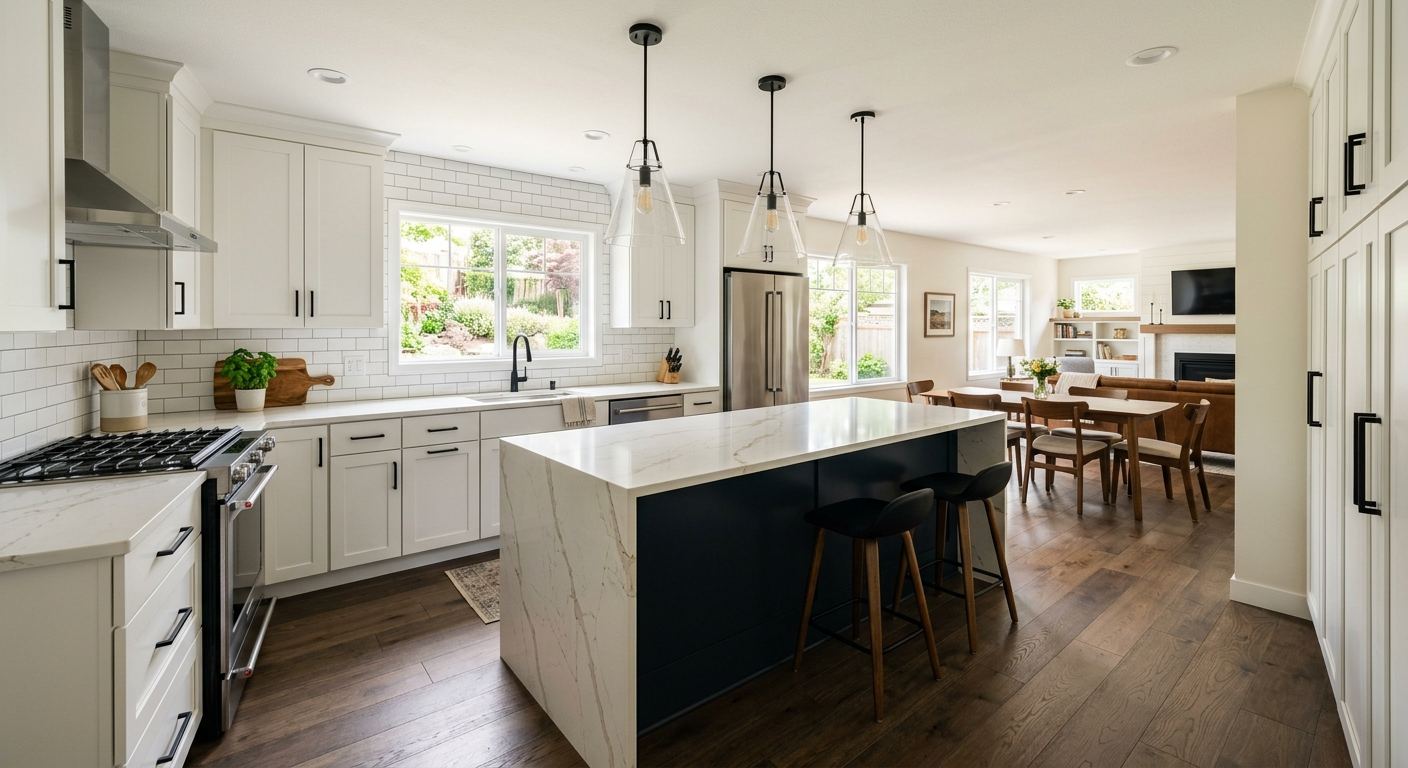
Kitchen renovation options and costs in Three Hills
Three Hills homeowners typically start their kitchen plans with one big question: what will it cost to get a modern look without overbuilding? With a median household income of about $76,000 (Statistics Canada, 2021 Census), many households choose finishes that feel “premium” but still resale-smart—often leaning toward semi-custom cabinetry and mid-grade to mid-upper countertops. The town is small (population 3,042 in 2021), and with 805 homeowner households (Statistics Canada, 2021 Census), renovation demand is steady enough to support local dealers and a handful of crews, but not always on the same schedule as larger centres.
In the Lethbridge–Medicine Hat economic region, budgets tend to track more to income and neighbourhood resale expectations than to square footage or weather alone. That means in higher-demand pockets, upgrades like quartz or natural stone become common because they tend to recover better on resale, while in more price-conscious setups you’ll see laminate and stock options to keep total spend inside the $20,000–$70,000 full-reno range. Southern Alberta’s dry, wide temperature swings can be rough on older caulking and under-sink materials over time; that’s why many quotes include careful subfloor checks and moisture protection, which can add labour even when the visible finishes look simple. Older housing is also common here—about 56.0% of homes were built before 1981—so expect more “hidden” work around plumbing, electrical runs, and cabinet wall conditions.
In Three Hills, trade demand is especially strong around the residential core near the downtown area and the older neighbourhoods with original kitchens, where homeowners often refresh layouts for better circulation. From there, the most helpful next step is comparing renovation tiers in the table below.
| Renovation Tier |
What's Included |
Typical Duration |
Price Range |
| Cosmetic refresh (paint, hardware, new appliances only) |
Cabinet paint or repaint (if refinishing), new hardware, wall paint touch-ups, replacement appliances, basic cleaning and surface prep (no cabinet box changes) |
3–7 days |
$20,000–$30,000 |
| Mid-range full renovation (new cabinets, counters, sink, tile) |
Semi-custom or stock cabinetry, new countertop (laminate or entry-level quartz), new sink and faucet, backsplash tile, flooring refresh/repair as needed, removal & disposal, standard plumbing/electrical adjustments |
2–4 weeks |
$35,000–$55,000 |
| High-end full renovation (custom cabinets, stone counters, island) |
Fully custom millwork, premium quartz/stone counters, upgraded backsplash (tile to feature wall or full-height), island (often includes electrical and lighting), enhanced appliance package, upgraded finishes and detailing |
4–8 weeks |
$55,000–$70,000 |
| Cabinet refacing only (new doors + drawer fronts, same boxes) |
New door and drawer fronts, new veneer/surfaces to cabinet faces, new hardware, matching toe-kick/base trim, alignment adjustments; countertop not included unless specified |
1–3 weeks |
$5,000–$25,000 |
| Countertop swap only (laminate to quartz or stone) |
Template, fabrication and install of new countertop, edge profile selection, sink cut-out adjustments, existing backsplash limited to countertop edge finishing |
3–10 days |
$2,500–$12,000 |
| Backsplash tile installation only |
Demo of existing backsplash (as needed), tile layout and install, grout and caulking details, waterproofing prep on drywall (water-resistant backer if required) |
2–5 days |
$2,000–$8,000 |
Prices are estimates only and vary by project scope, site access and material selection.
What affects the price of kitchen renovation in Three Hills
Even when you’re quoted for the “same” kitchen in Three Hills, two bids can easily differ by 30–50%. In practice, that gap usually comes from what finish tier is assumed, how much layout change is included, and what’s hiding behind older walls—more than from climate. In the Lethbridge–Medicine Hat region, homeowners often anchor decisions to home value and what buyers expect when they walk through a listing. That’s why finish upgrades (like quartz or stone) are common where the resale market rewards them; conversely, when households aim for strong ROI, laminate and stock cabinetry help keep budgets closer to the mid-band.
Start with the big drivers. If your plan includes layout moves—wall removal, adding an island, or relocating a gas or plumbing line—that tends to add the most unpredictable cost regardless of whether you pick laminate or higher-end stone. Labour and materials rise because you’re not just swapping surfaces; you’re rebuilding what the kitchen depends on. In Three Hills, older homes built before 1981 can have out-of-date rough-ins, making “minor adjustments” turn into bigger trade coordination. That’s when a countertop-only idea can expand into replacing sections of subfloor or fixing venting clearances.
Concrete examples from typical Three Hills projects: (1) A kitchen with a long run of existing supply/drain lines in older framing often costs more to open and re-seat than a like-for-like cabinet swap—sometimes adding $3,000–$6,000 in plumbing and wall patching. (2) Adding an island usually brings new electrical for outlets and under-cabinet lighting; that can push you from a $20,000–$50,000+ project closer to the upper end of the $20,000–$70,000 band depending on finish tier. (3) If you choose premium stone with complicated edges or a waterfall detail, the countertop installation can jump substantially from the entry-level end of the countertop swap range.
Next, the finish choices and scope details determine whether you land closer to the lower mid-range (stock cabinets, laminate) or the high-end tier (custom millwork, stone), even before you count permits and electrical work.
| Price Factor |
Why It Matters |
Cost Impact |
| Cabinet tier — stock vs. semi-custom vs. fully custom millwork |
Higher tiers mean better materials, fit and finish, and more flexibility for sizes, storage, and special components (pantries, rollout trays, appliance garages) |
Can swing the overall kitchen cost by roughly $10,000–$25,000 depending on scope |
| Countertop material — laminate vs. quartz vs. granite vs. stone |
Material cost, thickness, edge profiles, and installation difficulty vary; stone also requires more template and careful handling |
Countertop installs can differ by about $2,500–$12,000+ for swaps, and more when bundled with a full renovation |
| Layout change — wall removal, island add, plumbing/gas move |
Changes trigger carpentry, engineering/structural considerations, new rough-ins, and scheduling of multiple trades |
Often the largest unpredictable item; commonly +$5,000–$20,000+ beyond baseline |
| Appliance package tier — builder vs. mid-range vs. pro-grade |
Pro-grade models require more specific power/venting, and pricing can vary widely for matching sets |
Can add several thousand dollars and affect electrical and venting labour |
| Flooring — refinish existing vs. full replacement |
If floors survive demo, you save on underlay, subfloor prep, and matching height transitions |
Floor replacement can add materially; refinishing is typically far less |
| Backsplash — ceramic tile vs. marble vs. full-height slab |
Premium stone and full-height coverage increase material, waterproofing prep, and precision cutting |
Can range within the backsplash & tile band of $2,000–$8,000, with premium options trending higher |
| Electrical — new circuits for island, under-cabinet lighting |
New circuits and code-required protection/locations are labour- and inspection-driven |
Typically +$1,000–$6,000+ depending on wiring complexity and fixtures |
| Permit fees and licensed trade requirements |
Certain work requires permits and inspection; licensed trades add cost but reduce risk |
Usually a few hundred to a few thousand dollars plus trade scheduling |
Permits & regulations in Alberta
In Alberta, many straightforward kitchen updates do not require permits—while other common changes absolutely do. As a homeowner in Three Hills, the rule of thumb that matters for budgeting is: if you’re only swapping finishes (like cabinet doors, countertops, or tile) you usually avoid permits; if you’re changing the building’s systems (plumbing, gas, load-bearing structure, or adding electrical circuits), you should expect permits and licensed trades.
Typically, you do not need a permit for cabinet and countertop swaps: replacing cabinet doors/drawer fronts on existing boxes, and installing new laminate/quartz/stone counters over the prepared base is generally permit-light. You also typically don’t pull permits for backsplash tile installation when it’s simply a surface upgrade.
You do need permits when you move plumbing supply or drain lines, relocate gas (including stove/range moves and venting work tied to gas), remove a load-bearing wall, or add new electrical circuits (common for island outlets and dedicated lighting circuits). Gas work must be completed by a licensed gas fitter, and electrical work by a licensed electrician, with inspections after installation.
Before signing a contract, verify responsibility in writing: ask who is pulling permits, which trade does the work, and whether inspection scheduling is included. To confirm a contractor’s legitimacy, check their Alberta licence status through the appropriate online registry, request a current certificate of liability insurance, and ask for proof of clearance/coverage for work and subcontractors (including WCB/WSIB coverage). A good contractor should provide paperwork quickly and clearly.
Cabinets, countertops and layout decisions in Three Hills
When homeowners in Three Hills ask me what will matter most in the end result, I point to three decisions: (1) cabinet tier, (2) countertop material, and (3) layout changes. In a town where many homes were built before 1981, the base structure can be uneven—so picking a system that tolerates small wall variations (and includes good installation practices) can save you money on “fixes” later.
Cabinet tier drives both look and function. Stock cabinets install the fastest and cost the least, but they can limit storage options and fit. Semi-custom cabinets are usually the best balance for most budgets; they’re commonly chosen because they offer better storage layouts without the premium of fully custom millwork. Fully custom cabinets cost the most, but they shine when you’re correcting an unusual room shape, need specialized storage (pantry systems, appliance garages), or want a specific designer alignment.
Countertops should be selected with Alberta’s freeze–thaw and dry winter indoor conditions in mind. Moisture control near sinks and along seams matters as much as material name. Laminate is budget-friendly and forgiving, but edges and seams can show wear sooner. Quartz is a popular mid-to-upper choice because it resists staining and stands up well to everyday cleaning. Granite and other natural stones bring upscale character but require more attention to sealing and upkeep. If you’re considering butcher block, it can be great for warmth and a “craft” feel, but it demands sealing and careful maintenance around sinks.
Layout decisions justify cost only when the space gain is real. For example, adding an island can improve workflow and seating, but if it triggers electrical and plumbing coordination, it can push a renovation toward the upper range of the $35,000–$55,000 band. If your goal is mainly visual modernization, a cabinet and countertop upgrade without moving lines may deliver 80% of the impact for less money. Finally, resale expectations in the Lethbridge–Medicine Hat market tend to favour clean, bright surfaces and efficient storage—so plan around the buyer’s “easy to live with” checklist.
| Option |
Durability |
Maintenance |
Best For |
Price Range |
| Stock cabinets (big-box) |
Good for standard openings; durability depends on box build quality and installation shim/leveling |
Low to moderate; hardware and seam care matter |
Quick renovations and tighter budgets where layout matches typical sizes |
$20,000–$35,000 |
| Semi-custom cabinets (local dealer) |
Very solid for everyday use; improved storage options and better fit for non-standard walls |
Low; wipe-down and periodic hardware tightening |
Most homeowners aiming for a modern look with better storage |
$35,000–$55,000 |
| Custom cabinets (local millwork shop) |
Excellent fit and component options; best for complex layouts and specialty storage |
Low to moderate; premium hardware and finishes may need careful cleaning |
High-end projects and homeowners who want a built-to-fit kitchen |
$55,000–$70,000 |
| Laminate countertop |
Decent impact resistance; edges and seams are the weak points over time |
Low; avoid soaking and use care near sinks and hot items |
Budget-focused refreshes and rentals or short-to-medium holding periods |
$2,500–$6,000 |
| Quartz engineered countertop |
High durability for daily cooking; good resistance to staining and most household wear |
Low; routine cleaner and protection around seams/sink areas |
Popular resale-friendly upgrade that fits many budgets |
$6,000–$12,000 |
| Granite / natural stone countertop |
Very durable and scratch resistant; performance varies by stone type and finish |
Moderate; typically requires periodic sealing and careful stain prevention |
Upscale look where natural veining is a priority |
$8,000–$14,000 |
| Butcher block countertop |
Durable when maintained; surface can dent if abused |
Moderate to high; regular oiling and immediate drying after wet use |
Warm, traditional style kitchens and homeowners who like maintenance |
$4,000–$9,000 |
| Marble countertop |
Beautiful and heat resistant, but softer than quartz; can etch/stain with acidic products |
Moderate; sealing and fast cleanup are essential |
Statement kitchens where appearance and upkeep expectations match lifestyle |
$10,000–$18,000 |
How to choose a kitchen renovation contractor in Three Hills
Choosing the right contractor in Three Hills is less about who has the nicest showroom photos and more about who can prove they’re properly licensed, insured, and organized. Start with verifying Alberta licensing for the trades involved (especially electrical and gas work), and ask for liability insurance and coverage documentation before any demo starts. For coverage, confirm the contractor’s WCB/WCB clearance (and that subcontractors working on your project have appropriate coverage too). If they can’t provide clearance and certificates on request, that’s a major warning sign.
Get 2–3 itemised written quotes rather than lump-sum estimates. You want labour and materials broken out: cabinetry supply, countertop template/fabrication/install, plumbing/electrical allowance, tile labour, disposal, and any millwork site adjustments. Review scope carefully: what’s excluded (drywall repair above tile, patching after plumbing moves, under-cabinet lighting supply, appliance hookups) and whether permit pulling and inspections are included.
Warranty matters, too. Ask for the workmanship warranty length and whether product warranties are direct-from-manufacturer and transfer if you sell the home. Also clarify the payment schedule: never pay more than 10–15% upfront, and hold back a portion until the job is complete and punch-list items are addressed. A professional contractor will give you a clear start date, a realistic completion estimate, and a plan for ordering lead-time items (especially countertops and custom doors).
- Confirm the contractor is properly licensed for the scope they advertise and uses licensed electricians/gas fitters where required.
- Ask for proof of liability insurance and request the clearance letter for WCB/WCB coverage before work begins.
- Require 2–3 itemised quotes with labour and material line items, not just totals.
- Check what disposal includes: is it haul-away of old cabinets/counters and construction debris?
- Verify if permit fees, inspections, and any engineering are included if your scope changes walls or services.
- Make sure countertop quoting includes template and fabrication time (and what happens if measurements change).
- Ask how electrical work is handled for island outlets and lighting—permit and inspection included?
- Confirm plumbing allowances cover moving supply/drain lines if needed, not just “basic hookups.”
- Review flooring and drywall patching responsibilities after demo—who does the prep for tile/cabinets?
- Get a written schedule: demolition date, rough-in, cabinet install, countertop install, tile completion.
- Ask for warranty terms in writing for both workmanship and products, including transferability.
- Use a payment schedule with a holdback until final inspection/punch-list completion.
Red flags I see often in kitchen renovation projects in and around Three Hills include contractors who won’t provide itemised quotes, vague scopes that omit disposal or permit responsibility, payment requests larger than 10–15% upfront, no written timeline for countertop and millwork lead times, and missing or outdated insurance/coverage paperwork.
Frequently asked questions — kitchen renovation in Three Hills
Can I live at home during a kitchen renovation in Three Hills?
You can often live at home during a renovation in Three Hills, but it depends on how disruptive the work is. If you’re doing a cosmetic refresh or a countertop swap only, most homeowners keep life running with a temporary microwave setup and access to a functioning sink. For a mid-range full renovation—new cabinets, counters, sink and tile—expect limited kitchen use during demo and countertop installation; many families set up a “temporary kitchen” with a bar fridge, kettle/hot plates, and a microwave for a week or two. If your scope includes moving plumbing lines or adding an island with electrical work, the shutdown is usually longer because trades must coordinate and inspections may be required. Plan for dust control, especially in older homes built before 1981, where sealing off the work area matters.
Should I renovate my kitchen before selling in Three Hills?
Often, yes—if your kitchen is clearly dated or poorly functional, a renovation can improve buyer confidence in Three Hills. The key is not overspending beyond what buyers in the Lethbridge–Medicine Hat resale market will reward. Many homeowners align renovations to realistic mid-range tiers because upgrades like quartz and better storage usually photograph well and feel modern without turning the project into a luxury build. With a median household income around $76,000 (Statistics Canada, 2021 Census), buyers tend to respond best to clean finishes and practical layouts rather than very expensive, niche features. If your budget is tight, consider the “highest-impact per dollar” approach: cabinet refacing plus a countertop upgrade, or a backsplash refresh to reduce visual fatigue. A full renovation is more justified when the layout change solves real issues (traffic flow, storage, or wiring).
What's the most popular kitchen style in Three Hills right now?
Right now, many Three Hills renovations are trending toward bright, timeless palettes: white or light-colour cabinetry paired with warm wood accents and straightforward hardware. On surfaces, homeowners commonly choose quartz for its low maintenance and consistent look, especially when upgrading from older, worn countertops. In terms of cabinet tier, semi-custom is the most common “sweet spot” because it allows better storage layouts and better fit while still keeping the project inside the typical full-renovation range (often around the $35,000–$55,000 tier for mid-range projects). That said, some households choose stock cabinets for a faster refresh and then invest the difference in countertop quality and a nicer backsplash. The result is modern but not overly trendy—important for resale in a small market.
How do I know if I need to update my kitchen plumbing in Three Hills?
You may need plumbing updates if your sink drains slowly, if there are signs of leaking under the sink or at supply connections, or if the existing rough-ins don’t line up with your new cabinet layout. In Three Hills—where about 56.0% of homes were built before 1981 (Statistics Canada, 2021 Census)—it’s not unusual to find older materials, questionable shutoffs, or drain piping that doesn’t align cleanly after renovations. You’ll also want to plan ahead if you’re moving the sink, adding a dishwasher, or relocating plumbing for an island. In those cases, permit and licensed work rules generally apply because you’re changing supply/drain lines, not just reconnecting. A good contractor will inspect accessible pipe runs during quoting and include allowances for repairs to hidden water-damage or subfloor soft spots.
What is the difference between a galley and open-concept kitchen?
A galley kitchen is a narrow, corridor-style layout—counters on two sides—typically efficient for cooks but with less room for seating. An open-concept kitchen blends the kitchen with living space, often through partial or full wall removal, which can improve social flow and sightlines. In Three Hills, the “right” choice is usually driven by your existing wall layout and the condition of older framing. If you’re considering open-concept changes, remember that removing a load-bearing wall can require permitting and engineering, and may increase labour even beyond finish choices. Budget-wise, a plan that stays within cabinet and countertop upgrades can land around the $35,000–$55,000 mid-range, while layout changes and service moves frequently push projects toward the upper end of the full renovation band. If your goal is accessibility and improved flow without major construction, consider smaller tweaks like widening walkways, adding storage, or reworking the peninsula instead of full wall removal.
How do I get accurate kitchen renovation quotes in Three Hills?
To get accurate quotes in Three Hills, start by standardizing your scope and materials in writing. Ask for 2–3 itemised quotes that separate labour and materials: cabinet supply, countertop template/fabrication/install, sink and faucet, backsplash tile labour, plumbing/electrical allowances, disposal, and any permit-related work. Be explicit about what you want changed—cosmetic refresh versus mid-range full renovation versus high-end custom, and whether you’re moving plumbing or adding electrical for an island. Countertops alone often fall into the $2,500–$12,000 range depending on material, while full renovations commonly land in the $20,000–$70,000 band. Also confirm timeline details for lead items and ask who is responsible for permit pulling and inspection scheduling. Finally, request proof of insurance and WCB/WCB clearance, and ensure the contract clearly states exclusions and warranty terms.