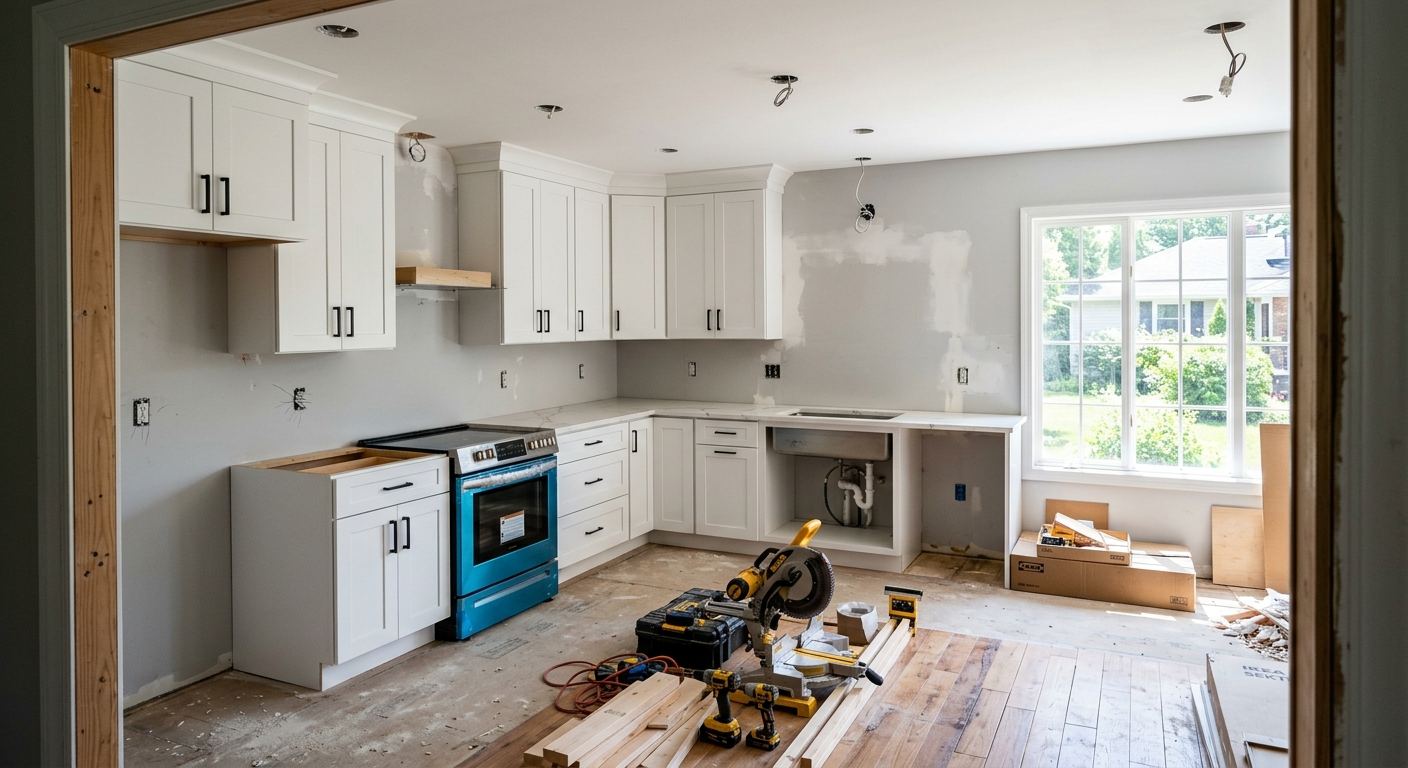
Kitchen renovation options and costs in Crescent Heights
Crescent Heights, Alberta sits inside Calgary’s high-demand renovation market, and homeowners there tend to upgrade kitchens to match the expectations of nearby resale buyers. With a 2021 population of 6,240 in the area (Statistics Canada, 2021 Census), project volume is steadier than you’d see in smaller neighbourhoods—so you’ll often find reputable trades available for quotes and scheduling. More importantly, Crescent Heights renovations typically track local purchasing power: in Calgary’s economic region, many households choose finishes that feel “move-in ready,” because the cost difference is easier to recover on resale than in lower-value markets.
In practice, Calgary’s renovation pricing isn’t driven by weather so much as by material tiers and labour demand. Alberta’s winter freeze–thaw cycle can still affect the details (caulking longevity, grout cracking, and the need for good ventilation around moisture-producing areas), but the biggest drivers of cost are usually cabinetry style, countertop material, and whether the layout changes. Labour in Calgary is commonly quoted around $90–$140 per hour, so design work, project management, and skilled installation make up a significant share of many bids. You’ll also see faster turnarounds in neighbourhood pockets where crews routinely run multi-home schedules; in Crescent Heights, that often means projects around the more established blocks close to 1A/17th Ave corridors, where finish packages are frequently bundled with adjacent trades’ route planning.
Below is a practical cost comparison to help you align scope with budget—then we’ll break down what changes those numbers most in the next section.
| Renovation Tier |
What's Included |
Typical Duration |
Price Range |
| Cosmetic refresh (paint, hardware, new appliances only) |
Paint, new hardware/fixtures, new appliances (dishwasher/range/hood/fridge as selected), minor caulking and touch-ups; countertop and cabinet boxes typically remain |
3–7 days active work (plus 1–2 weeks for ordering) |
$8,000–$20,000 |
| Mid-range full renovation (new cabinets, counters, sink, tile) |
Semi-custom or quality stock cabinetry, new countertop (quartz or laminate), sink + faucet, backsplash tile, new flooring under scope (where required), plumbing/electrical adjustments as needed |
4–8 weeks |
$25,000–$55,000 |
| High-end full renovation (custom cabinets, stone counters, island) |
Fully custom cabinetry, natural stone or premium engineered stone, island (often with electrical), expanded backsplash, integrated lighting, higher-end appliance package, possible wall modifications depending on layout |
8–16 weeks |
$65,000–$100,000 |
| Cabinet refacing only (new doors + drawer fronts, same boxes) |
New thermofoil/laminate or wood fronts, new hardware, re-sealing and finishing; countertops and tile may be left as-is or refreshed separately |
1–3 weeks |
$8,000–$25,000 |
| Countertop swap only (laminate to quartz or stone) |
Removal and disposal of existing tops, new quartz/stone installation, sink cut-outs and resealing; backsplash may or may not be disturbed depending on edge/height |
3–10 days active work (plus 1–3 weeks for templating/production) |
$3,000–$12,000 |
| Backsplash tile installation only |
Tile supply and install, surface prep, waterproofing where appropriate, trim/finishing; allowance for minor wall repairs |
2–6 days |
$2,500–$8,000 |
Prices are estimates only and vary by project scope, site access and material selection.
What affects the price of kitchen renovation in Crescent Heights
Even for the “same” kitchen on paper, Crescent Heights homeowners can see 30–50% quote differences because contractors price uncertainty differently—especially around layout changes, trade scheduling, and finishing upgrades. In Calgary’s market, bids also reflect what the neighbourhood supports: higher home values and buyer expectations steer projects toward quartz or natural stone counters and semi-custom cabinetry, which can push many full renovations into the mid five-figures and beyond. In more modest finish tiers, laminate and stock cabinets keep budgets closer to the lower end of the $25,000–$100,000 full-renovation range.
Climate plays a secondary role. Alberta’s winter swings can shorten the lifespan of poor ventilation and weak sealing around sinks and backsplash edges, but it’s usually not what causes the biggest dollar swings. The layout and mechanical scope do. Moving a wall, adding an island, or relocating plumbing/gas lines tends to carry the most unpredictable cost regardless of whether you’re aiming for laminate at the lower tier or premium stone at the higher tier.
Two local examples from Crescent Heights commonly drive costs up or down: first, kitchens in older infill and mid-century homes may have less space for new toe-kicks, so cabinet modifications take extra labour—often adding hours when crews have to fit around existing runs. Second, if the existing backsplash height or outlet placement doesn’t match your chosen tile type and backsplash design, you may see additional electrical and patchwork charges. Meanwhile, if you keep the sink location and only upgrade counters, a countertop swap-only project typically stays closer to the $3,000–$12,000 band. If you move the sink and add an island, budgets more naturally follow the $25,000–$55,000 mid-range or higher, depending on cabinetry and stone selection.
| Price Factor |
Why It Matters |
Cost Impact |
| Cabinet tier — stock vs. semi-custom vs. fully custom millwork |
How much the cabinets need to be sized, detailed, and finished; also affects lead times and installation complexity |
Often shifts total kitchen spend by roughly $10,000–$40,000+ across common tiers |
| Countertop material — laminate vs. quartz vs. granite vs. stone |
Material cost, edge detailing, weight handling, and fabrication requirements |
Can add $2,000–$15,000 depending on surface type and island size |
| Layout change — wall removal, island add, plumbing/gas move |
New framing, electrical circuits, plumbing/drain routing, venting, and inspection steps |
Frequently adds $5,000–$25,000 even before finishing upgrades |
| Appliance package tier — builder vs. mid-range vs. pro-grade |
Electrical demands, venting needs, and installation detail (especially hoods, steam, and built-ins) |
Can swing $3,000–$20,000+ based on what’s selected |
| Flooring — refinish existing vs. full replacement |
Whether the crew needs to remove subfloor/patching and match old floor transitions |
Commonly adds $1,500–$8,000 depending on mismatch and repair needs |
| Backsplash — ceramic tile vs. marble vs. full-height slab |
Labour hours, substrate prep, sealing requirements, and material thickness/weight |
Often changes by $1,000–$6,000 within a typical renovation scope |
| Electrical — new circuits for island, under-cabinet lighting |
Licensed work and new box routing; also impacts pot lights/LED placement and finish cuts |
Typically adds $1,000–$6,000, depending on circuit count and layout |
| Permit fees and licensed trade requirements |
Admin time, scheduling, inspections, and documentation when systems are moved |
Often $500–$3,500, but can rise if multiple inspections or rework occur |
Permits & regulations in Alberta
In Alberta, many “like-for-like” kitchen upgrades don’t need permits, but several common renovation moves do. Typically, cabinet and countertop swaps are straightforward and generally do not require a permit. Likewise, replacing appliances that don’t change fuel type or venting usually stays in the non-permit zone—your installer should still follow manufacturer requirements and safety standards.
Permits and licensed trades become important when you change the building systems: moving plumbing supply or drain lines (including changing the sink location), relocating a gas stove or making changes that affect gas supply, and removing a load-bearing wall. Adding or altering electrical circuits—especially for an island (extra receptacles), under-cabinet lighting, or new range hood wiring—also requires the proper electrical permitting pathway and a licensed electrician.
Here’s how a Crescent Heights homeowner can verify contractor compliance step-by-step. First, ask for their Alberta licence information for the relevant trades (gas fitting and electrical where applicable), then check it against the appropriate online public registry results the contractor should be able to point you to. Next, request a current certificate of insurance (liability coverage) showing their coverage is active for the project address. Then ask for proof of WSIB/WCB coverage—many reputable contractors will provide a clearance letter or equivalent documentation on request. Finally, confirm in writing who pulls permits and pays for them, because the permit responsibility should be clearly assigned in your contract before any work starts.
Cabinets, countertops and layout decisions in Crescent Heights
In Crescent Heights, three decisions drive both comfort and resale appeal: cabinet tier, countertop material, and whether you change the layout. For cabinets, stock is fastest and usually the lowest-cost path, but it can look mismatched if your room dimensions aren’t standard. Semi-custom is the most popular mid-range choice in Calgary-area kitchens because it balances fit and lead time with cost control. Custom cabinets give you the best alignment and storage design, but they’re the highest-cost option and often require longer fabrication windows.
Countertops are where buyers notice quality quickly. Laminate is durable enough for typical family use, but it can show seams and wear at edges over time. Quartz and engineered stone bring consistent colour and excellent stain resistance, and they’re commonly chosen when homeowners want “clean, modern” without the maintenance demands of some natural surfaces. Granite/natural stone offers unique veining, but it needs sealing upkeep and can cost more in fabrication. Butcher block adds warmth and can be resurfaced, yet it needs regular oiling and careful drying around sinks—important in a city where kitchens see heavy winter indoor humidity swings and frequent wet cleanup.
Layout changes should be justified by space gain and traffic flow, not just aesthetics. For example, adding an island can cost several thousand more once you account for electrical and countertop fabrication, but it’s often worth it if it improves circulation and gives you seating or prep space. If you keep the existing sink location and only swap countertops, the budget usually stays closer to the $3,000–$12,000 countertop swap band; if you move plumbing and add an island, your project naturally moves toward the mid five-figures, especially when paired with semi-custom or custom millwork.
| Option |
Durability |
Maintenance |
Best For |
Price Range |
| Stock cabinets (big-box) |
Good everyday durability; limited custom fit for odd wall conditions |
Low—wiping and avoiding standing water at seams |
Budget-conscious refreshes with straightforward measurements |
$8,000–$20,000 |
| Semi-custom cabinets (local dealer) |
Very solid build; better internal organization and more size flexibility |
Low to moderate—protect from moisture at sink/dishwasher edges |
Crescent Heights homeowners wanting a “custom look” without custom lead times |
$18,000–$40,000 |
| Custom cabinets (local millwork shop) |
Highest durability and best fit; can tailor storage to your exact layout |
Low with proper sealing and routine cleaning |
High-end remodels and clients prioritizing precise storage and design |
$35,000–$70,000 |
| Laminate countertop |
Moderate; can chip at edges and show wear around seams |
Low—avoid excessive heat; keep seams dry |
Cost control when you’re aiming for a refresh not a luxury finish |
$3,000–$6,000 |
| Quartz engineered countertop |
High; consistent surface and good resistance to stains and scratches |
Low—wipes clean and needs no sealing |
Most Calgary-area kitchens because it looks premium and performs predictably |
$6,000–$12,000 |
| Granite / natural stone countertop |
High; very hard surface but varies by slab and finish |
Moderate—requires periodic sealing and careful maintenance at cut edges |
Homeowners who want natural character and are okay with upkeep |
$7,000–$15,000 |
| Butcher block countertop |
Moderate; resists normal wear but is vulnerable to water at end grain |
Moderate—regular oiling, quick wipe-down, protective practices near sink |
Warm, casual kitchens where maintenance routines are acceptable |
$4,500–$10,000 |
| Marble countertop |
Moderate to high; beautiful but can etch/stain more than quartz |
Higher—requires sealing and careful cleaning habits |
Statement kitchens with strict care and a “designer” finish approach |
$10,000–$20,000 |
How to choose a kitchen renovation contractor in Crescent Heights
Choosing the right contractor in Crescent Heights is mostly about verification and clarity. Start by confirming the right Alberta coverage for the work being done: ask for proof of the relevant trade licensing (for example, electrical and gas-fitting work), plus liability insurance for the project address. Then request WSIB/WCB coverage documentation—many strong teams can provide a clearance letter or equivalent proof without pushing back. If a contractor won’t share documentation, treat that as a serious concern, especially when your plan includes electrical changes for an island or any plumbing/gas relocation.
Next, get 2–3 itemised written quotes. You want labour and materials broken out—cabinet supply, countertop fabrication/installation, tile labour, disposal, electrical fixtures, and any allowance items—so you can compare apples to apples. Read the scope carefully: is permit pulling included, who schedules inspections, and is demolition/disposal included or billed separately? Ask about waste handling, protection of flooring during demo, and whether appliances are included or excluded.
For warranty, make sure you understand both workmanship and product coverage. Ask how long the workmanship warranty lasts, whether it’s transferable, and what documentation you’ll receive. On payment schedule, avoid large upfront deposits—keep it around 10–15% at most—and use holdback until the project is complete and deficiencies are addressed. Finally, insist on a written timeline with a start date target and a completion estimate tied to material lead times.
- Confirm the contractor’s Alberta trade licensing for the work they’ll perform (and that the subcontractors are licensed too).
- Request a current certificate of liability insurance naming the project address or homeowner correctly.
- Verify WSIB/WCB coverage with a clearance letter or proof of coverage.
- Get 2–3 itemised quotes (labour vs. materials; allowances separated).
- Ensure the quote states what’s included for demolition, protection, and disposal.
- Ask who pulls permits and whether permit fees are included in the price.
- Confirm electrical/gas work scope is clearly assigned to licensed trades.
- Check that cabinet measurements are templated and that countertop fabrication tolerances are planned.
- Verify warranty terms: workmanship duration and how product warranties are handled.
- Use a payment schedule with minimal upfront and a holdback until punch-list completion.
- Require a written start date and completion estimate, plus a plan for delays due to materials.
- Review communication expectations: site contact, change-order process, and who signs off on revisions.
Red flags I commonly see in Crescent Heights kitchen projects include: quoted “all-in” lump sums with no itemisation, unclear allowance amounts for tile/fixtures that quietly inflate costs, contractors who won’t provide insurance and WSIB/WCB proof, schedules that ignore cabinet and countertop lead times, and refusal to put permit responsibility in the contract when plumbing/gas/electrical is changing.
Frequently asked questions — kitchen renovation in Crescent Heights
Should I reface or replace my cabinets?
In Crescent Heights, refacing is usually worth considering when your cabinet boxes are solid, the layout is staying the same, and you’re mainly chasing a dated look. Replacing cabinets costs more upfront, but it solves issues you may not see—like worn rails, water-damaged interiors, or boxes that are out of square, which can cause doors to misalign. If you want a budget-friendly, faster option, cabinet refacing typically lands around $8,000–$25,000, while a mid-range full renovation with new cabinetry and counters often moves into the $25,000–$55,000 band. If you’re planning layout changes (like adding an island) or you suspect moisture problems near the sink/dishwasher, replacement is usually the smarter long-term choice.
Do I need a permit for a kitchen renovation in Alberta?
Often, you do not need a permit in Alberta for simple swaps like cabinet and countertop replacements, assuming you’re not moving plumbing or electrical. However, permits and licensed trades generally are required when you change systems: moving plumbing supply or drain lines, relocating gas appliances or modifying gas supply, removing a load-bearing wall, or adding electrical circuits (common for island outlets and under-cabinet lighting). For Crescent Heights homeowners, the practical step is to confirm permit responsibility in writing before signing—don’t rely on verbal assurances. If your plan includes changing the sink location or stove/hood venting, treat it as permit-required scope. A reputable contractor will explain which tasks trigger permits and will schedule inspections as part of the job plan.
What's the ROI on a kitchen renovation?
Kitchen renovations rarely “return 100 cents on the dollar,” but they can materially improve marketability—especially in Calgary-area neighbourhoods where buyers expect modern finishes and better storage. In higher-value markets, homeowners often recover more of the spend because quartz or natural stone counters and semi-custom cabinetry align with what resale buyers look for. That said, ROI depends heavily on what you change. If you do a cosmetic refresh (paint/hardware and appliances only), your ROI tends to be steadier but less dramatic because the layout and utility may remain the same. If you do a mid-range full renovation—often around $25,000–$55,000—you’re more likely to impact how the home shows during a sale. The highest-cost redesigns that reach $65,000–$100,000 can boost value when the layout genuinely improves function (like better flow or usable island seating), not just when finishes are upgraded.
How do I budget for a kitchen renovation?
Budgeting in Crescent Heights works best when you start with tier selection and then add realistic allowances for the “hidden” work: electrical adjustments, patching after tile removal, disposal, and any plumbing/gas changes. A good rule is to decide whether you’re staying within a cosmetic refresh, a mid-range full renovation, or a high-end redesign. From there, align materials to your tier: quartz/stone and semi-custom cabinetry typically push you toward the mid five-figure range, while stock/laminate choices help keep totals lower. To protect yourself from surprises, ask for itemised quotes and include a small contingency for field conditions (older homes can have awkward wall conditions and mismatched outlet locations). If your plan is only counters and a bit of backsplash, you might target the $3,000–$12,000 countertop band rather than budgeting like you’re moving plumbing.
Can I move my kitchen sink or stove?
Yes, you can move a sink or stove, but in Alberta it’s the moving of plumbing, drain lines, gas supply, and/or electrical circuits that typically changes the permitting and cost story. Moving the sink usually requires re-routing supply and drain, plus coordination with venting and waterproofing details—especially around backsplash edges. Moving a stove that uses gas often triggers gas work by a licensed gas fitter and may also require a different hood or venting arrangement. In Crescent Heights, older kitchen spaces sometimes have existing wall runs that limit how easily lines can be re-routed without opening more drywall or adjusting flooring transitions. If you want to keep cost down, the most predictable approach is usually to keep the sink location and update counters/cabinets; if you truly need the move for function, expect mid-range or higher full-renovation spending once plumbing/electrical work is included.
What's the most cost-effective kitchen upgrade?
The most cost-effective upgrade is usually one that delivers a visible “new kitchen” look without triggering major demolition or permit-triggering scope. For many Crescent Heights homes, a countertop swap is a strong value move—especially when you switch from laminate to quartz, because it upgrades appearance and performance while keeping cabinet boxes and layout intact. That kind of project commonly fits the $3,000–$12,000 countertop swap range. If you want a second high-impact option, a backsplash installation can make the space feel finished and helps protect the wall; backsplash tile installation often sits around $2,500–$8,000. If your cabinets are structurally fine, refacing can also be cost-effective around $8,000–$25,000, particularly when combined with a countertop update. The key is avoiding layout changes unless the space truly needs them.