Kitchen renovation options and costs in Signal Hill
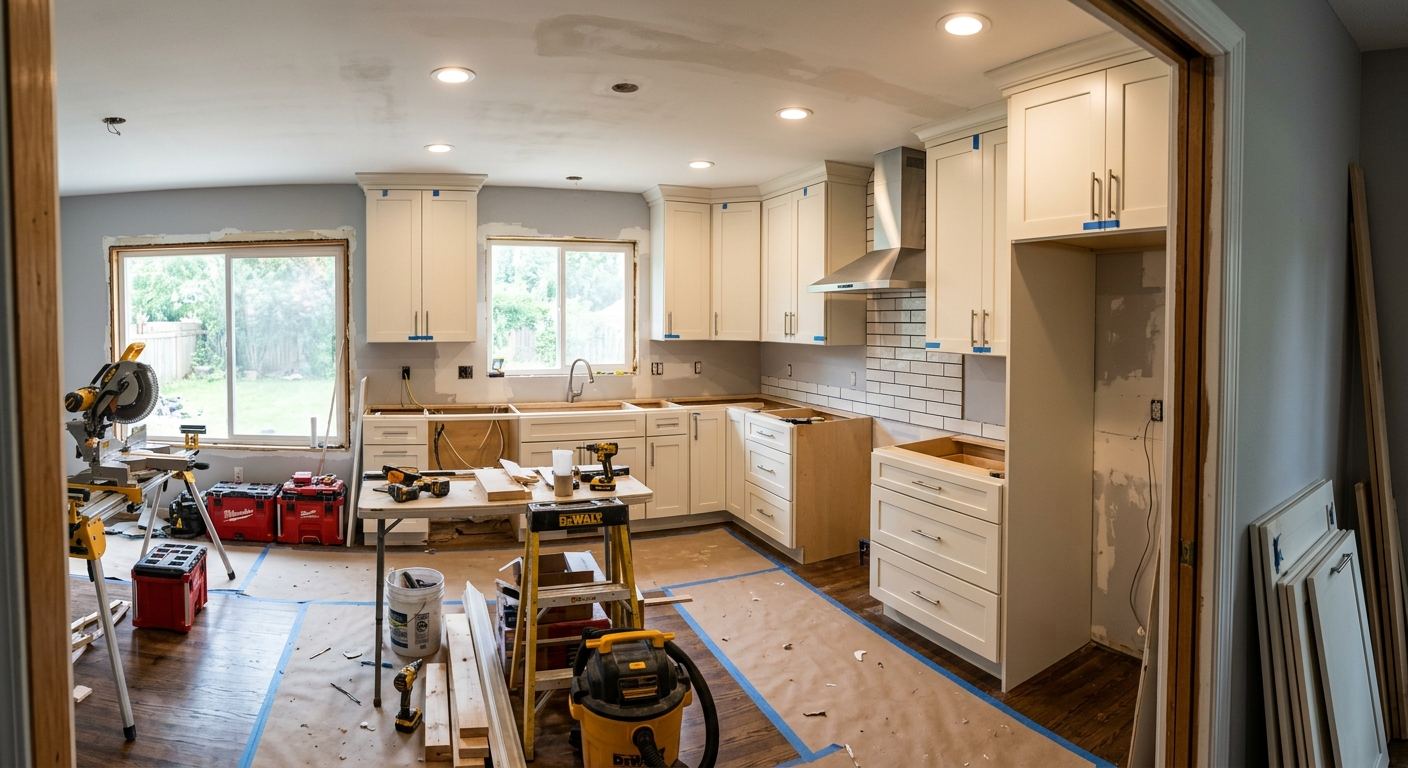
Kitchen renovations in Signal Hill, Alberta usually start with three questions: what do you want to change, what finishes are you aiming for, and how quickly do you want it done. With Signal Hill’s population sitting around 13,000 people (Statistics Canada, 2021 Census), the local trade base is active but schedules can still tighten when multiple homes in the area are renovating at once. Budget expectations also track with residents’ purchasing power—Calgary’s economic strength and the resale mindset around practical upgrades push many owners toward “refresh now, recover later” choices, often aiming their spend at a mid-range full renovation rather than a purely cosmetic update.
In Calgary’s market, renovation costs tend to move with home values and household income rather than climate. That’s why a kitchen refresh in Signal Hill can cost more than you’d expect even when the weather conditions are not the driver of the project. Alberta’s strong construction demand also keeps labour rates in a noticeable range; skilled trades commonly price around $90 – $140 per hour depending on scope and timing. Contractor availability is especially in-demand around higher-traffic residential pockets such as the Signal Hill/South Calgary commuter corridor, where timelines can affect pricing.
Below are the most common renovation tiers homeowners select. Use this as a starting point for comparing quotes, then confirm what’s included (demo, disposal, electrical and plumbing work, and any permit pull) before you commit.
| Renovation Tier |
What's Included |
Typical Duration |
Price Range |
| Cosmetic refresh (paint, hardware, new appliances only) |
Paint, new pulls/knobs, backsplash touch-up, appliance swap (non-plumbing), minor caulking and trim |
1–3 weeks |
$6,000–$18,000 |
| Mid-range full renovation (new cabinets, counters, sink, tile) |
New semi-custom or quality stock cabinetry, new countertops, sink and faucet, backsplash tile, countertop under-mount supports as needed |
4–8 weeks |
$25,000–$65,000 |
| High-end full renovation (custom cabinets, stone counters, island) |
Fully custom cabinetry, natural stone (or premium engineered), island build with upgraded lighting, higher-end backsplash treatment, appliance integration and additional finish carpentry |
8–14 weeks |
$70,000–$100,000 |
| Cabinet refacing only (new doors + drawer fronts, same boxes) |
Door/drawer replacement, new veneer or wrap panels, new hardware, re-caulk and align, typically re-use existing boxes |
2–5 weeks |
$8,000–$35,000 |
| Countertop swap only (laminate to quartz or stone) |
Remove existing top, new quartz/stone installation, edge profile upgrade, seaming and sink/cooktop cut-outs if in same locations |
3–7 days (plus measurement and curing time where applicable) |
$3,000–$12,000 |
| Backsplash tile installation only |
Surface prep, tile layout and setting, grout/sealing, trim and caulking to match cabinetry and counters |
1–2 weeks |
$2,500–$8,000 |
Prices are estimates only and vary by project scope, site access and material selection.
What affects the price of kitchen renovation in Signal Hill
Even when two homeowners in Signal Hill request the same “new cabinets and counters” job, quotes in Calgary and across Alberta can vary by 30–50% because the scope details are rarely identical. The biggest driver is not weather; Calgary’s renovation pricing follows local home value expectations and household income, which determine the finish tier (laminate/stock vs. quartz/stone and semi-custom/custom cabinetry). In higher-value areas, homeowners often choose quartz or natural stone and semi-custom cabinetry because these upgrades are easier to justify on resale. In more modest setups, laminate counters and stock boxes can offer a stronger return because the spend stays closer to the basics.
Layout decisions add unpredictability no matter the finish. Removing a wall, adding an island, or moving a gas line or plumbing run can increase labour and material costs quickly—often pushing a job from the mid band (for example, $25,000–$65,000) toward higher budgets (like $70,000–$100,000) if electrical, venting, and subfloor/ceiling patching expand.
In Signal Hill specifically, I commonly see costs rise when older kitchen plumbing routes are tucked behind dated wall finishes—new sink locations mean cutting into finishes and repairing drywall in a way that adds days of trade time. Conversely, costs can come down when you keep the “plumbing footprint” the same and do a countertop swap only (typically $3,000–$12,000), which avoids relocating supply/drain and keeps the project in a tight schedule. Alberta’s strong construction market also means countertop fabrication and scheduling windows can affect sequencing, which can increase the cost of holding labour on-site while materials arrive.
| Price Factor |
Why It Matters |
Cost Impact |
| Cabinet tier — stock vs. semi-custom vs. fully custom millwork |
Higher tiers mean better fit, more storage solutions, stronger materials, and more options (internal organizers, dovetails, custom sizes) |
Can shift a full renovation by roughly $10,000–$35,000 depending on quantity and custom runs |
| Countertop material — laminate vs. quartz vs. granite vs. stone |
Material cost, edge profiling, and fabrication complexity drive price; natural stone also varies by slab |
Often moves countertop budgets within $3,000–$12,000 and higher for premium islands |
| Layout change — wall removal, island add, plumbing/gas move |
Creates drywall, structural considerations, longer trade time, and potentially new rough-in lines |
Most unpredictable; commonly adds $8,000–$30,000+ beyond a like-for-like refresh |
| Appliance package tier — builder vs. mid-range vs. pro-grade |
Pro-grade units often require better ventilation, more integrated installs, and higher electrical compatibility |
Can add $3,000–$20,000 based on package and install complexity |
| Flooring — refinish existing vs. full replacement |
Kitchen demolitions can damage adjacent flooring; matching costs can increase if product is discontinued |
Typically swings $2,500–$10,000 on scope and material |
| Backsplash — ceramic tile vs. marble vs. full-height slab |
Large-format tile, marble, and full-height slabs increase labour, layout precision and material waste |
Often within $2,500–$8,000 but rises with slab systems |
| Electrical — new circuits for island, under-cabinet lighting |
More receptacles, dedicated circuits, and lighting add licensed electrical time and coordination |
Commonly adds $1,500–$8,000 depending on how far you expand |
| Permit fees and licensed trade requirements |
When permits apply, you need inspections and certified trades; documentation affects scheduling |
Usually a smaller line item, but can add $500–$5,000+ including trade scheduling time |
Permits & regulations in Alberta
In Alberta, some kitchen changes are straightforward from a permitting standpoint, but others require permits and licensed trades. In general, swapping cabinets and replacing countertops (without changing plumbing or structural elements) typically does not trigger permits. However, permitting is usually required when you move plumbing supply/drain lines, relocate gas appliances or related components (including gas stoves and some range hood scenarios), remove a load-bearing wall, or add new electrical circuits (for example, additional outlets for an island and under-cabinet lighting circuits). For any gas work, a licensed gas fitter must complete the work and you should expect an inspection or documented sign-off as required for compliance.
Here’s the practical step-by-step process I recommend for a homeowner in Signal Hill before you sign anything:
- Ask the contractor to identify which scope items require permits in writing (not verbally).
- Confirm who is pulling permits—your contract should state responsibility clearly.
- Verify the licensed trade’s credentials using the online licensing registry for electrical and gas work (search by contractor or individual name).
- Request a current certificate of liability insurance; verify the name matches the signing contractor.
- Confirm coverage for workers through WSIB/WCB (ask for documentation and policy status).
- Ask what inspection steps will occur and who schedules them.
- Get the permit/inspection details included in the project schedule so trades aren’t waiting on approvals.
Always confirm—permit responsibility and licensing documentation should be included in the written agreement, alongside start dates and completion estimates.
Cabinets, countertops and layout decisions in Signal Hill
For a kitchen renovation in Signal Hill, the three decisions that most consistently determine cost and resale appeal are: (1) cabinet tier, (2) countertop material, and (3) whether you change the layout. Cabinet tier drives how well the kitchen looks “finished” and how quickly the work can be scheduled. Stock cabinets are typically the fastest and lowest-cost route, while semi-custom cabinets are the most popular mid-range choice because they balance options (drawers, organizers, sizes) with predictable lead times. Custom cabinets provide the tightest fit and best storage geometry, but they’re usually where budgets move toward the high end of the market.
Countertop material selection is similar. Laminate can deliver a clean look for less, but quartz and granite/natural stone are more durable against daily kitchen wear and are easier to maintain with busy household routines—particularly important for families who cook often. In a Calgary resale-focused market, buyers commonly expect quartz or stone at higher price points, which is why many projects in the mid band ($25,000–$65,000) include upgrades from laminate to quartz, and why high-end renovations more often move into stone and island feature work.
Layout changes are where costs can jump even if finishes stay “reasonable.” Moving plumbing/gas lines or adding an island often demands extra rough-in, electrical coordination, and patching—costs justified when the layout gain is meaningful (better traffic flow, improved appliance access, or more seating). As a concrete example: if you keep the sink/cooktop footprint and do only a countertop swap, you may stay around $3,000–$12,000 (depending on edges and size). If you add an island with new power drops and relocate gas/venting, you’re more likely to move into a full-renovation budget, even with similar cabinetry.
Alberta’s day-to-day climate doesn’t usually drive countertop failure, but humidity swings and winter indoor heating can make old finishes show their age faster—so replacing worn caulking lines, sealing junctions, and updating surfaces can protect the overall look longer.
| Option |
Durability |
Maintenance |
Best For |
Price Range |
| Stock cabinets (big-box) |
Good everyday durability; limited custom fit |
Standard wipe-down; hinges/hardware depend on model |
Fast schedules and tighter budgets |
$8,000–$20,000 |
| Semi-custom cabinets (local dealer) |
Very good durability; improved drawer and finish quality |
Easy cleaning; more hardware options for longevity |
Most Signal Hill homeowners aiming for resale-friendly finishes |
$18,000–$45,000 |
| Custom cabinets (local millwork shop) |
Excellent durability; best fit and storage optimization |
Craftsmanship means fewer “gaps,” easier alignment over time |
Unique layouts, specialty storage, statement kitchens |
$40,000–$70,000+ |
| Laminate countertop |
Moderate; can chip at edges with impact |
Wipe clean; avoid prolonged heat directly on surface |
Cosmetic updates and budget-focused renovations |
$3,000–$6,000 |
| Quartz engineered countertop |
High; very resistant to staining and daily wear |
Low maintenance; typically no sealing needed |
Busy kitchens and resale-friendly durability |
$6,000–$12,000 |
| Granite / natural stone countertop |
High; durable but depends on stone selection |
May require periodic sealing; handle spills per stone guidance |
Homeowners wanting natural variation and premium look |
$7,000–$14,000 |
| Butcher block countertop |
Good; resilient to minor nicks with proper care |
Requires oiling and careful water management |
Warm, traditional styles and households ready for upkeep |
$4,500–$10,000 |
| Marble countertop |
Beautiful but softer; can scratch and etch |
Higher maintenance; sealing and careful cleaning needed |
Design-forward kitchens with lower “rough use” expectations |
$10,000–$18,000+ |
How to choose a kitchen renovation contractor in Signal Hill
Choosing the right contractor in Signal Hill comes down to verification, clarity, and coordination—not just the lowest number. In Alberta, confirm the contractor’s licensing where applicable and, more importantly for homeowners, verify the trades involved. Ask for liability insurance and proof of workers’ coverage (WSIB/WCB). How to check: request a current certificate of insurance and verify the named insured matches the company on the contract; then ask the contractor for confirmation that any required work will be performed by properly licensed electrical/gas trades, and for their clearance letter or documentation where available. If a contractor can’t provide documents promptly, that’s a real risk.
For pricing, get 2–3 itemised quotes with a labour and materials breakdown, not a lump sum that hides cost drivers. Make sure the scope is written clearly: what’s included for demo and disposal, whether protection is included for floors/railings, and whether permits are part of the quote or treated as an add-on. Confirm which items are excluded (for example, patching drywall beyond a set amount, moving the fridge location, or specialty tile trim pieces). Warranty matters too: ask for the workmanship warranty length and whether product/manufacturer warranties transfer to you if you sell the home.
On payment schedule, never pay more than about 10–15% upfront. Hold back a final portion until the job is complete and you’ve confirmed punch-list items are finished. Finally, require a written start date and a completion estimate. In Alberta’s busy construction months, schedules can shift—having timelines in writing protects you.
- Require itemised quotes (labour + materials) with line-by-line totals.
- Confirm what’s included: demo, debris removal, protection, and patching.
- Check whether permit pulling is included or billed separately.
- Ask who supplies and schedules countertop templating and installation dates.
- Verify liability insurance and WSIB/WCB coverage documents before work starts.
- Confirm licensed trades for any electrical and gas-related tasks.
- Request proof of warranty terms in writing (workmanship and product).
- Set a clear payment schedule (max 10–15% upfront; retainage at completion).
- Insist on a written start date and target completion date.
- Review exclusions: structural changes, subfloor repairs, unexpected plumbing findings.
- Confirm whether disposal/recycling fees are included in the estimate.
- Ask for a demolition-to-installation sequence so you know what happens between trades.
Red flags I see in Signal Hill include: vague scopes that rely on “allowances” with no amounts, quotes that don’t list which items are excluded, contractors who won’t provide insurance/coverage documentation, unrealistic timelines that ignore fabrication lead times, and payment requests that jump above 10–15% upfront.
Frequently asked questions — kitchen renovation in Signal Hill
What's the most popular kitchen style in Signal Hill right now?
In Signal Hill and the broader Calgary area, the most common “current” look I’m seeing is a bright, modern transitional style: full-height shaker or flat-panel cabinetry in warm white, greige, or light greys, paired with quartz countertops and a simple, clean backsplash (often tile in neutral tones). Homeowners also increasingly choose integrated lighting—under-cabinet LED strips and a focused ceiling fixture—because it photographs well and makes the kitchen feel larger. Budget-wise, many projects cluster in the mid five-figures (for example, $25,000–$65,000) where semi-custom cabinetry plus quartz is a reliable combination for resale. While style trends shift, this palette stays popular because it works across the housing stock and avoids looking dated quickly.
How do I know if I need to update my kitchen plumbing in Signal Hill?
You usually don’t need to “replace everything” in a kitchen, but you do need to update plumbing when you’re changing the sink location, seeing leaks, or upgrading appliances that require better supply/drain performance. In Signal Hill, if your kitchen has older supply lines, recurring slow drains, low water pressure at the sink, or visible corrosion under the sink, it’s worth planning plumbing checks before cabinetry goes in. A practical test: confirm valve shut-offs work smoothly and watch for dampness around traps and supply connections. If you keep the plumbing footprint, you can often do a countertop swap only (commonly $3,000–$12,000) without opening walls. But if you’re moving plumbing or reconfiguring the island sink, expect licensed rough-in work and possible permits as part of Alberta compliance.
What is the difference between a galley and open-concept kitchen?
A galley kitchen is typically a narrow, straight-through layout with counters on two parallel walls. It’s efficient for workflow, but it can feel closed off, especially in homes where dining and living areas need more visual connection. An open-concept kitchen removes barriers so the cooking zone blends into living space, which often means wall removal and more complex electrical/plumbing coordination when layouts change. In Signal Hill’s resale market, open-concept layouts can improve day-to-day flow and buyer appeal, but they often push budgets upward because the scope includes moving lines and patching larger areas. If you’re aiming for predictable costs, a like-for-like galley refresh (new cabinets and counters without relocating major plumbing/gas) is the safer path; a redesigned open concept is where projects more commonly move toward the upper bands (up to the $70,000–$100,000 range when islands and structural changes are involved).
How do I get accurate kitchen renovation quotes in Signal Hill?
To get accurate quotes in Signal Hill, start by locking down your scope and your “must-keep” elements. Provide clear measurements and photos, and decide whether you’re changing the layout or keeping the plumbing footprint. Then request itemised quotes that break down labour and materials—cabinets, countertops, tile, electrical, plumbing, disposal, and any allowance items. Make sure the contractor states whether permits are included and who is responsible for them. Also ask for a schedule that accounts for countertop templating and fabrication lead times. A common reason quotes swing by 30–50% is hidden scope expansion: adding an island, moving gas lines, or expanding electrical circuits. If you compare a cosmetic refresh to a mid-range full renovation, the numbers will naturally differ—cosmetic work usually sits below the mid band, while full renovations often land in the $25,000–$65,000 range depending on cabinet tier and countertop selection.
What's the best countertop material for a busy Signal Hill kitchen?
For most busy households in Signal Hill, quartz is the most balanced choice: it handles daily wear well, resists staining, and usually doesn’t require sealing like some natural stones. It also delivers a consistent look that many buyers expect in Calgary’s mid-to-higher finish tiers. If you want a more premium, natural variation and are comfortable with slightly higher maintenance (such as periodic sealing for granite), natural stone can be an excellent option. For a more budget-focused refresh, laminate can work, but you need to be realistic about edge durability and heat impact. The practical takeaway: if you want “set it and enjoy it,” quartz typically aligns with the common renovation budget path—often within $6,000–$12,000 for countertop installation depending on size and complexity. For stone islands and higher-end installs, costs climb toward the top end of the kitchen renovation range.
How do I add an island to my Signal Hill kitchen?
Adding an island is doable, but it’s rarely “just carpentry.” Start by checking whether the kitchen has enough clearance for traffic flow, then confirm how electrical and plumbing will be handled if you plan for outlets, a sink, or a cooktop. If the island includes a sink or requires moving a gas appliance connection, it may trigger permits and involve licensed trades—especially for gas work and electrical circuit additions. Even when plumbing and gas stay where they are, adding an island often means new power drops for outlets and lighting, plus floor leveling considerations. The cost justification is strongest when the island solves a real space problem: more prep room, better seating, or improved circulation. Budget-wise, island projects typically move beyond a simple refresh; they often sit in the broader full renovation bands (for example, $25,000–$65,000 for many mid-range builds, and higher if you’re changing layouts substantially and upgrading to stone counters).