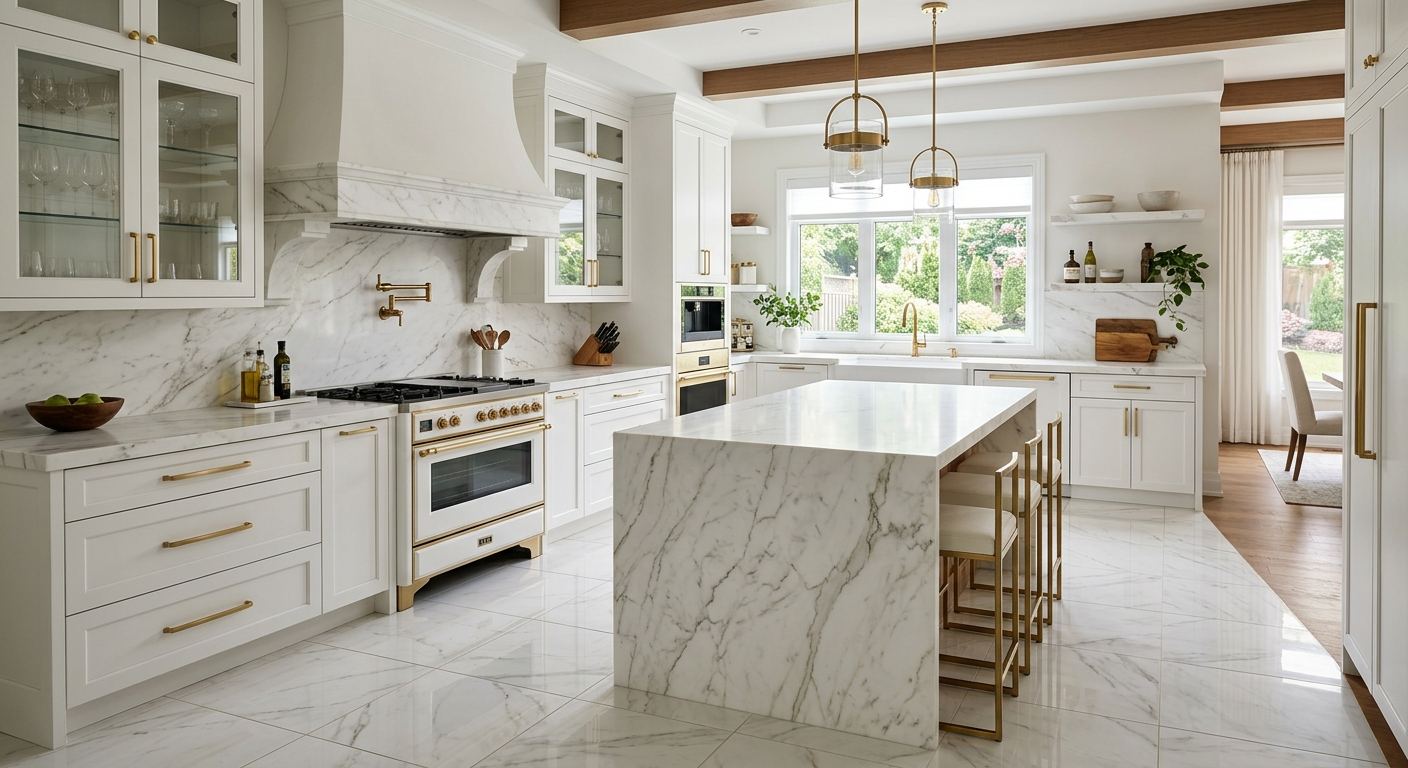
Kitchen renovation options and costs in Kameyosek
Kameyosek homeowners are usually deciding between a quick face-lift and a full rebuild, and the right choice depends on how the kitchen is used today and how they expect to sell later. With a 2021 population of 2,895 in the area (Statistics Canada, 2021 Census), most kitchens here sit within a smaller local housing base, so trades scheduling can feel tighter than in bigger Calgary neighbourhoods. At the same time, the Calgary economic region’s higher-value housing reality tends to raise finish expectations: when buyers see a renovation in the mid five-figures, they often expect quality cabinetry and modern solid-surface countertops rather than older laminate standards. (Statistics Canada, 2021 Census)
In this region, Calgary-area pricing is driven more by home values and household income than by weather. Alberta’s extreme temperature swings still matter—especially for adhesive-backed finishes, caulking performance, and how quickly materials acclimatize on site—but those impacts typically show up as planning and workmanship details, not as the main cost driver. Labour availability does influence cost: in Calgary, skilled trade rates commonly run about 90–140 per hour, so project management, design time, and installation labour become a significant part of the budget. This is why a cosmetic refresh is often scheduled faster, while full redesigns—especially those involving electrical, plumbing, and wall changes—require more coordinated trades.
Within the Calgary sphere, demand is particularly strong in higher-activity family areas such as Okotoks and Rocky View County, where similar cabinetry and countertop packages are frequently requested for everyday lifestyle upgrades. That same demand pattern tends to echo in Kameyosek quotes because contractors price based on regional workload and material lead times. Use the tiers below as a starting point before you compare contractor line items.
| Renovation Tier |
What's Included |
Typical Duration |
Price Range |
| Cosmetic refresh (paint, hardware, new appliances only) |
Cabinet paint or repaint, new hardware, appliance swap, minor caulking/touch-ups, basic cleanup |
2–5 working days |
$8,000–$20,000 |
| Mid-range full renovation (new cabinets, counters, sink, tile) |
Semi-custom or upgraded stock cabinetry, new countertops, sink and taps, backsplash tile, flooring patching, updated lighting as needed |
3–6 weeks |
$25,000–$60,000 |
| High-end full renovation (custom cabinets, stone counters, island) |
Fully custom cabinetry, quartz or natural stone counters, island build, elevated backsplash, upgraded appliance package, integrated lighting, more involved electrical/plumbing coordination |
6–12 weeks |
$65,000–$100,000 |
| Cabinet refacing only (new doors + drawer fronts, same boxes) |
New door/drawer fronts, new trim detail, updated hardware, optional repainting of existing frames, light demolition and reinstall |
1–3 weeks |
$8,000–$35,000 |
| Countertop swap only (laminate to quartz or stone) |
Template and install new counters (quartz/stone), adjust sink fit as needed, recaulk and reseal, backsplash tie-in if included |
3–10 working days |
$3,000–$12,000 |
| Backsplash tile installation only |
Surface prep, tile layout/install, grout, sealing where required, trim and caulking, minor outlet detailing |
3–7 working days |
$2,500–$8,000 |
Prices are estimates only and vary by project scope, site access and material selection.
What affects the price of kitchen renovation in Kameyosek
In Kameyosek and across the Calgary economic region, two contractors can quote the “same” kitchen renovation and still be 30–50% apart. The biggest reason is that finish choices and design complexity get bundled differently: one quote might include electrical upgrades, appliance ventilation, and thorough cabinet modifications, while another treats them as allowances. Labour timing matters too—Calgary’s active trade market often means scheduling and coordination time show up as higher project management costs.
Local home values and median income shape the typical finish tier far more than climate. In higher-value Calgary-area markets, homeowners often default to quartz or natural stone counters and semi-custom cabinetry because the renovation cost is more easily recovered on resale. In more modest market pockets, laminate and stock cabinets dominate because they deliver “good enough” appearance at a lower replacement cost. Either way, layout changes are the most unpredictable cost regardless of finish level: removing a wall, adding an island, or moving plumbing and gas can require demolition, new rough-in, longer labour hours, and rework of adjacent finishes.
Concrete examples you’ll feel in Kameyosek: (1) Kitchens with older plumbing runs may require pipe re-routing and can push countertop swap pricing beyond the typical $3,000–$12,000 range; (2) If your home uses exterior-grade wood trim and older caulking, seasonal expansion can reveal gaps faster, which increases time spent on prep and sealing during a mid-range $25,000–$60,000 renovation; (3) If you add under-cabinet lighting and want dimmers, electrical labour and material allowances can move the project closer to the higher band even without changing cabinet style.
| Price Factor |
Why It Matters |
Cost Impact |
| Cabinet tier — stock vs. semi-custom vs. fully custom millwork |
Higher tiers change material quality, tolerances, door styles, and how much carpentry is needed on site |
$8,000–$55,000 (cabinet portion varies widely) |
| Countertop material — laminate vs. quartz vs. granite vs. stone |
Material cost, thickness/edge profiles, and fabrication complexity affect both price and install time |
$3,000–$18,000 |
| Layout change — wall removal, island add, plumbing/gas move |
Demolition + rough-in + patching drive the biggest swings between “similar” quotes |
$5,000–$40,000 |
| Appliance package tier — builder vs. mid-range vs. pro-grade |
Pro-grade models often require ventilation planning, specialty electrical, and higher cabinet cut-outs |
$1,500–$15,000 |
| Flooring — refinish existing vs. full replacement |
Cut-and-fit kitchens can be manageable; full replacement adds demo, underlayment, and finishing |
$1,500–$12,000 |
| Backsplash — ceramic tile vs. marble vs. full-height slab |
Harder materials increase cutting time, waste, and substrate prep requirements |
$2,500–$10,000 |
| Electrical — new circuits for island, under-cabinet lighting |
More circuits and lighting points increase licensed work and inspection coordination |
$1,000–$8,000 |
| Permit fees and licensed trade requirements |
Work that triggers permits adds administrative time, inspection scheduling, and licensed trade costs |
$500–$5,000 |
Permits & regulations in Alberta
For Alberta kitchen renos in Kameyosek, the permit picture is mostly about what you change. A cabinet and countertop swap typically does not require a permit because you’re replacing finishes without altering plumbing, gas, structure, or electrical systems. Likewise, upgrading visible surfaces—like paint and backsplash—usually doesn’t require permits.
Permits and inspections are generally required when you: (1) move plumbing supply or drain lines, (2) relocate gas such as the stove/range or any gas-related venting or related modifications, (3) remove a load-bearing wall or otherwise alter structural support, and (4) add new electrical circuits (commonly for an island, additional outlets, or significant lighting/ventilation changes). Gas work must be completed by a licensed gas fitter, and electrical work by a licensed electrician, with inspections as required.
Step-by-step verification is simple and should be done before you sign: ask the contractor for (1) their Alberta licence number and company details; (2) a certificate of insurance for general liability; and (3) proof they carry WSIB/WCB coverage or provide the proper clearance letter for their trades. You can confirm licence status by checking the appropriate online registry for the trade, then cross-check that the insurance certificate matches the legal business name and address you’re contracting with. Always confirm in writing which party pulls permits—responsibility should be explicit in the contract.
Cabinets, countertops and layout decisions in Kameyosek
In Kameyosek, the three most consequential decisions for cost and satisfaction are: (1) the cabinet tier (stock, semi-custom, or custom), (2) the countertop material (laminate, quartz, granite, butcher block, or marble), and (3) layout changes (open-concept wall removal, island addition, or plumbing/gas relocation). Calgary buyers tend to look for clean lines, durable surfaces, and practical storage—so upgrades that improve usability (better drawer layouts, more pantry space, sensible appliance placement) usually outperform purely cosmetic changes.
Cabinet tier drives both fit and lead time. Stock cabinets are fastest and typically the lowest-cost route, but they can require more compromise in corner storage and panel alignment. Semi-custom cabinets are the “most popular mid-range” because you can adjust dimensions, upgrade hardware, and still stay near the $25,000–$60,000 mid-range full renovation band. Custom cabinets shine when your kitchen has unusual wall angles, ceilings, or you want specific storage features; that’s why high-end projects often land in the $65,000–$100,000 range—especially when paired with an island and premium stone.
Countertops are where durability meets maintenance. Quartz is a strong middle ground: it resists staining better than many natural options and typically needs minimal sealing. A real dollar example: swapping from laminate to quartz during a mid-range renovation may add a few thousand dollars, but it often avoids the early wear you’d otherwise see in heavy-use households—so it’s a better value than “upgrading everything except the worktop.” Marble looks premium but is more maintenance-heavy for acidic spills.
Layout changes are justified when the space gain improves flow: adding an island can boost prep space, but moving plumbing or gas lines tends to be where budgets jump most. In Alberta’s seasonal climate, proper acclimatization and ventilation planning are also important to keep finishes performing, especially with new cabinet adhesives and sealants.
| Option |
Durability |
Maintenance |
Best For |
Price Range |
| Stock cabinets (big-box) |
Good for normal family use; relies on standard sizing |
Low; clean with non-abrasive cleaners |
Fast timelines and budget-conscious refreshes |
$8,000–$20,000 |
| Semi-custom cabinets (local dealer) |
Very good; improved door/drawer hardware and better fit flexibility |
Low; wipe and periodic hardware checks |
Most Kameyosek renovations aiming for resale-ready finishes |
$15,000–$35,000 |
| Custom cabinets (local millwork shop) |
Excellent; tailored storage and precise detailing |
Low to moderate; depends on finish type |
Unusual layouts and “built-for-the-home” storage goals |
$30,000–$60,000 |
| Laminate countertop |
Moderate; can chip or burn with abuse |
Low to moderate; avoid heat directly on surface |
Cost control for cosmetic upgrades |
$3,000–$7,000 |
| Quartz engineered countertop |
High; strong stain and scratch resistance |
Low; routine cleaning, no sealing typically |
Family kitchens that want “set-and-forget” durability |
$6,000–$12,000 |
| Granite / natural stone countertop |
High; durable but varies by stone type and sealer quality |
Moderate; periodic sealing and careful cleaning |
Premium look with natural variation |
$8,000–$16,000 |
| Butcher block countertop |
Moderate to high; resilient but can show knife marks |
Moderate; oiling and protection needed |
Warm, casual kitchens and frequent food prep |
$5,000–$10,000 |
| Marble countertop |
Moderate; can etch/scuff with acidic exposure |
High; more frequent sealing and prompt spill cleanup |
Low-traffic kitchens that prioritize luxury appearance |
$10,000–$20,000 |
How to choose a kitchen renovation contractor in Kameyosek
Choosing a contractor in Kameyosek comes down to proof and clarity. In Alberta, verify licensing and coverage before you trust anyone with your home. Ask for their Alberta licence number (for applicable trades) and confirm they carry general liability insurance with your renovation scope listed. If they use subcontractors, you should also request proof those trades are properly licensed and insured. For workers on your project, confirm WSIB/WCB coverage (or the contractor clearance letter that shows their account is in good standing) and ensure the certificate of insurance matches the legal entity on your contract.
Then get 2–3 itemised written quotes, not just a single lump sum. A good quote separates labour and materials (cabinet supply, countertop fabrication, demolition, electrical/plumbing rough-in, drywall patching, tile install, disposal). Read the scope carefully: what’s excluded (old cabinet removal, hidden water damage, subfloor prep, appliance haul-away)? Is permit pulling included? Is waste disposal included? If a contractor refuses to name exclusions, that’s a risk.
Warranty matters for both workmanship and products. Ask for the workmanship warranty length (and what it covers), plus manufacturer warranty details for cabinets and counters, and whether warranties are transferable if you sell. Payment schedules should be restrained: never pay more than about 10–15% upfront. Holdback until substantial completion reduces the risk of unfinished punch-list items. Finally, get a start date and a completion estimate in writing, including lead-time assumptions for cabinets and stone templating.
- Request licence numbers and confirm trade licensing where electrical/gas/plumbing is involved.
- Ask for certificate of insurance and verify limits and business name match your contract.
- Confirm WSIB/WCB coverage or clearance letter before work begins.
- Get itemised labour + materials breakdowns for cabinets, counters, tile, electrical/plumbing, and labour hours.
- Ask what happens if your kitchen requires extra demo due to hidden damage.
- Confirm permit responsibility and inspection scheduling in the written scope.
- Verify disposal/haul-away is included for old cabinets, counters, and debris.
- Ask about acclimatization for counters and cabinetry materials in Alberta’s seasonal temperature swings.
- Request a detailed schedule: demolition, rough-ins, cabinet install, countertop template/measure, final finishes.
- Clarify warranty terms for labour workmanship and product manufacturing warranties.
- Confirm whether appliances are supplied/installed and who handles warranty registration.
- Use a payment schedule with modest deposits and holdback until punch list completion.
Red flags in Kameyosek kitchen renos include: (1) quotes that are not itemised and only state a total price with no allowances; (2) “we’ll deal with permits later” language; (3) asking for large upfront payments beyond 10–15%; (4) no written warranty details for labour; and (5) unclear who is responsible for inspection scheduling after electrical or gas-related work.
Frequently asked questions — kitchen renovation in Kameyosek
How do I budget for a kitchen renovation?
Start with a realistic tier based on what you’re changing. If you’re only updating hardware, paint, and swapping appliances, budget closer to the cosmetic refresh band (often around $8,000–$20,000) and keep expectations about what changes won’t address (storage layout, aging plumbing, outdated countertop surfaces). If you’re aiming for a resale-ready update with new cabinets and counters, plan for the mid-range full renovation band of $25,000–$60,000. For a redesign with an island, premium cabinetry, and stone, many projects land in the $65,000–$100,000 range. In Alberta, the biggest budget swings usually come from layout changes that require new plumbing/gas/electrical rough-in, not from typical seasonal temperature effects—though materials still need proper acclimatization and sealing for long-term performance.
Can I move my kitchen sink or stove?
Yes, you can move a sink or stove in Kameyosek, but it’s the part of the renovation that most often changes the total price. Moving a sink usually requires rerouting plumbing supply and drain lines; moving a stove can involve relocating gas and the range hood ventilation plan. That work typically triggers permits and must be performed by licensed trades, with inspections after rough-in. If you want to keep costs predictable, the best strategy is often relocating within the same plumbing “zone” (staying close to existing drain runs) and keeping your island placement aligned with existing service routes where possible. Your contractor should itemise these changes so you can compare quotes apples-to-apples against the countertop-only band or the mid-range full renovation budget.
What's the most cost-effective kitchen upgrade?
The most cost-effective upgrade is usually the one that modernizes the “work surfaces” without a full teardown. For many Kameyosek households, a countertop swap is a strong value move: replacing laminate with quartz typically fits the countertop-only band of $3,000–$12,000, and it instantly updates the look and day-to-day durability. If your cabinets are structurally sound, cabinet refacing can also be efficient—often in the $8,000–$35,000 range—because it avoids replacing the cabinet boxes. Purely cosmetic changes like paint and new hardware can also refresh a kitchen quickly, but they don’t solve issues like worn cabinet interiors, dated layouts, or countertop staining. The best value comes from pairing a durable surface upgrade with minimal electrical/plumbing disruption.
Custom vs stock cabinets — is custom worth it?
Custom cabinets can be worth it when your kitchen has constraints that standard options can’t solve—odd wall lengths, ceiling height variations, or a strong need for specific storage features (pantries, pull-outs, tailored corner solutions). In Kameyosek and the broader Calgary market, many homeowners choose semi-custom to get close to that fit without the highest millwork cost. Stock cabinets are typically the fastest and cheapest route, but they may require compromises in layout and finishing detail. Custom work often pushes projects toward higher total budgets (commonly approaching the upper full-renovation band like $65,000–$100,000)—especially when paired with premium stone and an island. If you’re not changing the layout, semi-custom is often the best “worth it” balance for resale-ready aesthetics and practical storage.
How do I choose a kitchen contractor in Kameyosek?
In Alberta, choose a contractor who can prove licensing and coverage and who provides itemised quotes. Ask for their Alberta licence details, a certificate of insurance (general liability that matches the legal name on the contract), and confirmation of WSIB/WCB coverage or a clearance letter. Then request 2–3 quotes that break down labour vs materials and clearly list what’s included: permit pulling responsibility, disposal/haul-away, and what happens if there’s hidden damage behind existing cabinets. For warranty, confirm workmanship warranty length and manufacturer warranty terms for cabinets and counters, and whether warranties are transferable. Pay responsibly: avoid large upfront payments beyond about 10–15% and keep a holdback until completion and punch list. A contractor who won’t put scope and schedule in writing is usually the highest risk.
What order do kitchen renovation steps happen in?
A typical order in Kameyosek starts with design finalization and measurements, then demolition and rough-ins. First come demolition and any structural review if you’re altering walls. Next are plumbing and gas rough-in (if any lines move), followed by electrical rough-in for new circuits, outlets, and under-cabinet lighting. After rough-ins pass required inspections, the job moves into drywall patching, subfloor adjustments, and flooring prep. Cabinets install next, then countertop templating and fabrication (quartz/stone shops schedule time), and finally countertops are set. Backsplash tile, painting, trim, and appliance hookups follow, with final caulking and finishing at the end. This sequencing matters because stone templating should happen after cabinets are level and secured, and it helps prevent rework during Alberta’s temperature swings.