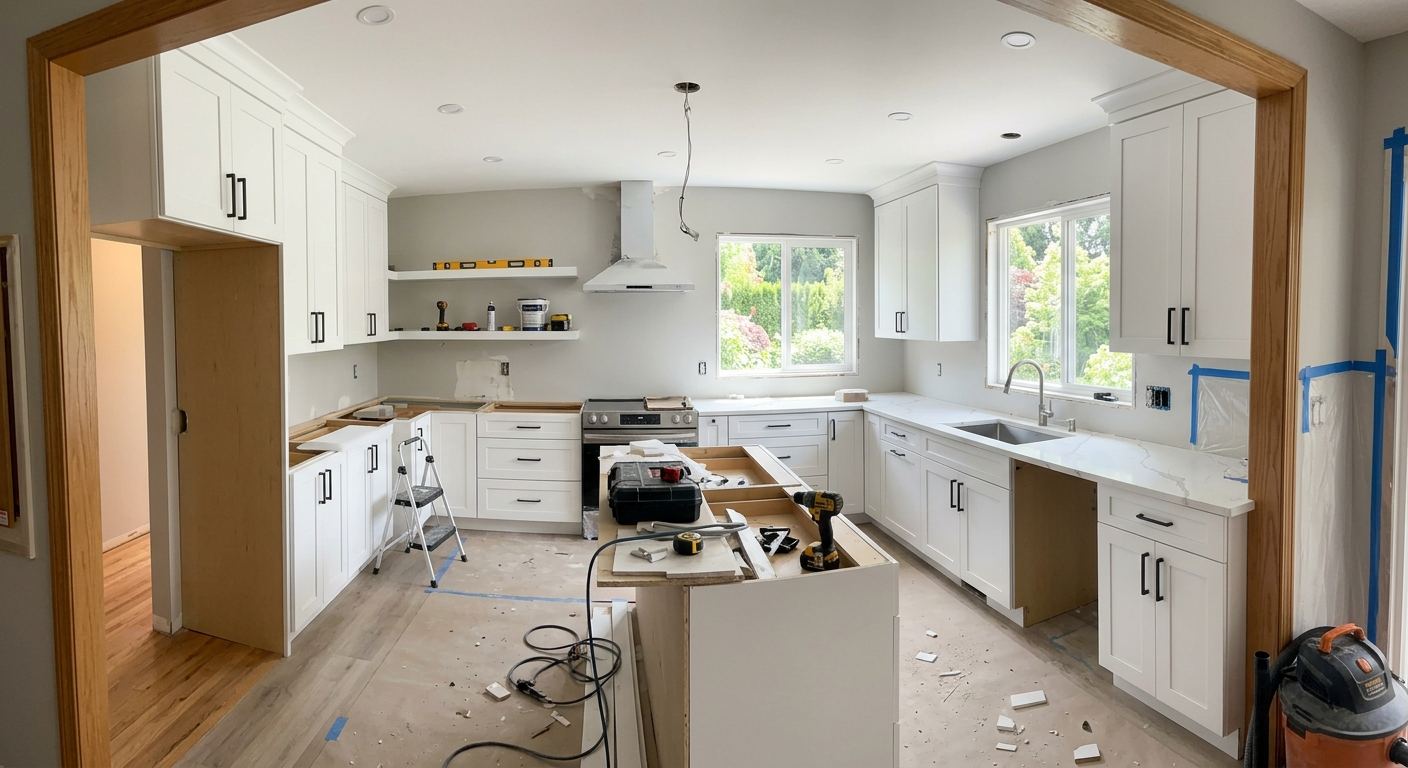
Kitchen renovation options and costs in Menisa
In Menisa, Alberta, kitchen renovations usually start with three questions: what you want to change, how long you can live with disruption, and what finish level your home can support. With a very small local population of 2,545 (Statistics Canada, 2021 Census), you’ll often see tighter availability for niche trades—so scheduling earlier can affect your total cost. Across the wider Calgary economic region, homeowners typically choose finishes based on resale expectations and the market’s ability to absorb higher-end materials; in higher-value pockets of the region, the “refresh” quickly becomes a mid-to-high tier redesign. That’s why renovation budgets track more closely to local home value and household income than to climate.
Calgary’s trade demand also matters: skilled labour in this region commonly runs around $90–$140 per hour, and labour/design/project management can become a large share of the budget even when materials look simple. Even though Alberta winters don’t directly change kitchen materials, cold snaps can expose installation issues—like poor venting behind ranges or weak ventilation under soffits—so reputable contractors plan for durability and proper airflow from day one. In Menisa, trades tend to be especially in demand around established residential corridors connected to Calgary commuting routes, where owners often blend kitchen upgrades with broader home maintenance.
Use the options below to compare typical scopes in Menisa, then choose a tier based on how much you’re changing—not just what you’re upgrading.
| Renovation Tier |
What's Included |
Typical Duration |
Price Range |
| Cosmetic refresh (paint, hardware, new appliances only) |
Cabinet paint/stain or touch-up, new hardware, replace appliances (no cabinet moves), minor electrical for appliance hookups, simple cleanup/patching |
3–7 days |
$10,000–$25,000 |
| Mid-range full renovation (new cabinets, counters, sink, tile) |
Semi-custom or upgraded stock cabinets, new countertops, undermount sink and faucet, backsplash tile, flooring spot repair/replacement as needed, plumbing reconnects, basic lighting updates |
3–5 weeks |
$25,000–$60,000 |
| High-end full renovation (custom cabinets, stone counters, island) |
Custom cabinetry, premium quartz/natural stone, island design, integrated lighting, upgraded plumbing/electrical run(s), full backsplash (often extended), appliance package allowance, deeper flooring and finishing |
6–10 weeks |
$60,000–$100,000 |
| Cabinet refacing only (new doors + drawer fronts, same boxes) |
Door/drawer replacement, new hardware, re-seal/finish existing boxes, optional under-cabinet lighting tie-in, backsplash repair/limited tile replacement |
2–4 weeks |
$8,000–$35,000 |
| Countertop swap only (laminate to quartz or stone) |
Remove existing top, new quartz/stone install, sink reinstall (if compatible), seam/edge finishing, caulking and backsplash trim adjustments |
3–10 days |
$3,000–$12,000 |
| Backsplash tile installation only |
Ceramic/porcelain tile install, surface prep, grout/seal, caulk/trim details, limited patching around outlets |
2–5 days |
$2,500–$8,000 |
Prices are estimates only and vary by project scope, site access and material selection.
What affects the price of kitchen renovation in Menisa
In Menisa and across the Calgary economic region, it’s common to see quotes for the “same” kitchen swing by 30–50%. The main reason isn’t climate—it’s how local home values and typical finishes shape the scope. In higher-value parts of the region, homeowners often choose quartz or natural stone counters and semi-custom cabinetry because the upgrade aligns with buyer expectations and can be easier to recover on resale. In more modest markets, laminate and stock cabinetry can deliver a better ROI, because you can modernize the look without fully re-engineering the layout.
Second, the biggest unpredictability comes from layout changes. Removing a wall, adding an island, or moving plumbing/gas lines tends to trigger extra labour, inspection steps, and trade coordination—so the cost changes even if you keep finishes mid-range (for example, within the $25,000–$60,000 full-renovation band). On top of that, Alberta’s active construction market means scheduling labour is itself a cost driver; if trades are booked out, homeowners can pay more for priority windows and accelerated material deliveries.
Here are a few practical Menisa examples that commonly raise or lower cost:
- Older Calgary-area homes sometimes have dated undersized wiring runs, so adding an island circuit or new under-cabinet lighting may add electrical time beyond “basic” refresh assumptions.
- If your sink is moved to a different cabinet bank, plumbing changes can push a countertop-only plan beyond the $3,000–$12,000 band.
- If your backsplash area needs more than spot repair (poor tile substrate, moisture issues behind the range wall), the project stops being “tile only” and becomes prep-and-install.
Use these factors to interpret differences between bids before you decide who is “cheaper.”
| Price Factor |
Why It Matters |
Cost Impact |
| Cabinet tier — stock vs. semi-custom vs. fully custom millwork |
Higher tiers require more shop time, better materials, tighter tolerances, and often upgraded hardware/finishes |
$8,000–$40,000 |
| Countertop material — laminate vs. quartz vs. granite vs. stone |
Material cost and fabrication complexity drive install price; stone also affects cutting/seaming and supports |
$3,000–$20,000 |
| Layout change — wall removal, island add, plumbing/gas move |
Structural and service work adds trades, inspection steps, and coordination risk |
$5,000–$35,000 |
| Appliance package tier — builder vs. mid-range vs. pro-grade |
Electrical/gas requirements, venting style, and dimensions can change install labour and accessory needs |
$2,000–$15,000 |
| Flooring — refinish existing vs. full replacement |
Removal adds disposal and subfloor checks; matching heights matters with new cabinetry toe-kicks |
$1,500–$12,000 |
| Backsplash — ceramic tile vs. marble vs. full-height slab |
Premium stone increases cutting precision, material handling, and sealing steps |
$2,500–$12,000 |
| Electrical — new circuits for island, under-cabinet lighting |
New circuits require licensed work, potential panel upgrades, and inspection scheduling |
$1,000–$8,000 |
| Permit fees and licensed trade requirements |
Work tied to plumbing, gas, load-bearing changes, and electrical typically triggers permits and inspections |
$300–$6,000 |
Permits & regulations in Alberta
In Alberta, many kitchen “makeovers” do not require permits, but several common upgrades do. Cabinet and countertop swaps typically do not require a permit, as long as you are keeping existing connections and you’re not altering services. Where permits and licensed trades become necessary is when you move or change the infrastructure: relocating plumbing supply/drain lines, moving a gas stove or changing the range hood venting for gas appliances, removing a load-bearing wall, and adding new electrical circuits (for example, new outlets, island circuits, or significant under-cabinet lighting runs) usually require permitting and inspections.
Because Menisa homeowners often start with cabinets and counters and then “just tweak” the layout, it’s important to understand the steps before signing. Step one: identify what is changing—new sink location, moved dishwasher, new island with plumbing, or a new range position. Step two: ask the contractor to list the specific permit-requiring scope in writing. Step three: confirm that gas work is done by a licensed gas fitter and that electrical work is performed by a licensed electrician, both with appropriate inspections.
To verify a contractor in Alberta, check three things: (1) their Alberta licence status and relevant trade credentials using the online registry for trades that apply; (2) their certificate of insurance (liability insurance showing coverage limits and effective dates); and (3) WSIB/WCB coverage documentation or clearance letter for their workers. Also confirm who pulls permits (contractor vs. homeowner) before you pay a deposit.
Cabinets, countertops and layout decisions in Menisa
If you want the biggest result for your budget in Menisa, focus on three decisions: cabinet tier, countertop material, and whether you’re changing the layout. Calgary buyers tend to reward a clean, durable kitchen with modern sightlines. That said, “upgrading” doesn’t always mean “moving walls”—sometimes the best ROI comes from better storage, improved finishes, and smart appliance/lighting choices.
1) Cabinet tier. Stock cabinets are the fastest and cheapest path, but they may not fit perfectly without compromise. Semi-custom (the common mid-range choice) is a practical balance, letting you adjust heights, internal layouts, and door styles to match the room. Custom cabinets cost more, but they shine when you need off-standard dimensions, tall pantry integration, or tailored millwork.
2) Countertop material. Laminate is budget-friendly and easier to replace later, but it’s less resistant to heat and can show wear at seams. Quartz is the popular middle ground: durable, low maintenance, and consistent. Granite or natural stone adds prestige and unique patterns, but it needs more care. Butcher block can work for warmth, yet it requires ongoing maintenance and careful sealing—especially in a kitchen where moisture and cleaning products are frequent.
3) Layout changes. Open-concept wall removal or adding an island can justify the spend when it improves flow and creates seating—but moving plumbing or gas lines is where costs can jump regardless of countertop choice. For example, keeping a renovation within the $25,000–$60,000 full-renovation band is often realistic with a cosmetic-to-mid upgrade; however, moving a sink for an island can push you toward the upper part of the mid-range or into the $60,000–$100,000 high-end range even if cabinets stay semi-custom, because plumbing, electrical, and inspection steps add labour and coordination time.
Frame your decisions around what buyers expect in Calgary-area resale: storage efficiency, bright lighting, and counters that look premium but are easy to maintain through daily use.
| Option |
Durability |
Maintenance |
Best For |
Price Range |
| Stock cabinets (big-box) |
Good for everyday use; relies on standard sizes and installation quality |
Low maintenance; may need caulk/tuning at seams over time |
Fast timelines and tight budgets |
$8,000–$20,000 |
| Semi-custom cabinets (local dealer) |
High durability with better fit; improved hinges and finish options |
Low maintenance; stable hardware improves day-to-day feel |
Most Menisa homeowners balancing quality and cost |
$20,000–$45,000 |
| Custom cabinets (local millwork shop) |
Best fit and highest build quality for unusual dimensions and premium hardware |
Low maintenance; long service life when built correctly |
Unique layouts, custom pantries, and high-end finishes |
$45,000–$80,000 |
| Laminate countertop |
Moderate; can chip or scorch if heat isn’t managed |
Wipe clean; avoid prolonged heat and aggressive scraping |
Budget refreshes and rental-friendly upgrades |
$3,000–$6,000 |
| Quartz engineered countertop |
High; excellent scratch and stain resistance for busy households |
Low; simple cleaning with non-abrasive products |
Family kitchens and resale-friendly upgrades |
$6,000–$12,000 |
| Granite / natural stone countertop |
High; strong surface with natural variation |
Moderate; typically needs periodic sealing |
Premium look seekers and statement kitchens |
$8,000–$18,000 |
| Butcher block countertop |
Good but depends on upkeep; sensitive to moisture if untreated |
Higher; regular oiling/sealing and gentle cleaning |
Warm, traditional styles and flexible prep use |
$4,000–$10,000 |
| Marble countertop |
Beautiful but softer; can scratch etch with acids |
Higher care; requires protective habits and careful cleaners |
Low-abuse showpieces and luxury aesthetics |
$12,000–$25,000 |
How to choose a kitchen renovation contractor in Menisa
Choosing the right contractor in Menisa is less about glossy photos and more about verification and clarity. Start with Alberta licensing and coverage. Confirm that the contractor (and subcontractors) carry the right credentials for the work: gas work by a licensed gas fitter, electrical by a licensed electrician. Ask for their certificate of liability insurance—look for coverage limits that make sense for renovation scope—and request proof of WSIB/WCB coverage or a clearance letter so you’re not held responsible for worker-related incidents.
Next, get 2–3 itemised written quotes, ideally with a labour-and-materials breakdown. You want line items for demolition, cabinetry install, counter fabrication/installation, plumbing/electrical allowances, tile prep, drywall/painting, and disposal. Avoid “lump sum” only quotes with vague exclusions. Also confirm whether permit pull is included (when needed), whether material delivery and staging are covered, and what’s included for waste removal.
Warranty matters in kitchen renovations because workmanship issues often show up after the finish settles. Ask how long the workmanship warranty lasts, what it covers (for example, cabinet alignment, countertop seam issues, grout cracking), and whether the product warranty is direct-to-manufacturer. Finally, keep payment sensible: never pay more than 10–15% upfront, and use a holdback until the job is complete and deficiencies are corrected. Request a start date and completion estimate in writing so you can plan around inspections and countertop fabrication lead times.
- Ask for their Alberta trade licence numbers and confirm which subcontractors they’ll use.
- Request certificate of insurance plus proof of WSIB/WCB coverage.
- Get an itemised quote with labour and material allowances separated.
- Ensure the quote lists exclusions (what’s not included) and contingency for hidden damage.
- Confirm who pulls permits when plumbing, gas, structural, or electrical work is involved.
- Check warranty length for workmanship and how countertop seams are handled.
- Review the payment schedule; limit deposits to 10–15% upfront.
- Require a written start date and a milestone-based completion plan.
- Confirm disposal and dump fees are included or priced transparently.
- Ask about lead times for cabinets and stone/quartz fabrication.
- Verify dust control and site protection (plastic, floor protection, clean daily).
- Look for a clear change-order process so pricing doesn’t drift.
Red flags to watch for in Menisa: (1) no proof of insurance or unclear WSIB/WCB coverage, (2) a quote that bundles electrical/plumbing into “allowance” without specifying who does the work, (3) no permit responsibility stated when layout changes include plumbing/gas, (4) pressured deposits beyond 15% upfront, and (5) vague timelines that ignore countertop fabrication and inspection windows.
Frequently asked questions — kitchen renovation in Menisa
How long does a kitchen renovation take in Menisa?
In Menisa, timelines depend mostly on whether you’re doing a cosmetic refresh versus a full renovation with counters and cabinetry. A cosmetic refresh (paint, hardware, appliance-only) is often complete in 3–7 days. A mid-range full renovation typically takes about 3–5 weeks when cabinet delivery and countertop fabrication land on schedule. High-end builds with custom millwork and stone can take 6–10 weeks due to lead times and additional coordination. Alberta’s busy construction market in the Calgary region can also affect availability of trades—especially electricians and gas fitters—so the earlier you lock dates, the smoother the sequence usually is. If you’re moving plumbing or adding electrical for an island, inspections can add time that should be scheduled into the plan. (Statistics Canada, 2021 Census)
Quartz vs granite countertops — which is better?
“Better” depends on how you use your kitchen and what maintenance you’re willing to do. Quartz is typically the best all-around choice for busy households: it’s very resistant to staining and scratching and usually requires only routine cleaning. Granite is also durable and offers unique natural patterns, but it’s more variable from slab to slab and typically needs periodic sealing to help protect against staining. If you want a resale-friendly, low-maintenance counter in Menisa with fewer upkeep steps, quartz often fits the bill—especially since many kitchens in the Calgary area steer toward quartz as a practical premium. If you love the stone look and don’t mind the extra care, granite can be an excellent upgrade. Budget-wise, quartz commonly sits around the $6,000–$12,000 countertop range, while granite/natural stone often trends higher within the $8,000–$18,000 band.
Should I reface or replace my cabinets?
Refacing is usually worth it when your existing cabinet boxes are structurally sound, level, and properly installed. It can be an efficient way to modernize doors, drawer fronts, and hardware while keeping much of the original footprint—often aligning with the $8,000–$35,000 cabinet refacing range. Replacing makes more sense when boxes are water-damaged, sagging, badly out of level, or when you want major changes to interior storage (like custom pull-outs), height adjustments, or full layout changes. In Menisa, homeowners sometimes start with reface to stay in a tighter budget, then realize they also need new flooring details, updated lighting, or revised plumbing clearance around sinks—at that point, replacement may be the more straightforward long-term solution. A good contractor should help you assess cabinet box condition before you commit, because the substructure drives how well doors align and operate for years.
Do I need a permit for a kitchen renovation in Alberta?
Some parts of a kitchen renovation can be done without permits, while others almost always require them in Alberta. Cabinet and countertop swaps generally do not require permits. However, permits and licensed trades typically come into play when you move plumbing supply/drain lines, relocate gas appliances or change gas venting, remove a load-bearing wall, or add electrical circuits (like new island outlets or significant lighting runs). Because the scope can blur during renovations, confirm responsibility with your contractor in the written agreement before work starts. To verify compliance in Menisa, ask which permits will be pulled (and by whom), then review the contractor’s licensing, insurance certificate, and WSIB/WCB coverage. Gas work must be performed by a licensed gas fitter, and electrical work by a licensed electrician, with required inspections for the altered systems.
What's the ROI on a kitchen renovation?
ROI varies by neighbourhood appeal, home value expectations, and how much of the renovation is “value-visible” to buyers. In the Calgary economic region, homeowners often spend toward the local finish expectations—quartz or natural stone counters and semi-custom cabinetry are common in higher-value homes—because those choices tend to align with what buyers notice during showings. If you stay in a mid-range refresh that modernizes key surfaces without major reconfiguration, ROI is often stronger than a project with expensive structural or service changes that buyers can’t immediately see. For example, a mid-range full renovation often clusters around $25,000–$60,000; that spend is more likely to feel proportionate to resale in many Calgary-area markets than an upscale $60,000–$100,000 project unless the layout is significantly improved. The best ROI comes from efficient storage, durable counters, and a cohesive look—not simply the highest material grade.
How do I budget for a kitchen renovation?
Budgeting starts by matching your scope to a realistic tier and then adding a contingency. In Menisa, many homeowners budget using the common bands: cosmetic refreshes often sit around $10,000–$25,000, mid-range full renovations are commonly $25,000–$60,000, and high-end full redesigns can reach $60,000–$100,000 when you add custom cabinetry, premium stone, islands, or major layout changes. Next, decide where you’ll spend: cabinets, countertops, and whether you’re moving plumbing/gas/electrical. Layout changes add the most unpredictable costs even if finishes stay simple, so include a contingency for hidden damage (subfloor, old plumbing, electrical corrections). Ask for 2–3 itemised quotes so you can compare labour and material allowances, including disposal and any permit requirements. Finally, plan the payment schedule responsibly: limit deposits to 10–15% and hold back until completion. In small local markets, confirm lead times early so you don’t pay for rush delivery.