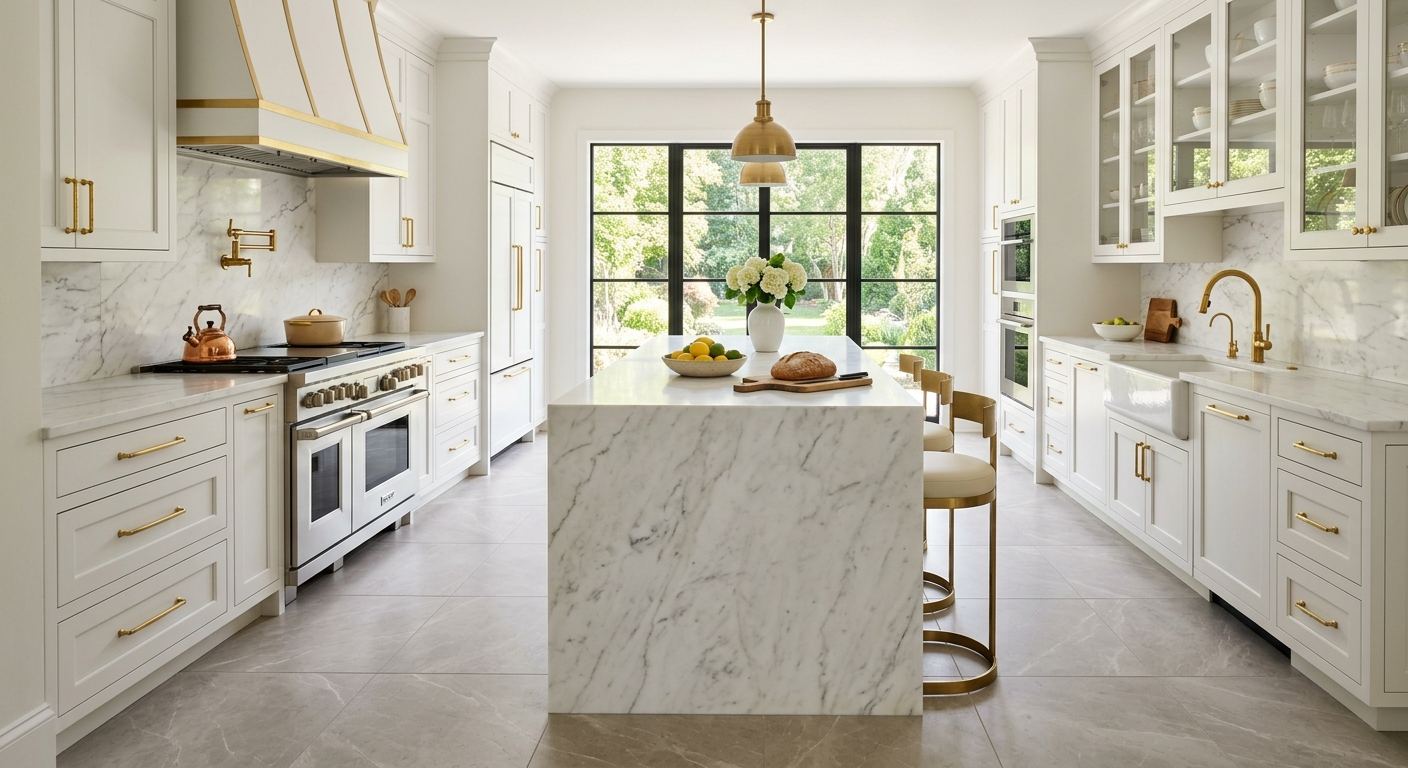
Kitchen renovation options and costs in Summerside
Kitchen renovation in Summerside is usually driven by resale expectations and how comfortable you want the space to feel day-to-day. With a population of 7,976 in the area (Statistics Canada, 2021 Census), there’s enough demand for multiple contractors, but scheduling can still tighten during busy spring and early summer. Many homeowners in higher-value pockets of the Calgary economic region typically choose a finish tier that matches the rest of the home—so the renovation is planned like a long-term upgrade, not a quick refresh. That expectation is why “basic” renovations often still land in the mid five-figure range once cabinetry, countertops, and trade labour are bundled.
Alberta’s kitchen costs tend to follow the market more than the climate. Calgary-region pricing is strongly shaped by home values and household incomes, which push people toward quartz or natural stone and semi-custom or custom cabinetry—choices that add to labour and material costs. Labour availability matters too: in the Calgary region, skilled trade rates often run about $90–$140 per hour, so design time, layout coordination, and project management meaningfully affect your total. Summerside’s older housing stock can also influence scope; if your existing base cabinets and subfloor need corrections for level or water exposure, costs rise quickly regardless of counter choice.
Builders and installers are especially in demand in the newer development areas around the city where larger lot builds are common—those projects typically require faster turnarounds for cabinetry and electrical tie-ins. From there, the question becomes which renovation tier matches your goals, and what budget band you should expect.
| Renovation Tier |
What's Included |
Typical Duration |
Price Range |
| Cosmetic refresh (paint, hardware, new appliances only) |
Paint and trim touch-ups, new cabinet hardware, appliance swap, minor caulking/trim repair |
2–5 days on site |
$6,500–$18,000 |
| Mid-range full renovation (new cabinets, counters, sink, tile) |
New semi-custom cabinets, countertop (quartz or upgraded solid surface), sink and faucet, backsplash tile, plumbing refresh as needed |
3–5 weeks |
$25,000–$70,000 |
| High-end full renovation (custom cabinets, stone counters, island) |
Custom millwork, stone or premium engineered counters, island build and cabinetry, higher-end tile and integrated lighting |
5–10 weeks |
$65,000–$100,000 |
| Cabinet refacing only (new doors + drawer fronts, same boxes) |
New doors/drawer fronts, new hardware, new paint/finish, update of trims; limited plumbing changes |
1–3 weeks |
$8,000–$35,000 |
| Countertop swap only (laminate to quartz or stone) |
Remove and reinstall countertop, cut-outs, sink/cooktop adjustments, basic edge upgrade if selected |
3–7 days |
$3,000–$12,000 |
| Backsplash tile installation only |
Surface prep, tile supply and install, grout/seal where required, caulking and finish trims |
3–7 days |
$2,500–$8,000 |
Prices are estimates only and vary by project scope, site access and material selection.
What affects the price of kitchen renovation in Summerside
Even when you’re aiming for the “same” kitchen renovation in Summerside, quotes across the Calgary region can swing 30–50%—and it usually isn’t because the contractor in one neighbourhood is charging more for the sake of it. Higher-end finish expectations (driven by home values and household income) change material choices and how much labour goes into the details. In higher-value areas of the Calgary economic region, homeowners often default to quartz or natural stone counters and semi-custom cabinetry because they want a renovation that holds its value on resale. In more modest upgrade plans, laminate and stock cabinet systems dominate because they deliver better ROI per dollar.
Climate doesn’t typically make or break renovation pricing here; instead, it influences installation timing and the need for careful ventilation and moisture control during finishes. Alberta’s fast-paced construction season also means contractor availability can tighten, which affects scheduling and sometimes increases coordination costs. The biggest unpredictable cost is layout work: removing a wall, adding an island, or moving a gas line or plumbing stack tends to require extra framing, subfloor corrections, and licensed trade involvement—pushing labour time and permit requirements.
In Summerside specifically, three common examples that move budgets quickly are: (1) older cabinet boxes that aren’t square, leading to extra shimming and longer install days; (2) inconsistent subfloor level near older plumbing rough-ins, which can add to countertop fabrication adjustments; and (3) larger tile formats on backsplashes that demand more time for prep and grout control. If your project is closer to a countertop swap only (often around $3,000–$12,000), these unknowns may stay contained. But if you’re moving toward a mid-range full renovation ($25,000–$70,000), the trade coordination makes every change ripple through the schedule and cost.
| Price Factor |
Why It Matters |
Cost Impact |
| Cabinet tier — stock vs. semi-custom vs. fully custom millwork |
Custom doors, better tolerances, and specialty storage cost more and take longer to fabricate and install |
Can change cabinet labour/materials by tens of thousands on full projects |
| Countertop material — laminate vs. quartz vs. granite vs. stone |
Material price, thickness, edge profiles, and fabrication complexity drive both cost and install time |
May swing countertop portion by several thousand dollars |
| Layout change — wall removal, island add, plumbing/gas move |
Framing, mechanical rough-in access, and licensed trades add cost and reduce certainty during bidding |
Often the largest variable—commonly the difference between “refresh” and “full redesign” budgets |
| Appliance package tier — builder vs. mid-range vs. pro-grade |
Ventilation requirements, power needs, and fit/trim requirements vary by tier and brand |
Can raise the budget notably without changing your layout |
| Flooring — refinish existing vs. full replacement |
Demo and re-install time, underlayment needs, and moisture-proofing matter most in kitchens |
Often adds days and material costs, especially if floor level is off |
| Backsplash — ceramic tile vs. marble vs. full-height slab |
Material weight, cutting complexity, and finish sealing requirements change labour and risk |
Can materially affect total even though it’s “just” a wall surface |
| Electrical — new circuits for island, under-cabinet lighting |
Lighting layouts, GFCI locations, and new circuit work add licensed time and inspection steps |
Often adds both labour and permit-related overhead |
| Permit fees and licensed trade requirements |
When plumbing, gas, electrical, or structural changes are involved, permits and inspections become mandatory |
Can add several hundred to a few thousand dollars and extend timelines |
Permits & regulations in Alberta
In Alberta, a cabinet and countertop swap typically does not require a permit. You can usually replace cabinets in the same footprint and install new counters without pulling permits—provided you’re not changing plumbing or electrical connections beyond minor reconnections. Where permits do come into play is when your work changes building services or structure. Moving plumbing supply or drain lines, relocating a gas appliance (including the stove/range area), removing a load-bearing wall, or adding new electrical circuits (for example, dedicated island outlets or under-cabinet lighting tied into new wiring) generally requires permits and licensed trade involvement.
Gas work must be performed by a licensed gas fitter, and electrical work by a licensed electrician; both require proper inspections. The practical takeaway for homeowners in Summerside is simple: confirm permit responsibility with your contractor before you sign—this should be in writing within the scope and contract terms. If the quote doesn’t clearly state who pulls permits (and who pays for them), get it clarified.
To verify Alberta licence and coverage step-by-step, I recommend:
- Ask for the contractor’s Alberta licence/registration details and check them through the appropriate online registry resources.
- Request a current certificate of insurance (liability) showing coverage dates and job address.
- Confirm WSIB/WCB coverage (or the applicable coverage status) for workers on your project.
- For gas and electrical, request the licensed contractor’s credentials for each trade before work starts.
- Keep copies of permits/inspection confirmations as they’re issued.
Cabinets, countertops and layout decisions in Summerside
The three most consequential decisions in a Summerside kitchen renovation are cabinet tier, countertop material, and whether you change the layout. Cabinet tier drives speed and final fit: stock is fastest and cheapest, semi-custom is usually the best balance for most homeowners, and custom cabinetry is ideal when you want a perfect fit around soffits, awkward corners, or an island plan. Countertops matter just as much visually and functionally. Laminate is budget-friendly and durable for everyday use, but it can be less forgiving than premium surfaces around seams and heavy impact. Quartz and natural stone elevate the look and hold up well to busy kitchens, while butcher block adds warmth and needs more careful maintenance. Layout decisions—open-concept wall removal, island addition, or moving plumbing/gas—create the biggest cost spread because they add framing, subfloor corrections, and multiple licensed trades.
In the Calgary resale market feeding Summerside buyers, the finish expectations often rise with renovation price. When you target a mid-range full renovation budget (commonly $25,000–$70,000), many homeowners land on semi-custom cabinets and quartz, plus a backsplash that ties the room together. If you aim higher (often $65,000–$100,000 for high-end full redesigns), custom millwork, premium stone counters, and an island with integrated lighting are what buyers typically notice first.
Here’s a realistic dollar example: if you upgrade from laminate to quartz, you might pay roughly a few thousand more for the counters and fabrication (often within $3,000–$12,000 for a swap depending on size and edge profile). That difference is usually justified because it upgrades both durability and resale appeal, without the same risk profile as moving plumbing or gas lines. In contrast, moving a sink 6–10 feet usually costs more than choosing a higher-end countertop—because it triggers rough-in changes, potential wall/ceiling patching, and inspection steps.
Climate-wise, Summerside’s kitchen moisture and temperature swings are managed primarily by good ventilation and proper sealing during installation. Proper spacing around sinks, careful caulking, and curing times protect your surfaces and help avoid warranty issues.
| Option |
Durability |
Maintenance |
Best For |
Price Range |
| Stock cabinets (big-box) |
Good everyday durability; limited flexibility for unusual dimensions |
Low—keep hardware tight and wipe spills promptly |
Fast timelines, straightforward layouts, tighter budgets |
$8,000–$25,000 |
| Semi-custom cabinets (local dealer) |
Solid durability with better fit and more storage options |
Low to moderate; hinges and slides benefit from periodic checks |
Most Summerside renovations aiming for strong resale appeal |
$15,000–$45,000 |
| Custom cabinets (local millwork shop) |
Highest durability and best fit around the existing structure |
Low; premium finishes are easy to maintain when installed correctly |
Architectural constraints, island builds, premium storage layouts |
$35,000–$70,000 |
| Laminate countertop |
Decent surface strength; seams can be vulnerable if quality is low |
Keep moisture out of seams; use cutting boards |
Cost-sensitive projects and quick refreshes |
$3,000–$6,500 |
| Quartz engineered countertop |
Very durable for daily use; resists staining better than laminate |
Low—typical wipe-downs with mild cleaner |
Busy households wanting “set and forget” performance |
$6,500–$12,000 |
| Granite / natural stone countertop |
Highly durable; unique patterns add premium character |
May require periodic sealing depending on stone and finish |
Homeowners prioritizing natural look and premium resale style |
$8,000–$15,000 |
| Butcher block countertop |
Good impact resistance; can dent if abused |
Requires regular oiling; wipe and dry quickly near sinks |
Warm, traditional kitchens and lighter-use workflows |
$5,000–$10,000 |
| Marble countertop |
Elegant but softer; can etch from acids and heat |
Higher care level; sealing and careful cleaning are essential |
Premium visual impact where you’ll maintain it properly |
$10,000–$20,000 |
How to choose a kitchen renovation contractor in Summerside
Choosing the right contractor in Summerside starts with credentials and clarity. In Alberta, verify licence status and coverage before any demolition. Ask for the contractor’s proof of liability insurance (certificate showing coverage and limits), and confirm WSIB/WCB coverage for workers so you’re not exposed to liability if someone is injured. For trade-specific work, require confirmation that gas-related tasks are handled by a licensed gas fitter and electrical by a licensed electrician. Get copies—don’t rely on verbal assurances.
Next, get 2–3 itemised written quotes. A quality quote separates labour and materials instead of only providing a single lump-sum number. Make sure it includes cabinet supply and install, countertop fabrication/installation, tile prep, disposal, and any allowance items. Read the scope carefully: what’s excluded (for example, wall patching beyond a specified height, re-tiling adjacent areas, or replacing underlayment), is permit pulling included, and does disposal cover construction waste only or also old appliance hauling?
Warranty should be specific. Look for a workmanship warranty length (for example, how long they stand behind install issues), the manufacturer warranty on cabinets/counters, and whether warranties are transferable if you sell. Payment schedule matters: never pay more than 10–15% upfront. Hold back a meaningful final portion until the job is complete, cleaned, and any punch-list items are addressed. Finally, demand a start date and completion estimate in writing, including key milestones like cabinet template, countertop fabrication lead time, and tile install dates.
- Confirm Alberta coverage: liability certificate and WSIB/WCB documentation.
- Ask for proof of licensed trades for gas and electrical tasks.
- Request an itemised labour + materials breakdown (not a vague lump sum).
- Check what demolition includes and where patching ends.
- Confirm disposal/haul-away is included and what’s excluded.
- Ask whether permit fees and inspections are included or billed separately.
- Get exact cabinet lines/specs and countertop product details in writing.
- Review backsplash prep requirements (surface flatness and backer prep).
- Verify warranty terms for workmanship and product separately.
- Use a milestone-based payment plan with a final holdback.
- Require a written schedule with lead times and contingency days.
- Ensure the quote states how changes are priced (change-order process).
Concrete red flags I see in Summerside kitchen projects: (1) quotes that omit permit responsibility while including gas or electrical scope; (2) “no problem” answers to plumbing/gas relocation without a layout and rough-in plan; (3) vague allowances for cabinets/counters that later become expensive change orders; (4) requesting large upfront payments beyond 10–15%; and (5) no written warranty details on workmanship or no contract for scope and inclusions.
Frequently asked questions — kitchen renovation in Summerside
Should I renovate my kitchen before selling in Summerside?
If you’re selling in Summerside, a kitchen renovation can pay off, but only if you choose the right scope and finish tier for local buyer expectations in the Calgary economic region. In practice, many buyers respond best to kitchens that look updated without looking overly bespoke unless the home is positioned for premium pricing. If you want maximum impact per dollar, consider a mid-range full renovation (often $25,000–$70,000) with semi-custom cabinetry and quartz—this tends to photograph well and feels durable in daily use. If your budget is tighter or your layout is already efficient, a focused refresh (appliances/hardware/paint) or a countertop swap can modernize the space with less disruption. In older Summerside homes, also budget for the “hidden fixes” that affect showings: cabinet alignment, subfloor level near plumbing, and proper backsplash prep—these issues can’t be ignored if you want the reno to look truly finished.
What's the most popular kitchen style in Summerside right now?
Right now, the most common style choice I see for Summerside and the broader Calgary economic region is a clean, modern look with warm neutrals: shaker-style or simple slab-front cabinets, light-to-medium paint colours, and quartz counters paired with a straightforward backsplash. Homeowners also lean toward practical storage (pantries, drawer organisers) because it’s functional and helps the kitchen “work” for everyday life. When projects move into the high-end tier, the most popular upgrades are custom or semi-custom millwork, an island with seating, and better integrated lighting (for example, under-cabinet LEDs). Those selections align with how buyers evaluate kitchens—layout clarity and durable surfaces matter more than trendy colours that may date quickly.
How do I know if I need to update my kitchen plumbing in Summerside?
You may need plumbing updates if you see persistent leaks under the sink, slow drainage, corrosion around shut-off valves, or if the shut-offs don’t hold pressure. In older homes around Summerside, it’s also common to find rough-in lines that don’t match newer cabinet depths or appliance connections—this becomes obvious once you remove old cabinets. Another sign is when you plan to move the sink or change the dishwasher layout; moving plumbing supply/drain lines is usually a permitted job with licensed trade involvement in Alberta. If your renovation scope is a countertop swap only (often $3,000–$12,000), you can often keep plumbing as-is—unless you discover damage during demo. For full renovations, assume you’ll confirm plumbing condition during demolition before final cabinet placement, so you’re not stuck with surprise change orders.
What is the difference between a galley and open-concept kitchen?
A galley kitchen is typically a narrow, corridor-style layout with work surfaces and cabinetry on two parallel walls, often with limited room for an island. An open-concept kitchen blends the kitchen into the living or dining area with fewer walls and a broader sightline. Cost implications are real: a galley often renovates faster because utilities may already be in place and there’s less structural work. Open-concept renovations are more likely to involve moving electrical, plumbing runs, and sometimes permits if you’re removing a load-bearing wall—plus there’s more finishing work for floors, ceilings, and transitions. In Alberta, the layout choice affects not only labour but also how trades coordinate inspections and scheduling.
How do I get accurate kitchen renovation quotes in Summerside?
To get accurate quotes in Summerside, start by giving contractors the same baseline information: your measurements, a clear list of what stays (or moves) and your preferred finish tier. Request 2–3 itemised quotes so you can compare cabinet lines, countertop products, tile allowance, electrical scope, disposal, and whether permits are included. Quotes should specify if the installer includes prep work for tile (surface flatness, backer prep) and whether wall repairs beyond a certain height are included. For scope clarity, highlight anything that triggers permits—like relocating plumbing supply/drain, gas changes, removing load-bearing walls, or adding new electrical circuits. Avoid selecting finishes too late; material lead times can shift schedules, especially for quartz and custom cabinetry. Finally, confirm the payment schedule (10–15% upfront max) and ask how change orders are priced if hidden conditions are found after demo.
What's the best countertop material for a busy Summerside kitchen?
For a busy kitchen in Summerside, quartz is often the best “balance” choice: it’s durable, low-maintenance, and handles daily spills and cooking activity well without the higher care requirements of some natural stones. In real project terms, quartz countertop swaps commonly fall into the $6,500–$12,000 band depending on kitchen size, edge profile, and cut-outs. Laminate is a cost-saving option and can work for basic use, but it’s less forgiving than quartz if you’re rough on seams or if heavy moisture exposure gets into joints. Natural stone like granite is also strong but may require sealing depending on the exact product, and marble needs careful cleaning to avoid etching. If you want the simplest upkeep while still feeling “premium” for resale in the Calgary region, quartz is usually the most practical top pick.