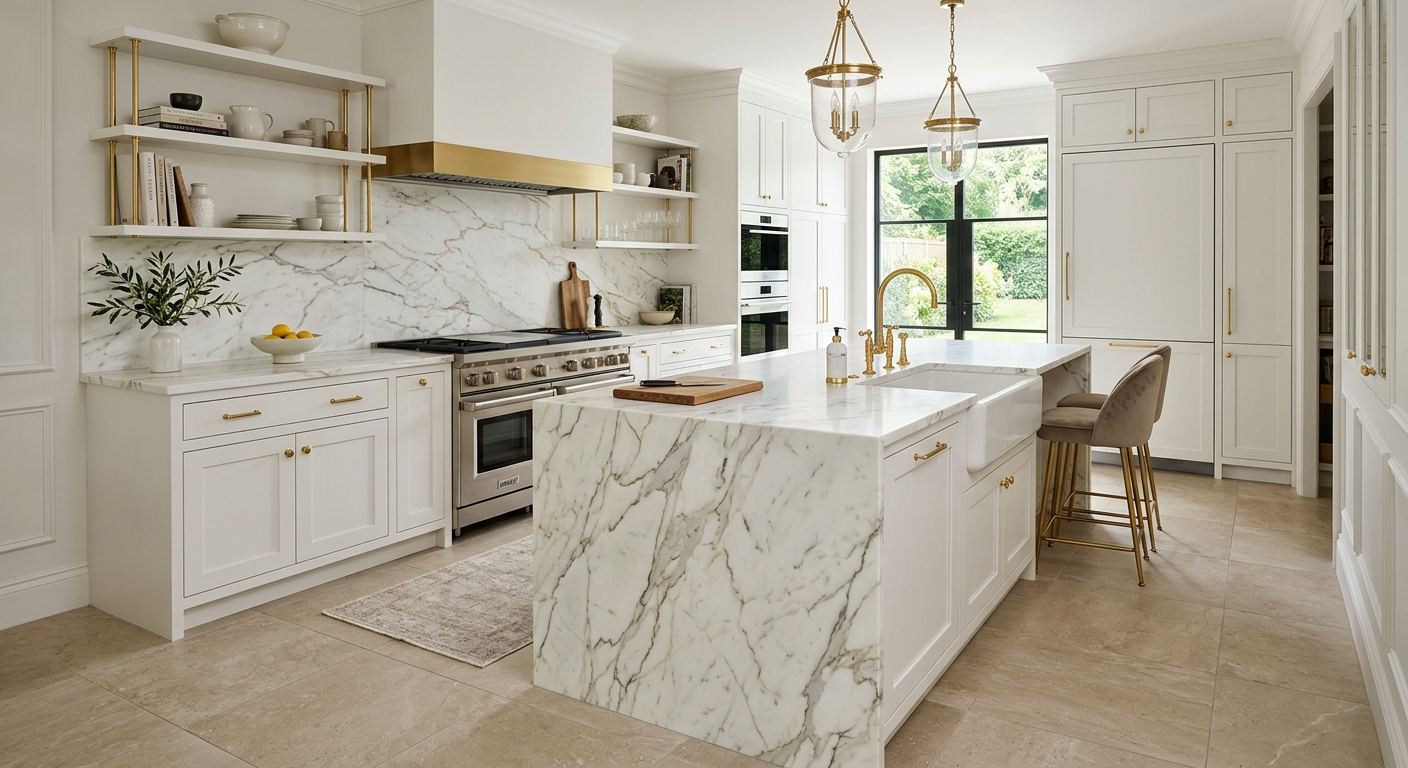
Kitchen renovation options and costs in Deer Run
In Deer Run, Alberta, homeowners typically start by choosing how much change they want—because even a “small” kitchen job can swing widely once labour, cabinetry selection, and countertop upgrades are priced in. Deer Run’s broader region is supported by a strong housing market; Calgary’s economic region has a large share of buyers who expect durable finishes that photograph well and sell well. With a population of 4,910 in Deer Run (Statistics Canada, 2021 Census), projects are smaller in volume than major city cores, so scheduling can feel tighter when trades are busy. At the same time, the Calgary region’s home value and income levels often push renovations toward quartz or stone counters and semi-custom cabinetry rather than laminate and stock boxes—especially when the kitchen will be a key selling room.
Calgary-area market demand, not weather alone, shapes pricing. Alberta’s winter freeze-thaw and indoor humidity swings can stress older caulking, grout, and water-related components, so when kitchens are opened up, contractors often include allowance for ventilation checks and leak-prone joints. Labour availability also matters: in the Calgary region, skilled trade rates often run about 90–140 per hour, so design time, project management, and rework risk carry meaningful cost. For homeowners near Deer Run’s established residential pocket off Deer Run Boulevard, cabinet installers and tile crews are especially in demand because most nearby projects are full-living homes with limited staging space.
Below is a practical way to compare typical renovation tiers in Deer Run, from a fast cosmetic refresh to a full redesign that may include layout changes and upgraded electrical.
| Renovation Tier |
What's Included |
Typical Duration |
Price Range |
| Cosmetic refresh (paint, hardware, new appliances only) |
Cabinet paint or trim repaint, new hardware/handles, touch-up caulking, appliance swap (no plumbing relocation, no cabinet rebuild), basic cleaning and reassembly |
2–5 business days |
$4,000–$12,000 |
| Mid-range full renovation (new cabinets, counters, sink, tile) |
New semi-custom or good-stock cabinets, new counters, sink and tap replacement, backsplash tile, under-cabinet finishing, plumbing connections (no major line moves assumed) |
3–6 weeks |
$25,000–$65,000 |
| High-end full renovation (custom cabinets, stone counters, island) |
Fully custom cabinetry, natural stone or premium engineered stone, island build with upgraded lighting and wiring, sink/fixture upgrades, more extensive tile/stone detailing, potential layout optimization |
6–12+ weeks |
$70,000–$110,000 |
| Cabinet refacing only (new doors + drawer fronts, same boxes) |
Refacing materials, new doors/drawer fronts, updated hardware, optional new crown/trim details, countertop and backsplash usually excluded unless noted |
1–3 weeks |
$8,000–$35,000 |
| Countertop swap only (laminate to quartz or stone) |
Removal of old counters, templating, new quartz/stone install, sink cut-outs (if unchanged), polishing/sealing as needed, basic caulking and re-sealing |
3–10 business days |
$3,000–$12,000 |
| Backsplash tile installation only |
Tile supply/installation, removal of existing backsplash where required, waterproofing/underlayment (as needed), grout sealing and finishing |
3–7 business days |
$2,500–$8,000 |
Prices are estimates only and vary by project scope, site access and material selection.
What affects the price of kitchen renovation in Deer Run
In the Calgary economic region, quotes for what looks like the “same” kitchen can vary by 30–50% because the biggest cost drivers are not cosmetic—they’re scope risk (what’s behind the walls), labour intensity (trade scheduling), and finish tier (cabinets, counters, tile detailing). Home values and household incomes in the Calgary area strongly influence what finish tier homeowners choose, and that drives pricing more than climate. In higher-value parts of the region, homeowners often default to quartz or natural stone counters and semi-custom cabinetry because the upgrade cost is more easily recovered on resale. In more modest renovation budgets, laminate counters and stock cabinetry dominate because they deliver better ROI per dollar.
Layout changes are the cost wildcards in Deer Run. Removing a wall, adding an island, or moving plumbing and gas lines can trigger additional demolition, re-framing, venting checks, and licensed trade work. For example, a typical countertop swap band of $3,000–$12,000 can stay relatively predictable when plumbing stays put. But if you’re moving a sink or changing an electrical island feed, that same kitchen may move from the mid five-figures toward $25,000–$65,000 or higher because the project becomes “multiple trades plus coordination.”
Concrete Deer Run examples that often raise costs: older homes with timeworn shutoff valves and undersized venting can force plumbing adjustments during cabinet removal; cracked subfloor areas near exterior doors may need patching once tile is removed; and high-wear kitchen layouts with tight clearances can increase install time for cabinet runs and stone templating. While Alberta’s winters don’t directly set contractor pricing, freeze-thaw and indoor moisture swings can accelerate sealant failure—so when kitchens open up, contractors commonly budget time for water-sensitive areas and ventilation checks.
| Price Factor |
Why It Matters |
Cost Impact |
| Cabinet tier — stock vs. semi-custom vs. fully custom millwork |
Higher tiers have better fit/finish, more door and drawer options, and increased build accuracy for uneven walls |
$8,000–$55,000 depending on the kitchen size and complexity |
| Countertop material — laminate vs. quartz vs. granite vs. stone |
Material cost, edge profiles, cut-outs, and installation method (and sometimes templating rework) drive price |
$3,000–$30,000 for a typical countertop scope |
| Layout change — wall removal, island add, plumbing/gas move |
Demolition, re-framing, potential ventilation/electrical/plumbing work, and increased scheduling complexity |
$5,000–$35,000 (often the largest swing) |
| Appliance package tier — builder vs. mid-range vs. pro-grade |
Higher-end appliances can require different electrical specs, ventilation performance, and trim allowances |
$1,500–$15,000 beyond the cabinetry/counter budget |
| Flooring — refinish existing vs. full replacement |
If flooring needs to be removed for cabinet install and you choose new tile/LVP, disposal and labour increase |
$2,000–$12,000 |
| Backsplash — ceramic tile vs. marble vs. full-height slab |
Full-height installs require more waterproofing, higher labour time, and careful seam alignment |
$2,500–$18,000 |
| Electrical — new circuits for island, under-cabinet lighting |
Licensed work, wiring run distances, junction box upgrades, and inspection requirements |
$800–$6,500 |
| Permit fees and licensed trade requirements |
When scope triggers permits, fees and trade coordination can add both cost and schedule time |
$300–$2,500 plus scheduling |
Permits & regulations in Alberta
In Alberta, many kitchen “swap” projects do not require permits, but several common renovations do. Cabinet and countertop replacements typically do not require a permit when you are not moving plumbing, gas, structural elements, or electrical circuits. However, moving plumbing supply or drain lines, relocating a gas appliance (including the stove/range) or changing a gas-rated exhaust setup, removing a load-bearing wall, or adding new electrical circuits for an island or substantial lighting package generally do require permits and licensed trades.
For a homeowner in Deer Run, the safest approach is to verify three things before signing: the contractor’s Alberta licence status, their liability insurance, and their coverage for worker compensation (WSIB/WCB). Step-by-step: (1) Ask for the contractor’s licence details and confirm using the appropriate Alberta online registry that matches their trade category or business registration; (2) request an up-to-date certificate of insurance showing liability coverage (and ensure the policy includes the work scope); (3) request proof of WSIB/WCB coverage or a clearance letter, then ensure the names match the contracting entity on your contract.
Also confirm permit responsibility in the written contract. Even when you’re not pulling permits yourself, the contractor should identify which permits are needed, who is applying, and what inspections will occur. If they can’t clearly state “what requires a permit” versus “what doesn’t,” that’s a schedule risk and a liability risk for you.
Cabinets, countertops and layout decisions in Deer Run
The three most consequential decisions in a Deer Run kitchen renovation are your cabinet tier, your countertop material, and whether you change the layout. Cabinet tier affects how quickly the kitchen installs, how well it fits older walls, and how confidently buyers recognize quality. Stock cabinets are the fastest and cheapest; semi-custom is the most popular mid-range path because you can upgrade storage and door style without fully custom lead times. Custom cabinets give the best fit for irregular spaces, but the trade-off is cost and scheduling.
Countertops matter even when the rest of the room is unchanged. Laminate is the budget-friendly option, but it’s more susceptible to edge wear and cannot match the visual depth of premium surfaces. Quartz is the workhorse in Calgary’s market—durable, low-maintenance, and consistent in appearance. Granite/natural stone and marble offer premium look, but they can bring higher upfront costs and greater maintenance requirements; they’re also more sensitive to staining and require more careful sealing practices. In this region, these finishes are chosen less for “climate performance” and more for buyer expectations and resale confidence.
Layout decisions are where you justify real cost. Adding an island or opening an area for better flow can be worth it when it improves usability and gathering space. But relocating plumbing or gas lines is the price jump you should only do if the space gain changes how you live day-to-day or how the home will be marketed. For example, if you keep the plumbing where it is, staying closer to the countertop band of $3,000–$12,000 can deliver a major visual upgrade. If you move a sink and add lighting, you’re often pushed into the mid-range full renovation band of $25,000–$65,000 because you’re paying for coordination across trades, not just materials.
| Option |
Durability |
Maintenance |
Best For |
Price Range |
| Stock cabinets (big-box) |
Good for everyday use; hinges and finishes vary by brand |
Low; keep hardware adjusted and clean with non-abrasives |
Fast timelines and budget-first upgrades |
$8,000–$22,000 |
| Semi-custom cabinets (local dealer) |
Very good durability; more flexibility for storage and layout tweaks |
Low; wipe clean, tighten hardware periodically |
Most Deer Run renos where you want better fit and more storage |
$20,000–$45,000 |
| Custom cabinets (local millwork shop) |
Excellent longevity; tailored construction for uneven walls and special dimensions |
Low; treat like quality cabinetry—avoid standing water near sink zones |
High-end kitchens, unusual spaces, and “perfect fit” expectations |
$45,000–$80,000+ |
| Laminate countertop |
Moderate; edges are the weak point with heavy wear |
Low; avoid impact and excessive heat directly on the surface |
Budget refreshes where appearance matters most |
$3,000–$6,500 |
| Quartz engineered countertop |
High; resists staining and daily abrasion well |
Low; routine cleaner only, minimal sealing needs |
Most Calgary-area homeowners who want a “durable, modern” finish |
$6,500–$12,000 |
| Granite / natural stone countertop |
Very good; heat tolerant but can be porous depending on stone |
Moderate; sealing and prompt spill cleanup are important |
Premium look with homeowners willing to maintain |
$9,000–$20,000 |
| Butcher block countertop |
Good; durable with proper oiling, but sensitive to standing water |
Higher; periodic oil/conditioning and careful moisture management |
Warm, traditional kitchens with mindful maintenance |
$4,500–$10,500 |
| Marble countertop |
High beauty; softer and more prone to etching/staining than quartz |
Higher; requires diligent sealing and careful cleaning |
Showpiece kitchens where maintenance is acceptable |
$12,000–$28,000+ |
How to choose a kitchen renovation contractor in Deer Run
Choosing the right contractor in Deer Run is mostly about proof and paperwork—because kitchens involve multiple trades and real site risk. First, verify Alberta licensing (or the appropriate registration/competency for their trade category). Second, confirm liability insurance: request a current certificate and make sure it covers the actual scope (cabinet installation, tile work, carpentry, and any subcontracted electrical/gas work). Third, check WSIB/WCB coverage: ask for proof of coverage or a clearance letter, and ensure the names match the legal business entity on your contract so you’re not assuming risk for an uninsured crew. For any gas-related or electrical scope, insist that licensed gas fitters and electricians are used.
Next, get 2–3 itemised written quotes—labour and materials broken out, not a single lump sum. Carefully read the scope: what’s included for permits (if required), disposal and dumpster fees, protection of floors during demolition, and whether backsplash tile setting includes waterproofing/underlayment. Ask for details on exclusions and allowances (for example, “allowance for existing drywall repair” or “unknown subfloor condition”), because those are where budget overruns start. Review warranty terms: the workmanship warranty length, the product/manufacturer warranty, and whether warranty coverage is transferable if you sell the home. Finally, payment schedule should be sensible—never more than 10–15% upfront, then progress payments tied to clear milestones; keep a holdback until completion and final walkthrough.
Before work begins, require a written timeline with start date, target completion, and how delays are communicated.
- Ask for licence/registration numbers and confirm they align with the trade scope.
- Request a current certificate of liability insurance before signing.
- Verify WSIB/WCB coverage (or clearance letter) matches the contractor’s business name.
- Insist on itemised quotes (labour, materials, allowances, disposal, and protection).
- Confirm whether permit pulls and inspections are included if moving plumbing/gas/electrical.
- Clarify what happens if hidden damage is found (trigger, approval process, change order).
- Check who does backsplash underlayment/waterproofing where applicable.
- Confirm countertop templating and install dates tied to cabinet lead times.
- Ask about dust control plan and how floors/doorways are protected during demolition.
- Require a written payment schedule with milestone-based progress payments.
- Confirm warranty: workmanship duration, manufacturer warranty documentation, and transferability.
- Get a written start date, realistic schedule, and weekly communication plan.
Red flags to watch for with Deer Run kitchen contractors: they won’t provide insurance/WSIB paperwork on request; they only offer lump-sum quotes with no line items; they avoid discussing permits and licensed trade requirements when layout changes are proposed; they ask for large upfront deposits (beyond 10–15%); or they can’t give a clear start/finish timeline and change-order process.
Frequently asked questions — kitchen renovation in Deer Run
Can I move my kitchen sink or stove?
Yes, you can in Deer Run, Alberta, but it’s usually where project cost and permitting requirements change the most. Moving a sink commonly means relocating plumbing supply and/or drain lines, and that typically triggers a permit and licensed plumbing work. Moving a stove can involve gas line changes and must be done by a licensed gas fitter, with inspections as required. If you move only within the existing footprint (for example, swapping placement where existing rough-ins align), some scopes can stay simpler, but you’ll still want a contractor to confirm what’s behind the walls. Budget-wise, sink/stove moves tend to push projects beyond countertop-only pricing (often $3,000–$12,000) into a more complete renovation tier like $25,000–$65,000 when cabinets, electrical, and ventilation are affected.
What's the most cost-effective kitchen upgrade?
For most Deer Run homeowners, the most cost-effective upgrade is the one that delivers a major visual change while keeping plumbing and electrical as-is. In practice, that’s often either a quality countertop swap or a cabinet face/door update, depending on your cabinet box condition. A countertop-only change—from laminate to quartz or stone—can fall around $3,000–$12,000 and makes the entire kitchen look newer, especially with updated sink and tap. If your cabinets are structurally fine, cabinet refacing (new doors/drawer fronts) can refresh the look without full demolition, commonly landing around $8,000–$35,000. If you want the strongest “bang for the buck” with minimal surprises, pair one of these upgrades with a well-done backsplash rather than a full layout change.
Custom vs stock cabinets — is custom worth it?
Custom cabinets can be worth it when you have an irregular space, want specific storage solutions, or need the best fit for older framing. In Deer Run, many homes have minor wall or floor irregularities, and semi-custom or custom millwork can cover gaps more cleanly than stock options. But if your goal is budget control and speed, stock cabinets can be the right choice—especially for straightforward layouts. “Worth it” also depends on your resale strategy in the Calgary economic region: buyers often pay for consistent finishes and good storage, so moving from stock to semi-custom is a common upgrade path. A practical way to decide is to compare quotes side-by-side: stock tends to start lower, while custom can push you into the higher end of cabinet budgets and longer lead times. If you’re already planning a full renovation, custom may be justified; if you’re only refreshing, refacing or semi-custom is usually the smarter first step.
How do I choose a kitchen contractor in Deer Run?
Start with verification and clarity. In Alberta, ask every contractor for proof of liability insurance and WSIB/WCB coverage, and confirm their licensing/registration fits their scope of work. Then request 2–3 itemised quotes (labour plus materials, including demolition, disposal, and any allowances for subfloor/drywall repair). Scope clarity matters: confirm whether permits are included when you’re moving plumbing, gas, load-bearing elements, or adding electrical circuits. Review warranty details—workmanship warranty length and whether manufacturer warranties are documented—and ask if any warranty is transferable if you sell your home. Payment should be milestone-based; avoid paying more than 10–15% upfront. Finally, insist on a written timeline with start date and completion estimate. If a contractor can’t provide these basics, you’ll usually feel the impact later through change orders and schedule slips.
What order do kitchen renovation steps happen in?
A typical Deer Run kitchen renovation moves in a logical sequence to avoid rework: first comes site protection and demolition, then rough-in work (plumbing/gas/electrical) if you’re altering locations or adding circuits. After that, framing/drywall repairs happen, followed by insulation/finishing prep. Cabinet installation is usually next, then countertop templating and fabrication, with countertop install after cabinets are set. Flooring and backsplash typically follow—often backsplash after cabinets, because it ties into the countertop line. Appliances are usually final-stage. One reason order matters is that Alberta winters can amplify moisture issues: once demolition starts, the contractor should manage dust control and ensure ventilation and sealing are handled correctly before closing walls. If you keep plumbing in place, timelines can shorten and you may stay closer to countertop-only windows (often $3,000–$12,000) instead of full mid-range schedules.
Can I live at home during a kitchen renovation in Deer Run?
Often yes, but it depends on the renovation tier and how much of the kitchen is out of service. A cosmetic refresh or small countertop/backplash project is usually workable with a temporary sink setup and access to another cooking area. For mid-range full renovations (commonly $25,000–$65,000) many homeowners live at home, but they set expectations: you may have limited meal prep while cabinets are removed, floors are protected, and trades work through rough-in and installation phases. During high-end redesigns or layout changes, it’s more difficult because demolition and electrical/plumbing work create longer “no-cook” periods and more dust control needs. In Deer Run, plan for traffic flow and staging space from day one; if parking is tight, it can affect when deliveries (especially cabinets and stone) arrive. Ask your contractor for a daily plan and a clear “ready-to-use kitchen” checkpoint before you decide.