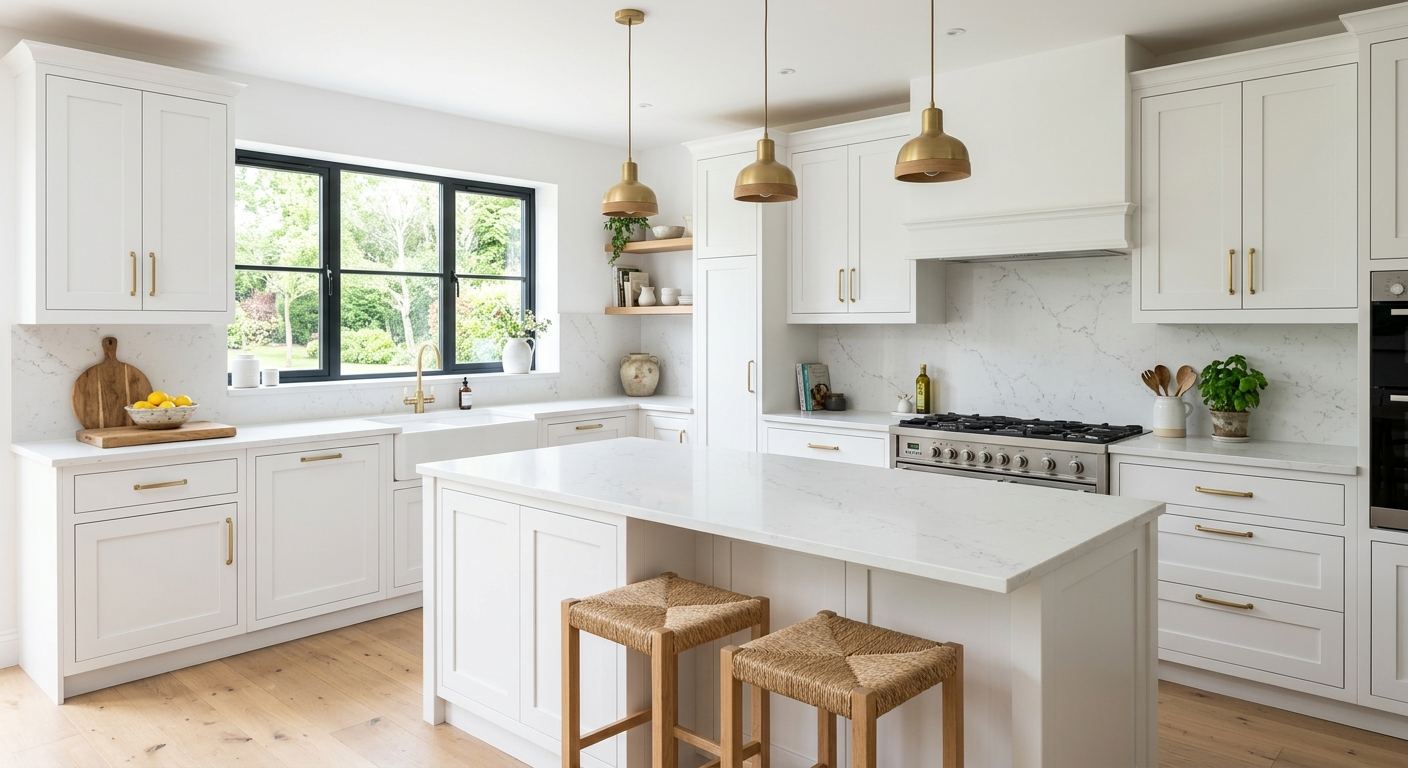
Kitchen renovation options and costs in Centretown
Kitchen renovation in Centretown tends to follow the same pattern as the rest of central Toronto: homeowners renovate with resale expectations in mind, and that pushes finish choices toward mid- to premium tiers. With a population of 25,687 in Centretown (Statistics Canada, 2021 Census), the neighbourhood has a steady flow of owner-occupied homes and condo-adjacent buyers who want clean lines, durable surfaces, and modern storage. In the Toronto economic region, kitchen budgets are strongly tied to local home values and household incomes, so a “basic” refresh can price out differently than the same plan in a more price-sensitive part of the GTA. The result is that many projects aim for the full kitchen bands of $25,000–$90,000, even when the layout stays mostly the same.
Toronto’s weather doesn’t directly drive cabinetry pricing, but it affects workmanship demand: high humidity in summer and cold, dry winters put more stress on adhesives and caulking lines, so we plan for proper surface prep and backer-board/tile detailing. We also see strong contractor availability in areas like Centretown around Elgin Street and near the downtown core, where trades are busiest because parking and site access are tight—meaning scheduling and logistics can shift timelines. If you’re deciding between a cosmetic refresh and a full remodel, the table below will help you compare realistic scopes and durations by tier.
| Renovation Tier |
What's Included |
Typical Duration |
Price Range |
| Cosmetic refresh (paint, hardware, new appliances only) |
Cabinet paint or colour update, new hardware, appliance swap, minor caulking/trim touch-ups |
3–7 days |
$10,000–$18,000 |
| Mid-range full renovation (new cabinets, counters, sink, tile) |
Semi-custom or stock cabinets, quartz (or similar), new sink/faucet, backsplash tile, basic electrical/lighting updates |
3–5 weeks |
$35,000–$60,000 |
| High-end full renovation (custom cabinets, stone counters, island) |
Custom millwork, premium stone counters, island construction, expanded tile/stone detailing, higher-end appliance package |
5–9 weeks |
$70,000–$90,000 |
| Cabinet refacing only (new doors + drawer fronts, same boxes) |
Door/drawer replacement, new veneer panels where applicable, existing box rebuilds if needed, new hardware |
1.5–3 weeks |
$12,000–$28,000 |
| Countertop swap only (laminate to quartz or stone) |
Removal and install of new countertop, sink cut-out changes as required, basic edge profile update |
2–5 days |
$3,500–$15,000 |
| Backsplash tile installation only |
Tile supply and install, backer board as required, grout/seal, finish trim and transitions |
2–7 days |
$2,000–$10,000 |
Prices are estimates only and vary by project scope, site access and material selection.
What affects the price of kitchen renovation in Centretown
In Centretown, two homeowners can receive quotes that differ by 30–50% for the same “kitchen refresh” because Toronto-area pricing is driven more by finish tier and risk (complex site conditions, trades scheduling, and how much hidden work is uncovered) than by weather. In higher-value pockets of the Toronto economic region, many owners default to quartz or natural stone and semi-custom cabinetry because those upgrades are easier to justify on resale—often targeting kitchen investments around 8–15% of home value. In more price-sensitive GTA areas, the same functional goals are met with laminate or stock cabinets, while reserving premium spend for the most visible elements.
Layout changes are the unpredictable part regardless of finish. Removing a wall, adding an island, or moving a gas line can require more labour and more trades coordination, which is why mid-range projects around $35,000–$60,000 can jump quickly toward full-renovation budgets closer to $70,000–$90,000 once plumbing/electrical and structural details are added.
Concrete Centretown examples: older homes and some mid-century renovations often have undersized electrical runs, so adding an island for seating or under-cabinet lighting can require new circuits and panel work. Also, when we uncover dated subfloor or moisture-softened drywall behind early backsplashes, we spend more on repairs than you’d expect from a countertop-only job. Finally, tight downtown access can increase labour time for deliveries and protect floors/adjacent finishes—small items add up in a way that doesn’t show on a “materials-only” estimate.
| Price Factor |
Why It Matters |
Cost Impact |
| Cabinet tier — stock vs. semi-custom vs. fully custom millwork |
Higher tiers raise hardware, fit/finish quality, and customization options for awkward corners and storage |
Can move a full kitchen from mid-range into high-end pricing (+$15,000–$35,000) |
| Countertop material — laminate vs. quartz vs. granite vs. stone |
Material cost, edge profiles, and installation complexity scale quickly with stone thickness and sink/edge detailing |
Typical countertop installs range from about $3,000 to $15,000+ depending on material |
| Layout change — wall removal, island add, plumbing/gas move |
Triggers multiple trades, possible structural work, and additional inspection/permit steps |
Often the biggest swing factor (+$8,000–$25,000) |
| Appliance package tier — builder vs. mid-range vs. pro-grade |
Professional components cost more and may require different electrical/gas specs |
Can add $2,500–$12,000+ |
| Flooring — refinish existing vs. full replacement |
Matching existing flooring is harder in older homes; removing cabinets can disturb adjacent layers |
Refinish stays lower; replacement can add $3,000–$10,000+ |
| Backsplash — ceramic tile vs. marble vs. full-height slab |
Premium materials require more labour for pattern matching, sealing, and heavier substrates |
Backsplashes commonly land in the $2,000–$10,000 range |
| Electrical — new circuits for island, under-cabinet lighting |
Islands and lighting increase wire runs and may require panel adjustments |
Often adds $1,500–$6,000+ depending on scope |
| Permit fees and licensed trade requirements |
Where required, permits add admin time and inspections; licensed trades have set scopes and pricing |
Usually a few thousand dollars once structural/plumbing/electrical work is involved |
Permits & regulations in Ontario
In Ontario, many kitchen changes do not require permits—for example, swapping cabinets in place, replacing countertops, and installing or re-tiling a backsplash typically fall under no-permit, “trade-on-site” work. However, once you start moving plumbing supply/drain lines, relocating gas appliances or associated venting, removing a load-bearing wall, or adding new electrical circuits, you’re in permit territory and you must use licensed trades. Gas work must be performed by a licensed gas fitter, and electrical work must be done by a licensed electrician; both require inspections depending on scope.
For a Centretown homeowner, the easiest way to verify responsibility is to treat permits like a contract deliverable:
- Ask your contractor: “Which permit(s) are required for my exact plan, and who pulls them?”
- Confirm what changes trigger permits (moving drains, moving water supply, moving a gas stove/range/hood with gas, removing structural walls, adding dedicated circuits for an island/lighting).
- Get everything in writing—“permit responsibility” should be in the scope and signed agreement.
Step-by-step verification: (1) Request licence numbers for the gas fitter and electrician. (2) Check proof of liability insurance and clearance letters if applicable. (3) Confirm WSIB/WCB coverage—ask for the certificate of clearance or evidence of account in the contractor’s name. (4) Cross-check the contractor’s licence status where available, and keep PDFs or email copies with your contract files.
Cabinets, countertops and layout decisions in Centretown
When you renovate in Centretown, the three decisions that typically make or break your budget—and your resale appeal—are: (1) cabinet tier, (2) countertop material, and (3) layout changes. Cabinet tier sets the baseline look and how well storage fits a Toronto kitchen: stock cabinets are the fastest and cheapest, semi-custom is the sweet spot most homeowners choose when they want better corner and pantry options, and custom millwork offers the tightest fit at the highest cost. Countertops then determine the “premium feel” buyers notice first. Laminate is budget-friendly but can show wear with heavy use; quartz is the popular durable middle ground; granite/natural stone delivers unmatched character but needs more maintenance planning; butcher block is warm but requires mindful sealing; marble looks luxurious and bright but is more vulnerable to etching.
Layout changes are where you decide whether the space gain is worth the added trades coordination. Open-concept wall removal or adding an island can justify cost if it improves circulation for everyday living and photos well for resale—especially in older housing stock where kitchens can feel closed in. But moving plumbing or gas lines is the most expensive path because it adds demolition, patching, and licensed work.
Durability also ties into Toronto’s indoor temperature swings and seasonal humidity—proper ventilation and good installation details matter. As a practical example: upgrading from a laminate countertop to quartz is often a manageable jump within a countertop-only scope (roughly $3,500–$15,000 depending on size and edge work), while switching to custom cabinetry can push a project toward full-renovation pricing like $70,000–$90,000. In most Centretown resales, that’s justified when your layout is also being modernized.
| Option |
Durability |
Maintenance |
Best For |
Price Range |
| Stock cabinets (big-box) |
Solid for everyday use; fit can be less precise in older rooms |
Low ongoing maintenance; touch-ups as needed |
Fast timelines and straightforward layouts |
$8,000–$18,000 |
| Semi-custom cabinets (local dealer) |
Better storage density, improved finishing and corner options |
Low maintenance; alignments generally hold up well |
Most Centretown renovations aiming for resale-ready finishes |
$18,000–$35,000 |
| Custom cabinets (local millwork shop) |
Highest fit and function; best for awkward dimensions |
Low maintenance; built to last when properly installed |
Homes where you want a signature kitchen and maximum storage |
$35,000–$60,000 |
| Laminate countertop |
Good for light-to-moderate use; edges can be the weak point |
Wipe clean; protect seams and avoid prolonged heat exposure |
Budget control without abandoning a clean look |
$3,000–$7,000 |
| Quartz engineered countertop |
Very durable and consistent; resistant to staining |
Minimal maintenance; routine cleaning and prompt spill wipe-up |
High-traffic kitchens and a resale-friendly finish |
$7,000–$14,000 |
| Granite / natural stone countertop |
Hard, long-lasting surface; natural variation is part of the appeal |
Periodic sealing and careful cleaning products |
Homeowners who want natural character and premium value |
$9,000–$15,000 |
| Butcher block countertop |
Durable but can dent; sensitive to standing water |
Regular oiling and careful drying habits |
Warm, casual kitchens where maintenance is a lifestyle choice |
$4,000–$10,000 |
| Marble countertop |
Beautiful but softer; can etch with acids |
Needs more sealing and gentler day-to-day care |
Showpiece kitchens with lower-impact use |
$10,000–$18,000 |
How to choose a kitchen renovation contractor in Centretown
Choosing the right contractor in Centretown is mostly about confirming competence before you agree on scope and price. Start by verifying Ontario licensing for the trades involved and ensure the company carries liability insurance and WSIB/WCB coverage. Practical method: request the certificate of insurance (showing the contractor name, coverage limits, and expiry date), and ask for WSIB/WCB clearance documentation (or proof of coverage) for the company and any subcontractors. Don’t accept “we’re covered” without documents.
Next, get 2–3 itemised quotes rather than one lump sum. You want line items showing labour categories (demo, carpentry, install, electrical/plumbing allowances) and material allowances (cabinet value, countertop grade/edge, tile type, adhesive/backer board, trim). Clarify exclusions: is drywall patching included, who handles permit pulls if required, and is construction waste disposal included? Timelines should be written with start date, milestones, and a realistic completion estimate—especially important downtown where site access and scheduling can create delays.
For payment, use a staged schedule and never pay more than 10–15% upfront. Hold back a portion until completion and final walkthrough. Warranty matters too: ask for workmanship warranty length (for installation and finishes), confirm manufacturer warranties on cabinets/countertops, and ask whether warranties are transferable if you sell the home.
- Ask for licence numbers and verify they match the work being proposed.
- Request proof of liability insurance and confirm coverage is current.
- Confirm WSIB/WCB coverage with clearance documentation.
- Get 2–3 itemised quotes with labour + material allowances.
- Ensure the scope lists removals, patching, and disposal.
- Confirm whether permit fees are included when work requires permits.
- Read exclusions for hidden conditions (subfloor, wiring, plumbing access).
- Ask who is responsible for electrical/plumbing adjustments if measurements change.
- Clarify countertop templating process and what happens if cut-outs don’t align.
- Request a detailed schedule with start date and completion target.
- Use a holdback and pay in stages, not all upfront.
- Verify warranty terms in writing (workmanship and product warranties).
Red flags we frequently see with kitchen renovation contractors in Centretown: vague scopes with no line items, refusing to put permit responsibility in writing, missing or expired insurance/WSIB documents, demanding large upfront payments, and promising “one-size-fits-all” timelines without measuring your site access and appliance specs.
Frequently asked questions — kitchen renovation in Centretown
How much does a kitchen renovation cost in Centretown?
For Centretown homeowners, a realistic full kitchen renovation budget usually falls within the Toronto economic region’s typical bands: modest full renos are commonly in the $25,000–$60,000 zone, while larger projects with upgraded millwork and premium finishes often land around $70,000–$90,000. The biggest drivers are cabinet tier and countertop material, plus whether you change the layout. In higher-value central areas, buyers often expect quartz or stone and better storage—so many projects tilt mid-range or high-end. Site constraints (older building wiring, tight access for deliveries, and protecting floors in condos or older houses) can also shift labour time and allowances.
How long does a kitchen renovation take in Centretown?
Typical durations in Centretown depend on whether you’re staying within a cabinet/counter replacement scope or doing a full layout change. A cosmetic refresh can be as quick as 3–7 days, while a mid-range full renovation with new cabinets, counters, sink, and backsplash is often 3–5 weeks. High-end builds with custom cabinetry and an island can run 5–9 weeks because custom shop work, templating, and trade scheduling take time. Countertop-only swaps are usually 2–5 days. Timeline risk is higher when you’re moving plumbing/gas lines, dealing with older wiring, or waiting on cabinet/counter deliveries—so your contractor should provide a milestone schedule, not just an end date.
Quartz vs granite countertops — which is better?
Quartz is often the practical “better” choice for many Centretown households because it’s engineered for consistent appearance and resists staining well, with relatively low daily maintenance. Granite is naturally beautiful with unique patterning, but it usually requires periodic sealing and more careful cleaning products. In Toronto homes, both work well; the bigger difference is lifestyle: if you want a worry-light surface for busy cooking and entertaining, quartz typically wins. If you love natural variation and don’t mind maintenance, granite can be worth it. Budget-wise, countertop installs commonly range up to about $3,000–$15,000 depending on material and size; your installer can also advise on edge profiles and sink cut-outs.
Should I reface or replace my cabinets?
Refacing is usually the right move when your cabinet boxes and layout are sound—doors and drawer fronts can be replaced without tearing everything out, which can significantly reduce disruption. In Centretown, many homeowners choose refacing to keep costs under control while updating the look to match quartz and modern hardware. But if the boxes are sagging, water-damaged, or the spacing no longer fits your storage needs, replacement is the better long-term solution. A typical cabinet refacing project may land around $12,000–$28,000, while replacement can push toward cabinet budgets that are closer to mid-range or even high-end full renovations, depending on tier. The best decision comes after checking box condition, alignment, and any underlying moisture issues.
Do I need a permit for a kitchen renovation in Ontario?
Often, simple upgrades in Ontario don’t require permits—cabinet swaps in place, countertop replacements, and backsplash installs typically fall under no-permit work. You do need permits (and licensed trades with inspections) when you move plumbing supply or drain lines, relocate gas appliances or related venting, remove a load-bearing wall, or add new electrical circuits. Gas work must be done by a licensed gas fitter, and electrical by a licensed electrician. For Centretown renovations, we recommend you confirm permit responsibility in the written contract before work starts. Ask: “Which changes require permits for my scope, and who pulls them?” Then verify licences, insurance, and WSIB/WCB coverage before signing.
What's the ROI on a kitchen renovation?
ROI depends on what you renovate and how closely it matches Toronto buyer expectations. In central Toronto and similarly higher-value pockets, upgraded kitchens with quartz/stone counters, improved storage, and clean finishes tend to perform better because they align with what buyers look for during resale. In the wider Toronto economic region, it’s common for renovation investment to be closer to 8–15% of home value for owners choosing premium upgrades, which helps make the cost easier to recover. That said, the ROI drop-off happens when the spend goes beyond what the home can “support” for the neighbourhood price point or when you change layout without careful planning. A well-scoped mid-range renovation in the $35,000–$60,000 range often balances modernisation with controllable risk.