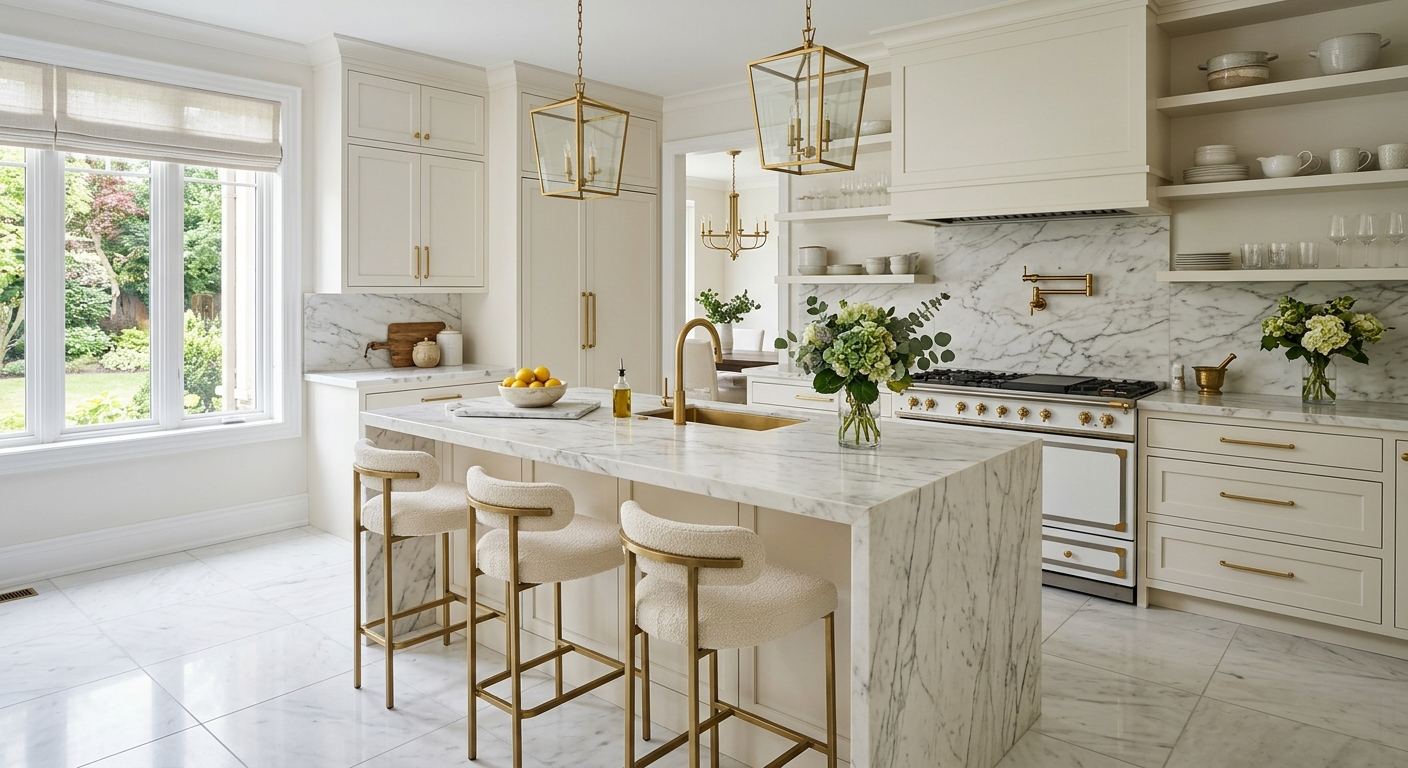
Kitchen renovation options and costs in Victoria
Kitchen renovation in Victoria, British Columbia is mostly about meeting homeowners’ finish expectations—then matching the budget to the materials you choose. With a median household income of $67,500 (Statistics Canada, 2021 Census) and a housing profile where 63.6% of homes were built before 1981 (Statistics Canada, 2021 Census), many Victoria renovations are upgrades to older cabinetry, dated surfaces, and “workhorse” layouts that can’t always be changed without opening walls. That’s why quotes can be surprisingly range-based: people who want an easy, low-disruption refresh often spend less than those who add an island, swap plumbing fixtures, and upgrade to quartz and semi-custom millwork.
On Vancouver Island and the Coast, costs are driven less by weather and more by market behaviour: in higher-value pockets (including parts of Saanich and areas around James Bay), buyers and homeowners commonly favour quartz or natural stone counters and custom or semi-custom cabinetry. Meanwhile, in more modest or secondary-suite situations, stock cabinets and laminate or entry-level quartz keep budgets closer to the “refresh” or basic full-renovation tier. Contractor availability also affects pricing—popular summer schedules and the need to protect floors, stairways, and tight old-home spaces can influence labour and staging costs.
Below are practical Victoria-oriented tiers you can use to compare quotes apples-to-apples, and to spot when a “mid-range” scope is actually being quoted like a higher-end rebuild.
| Renovation Tier |
What's Included |
Typical Duration |
Price Range |
| Cosmetic refresh (paint, hardware, new appliances only) |
Cabinet paint or refinishing, new pulls/knobs, trim adjustments, appliance swap (like-for-like), caulking, basic wall touch-ups |
1–3 weeks |
$15,000–$35,000 |
| Mid-range full renovation (new cabinets, counters, sink, tile) |
New stock or semi-custom cabinets, new countertop (laminate or quartz), new sink and faucet, backsplash tile, remove/replace flooring sections as needed |
4–8 weeks |
$40,000–$85,000 |
| High-end full renovation (custom cabinets, stone counters, island) |
Custom cabinetry, natural stone (granite/stone) or premium quartz, island with power/lighting allowance, upgraded hardware, full backsplash or feature wall, enhanced finishing details |
8–14 weeks |
$90,000–$150,000+ |
| Cabinet refacing only (new doors + drawer fronts, same boxes) |
Replace doors/drawer fronts, reface visible cabinet boxes, new hardware, install a new backsplash if desired, minor sanding/finishing |
1–4 weeks |
$8,000–$35,000 |
| Countertop swap only (laminate to quartz or stone) |
Remove and replace counters, new sink cut-outs as needed, countertop installation only (backsplash typically extra) |
3–7 days |
$3,000–$12,000 |
| Backsplash tile installation only |
Surface prep, tile supply and install, grout/seal (where required), finish trims to match existing counters |
3–10 days |
$2,500–$9,000 |
Prices are estimates only and vary by project scope, site access and material selection.
What affects the price of kitchen renovation in Victoria
In Victoria and across Vancouver Island and the Coast, the same “kitchen renovation” can land 30–50% apart from one contractor’s quote to another’s because pricing follows project complexity more than it follows climate. Local home values and median income shape the finish tier people choose, and finish tier is one of the biggest cost drivers. When homeowners in higher-value markets default to quartz or natural stone counters and semi-custom cabinetry, the renovation cost tends to “feel affordable” because it’s more easily recovered on resale. In more modest areas or secondary suites, laminate and stock cabinets dominate since they offer a stronger cost-to-value ratio.
Layout changes are the wildcard regardless of finish level. Removing a wall, adding an island, or moving a gas line and associated ventilation can quickly push labour and material costs beyond the countertop-and-cabinet portion. For example, a straightforward mid-range refresh might sit around the $40,000–$85,000 bracket, but the moment you add new supply/drain runs or upgrade electrical for an island, you can drift toward the upper band. Conversely, if you keep plumbing in place and focus on cabinets and countertops, your project often tracks closer to the lower end of full renovations. Replacement of flooring or subfloor sections also comes up more often in homes built before 1981—Victoria’s 63.6% pre-1981 housing stock (Statistics Canada, 2021 Census) means older framing and uneven tolerances are common once you remove toe-kicks and underlayment.
Two concrete examples common in Victoria: (1) tightening an uneven, older floor can add hours for cabinet leveling and custom shimming; (2) switching from laminate to quartz increases not only material costs but also templating time and risk for sink/edge rework. Finally, backsplash decisions—especially full-height tile or marble-look products—can add meaningful labour even when cabinets stay unchanged, because the preparation work is labour-intensive.
| Price Factor |
Why It Matters |
Cost Impact |
| Cabinet tier — stock vs. semi-custom vs. fully custom millwork |
Custom boxes, door styles, internal organizers, and fit tolerances change both material and labour |
Often the largest swing: roughly 30–40% of budget in many full remodels |
| Countertop material — laminate vs. quartz vs. granite vs. stone |
Material cost, edge profiles, fabrication time, and installation difficulty vary widely |
Countertops typically land around $3,000–$12,000, with premium stone at the upper end |
| Layout change — wall removal, island add, plumbing/gas move |
More trades, opening walls, structural/venting considerations, and permits drive unpredictability |
Can add major labour plus mechanical/electrical costs beyond typical refresh budgets |
| Appliance package tier — builder vs. mid-range vs. pro-grade |
Dimensions, ventilation requirements, and finish matching (panels/trim) differ by tier |
May shift overall project cost by several thousand dollars depending on what’s “like-for-like” |
| Flooring — refinish existing vs. full replacement |
Older subfloors and uneven thresholds often require more preparation once cabinets are removed |
Partial repairs are cheaper; full replacement can meaningfully increase labour and materials |
| Backsplash — ceramic tile vs. marble vs. full-height slab |
Prep, tile pattern complexity, and material weight change installation time |
Backsplash installation commonly runs $2,500–$9,000, trending higher for premium/full-height work |
| Electrical — new circuits for island, under-cabinet lighting |
Licensed electrical work, new runs, and code-compliant placement affect scope |
Small lighting adds can still require updated circuits; costs vary with access and panel capacity |
| Permit fees and licensed trade requirements |
Permits and inspections add paperwork and trade scheduling |
More than paperwork—can change timelines and labour sequencing |
Permits & regulations in British Columbia
In British Columbia, many straightforward kitchen finishes don’t need permits. In general, cabinet and countertop swaps usually do not require a permit when you’re replacing materials without changing plumbing, gas, or electrical systems. However, the moment you alter services, the rules tighten: moving plumbing supply or drain lines, relocating gas appliances or the gas line for a stove/range hood with gas, removing a load-bearing wall, or adding new electrical circuits for an island or new outlets typically require permits and licensed trades.
Step-by-step, here’s how a Victoria homeowner can verify the contractor and avoid surprises before signing: (1) Ask for the contractor’s BC business registration/contractor credentials (as applicable) and confirm they’ll only hire licensed trades for gas and electrical work; (2) Request a certificate of insurance (liability) and confirm the policy is current for the job scope; (3) For workers, confirm coverage through WSIB/WCB (whichever applies to their workforce) and ask for clearance details in writing; (4) For gas, ensure the person doing gas work is a licensed gas fitter and that inspections are scheduled where required; (5) For electrical, verify the licensed electrician will obtain required permits and conduct inspections where applicable; (6) Confirm in the written contract who is responsible for permits (and any permit-related scheduling delays).
When in doubt: ask for the permit responsibility line in the contract and a sketch of what work is changing versus “like-for-like.” In older Victoria homes—built before 1981 on average (Statistics Canada, 2021 Census)—hidden conditions can increase the likelihood that a “simple” change becomes a permitted service alteration.
Cabinets, countertops and layout decisions in Victoria
The three most consequential decisions in a Victoria kitchen renovation are cabinet tier, countertop material, and whether you change the layout. Start with cabinet tier: stock is the fastest and cheapest path, semi-custom is the most popular mid-range choice for homeowners who want better internal storage and closer fit, and fully custom cabinetry costs the most but can tailor to tricky pre-1981 walls, uneven floors, and uncommon dimensions. Next is countertop material. Laminate is budget-friendly and resilient for everyday use, but it’s less heat- and impact-resistant than engineered quartz or stone; quartz is a strong balance for maintenance and appearance in a coastal environment; granite/stone adds premium visual depth; butcher block and marble can work beautifully but need more care around moisture and sealing (and marble is especially maintenance-sensitive).
Finally, layout changes—open-concept wall removal, island addition, and plumbing/gas relocation—are what justify bigger budgets when the space gain actually improves daily life. In Victoria’s resale market, many buyers expect functional storage and a clean, modern finish. That said, if your budget is tight, you’ll often get better ROI by upgrading cabinets and countertops while keeping plumbing where it is. For instance, if you’re deciding between laminate and quartz and you keep the layout unchanged, you might add several thousand dollars (within the typical $3,000–$12,000 countertop band) and still land in the $40,000–$85,000 mid-range renovation band. If you pair quartz with a plumbing move, that same upgrade can become less “value-positive” because the layout work (trades, opening walls, and potential permits) can outweigh the countertop savings.
Local climate in Victoria does affect humidity and day-to-day handling (especially around sealing for natural materials), but the bigger cost drivers are still the Vancouver Island and Coast finish preferences and the trade scope once walls and services are opened.
| Option |
Durability |
Maintenance |
Best For |
Price Range |
| Stock cabinets (big-box) |
Good everyday durability; fit can be less forgiving in older homes |
Low—typical cleaning; touch-ups if dings occur |
Fast timelines and budget-focused renovations |
$8,000–$25,000 |
| Semi-custom cabinets (local dealer) |
Better material consistency; improved storage options and tolerance |
Low—keep hardware aligned and avoid excess moisture at sinks |
Most Victoria mid-range projects aiming for “custom look” |
$20,000–$55,000 |
| Custom cabinets (local millwork shop) |
Highest build quality and fit; best for unusual spaces |
Low to moderate—more finishing details to protect during use |
High-end remodels and tight pre-1981 layouts |
$45,000–$90,000+ |
| Laminate countertop |
Decent surface performance; seams and edges are the weak points over time |
Low; avoid prolonged heat and heavy impacts at corners |
Best for refresh budgets and rental/secondary-suite style upgrades |
$3,000–$6,000 |
| Quartz engineered countertop |
Very durable and consistent; great resistance to staining |
Low—wipe-clean maintenance; protect from extreme heat |
Popular in Victoria for a modern, resale-friendly look |
$6,000–$10,000 |
| Granite / natural stone countertop |
Excellent durability; unique variations add premium character |
Moderate—often needs periodic sealing depending on the stone |
Premium finishes and statement kitchens |
$8,000–$14,000+ |
| Butcher block countertop |
Durable but can dent; sensitive to standing water at seams |
Moderate—oil regularly and maintain edge and seam care |
Warm style kitchens where homeowners maintain surfaces |
$5,000–$9,000 |
| Marble countertop |
Beautiful but softer; more prone to etching and staining |
Higher maintenance—sealing and careful daily use required |
Low-traffic decorative kitchens or when homeowners want a luxury look |
$10,000–$18,000+ |
How to choose a kitchen renovation contractor in Victoria
Choosing a kitchen contractor in Victoria (British Columbia) is less about marketing and more about proof: licensing/coverage, itemised pricing, and clear scope. First, verify they use licensed trades where required—especially for electrical (new circuits, island lighting) and gas work (stove/range-hood gas lines). You can check licences through the appropriate provincial licence registries, and you should always request a current certificate of insurance for liability. For worker protection, ask for WSIB/WCB coverage documentation and confirm it’s valid for the individuals assigned to your project.
Next, get 2–3 itemised written quotes that break labour and materials down rather than bundling everything into a single number. Confirm whether permits are included and who pulls them. Ask about disposal: will they remove old cabinets and construction debris, and where will waste be hauled? Review warranties in writing—workmanship warranty length, product/manufacturer warranty terms, and whether warranties transfer if you sell the home. Keep the payment schedule conservative: don’t pay more than about 10–15% upfront, and hold back the final portion until completion and punch-list items are finished. Finally, require a start date and a completion estimate in writing, including how long lead times (cabinet and stone fabrication) typically add to the schedule.
- Ask for references from similar Victoria kitchens (especially if the home is pre-1981).
- Confirm insurance certificate and request named coverage for the project address.
- Verify licensed electrician and licensed gas fitter involvement where services change.
- Confirm WSIB/WCB clearance or coverage documentation in writing.
- Use itemised quotes: labour hours, line items for cabinets/counters/tile, and installation.
- Ensure the quote specifies inclusions/exclusions (demo, disposal, patching, trim, caulking).
- Ask who is responsible for permits and inspections, and whether fees are separate.
- Clarify waste handling and whether recycling/landfill costs are included.
- Check the warranty: workmanship length, product warranty, and transferability.
- Lock in a payment schedule with a small deposit (10–15%) and milestone-based payments.
- Require a written schedule and address material lead times up front.
- Request a clear change-order process (how pricing updates are calculated and approved).
Victoria-specific red flags: contractors who (1) won’t provide itemised quotes, (2) claim they can do electrical or gas work themselves without licensed trade documentation, (3) ask for large deposits (over 15%) before any measurable work, (4) have no written timeline or no plan for cabinet/stone lead times, or (5) treat permit responsibility as “not our problem” when layout/services are changing.
Frequently asked questions — kitchen renovation in Victoria
How do I choose a kitchen contractor in Victoria?
Start by comparing itemised proposals from at least 2–3 contractors and confirm their scope matches your goals. In Victoria and across British Columbia, a credible contractor should clearly state who is responsible for permits and should not bundle licensed electrical or gas work into “general labour.” Ask for a current liability insurance certificate and documentation of WSIB/WCB coverage. You should also verify licensing for the trades that touch electrical circuits or gas lines (for example, if you’re adding island lighting or relocating a stove/range hood). Budget-wise, make sure the quote’s tier matches your target—if you’re aiming for a mid-range full renovation, you’re often looking at the $40,000–$85,000 bracket; if they’re pricing basic upgrades like a full custom rebuild, the scope will usually give it away.
What order do kitchen renovation steps happen in?
In most Victoria kitchens, the order follows sequencing: planning and measurements first, then permits (if needed), then demo. After demo, the contractor should complete rough-in work—plumbing/electrical/gas changes—before cabinets go in. Next comes cabinet installation, then countertops templating and fabrication, then countertop installation. After counters are set, backsplash tile and sealing/caulking come next so water lines and edges are finished correctly. Flooring repairs or installation are typically coordinated around cabinet setting (to avoid gaps and ensure level installation). Finally, appliances install, finishing trims are set, and the punch-list is completed. If your home is older (many Victoria homes were built before 1981 (Statistics Canada, 2021 Census)), the contractor should also include time for subfloor and framing checks after demo.
Can I live at home during a kitchen renovation in Victoria?
Often yes, but it depends on how invasive your scope is and how much dust and service disruption your household can tolerate. Many “refresh” projects—like repainting, hardware, and appliance swaps only—can sometimes be managed while living in the home with a temporary cooking setup. For full renovations, especially those moving plumbing/electrical or adding an island, expect a stronger disruption: no full use of the sink area and sometimes limited access through the work zone. If your project is in the $35,000–$90,000 full-renovation range, discuss staging plans early: temporary dishwashing, dust protection (plastic containment), and a clear schedule for when demolition and cabinet install occur. A good contractor will also explain how they protect floors and stairs typical of Victoria’s older housing stock.
Should I renovate my kitchen before selling in Victoria?
Usually, renovating before selling can help—especially if your current kitchen is visually dated or functionally limiting—but the best approach is the one that improves buyer perception without overbuilding the finish tier. In higher-demand Victoria areas, buyers often expect clean cabinetry, durable countertops (commonly quartz) and a cohesive backsplash. If you’re considering a refresh versus a full remodel, keep ROI in mind: basic refreshes and cabinet refacing can be a smarter pre-sale move when your layout is already workable. If you’re moving into a full renovation tier, a typical target is the $40,000–$85,000 band; high-end custom rebuilds (often $90,000–$150,000+) can be harder to fully recover unless the neighbourhood supports premium finishes. Your contractor should help you align materials to the local resale expectations rather than “maxing out” the project.
What's the most popular kitchen style in Victoria right now?
Across Victoria and the broader Vancouver Island and Coast market, the most requested style is a modern, bright look: flat-panel or simple shaker profiles, neutral colours (white, soft greys, warm tones), and countertops that read upscale in daylight—most commonly quartz. Homeowners like quartz because it holds up well to daily use and keeps the kitchen feeling clean without the heavier maintenance associated with some natural stones. For finishes, Victoria buyers tend to like cohesive hardware, tidy backsplash lines, and island functionality where space allows. If you’re aiming for a mid-range renovation, these choices often fit neatly into the $40,000–$85,000 bracket; if you want a premium statement with an island and natural stone, pricing commonly rises into the high-end range. Your contractor should be able to show recent local examples and cabinet-door samples.
How do I know if I need to update my kitchen plumbing in Victoria?
You may need updates if you’re changing the layout (moving sink/dishwasher), replacing an old supply line that’s near the end of its service life, or dealing with persistent leaks or weak water pressure. In Victoria’s older housing stock—many homes are pre-1981 (Statistics Canada, 2021 Census)—it’s common for hidden plumbing conditions to be less than perfect once walls are opened for renovations. You’ll also want to plan plumbing updates if your new sink requires different drain configurations or if you’re adding a dishwasher where there wasn’t one. If you simply swap cabinets and countertops and keep the existing plumbing in place, you might avoid some permit-driven work. But if you’re moving supply or drain lines, that’s the point where permits and licensed trade involvement typically become necessary in British Columbia. A thorough pre-demo inspection can prevent mid-project rework and delays.