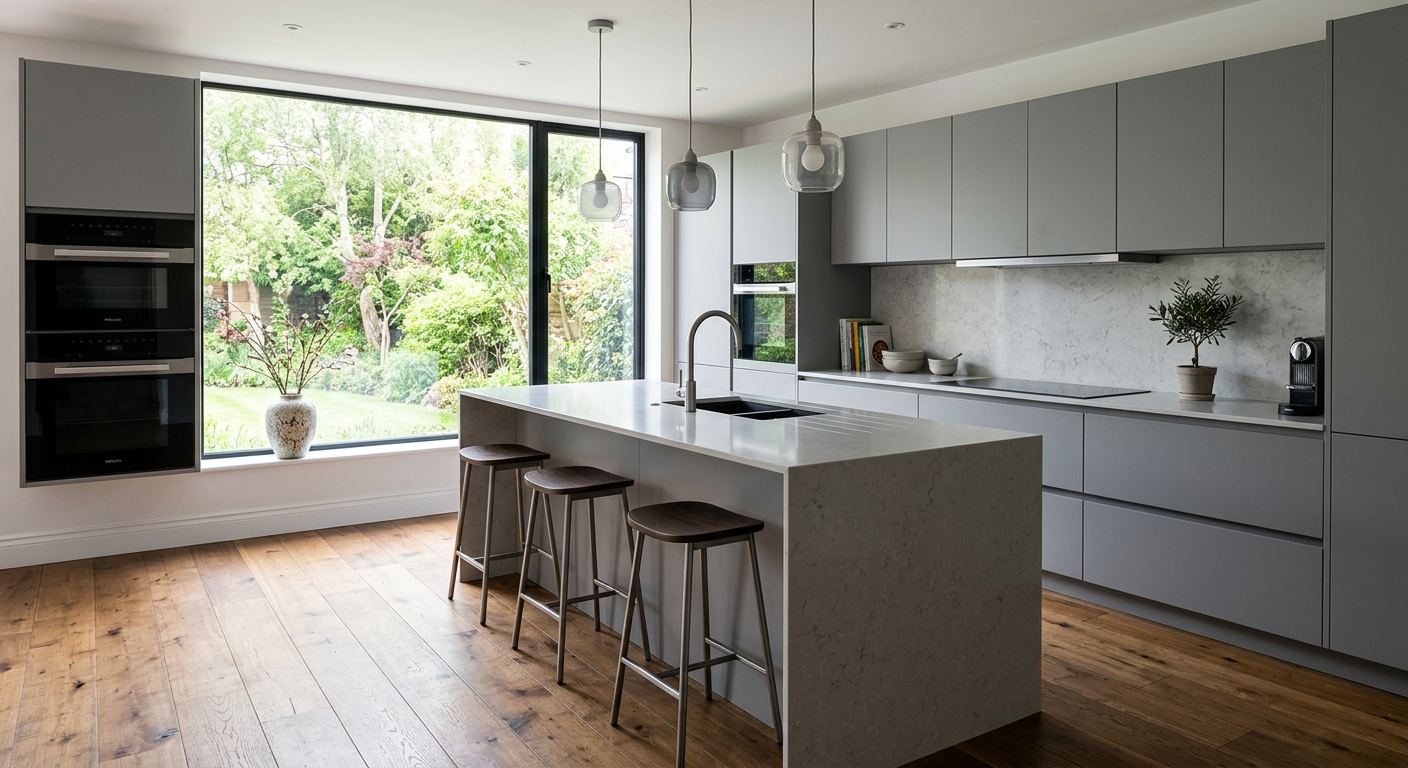
Kitchen renovation options and costs in Valleyview
Valleyview kitchen renovations usually start with a simple question: “What can we afford, and what will still feel right in 5 to 10 years?” With a median household income of about $82,000 (Statistics Canada, 2021 Census) and 68.9% of local households owning their homes, most projects are planned as longer-term upgrades rather than short, showy flips. That matters because homeowners in Valleyview generally choose finish levels they feel they can comfortably enjoy day to day—and that remain consistent with the mid-range expectations common across the Athabasca–Grande Prairie–Peace River economic corridor.
In this region, contractor availability and scheduling often reflect resource-market cycles, and that can shift labour costs during busy seasons. Weather also plays a role: colder shoulder seasons mean more care around protection of adjacent flooring, subfloor drying, and dust control when trades are working longer inside occupied homes. Older housing stock (46.2% built before 1981, Statistics Canada, 2021 Census) can introduce surprises like out-of-square walls, dated electrical capacity, or plumbing that needs rework once cabinets come out—pushing some scopes from a mid-range refresh into higher bands.
Demand is especially strong around the Valleyview townsite/central residential area, where homeowners tend to favour practical layouts, brighter lighting, and durable surfaces. If you’re comparing options, the fastest way is to pick a tier first (cosmetic, mid-range full, or high-end full), then decide how much you want to change layout and services. Use the table below to match your goal to realistic budget ranges for the Valleyview market.
| Renovation Tier |
What's Included |
Typical Duration |
Price Range |
| Cosmetic refresh (paint, hardware, new appliances only) |
Cabinet paint/stain (or touch-ups), new pulls/handles, trim/caulking, new appliance package, minor electrical cover plates, basic cleaning and re-install. |
1–2 weeks |
$20,000–$30,000 |
| Mid-range full renovation (new cabinets, counters, sink, tile) |
Semi-custom or quality stock cabinets, new countertop (often laminate or entry-level quartz), new sink and faucet, backsplash tile, new flooring under/around cabinets as required, trade labour for installs and connections. |
3–6 weeks |
$30,000–$55,000 |
| High-end full renovation (custom cabinets, stone counters, island) |
Fully custom millwork, premium quartz/natural stone counters, large-format tile or upgraded backsplash, island (often with added lighting/electrical), upgraded sink/faucet, higher-end fixtures and more extensive finish carpentry. |
6–10 weeks |
$55,000–$80,000 |
| Cabinet refacing only (new doors + drawer fronts, same boxes) |
Reface/replace doors and drawer fronts, new hardware, paint/finish refresh, new crown/trim, optional new countertop install depending on your selection and seam planning. |
2–4 weeks |
$6,000–$25,000 |
| Countertop swap only (laminate to quartz or stone) |
Remove old countertop, install new engineered/stone surface, re-seal where needed, adjust sink cut-outs and edge profile, caulking and limited splash updates. |
3–10 days (longer with templating and delays) |
$3,500–$15,000 |
| Backsplash tile installation only |
Surface prep, waterproofing where required, tile install, grout/seal, caulking around outlets, and cleanup. |
3–7 days |
$2,000–$9,000 |
Prices are estimates only and vary by project scope, site access and material selection.
What affects the price of kitchen renovation in Valleyview
Even when two homeowners ask for the “same kitchen,” Valleyview quotes can land 30–50% apart across the Athabasca–Grande Prairie–Peace River region and Alberta because the drivers aren’t just size—they’re finish choices, service changes, and how much the contractor has to fix once walls open. In Alberta, pricing is also influenced by how quickly materials can be sourced locally and how busy crews are between seasonal slowdowns and spring/summer installs.
Most Valleyview projects track more closely to local income and home-value expectations than to climate alone. With a median household income of roughly $82,000 (Statistics Canada, 2021 Census), many homeowners choose mid-range finishes that look “current” without going fully premium. In higher-value pockets within the broader region, homeowners often default to quartz or stone counters and semi-custom cabinetry because the investment is easier to recover on resale. In more modest setups, laminate and standard cabinet lines dominate since they deliver a strong ROI visual refresh while keeping spend within the $20,000–$80,000 full-kitchen band.
Layout changes are the biggest unpredictable cost regardless of finish: removing a wall, adding an island, or relocating a gas line and venting typically triggers additional trades, inspection coordination, and longer timelines. Concrete examples I see in Valleyview include: (1) homes built before 1981 where wiring is undersized for under-cabinet lighting, forcing electrical updates that add to the budget; (2) poorly vented cooking areas where ducting upgrades become necessary once a new range hood is selected; and (3) older subfloors where tile under the new perimeter cabinets needs extra patching before tile or flooring goes back in.
| Price Factor |
Why It Matters |
Cost Impact |
| Cabinet tier — stock vs. semi-custom vs. fully custom millwork |
Cabinet construction and customization (sizing, moulding, internal upgrades, hardware quality) directly affect material cost and labour to fit. |
Often the largest swing item; can move a full renovation several $10,000s. |
| Countertop material — laminate vs. quartz vs. granite vs. stone |
Material price, edge profiles, templating time, and install complexity change the budget substantially. |
Typical countertops can shift from the mid thousands up to low-to-mid teens or more. |
| Layout change — wall removal, island add, plumbing/gas move |
Moving services requires openings, patching, new rough-in, and coordination of multiple licensed trades. |
Can add days to weeks and push you toward the upper end of the renovation band. |
| Appliance package tier — builder vs. mid-range vs. pro-grade |
Stainless finish, ventilation requirements, and power/clearance specs vary. |
Can add thousands, especially with pro ventilation and specialty models. |
| Flooring — refinish existing vs. full replacement |
Cabinets often sit on floors that need flattening; tile removal or repair can be extensive. |
Small in cosmetic jobs; significant in full renovations where surfaces must be rebuilt. |
| Backsplash — ceramic tile vs. marble vs. full-height slab |
Higher-end materials require tighter tolerances, additional prep, and more time. |
From a couple thousand up to the high single digits for more elaborate coverage. |
| Electrical — new circuits for island, under-cabinet lighting |
New lighting and outlets increase scope and inspection coordination. |
Often a hidden cost until walls come open. |
| Permit fees and licensed trade requirements |
Permits, inspections, and licensed gas/electrical work add administration and scheduling costs. |
Can be modest on “swap-only” work, but meaningful on service relocations. |
Permits & regulations in Alberta
In Alberta, some kitchen upgrades are straightforward from a permitting standpoint, but service and structural changes are where requirements kick in. Generally, swapping cabinets and countertops does not require permits by itself. Likewise, a cosmetic update—paint, hardware, and appliance swaps that don’t change services—typically stays in the “no permit” bucket.
What does require permits and licensed trades includes: moving or modifying plumbing supply/drain lines; relocating or working on gas lines for stoves and certain range hood venting/connection scenarios; removing or altering load-bearing walls; and adding new electrical circuits (commonly for islands, upgraded outlets, or under-cabinet lighting). Gas work must be completed by a licensed gas fitter, and electrical work must be done by a licensed electrician, with inspections as required.
Here’s how a Valleyview homeowner can verify a contractor before signing:
- Ask for their Alberta licence details (trade-specific) and confirm the name matches their invoices.
- Request certificate of insurance (liability) showing coverage active for the project dates.
- Confirm WSIB/WCB clearance (or exemption letter, if applicable) so you’re not exposed during labour.
- Request written responsibility: “Who pulls permits?” and “Who schedules inspections?”
- Get the scope in writing: what is included/excluded for demolition, rough-in access, and close-up.
Always confirm permit responsibility in the contract, because the safest quote is the one that clearly states who owns which approvals and inspections.
Cabinets, countertops and layout decisions in Valleyview
In a Valleyview kitchen renovation, the biggest “bang for your buck” decisions are usually: (1) cabinet tier, (2) countertop material, and (3) whether you change layout. Cabinet tier affects not just cost but how well the kitchen fits your room and how quickly it can be installed. In older homes (46.2% built before 1981, Statistics Canada, 2021 Census), standard sizing can look fine, but uneven walls can require more careful fitting—something semi-custom often handles better than basic stock.
For countertops, think durability plus maintenance for real household use: quartz is usually the practical middle ground, laminate is budget-friendly and easy to keep clean, while granite/natural stone looks premium but needs more attention (sealing and careful stain management). Butcher block can be beautiful and warmer underfoot, yet it’s more maintenance-heavy and can be less forgiving with spills if you’re not diligent. Marble is stunning, but it can etch with acids and typically doesn’t fit every busy family budget unless you’re committing to careful care.
Layout decisions are where costs become justified—or not. Adding an island can create real work-zone separation in a compact kitchen, but moving plumbing or gas lines (or upgrading venting) can push you toward the higher band. A realistic example: swapping from laminate to quartz might add several thousand dollars, but that upgrade often pays back in daily feel and resale appeal without major disruption. In contrast, relocating a sink or stove usually adds time and trade coordination, and that’s only worth it when the space gain clearly improves flow.
| Option |
Durability |
Maintenance |
Best For |
Price Range |
| Stock cabinets (big-box) |
Good for standard openings; durability depends on finish and hardware quality. |
Low day-to-day care; may show gaps if walls are out-of-square. |
Fast timelines and the lowest-cost full refresh. |
$6,000–$20,000 |
| Semi-custom cabinets (local dealer) |
Very solid; better sizing options and more flexible internal organization. |
Low maintenance; easier to fit neatly in older Valleyview homes. |
The most common mid-range renovation choice. |
$15,000–$35,000 |
| Custom cabinets (local millwork shop) |
Highest durability potential; built to your exact layout and tolerances. |
Low ongoing maintenance; craftsmanship details require proper care. |
Unique layouts, integrated islands, and premium finishes. |
$30,000–$60,000 |
| Laminate countertop |
Durable surface with good scratch resistance; edges and seams matter. |
Easy to clean; avoid prolonged standing water at seams. |
Budget-conscious renovations where the goal is a fresh look. |
$3,500–$7,500 |
| Quartz engineered countertop |
Excellent everyday durability; resistant to staining and common kitchen wear. |
Low maintenance; wipe clean and use care with hot items. |
Busy kitchens needing a premium look without high upkeep. |
$7,000–$15,000 |
| Granite / natural stone countertop |
Very durable and heat resistant; performance depends on stone type and finish. |
Requires periodic sealing and careful stain control. |
Premium appearance with homeowners willing to maintain stone. |
$10,000–$18,000 |
| Butcher block countertop |
Strong but can dent; surface life depends on oiling and use habits. |
Oiling and occasional refinishing required. |
Families who want a warm, “natural” prep surface. |
$6,000–$12,000 |
| Marble countertop |
Attractive, but softer than quartz/most stones; can scratch/etch. |
Higher maintenance; requires sealing and acid-stain awareness. |
Premium aesthetic where the kitchen is less “high-wear.” |
$12,000–$22,000 |
How to choose a kitchen renovation contractor in Valleyview
When you’re hiring a kitchen renovation contractor in Valleyview, start with verification, then move to apples-to-apples pricing. First, confirm Alberta licensing for the trades involved: gas work should be handled by a licensed gas fitter, electrical by a licensed electrician, and any required permits should be clearly accounted for. Next, verify liability insurance with a certificate dated for the project period. Finally, ask about WSIB/WCB coverage (or clearance letter/exemption if applicable). These checks protect you if something goes wrong during demolition, cabinet install, or electrical/service tie-ins.
Then request 2–3 itemised written quotes. You want line items for labour and materials (cabinet supply and install separately, countertop templating and install separately, backsplash tile prep/setting labour, electrical/mechanical trades, and disposal). Avoid “all-in” numbers that don’t show whether permits are included, whether demolition and haul-away are part of the price, and what happens if something hidden is discovered behind older walls.
Warranty matters too: ask for the workmanship warranty length in writing, and separate it from manufacturer product warranties. Also confirm if warranties are transferable to a future buyer (often relevant for resale). For payments, never agree to pay more than 10–15% upfront; hold back the balance until the punch list is done. Make sure your timeline includes a start date and a completion estimate in the contract, not just “as soon as possible.”
- Ask for licence proof for each relevant trade and confirm names match invoices.
- Request proof of liability insurance (and ensure limits are appropriate for renovation work).
- Confirm WSIB/WCB clearance before work begins.
- Get itemised quotes (labour + materials) rather than a single lump sum.
- Verify who pulls permits, who schedules inspections, and what’s included if changes are needed.
- Confirm demolition scope and disposal/haul-away are included (or priced separately).
- Check what’s excluded: flooring replacement, subfloor levelling, drywall patching depth.
- Demand a clear schedule for cabinet ordering and countertop templating dates.
- Review warranty terms: workmanship duration and manufacturer warranty coverage.
- Clarify payment milestones tied to measurable milestones (not just “progress”).
- Ask about site protection (floor covering, containment for dust) since Valleyview homes are often occupied.
- Require a written scope change process (how change orders are quoted and approved).
Red flags I see with kitchen renovation contractors in Valleyview include: (1) refusing itemised quotes or hiding the permit/licensing details; (2) requesting large deposits beyond 10–15% without a solid construction schedule; (3) vague timelines like “about a month” with no start date or lead-time assumptions; (4) no clear warranty terms for workmanship; and (5) not addressing what happens when older wiring/plumbing requires upgrades once cabinets are removed.
Frequently asked questions — kitchen renovation in Valleyview
Should I renovate my kitchen before selling in Valleyview?
If you plan to sell in Valleyview, kitchen renovations can help, but the “best” timing depends on your current condition and your budget. Many sellers get the most return by targeting high-impact, mid-range upgrades—fresh cabinets (often semi-custom), a durable countertop like quartz, and a clean backsplash—rather than doing a full custom tear-out. In Alberta’s typical full kitchen band, many projects land around $30,000–$55,000, which is usually easier to justify for mid-income buyer expectations. Also consider that Valleyview has a meaningful share of older housing stock (46.2% built before 1981, Statistics Canada, 2021 Census), so buyers may be concerned about outdated electrical/plumbing once they see demo. If you can’t confirm your wiring and shut-offs are in good shape, it’s often better to fix the “function” items first, then renovate finishes.
What's the most popular kitchen style in Valleyview right now?
In Valleyview and the broader Athabasca–Grande Prairie–Peace River region, the most common demand is for bright, functional kitchens with clean-lined cabinet styles and practical layouts—think semi-custom cabinetry, soft modern colours, and quartz or similarly durable countertops. Homeowners frequently choose an updated backsplash that coordinates with flooring, plus under-cabinet lighting to reduce shadowing. Because many local homes are older (46.2% built before 1981, Statistics Canada, 2021 Census), style trends often include replacing older hardware, modernising lighting, and improving storage with better drawers and corner solutions rather than only chasing a specific “theme.” If you’re selecting finishes, a mid-range full renovation tends to land where buyers expect the visuals to feel updated without looking overly experimental, typically within the $30,000–$55,000 range for standard family layouts.
How do I know if I need to update my kitchen plumbing in Valleyview?
Plumbing updates are most likely when you see slow drains, frequent leaks under the sink, corrosion around shut-offs, or inconsistent hot water performance. In Valleyview homes built before 1981 (46.2% of dwellings, Statistics Canada, 2021 Census), it’s also common to find older supply lines and outdated shut-offs that may not meet today’s reliability expectations once you’re installing new cabinets. You’ll also need to think about plumbing updates if you’re moving the sink, changing the dishwasher location, or increasing the sink’s use (for larger families and daily cooking). A kitchen contractor should inspect drain slope and shut-offs during demo. Note: swapping cabinets/countertops usually doesn’t require a permit, but moving supply/drain lines typically does and involves coordinated licensed trade work.
What is the difference between a galley and open-concept kitchen?
A galley kitchen is typically a narrow, corridor-style layout with counters and cabinets on two opposing walls. It can be efficient for cooking, but storage and work-zone spacing can feel tight—especially if you’re trying to add an island (which usually doesn’t fit well without reworking the plan). An open-concept kitchen removes barriers between the kitchen and living space, improving visibility and social flow, but it can increase the complexity of renovations if you’re relocating services or dealing with load-bearing walls. In Valleyview, homeowners with older framing sometimes choose open-concept changes to modernise the feel; however, those changes can add unpredictable costs if plumbing, gas, or electrical must be rerouted. If your goal is to stay in a manageable budget, you can refresh a galley with cabinet upgrades and new countertops (for example, quartz within the $7,000–$15,000 countertop band) without triggering the higher service-change scope.
How do I get accurate kitchen renovation quotes in Valleyview?
Accurate quotes start with a clear scope and comparable selections. Ask for 2–3 itemised quotes showing labour and materials separately—cabinets supply and install, countertop templating and install, backsplash tile prep and setting, and any electrical/plumbing/gas work. Bring your measurements, and if you can, provide a cabinet plan or rough layout you want so contractors can price accurately. Make sure the quote clarifies what’s included: demolition, disposal/haul-away, drywall patching, flooring repairs, and whether permits are included if service changes occur. Because many Valleyview homes are older (46.2% built before 1981, Statistics Canada, 2021 Census), include a line item or contingency approach for surprises when walls open. Finally, avoid “single number” quotes that omit schedules and lead times—especially for cabinets and countertops—because delays can affect labour costs and your total project duration.
What's the best countertop material for a busy Valleyview kitchen?
For most busy Valleyview households, quartz is the best balance of durability and low maintenance. It resists staining better than laminate, holds up well to everyday cleaning, and provides a consistent look that buyers recognise as a “modern upgrade.” If you’re trying to stay cost-conscious, laminate remains a practical option for a refreshed look—often landing in the lower countertop band (commonly $3,500–$7,500), but you’ll want to protect edges and seams from prolonged water exposure. Granite/natural stone is also durable and heat resistant, though it typically requires periodic sealing and more careful stain management. Marble can be beautiful but needs more attention due to etching from acids. For a typical mid-range full kitchen, choosing quartz often pairs well with semi-custom cabinetry and backsplash tile, keeping the project within the $30,000–$55,000 range for many Valleyview scopes.