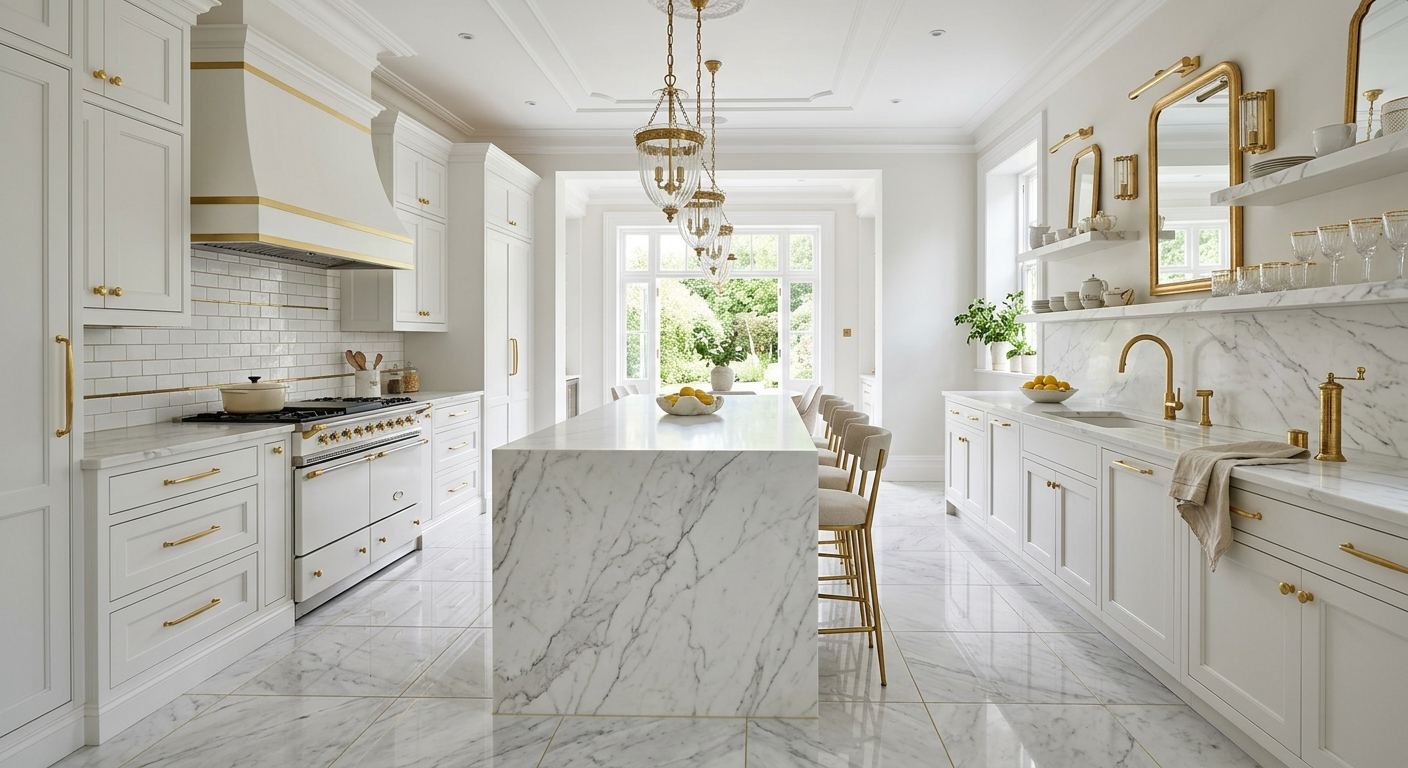
Kitchen renovation options and costs in Highlands
In Highlands, Alberta, kitchen renovation choices usually start with how your home is positioned in the Calgary housing market—and how long you plan to stay. With a population of 2,604 (Statistics Canada, 2021 Census), the community tends to be made up of families and long-term homeowners who care about practical durability as much as appearance. In the Calgary economic region, higher household buying power and home value expectations generally push many projects toward mid-range to high-end finishes, with homeowners planning around a “future resale” mindset (Statistics Canada, 2021 Census). That’s why even “basic” refreshes often include quality cabinetry and better counters than you’d see in more budget-focused markets.
Calgary’s renovation costs are shaped more by market demand and trade availability than by climate extremes—skilled labour rates in the region commonly run about $90–$140 per hour, so design, project management, and installation labour make up a big share of the total. The result is that two kitchens with similar materials can still come in 30–50% apart depending on schedule pressure, layout complexity (especially plumbing and gas line work), and whether a contractor has to build custom solutions. In Highlands, trade demand is especially strong around the older residential pockets near local commercial nodes—when those homes change hands, owners often update cabinets, counters, and lighting before putting the place on the market.
Below are the most common renovation tiers we see in Highlands, with realistic budget ranges to help you compare quotes side-by-side.
| Renovation Tier |
What's Included |
Typical Duration |
Price Range |
| Cosmetic refresh (paint, hardware, new appliances only) |
Cabinet paint or touch-up, new hardware, appliance replacement (no cabinet/counter changes), minor caulking/trim work |
1–3 days on site, 1–2 weeks scheduling/materials |
$5,000–$15,000 |
| Mid-range full renovation (new cabinets, counters, sink, tile) |
Semi-custom or quality-stock cabinets, new countertops, sink and faucet, backsplash tile, disposal/trim, basic lighting updates |
3–6 weeks |
$25,000–$55,000 |
| High-end full renovation (custom cabinets, stone counters, island) |
Fully custom millwork, quartz/natural stone, island buildout, integrated lighting, upgraded appliance package, upgraded backsplash (often premium tile or stone) |
6–12 weeks |
$70,000–$100,000 |
| Cabinet refacing only (new doors + drawer fronts, same boxes) |
Reface doors/drawer fronts, new hardware, new mouldings, cabinet paint/stain touch-ups, often includes backsplash refresh if desired |
1–3 weeks |
$8,000–$25,000 |
| Countertop swap only (laminate to quartz or stone) |
Remove old countertop, template and install new countertop (quartz or stone), sink cut-in and reseal, usually limited cabinet work |
3–10 business days |
$3,000–$12,000 |
| Backsplash tile installation only |
Surface prep, tile installation, grout/seal, trim/edge finishing, outlet cut-outs and caulking |
2–5 business days |
$2,500–$8,000 |
Prices are estimates only and vary by project scope, site access and material selection.
What affects the price of kitchen renovation in Highlands
In Highlands (and across the Calgary economic region), you’ll often see quotes for what seems like the “same” kitchen come back 30–50% apart. The biggest drivers are usually home values and household income expectations, which determine the finish tier buyers choose. When a neighbourhood leans toward higher-value homes, homeowners more readily move into quartz or natural stone counters and semi-custom cabinetry because the renovation cost is easier to justify on resale. In more modest markets, laminate and stock cabinetry dominate because they deliver a better ROI per dollar spent. Climate has less impact on the actual install price than people assume; the labour and material market does more to swing budgets—especially during peak construction periods when skilled trades are booked.
Two examples we see frequently in Highlands: first, upgrading from laminate to quartz can be a straightforward scope change, typically aligning with the $3,000–$12,000 countertop swap band, while expanding to include sink changes, new faucet rough-in, and extended edges for an island pushes the same “countertop job” into larger renovation territory. Second, layout changes are where costs get unpredictable: removing a wall, adding an island, or moving a gas line can quickly exceed the simpler $25,000–$55,000 mid-range band even if the finishes are “medium”. Alberta housing stock also matters—older homes often have uneven framing and older electrical routing, and that can add hours for remediation and rerouting before cabinets go in.
Bottom line: your finish selection controls day-to-day aesthetics, but layout, electrical, and plumbing/gas decisions control the cost curve.
| Price Factor |
Why It Matters |
Cost Impact |
| Cabinet tier — stock vs. semi-custom vs. fully custom millwork |
Higher tiers cost more in materials and fabrication time; custom also reduces fit/finish surprises |
Typically shifts projects by about $8,000–$35,000 depending on kitchen size and complexity |
| Countertop material — laminate vs. quartz vs. granite vs. stone |
Material price, edge profiles, and installation difficulty vary widely |
Often adds $2,000–$12,000+ versus laminate, especially with islands and premium edges |
| Layout change — wall removal, island add, plumbing/gas move |
Requires structural review and coordinated trades; hidden conditions can add labour and patching |
Commonly the largest swing factor; can move a job from mid-range into high-end budgets ($25,000–$100,000) |
| Appliance package tier — builder vs. mid-range vs. pro-grade |
Pro-grade units may require electrical specifics, ventilation changes, and specialty installation |
Can add roughly $2,000–$15,000 depending on brands and ventilation scope |
| Flooring — refinish existing vs. full replacement |
Cabinet installation tolerates limited flooring changes, but full replacement increases demo and install time |
Often adds $1,500–$6,000+ depending on flooring type and subfloor prep |
| Backsplash — ceramic tile vs. marble vs. full-height slab |
Premium stone adds template, weight handling, and higher material waste |
Typically $0 if included in a full renovation, otherwise about $2,500–$8,000+ for tile installation |
| Electrical — new circuits for island, under-cabinet lighting |
Adding outlets/lighting triggers licensed electrical work and coordination with cabinet timing |
Often adds $800–$4,000+ depending on wiring runs and number of devices |
| Permit fees and licensed trade requirements |
Work involving gas, plumbing modifications, structural changes, or new electrical circuits typically requires permits |
Often $300–$2,000+ in paperwork/inspection components, plus trade scheduling premiums |
Permits & regulations in Alberta
In Alberta, a countertop and cabinet swap is usually straightforward from a permitting standpoint. If you’re simply replacing cabinets in the same footprint, swapping countertops, and updating fixtures without moving plumbing/gas/electrical, you typically do not need a permit for the cabinet/countertop change itself. However, as soon as you change the “plumbing path” or “gas/electrical footprint,” the rules tighten.
These kinds of kitchen tasks typically do require a permit and must be carried out by the right licensed trades: moving or altering plumbing supply/drain lines; relocating a gas stove or making changes to gas connections; removing a load-bearing wall; and adding new electrical circuits (for example, an island outlet layout or under-cabinet lighting tied into a new circuit). Gas work must be done by a licensed gas fitter, and electrical work must be done by a licensed electrician—both need inspections.
Step-by-step verification for Highlands homeowners: (1) Ask your contractor for their licence information (where applicable) and confirm it through the appropriate online registry for the trade category. (2) Request a certificate of insurance showing liability coverage and confirm it’s active for the project dates. (3) For workplace coverage, confirm whether subcontractors carry WSIB/WCB coverage (request the clearance letter or proof of coverage). (4) Ensure the contract clearly states who pulls the permit—don’t assume.
Cabinets, countertops and layout decisions in Highlands
The three decisions that most strongly shape your Highlands kitchen renovation outcome are: (1) cabinet tier, (2) countertop material, and (3) whether you change the layout. Start with cabinet tier. Stock cabinets are fastest and cheapest, but fit may be less tailored for older Highlands homes with out-of-square walls. Semi-custom is usually the best balance in the Calgary resale market—buyers expect clean lines, good hardware, and drawers that feel solid. Custom cabinets shine when you need unusual dimensions, a true hood surround, or a well-planned island, but they add both fabrication time and budget.
Next, countertops. Laminate can be a smart “refresh” option if your goal is to stay near the lower end of renovation spend. Quartz engineered tops deliver high durability and a consistent look that buyers commonly recognize at move-in. Natural stone like granite or marble brings premium appearance but needs extra care (sealing/maintenance approach) and can push budgets upward. For many homeowners, this is why projects often land in the mid five-figures ($25,000–$55,000) for well-balanced renovations, while island or full redesigns commonly approach higher ranges ($70,000–$100,000).
Finally, layout changes. In Highlands kitchens, the cost is justified when it materially improves storage, traffic flow, or creates a functional island. But if you’re moving plumbing or gas, the “hidden” labour and trade coordination is what drives the jump. A dollar example: upgrading counters alone might stay within the $3,000–$12,000 swap band, but adding a new sink position plus associated plumbing and resealing can add enough labour and patching that you’ll effectively be buying part of a mid-range renovation, even before you touch lighting or flooring.
| Option |
Durability |
Maintenance |
Best For |
Price Range |
| Stock cabinets (big-box) |
Good for everyday use; relies on proper installation for long-term alignment |
Low—wipe clean, tighten hardware periodically |
Short timelines and budget-controlled refreshes |
$8,000–$20,000 |
| Semi-custom cabinets (local dealer) |
Very strong; better material consistency and more door/drawer configuration options |
Low—regular cleaning; minor touch-ups as needed |
Most Highlands renovations aiming for a resale-friendly look |
$15,000–$35,000 |
| Custom cabinets (local millwork shop) |
Highest fit and finish; ideal for irregular spaces and custom island storage |
Low—built to spec; same routine care as other painted/stained cabinetry |
Unique layouts, premium islands, and maximum storage efficiency |
$30,000–$60,000+ |
| Laminate countertop |
Durable enough for many households; edges and seams can be more vulnerable |
Low; avoid prolonged standing water and heavy impact at seams/edges |
Cost-sensitive upgrades when you want a clean refresh |
$3,000–$6,500 |
| Quartz engineered countertop |
Very durable; resistant to staining and everyday wear |
Low; routine cleaners, avoid harsh abrasives |
Most popular “premium practical” choice in the Calgary market |
$5,500–$12,000 |
| Granite / natural stone countertop |
Excellent durability; varies by stone type and finishing |
Moderate; periodic sealing and careful stain/acid management |
High-end look where you want natural variation and premium resale appeal |
$8,000–$18,000+ |
| Butcher block countertop |
Good durability but can be dented; best with proper maintenance |
Higher; regular oiling and prompt drying after wet tasks |
Warm, classic styles and kitchens used heavily by cooks |
$6,000–$14,000 |
| Marble countertop |
Premium feel; more susceptible to etching and staining than quartz |
Higher; sealing and careful cleaning habits required |
Statement kitchens where aesthetics outweigh maintenance |
$10,000–$22,000+ |
How to choose a kitchen renovation contractor in Highlands
Choosing the right contractor in Highlands comes down to verifying credentials, comparing written scope, and controlling cash flow until you’ve seen quality workmanship. First, confirm Alberta compliance: ask for their business licence details where applicable, their liability insurance certificate, and proof of WSIB/WCB coverage (or a clearance letter) for workers. To check: look for an up-to-date certificate of insurance showing active coverage for your project window, and request WSIB/WCB proof directly—don’t rely on verbal assurances. If they use subcontractors (electricians, gas fitters, tile/stone installers), ask for their coverage information too.
Next, get 2–3 itemised written quotes, not one lump sum. You want labour and materials separated, including demolition, cabinet installation, countertop template and install, tile or backsplash scope, electrical/plumbing/gas allowances (where relevant), and disposal. Read inclusions and exclusions carefully: is permit pulling included, or is it your responsibility? Is demolition and haul-away included, and does it specify dust protection? Clarify what’s excluded—often it’s patching drywall, subfloor repairs, new underlayment, or upgrades to ventilation.
Warranty matters. Confirm the workmanship warranty length, the manufacturer warranty on cabinets/counters, and whether warranties are transferable to a new owner (important for resale in the Calgary market). For payment schedule, don’t pay more than 10–15% upfront; hold back until the job is substantially complete and you’ve verified punch-list items. Get a start date and completion estimate in writing so you’re not guessing when trades are busy.
- Request insurance certificate and verify it covers renovations
- Ask for WSIB/WCB clearance or proof for workers
- Confirm who pulls permits and who pays for inspections
- Use itemised quotes (labour, materials, allowances separate)
- Confirm demolition, dust control and disposal/haul-away
- Verify countertop templating timing and responsibility for re-template
- Check backsplash scope (prep, waterproofing where needed, edge trims)
- Ask about electrical scope: new circuits, under-cabinet lighting plan
- Confirm cabinet installation approach for out-of-square walls
- Get a written payment schedule with holdback terms
- Review warranty length and what “workmanship” includes
- Ask for past Highlands/Calgary kitchen references with photos
Red flags we see in Highlands: quotes that are only totals with no breakdown, contractors who won’t put permit responsibility in writing, vague schedules that don’t show start/completion dates, reluctance to provide insurance/WSIB/WCB proof, and “material allowances” that are unrealistically low—then change orders appear once cabinets arrive.
Frequently asked questions — kitchen renovation in Highlands
Custom vs stock cabinets — is custom worth it?
In Highlands, custom cabinets are usually “worth it” when your kitchen has challenging measurements, you want a specific island layout, or you’re chasing a high-end look that aligns with how Calgary buyers evaluate kitchens. Stock cabinets are the fastest route and often fit best when your existing space is square and your layout is standard. Semi-custom is the most common sweet spot for homeowners targeting mid-range budgets—especially if you want upgraded drawers, better door styles, and a more tailored fit without custom millwork lead times. If you’re staying near the lower end of a renovation (for example, a $25,000–$55,000 full renovation tier), semi-custom often gives the best balance of appearance and cost. Custom can be justified when the design reduces wasted space, improves storage, or supports a true statement island that impacts resale appeal.
How do I choose a kitchen contractor in Highlands?
Start by verifying Alberta requirements the practical way: request their liability insurance certificate and confirm it’s active for your project dates. Ask for WSIB/WCB proof (or a clearance letter) and confirm coverage for subcontractors too—tile, electrical, gas fitters, and countertop installers. Then compare 2–3 itemised quotes so you can see what labour and materials are included (demo, disposal, cabinet installation, countertop templating, backsplash prep, electrical allowances, and permit responsibility). A solid contractor will clearly state exclusions and provide a written start date, timeline, and warranty details. In Highlands/Calgary, we also recommend asking for recent photos of similar kitchens in the area, because older home framing can create fit issues that only good installers plan for.
What order do kitchen renovation steps happen in?
A typical Highlands renovation sequence is designed around workflow efficiency and inspection timing. First comes site prep and demolition, including removal of old cabinets/counters and disconnecting fixtures. If you’re changing plumbing/gas/electrical, licensed trades complete rough-ins next—this is usually where permits and inspections fit in. After rough-in is done and approved, you finish wall/floor prep and then proceed with cabinet installation. Countertops require templating—often shortly after cabinets are installed so measurements are accurate. Once counters are installed, sink/faucet and any appliance cut-outs happen next. Backsplash tile goes in after countertops are set, followed by final trim, caulking, and fixture adjustments. Finishing steps like paint-touchups and final cleaning come last.
Can I live at home during a kitchen renovation in Highlands?
Often yes, but it depends on how disruptive the scope is and where you have a functional alternate cooking spot. In Highlands, many homeowners choose to stay home for cabinet-and-counter replacements or a limited backsplash upgrade because the work zones can be contained. For a full renovation, you’ll typically need temporary access for dishes and basic meals, and you may be without a working sink for parts of the schedule—especially when plumbing is modified. If you’re doing a layout change that involves moving gas or adding circuits, expect longer downtime for parts of the kitchen and plan for dust protection and noise hours. We recommend setting up a temporary cooking station (microwave/air fryer/hot plate) in another room and confirming with your contractor how they manage debris removal and daily clean-up.
Should I renovate my kitchen before selling in Highlands?
If you’re selling soon, the best timing depends on whether the renovation moves the home toward the finishes buyers expect while staying within a sensible budget. In Calgary-area resale markets, kitchens are a major decision point, and upgrades like new cabinets (or refacing), quartz counters, and a refreshed backsplash often offer the strongest “buyer confidence” impact. If you’re already close to move-in-ready, you can sometimes capture value with a narrower refresh rather than a full redesign. For example, a countertop swap within the $3,000–$12,000 band can look significant when paired with updated hardware and a modern backsplash. If your home needs layout changes (island, wall removal, plumbing/gas moves), consider your timeline—high-end projects that push into the $70,000–$100,000 range can be a larger commitment, so coordinate renovations with listing dates to avoid carrying costs and scheduling delays.
What's the most popular kitchen style in Highlands right now?
Right now in Highlands and across the Calgary economic region, homeowners most commonly lean toward bright, modern transitional looks: clean-lined cabinetry, neutral tones, and durable surfaces that photograph well during listings. Quartz countertops with a consistent finish, full-height or well-finished backsplashes, and integrated lighting under uppers are especially popular because they make the space feel updated without looking overly “trend-only.” Hardware finishes often skew contemporary (matte black or brushed metals), and islands are frequently used to improve storage and circulation. The key is matching the style to the home’s age—newer, higher-value upgrades tend to support premium stone and custom millwork, while more modest homes benefit from semi-custom cabinetry and a balanced materials package that stays within mid-range budgets.