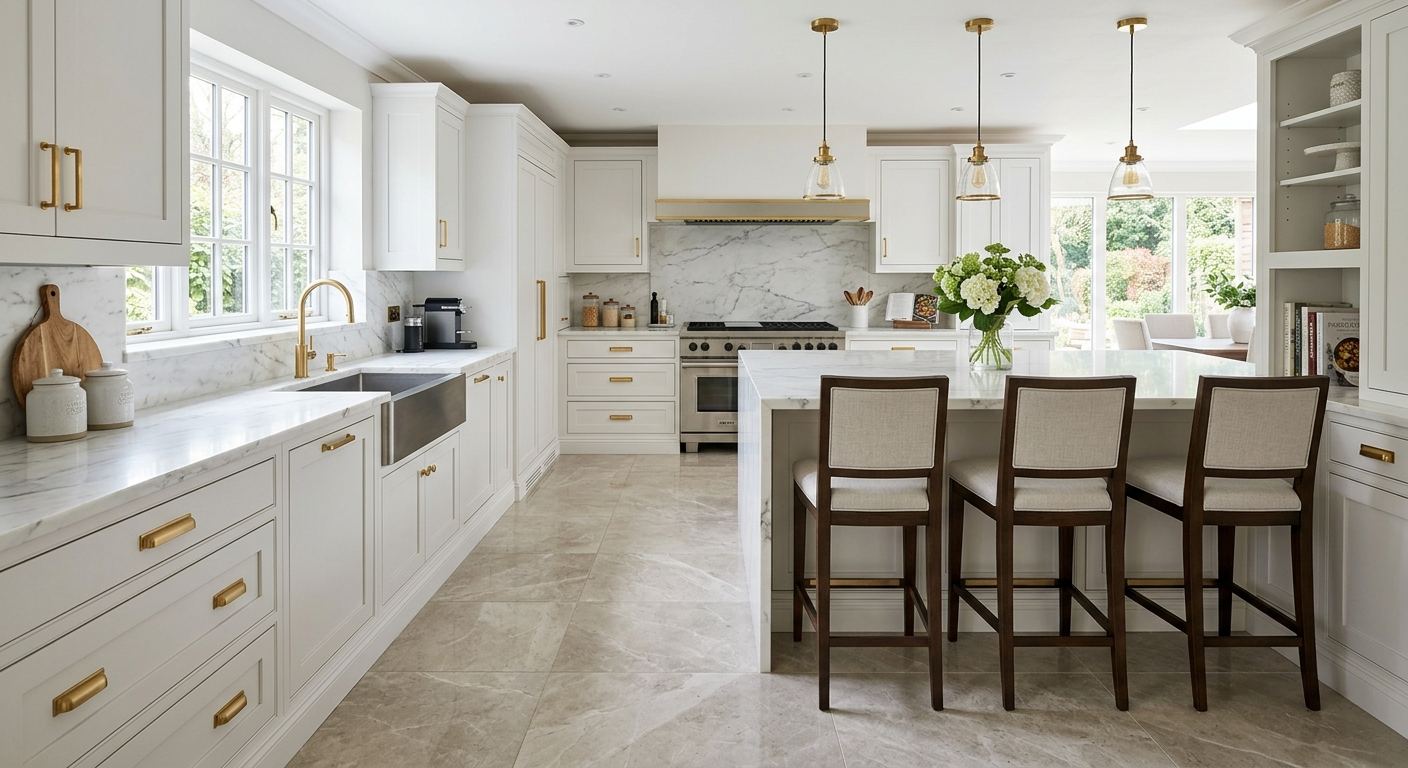
Kitchen renovation options and costs in Steinhauer
In Steinhauer, Alberta, kitchen renovations usually start with one question: “What do we want to feel when we walk in?” With a population of just 1,867 (Statistics Canada, 2021 Census), the local renovation demand is smaller than Calgary proper, so trades often get booked through the broader Calgary labour pool. In practice, that means scheduling can depend on how busy the season is and whether you’re competing for the same countertop crews and cabinet installers.
When homeowners in Steinhauer choose their finish level, it’s also guided by the surrounding Calgary market—higher home values and household incomes tend to support the mid-range to high-end look buyers expect on resale. In the Calgary economic region, that’s why many projects land in the mid five-figures for a full kitchen refresh and climb into the higher bands when layout changes and premium stone are chosen, rather than because of “weather” alone. Alberta’s climate does affect materials and installation planning (humidity swings can show up in woodwork if the space isn’t acclimated properly), but the biggest cost drivers are labour availability, stone/cabinet upgrades, and what needs to be moved.
Availability is especially in demand in the older, established pockets of the area where homeowners typically upgrade dated cabinets and tired flooring. Neighbourhoods on the Calgary edge and commuter corridors often see similar updates at the same time, which is why realistic timelines matter when you’re coordinating cabinets, counters, tile, and electrical work.
Below are common renovation tiers you’ll see in quotes for Steinhauer, so you can compare like-for-like before you book a site visit.
| Renovation Tier |
What's Included |
Typical Duration |
Price Range |
| Cosmetic refresh (paint, hardware, new appliances only) |
Cabinet paint or touch-ups, new knobs/handles, appliance swap, minor caulking/trim updates, basic cleanup |
1–3 weeks |
$7,000–$18,000 |
| Mid-range full renovation (new cabinets, counters, sink, tile) |
Semi-custom or quality stock cabinets, new countertop (quartz or upgraded solid surface), sink + faucet, backsplash tile, select flooring refresh, disposal hookup |
4–8 weeks |
$25,000–$60,000 |
| High-end full renovation (custom cabinets, stone counters, island) |
Fully custom cabinetry, premium natural stone (granite/marble/stone), island with upgraded sink or power, full backsplash/tile package, integrated lighting, pro-grade appliance fit |
8–14 weeks |
$60,000–$100,000 |
| Cabinet refacing only (new doors + drawer fronts, same boxes) |
Refaced cabinet faces, new doors/drawers, hardware, paint or prep on existing boxes, countertop continuity (if materials don’t change) |
3–6 weeks |
$8,000–$35,000 |
| Countertop swap only (laminate to quartz or stone) |
Remove existing top, new under-mount sink cut/fit as needed, countertop install, edge profile, caulking and basic backsplash patching |
1–3 weeks |
$3,000–$12,000 |
| Backsplash tile installation only |
Tile layout, waterproofing substrate where needed, tile + grout installation, trim/silicone finishes, cleaning |
5–10 days |
$2,500–$8,000 |
Prices are estimates only and vary by project scope, site access and material selection.
What affects the price of kitchen renovation in Steinhauer
Even when two homeowners in the Calgary economic region describe the “same” kitchen renovation, quotes can differ by 30–50% because the scope is rarely identical once you include trades coordination, material grade, and hidden conditions. Contractors price based on what must be removed, what must be repaired, and how difficult it will be to finish cleanly—especially when cabinets must align perfectly to older walls and floors.
In this region, local home values and household incomes are the biggest drivers of finish tier, far more than climate. In higher-value Calgary-area neighbourhoods, homeowners often default to quartz or natural stone counters and semi-custom cabinetry because the renovation cost is easier to recover on resale. In more modest settings, laminate and stock cabinets dominate because they deliver a strong visual upgrade at a lower cost-to-value ratio. Weather does play a supporting role: Alberta temperature swings can cause wood movement and grout/floor expansion if the space isn’t acclimated, but those effects are usually handled with proper material storage and installation sequencing—not a reason to inflate budgets by itself.
Two cost examples we commonly see in Steinhauer: (1) A countertop swap from laminate to quartz may land around the $3,000–$12,000 band, but adding a new undermount sink cut, thicker slab, and new backsplash transition can push it toward the upper end. (2) A mid-range full renovation in the $25,000–$60,000 range can jump when you add an island or move plumbing/gas lines, because labour and permits stack on top of cabinet and stone pricing. Layout changes—removing a wall, adding an island, or moving a gas line—are the most unpredictable costs regardless of finish.
Concrete Steinhauer-specific conditions that raise or lower costs include older drywall/plaster that needs reinforcement, uneven subfloors that require shimming before cabinet installs, and kitchens where older venting routes constrain hood placement. Those items are often why the same “cabinet + counter” plan can price higher once demolition is underway.
| Price Factor |
Why It Matters |
Cost Impact |
| Cabinet tier — stock vs. semi-custom vs. fully custom millwork |
Higher tiers cost more in materials and labour; fit and finish are more predictable for complex layouts. |
$8,000–$45,000 |
| Countertop material — laminate vs. quartz vs. granite vs. stone |
Material price and fabrication complexity (edges, undermount sink, thickness) change the total. |
$3,000–$30,000 |
| Layout change — wall removal, island add, plumbing/gas move |
Demolition, structural work, and trade reroutes are the biggest unpredictable variables. |
$5,000–$40,000 |
| Appliance package tier — builder vs. mid-range vs. pro-grade |
Pro-grade models add installation complexity, ventilation matching, and budget room for finish trim. |
$2,000–$20,000 |
| Flooring — refinish existing vs. full replacement |
If cabinets are removed, flooring replacement is often the cleanest option for long-term movement control. |
$1,500–$12,000 |
| Backsplash — ceramic tile vs. marble vs. full-height slab |
Large-format stone and full-height installs demand more templating and labour time. |
$2,500–$20,000 |
| Electrical — new circuits for island, under-cabinet lighting |
New circuits require licensed work, load calculations, and inspection scheduling. |
$500–$8,000 |
| Permit fees and licensed trade requirements |
Moving plumbing/gas, structural changes, and electrical work typically require permits and inspections. |
$300–$6,000 |
Permits & regulations in Alberta
In Alberta, homeowners are often surprised by what doesn’t trigger permitting. In most cases, swapping cabinets or countertops—keeping the existing plumbing and gas locations—typically does not require a permit. However, once your kitchen plan crosses into moving systems, the work often becomes permit-driven and must be performed by licensed trades.
The work that usually requires permits and inspections includes: moving plumbing supply or drain lines (for sink, dishwasher, or fridge water), relocating a gas line or changing the position of a gas stove/cooktop, and work that changes how a gas appliance is vented (often tied to range hood selection). Removing a load-bearing wall or making structural changes also generally requires permits and appropriate approvals. Electrical permitting is commonly needed when you add new circuits—for example, power to an island—or when you significantly alter the panel/load or add built-in lighting that ties into new wiring pathways.
For a Steinhauer homeowner verifying a contractor, do it in writing and in parallel:
- Ask for the contractor’s certificate of insurance (liability coverage) and confirm it matches the scope and job site address.
- Request WSIB/WCB coverage documentation for any workers they employ or subcontract in Alberta.
- Confirm licensed trade coverage: gas fitter licences for gas changes, and electrician licences for electrical work.
- Look at online licence registries for the exact legal name and licence number provided in the quote.
- Get a clear statement in your contract: who pulls permits, who schedules inspections, and what’s included in the contract price.
Don’t sign until you can point to a written plan for permits and licensed responsibilities—because “we’ll handle it” is not the same as “we included it.”
Cabinets, countertops and layout decisions in Steinhauer
For most Steinhauer kitchen renovations, three decisions determine 80% of the outcome: (1) cabinet tier, (2) countertop material, and (3) whether you change the layout. Cabinet tier is about speed, fit, and longevity. Stock cabinets are usually the fastest and cheapest, but the fit can be less forgiving in older homes with minor wall out-of-square. Semi-custom cabinets are the most common choice in the Calgary resale market because they balance realistic lead times with better door/drawer options. Custom cabinets cost more, yet they can lock in best-fit detailing where ceilings, corners, or awkward dimensions would otherwise force compromises.
Countertop material drives both daily durability and resale appeal. Quartz is popular because it stays consistent across seasons—important in Alberta where indoor humidity and temperature swing over the year. Granite/natural stone offers a premium look and heat resistance, but it can require periodic sealing and the natural patterning may limit exact match expectations. Laminate is budget-friendly and practical, but it’s less forgiving when you’re rough on edges or use heavy cutting directly on the surface.
Layout changes are the cost wild card. Removing a wall or adding an island is justified when you’re gaining usable space—better traffic flow, more seating, and improved work triangle. But when layout changes include moving plumbing or gas lines, the labour and permit pieces can outweigh the benefit of going from laminate to quartz. A realistic example: if a countertop swap alone is roughly in the $3,000–$12,000 band, adding an island can push your project into the $25,000–$60,000 mid-range (or beyond) because electrical and plumbing coordination add cost, not just stone.
In Steinhauer, where many kitchens are in homes with older framing and sometimes uneven subfloors, it’s especially important to plan the cabinet layout first and then let the countertop template follow—so you don’t pay twice to correct misalignment after walls are finished.
| Option |
Durability |
Maintenance |
Best For |
Price Range |
| Stock cabinets (big-box) |
Good for standard dimensions; less flexible for odd corners |
Low; clean hinges and hardware periodically |
Budget refreshes with a straightforward layout |
$8,000–$20,000 |
| Semi-custom cabinets (local dealer) |
Very solid build; better options for fit and internal storage |
Low; keep caulking tight around sink/faucet lines |
Most Steinhauer renovations targeting resale-friendly finishes |
$20,000–$45,000 |
| Custom cabinets (local millwork shop) |
Highest control over fit, joinery and storage solutions |
Low to moderate; quality hardware matters |
Complex spaces, ceiling soffits, unique islands, premium detailing |
$45,000–$75,000 |
| Laminate countertop |
Moderate; edges can chip if impacts occur |
Simple daily cleaning; avoid soaking at seams |
Value-focused upgrades |
$3,000–$7,000 |
| Quartz engineered countertop |
High scratch and stain resistance; consistent surface |
Low; wipe clean, avoid extreme heat exposure |
Busy households and kitchens where finishes must stay looking new |
$6,000–$12,000 |
| Granite / natural stone countertop |
High; naturally heat resistant and durable |
Moderate; sealing schedule depends on stone type and finish |
Premium visual appeal at higher-end price points |
$8,000–$18,000 |
| Butcher block countertop |
Moderate to high when maintained; can dent if abused |
Moderate; oil/condition routinely and protect from water at seams |
Casual warmth and prep-focused cooking styles |
$4,000–$10,000 |
| Marble countertop |
Beautiful but softer than quartz; can etch or stain |
Moderate; sealing and careful cleaning required |
Low-to-moderate kitchen wear where appearance is the priority |
$10,000–$25,000 |
How to choose a kitchen renovation contractor in Steinhauer
Choosing the right contractor in Steinhauer is less about marketing and more about verification, clarity, and the ability to coordinate trades without gaps. Start by confirming Alberta coverage. Ask for their liability insurance certificate (make sure it includes your address/project), and request WSIB/WCB clearance or documentation that workers are covered. If the scope includes gas or electrical changes, insist that licensed trades are included and verify their licence numbers through Alberta’s public licence registries (the contractor should provide the legal name and licence number). For any subcontractor, request their own proof of coverage as well.
Next, get 2–3 itemised written quotes instead of a single lump sum. You want line items that separate demolition, cabinet supply, cabinet install, countertop fabrication/install, tile/backsplash, plumbing changes, electrical work, permits, and disposal. Check what’s excluded: for example, patching drywall after tile, floor leveling, or disposal fees for old cabinets. Permit responsibility should be explicit—who applies, who pays, and who schedules inspections.
For warranty, confirm the workmanship warranty length and whether it covers labour if there are issues like cabinet alignment, tile cracking due to substrate problems, or caulking failures. Product warranties typically differ from labour warranties, and you should confirm whether warranties are transferable to you as the homeowner.
Payment schedule matters. Never pay more than 10–15% upfront; hold back a portion until key completion items are finished. Finally, demand a written start date and a realistic completion estimate tied to lead times for cabinets and countertop fabrication, since delays there often determine the whole project schedule.
- Itemised quote with labour and materials separated (no single “mystery number”).
- Written scope includes demolition, debris removal, and disposal.
- Explicit permit responsibilities and inspection scheduling included or excluded.
- Specify cabinet make/model and countertop material/edge profile in writing.
- Confirm who handles plumbing/gas and who pulls permits if lines move.
- Confirm electrical scope: circuits for island, under-cabinet lighting, outlets.
- Verify warranty: workmanship and product (and whether transferable).
- Ask for a schedule with milestones (demo, rough-ins, cabinets, counters, tile, final trim).
- Require protection plan for floors/doors during demolition and countertop install.
- Set a payment schedule with 10–15% max upfront and a holdback until close-out.
- Request references for recent Alberta kitchen projects with similar scope.
- Clarify change-order process and how extra costs are priced if surprises appear.
Red flags to watch for in Steinhauer: vague scopes with no permit or disposal details, refusing to list cabinet/countertop brands or installers, insisting on large upfront payments (beyond 10–15%), missing insurance/coverage documents when asked, and giving only verbal timelines without acknowledging lead times for cabinets and stone.
Frequently asked questions — kitchen renovation in Steinhauer
What's the best countertop material for a busy Steinhauer kitchen?
For most busy Steinhauer households, quartz is the safest “everyday” choice because it handles daily cleaning well and maintains a consistent surface despite Alberta’s seasonal indoor temperature and humidity swings. Laminate can work for tighter budgets, but seams and edges are more vulnerable in high-traffic kitchens. Natural stone (granite or other stone) is durable and heat resistant, yet it can require sealing depending on the stone type, and its patterning may affect how well it matches your backsplash and cabinet colours. In real Steinhauer pricing, countertop installs commonly sit in the $3,000–$12,000 band; quartz often lands mid-to-upper within that range once you include sink cut-outs, edge profiles, and proper templating.
How do I add an island to my Steinhauer kitchen?
Adding an island usually begins with confirming space and traffic flow, then mapping services—because electrical outlets and lighting (and sometimes a sink or dishwasher) change the scope. In Steinhauer, kitchens in older homes often have constraints in where plumbing and vents can run cleanly without major drywall changes. If your island requires power, under-cabinet or toe-kick lighting, or a new circuit, you’ll typically need a licensed electrician and electrical permits. If you also want an island sink or connect to gas (for a cooktop or range hood changes), that can bring additional permit-driven work. Budget-wise, don’t think “stone cost only”—the cabinetry, electrical, and plumbing coordination often push the overall project beyond a simple refresh. Many full renovations with layout changes land in the $25,000–$60,000 band, and higher-end builds with premium stone and custom millwork can move toward the mid-to-upper bands.
How much does a kitchen renovation cost in Steinhauer?
Kitchen renovation cost in Steinhauer typically follows the regional Calgary pattern: finish tier and layout complexity matter more than climate. A cosmetic refresh (paint, hardware, and new appliances only) is commonly in the $7,000–$18,000 range, while a mid-range full renovation with new cabinets, counters, a sink, and tile often falls in the $25,000–$60,000 range. If you’re moving walls, adding an island with services, or going with custom cabinets and premium natural stone, projects frequently approach the high-end band up to $60,000–$100,000. Alberta labour demand can also affect schedules and pricing; skilled labour in the Calgary area often runs around $90–$140 per hour, so coordination, design, and project management can represent a meaningful portion of the budget.
How long does a kitchen renovation take in Steinhauer?
Timing depends on scope, material lead times, and whether you’re keeping existing plumbing and electrical locations. A cosmetic refresh can often be completed in 1–3 weeks. A countertop-only or backsplash-only project is frequently measured in days to a couple of weeks. For a mid-range full renovation, plan on about 4–8 weeks when cabinets and counters are readily available. High-end projects with custom cabinetry and stone counters commonly take 8–14 weeks due to fabrication and the extra coordination required for islands, integrated lighting, and potential service relocations. In Alberta, contractors also plan for acclimation and scheduling around temperature swings—mainly to avoid issues with woodwork and to ensure a clean finish when tile and caulking are installed. A written start date and completion estimate should be included in your contract, not just discussed verbally.
Quartz vs granite countertops — which is better?
“Better” depends on your priorities. Quartz is usually the better pick for a busy Steinhauer kitchen because it offers strong stain resistance, consistent appearance, and low maintenance. Granite is also durable and heat resistant, and many homeowners choose it for the natural pattern and premium look. The trade-off is that granite is a natural material, so colour variation is normal, and many types need periodic sealing to keep them performing well over time. From a cost perspective, both can fit into the broader countertop bands, but quartz often lands comfortably in the middle-to-upper part of the $3,000–$12,000 range depending on thickness, edge, and sink cut-outs, while granite frequently pushes upward once premium slabs and complex templating are included. If you want the lowest day-to-day maintenance, quartz usually wins; if you want maximum natural variation and a classic luxury look, granite is compelling.
Should I reface or replace my cabinets?
In Steinhauer, cabinet refacing is usually worth considering when the existing boxes are structurally sound, aligned, and in good condition—especially if you like your current layout and want a faster, lower-cost upgrade. Refacing typically stays within the $8,000–$35,000 range, depending on door/drawer styles and hardware. Cabinet replacement makes more sense when boxes are damaged by moisture, sagging or out of square, or when you want to change storage features (pull-outs, internal organisers) in a way refacing can’t fully deliver. If you’re also planning countertop replacement, you’ll need to align the new counters with the refaced face thickness and seams, which is why a coordinated template schedule matters. Either option can work—what drives the best choice is the condition of your current boxes, the level of storage upgrades you want, and how much of your timeline you can commit to demolition and installation.