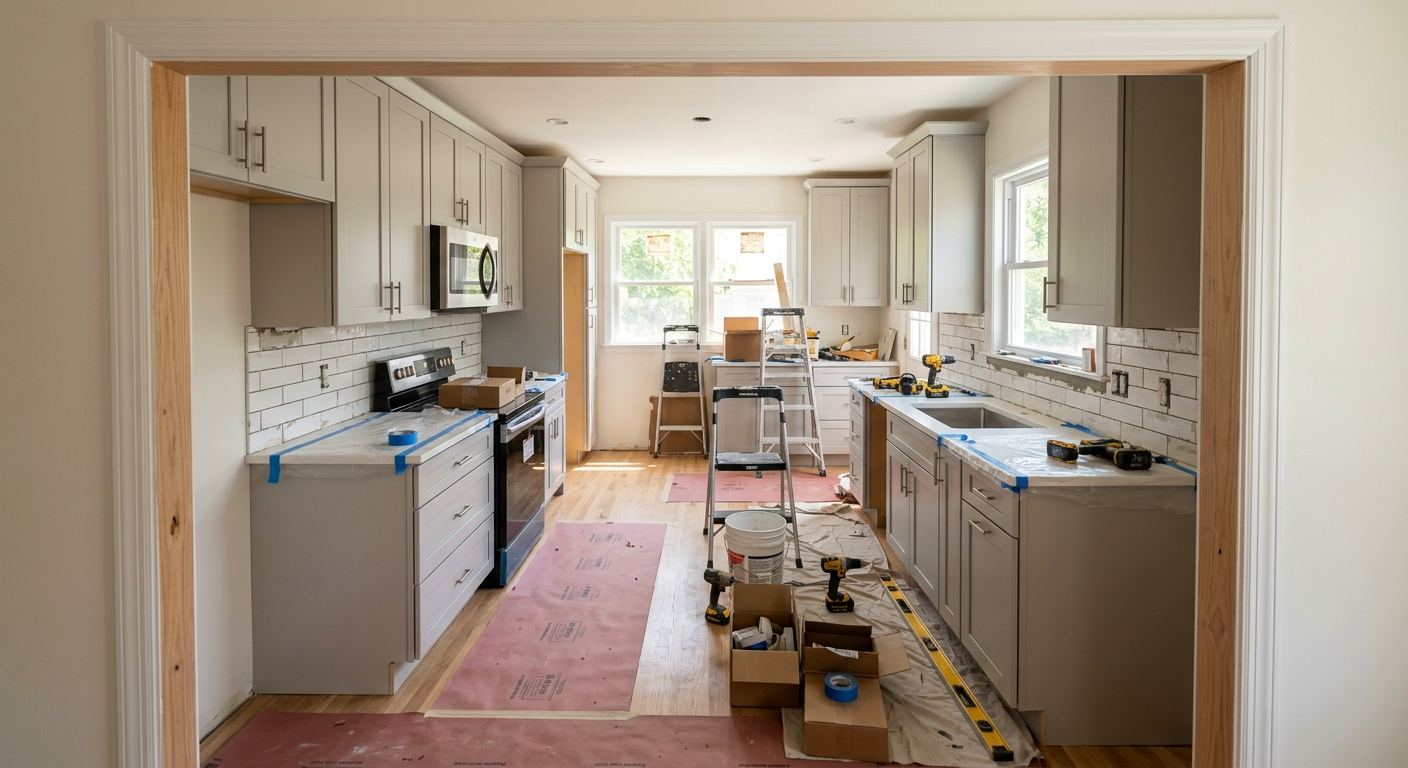
Kitchen renovation options and costs in Mahogany
Mahogany, Alberta is a fast-moving community in the Calgary economic region, and that pace shows up in how kitchen reno quotes are priced and scheduled. With a population of 13,860 (Statistics Canada, 2021 Census), there’s enough demand to keep trade crews busy, but not so much that you’ll always get off-season pricing. Home finishing expectations typically rise with household prosperity—Calgary-area buyers often plan upgrades as part of resale value, and many homeowners in Mahogany choose a finish tier that matches the rest of the home’s quality. In practical terms, that means upgrades gravitate toward cabinetry that installs cleanly and counters that look “final” for years, rather than cheaper interim surfaces.
In this region, the Calgary housing market drives renovation budgets more than climate performance does. Alberta winters can stress caulking lines, sink plumbing joints, and temperature-sensitive adhesives, but the main cost drivers are labour rates and finish selection. Skilled kitchen labour in Calgary is commonly around $90–$140 per hour, so design time, demo time, and millwork installation add up quickly even for straightforward scopes. Contractors are especially in demand around Mahogany’s busiest commercial-and-residential connector areas, where ongoing building phases keep crews booked.
Use the ranges below to compare scopes—from a simple cosmetic refresh to a full redesign with custom millwork and an island. Once you pick a tier, the next step is matching material choices (cabinets + counters + tile) to the layout changes you want.
| Renovation Tier |
What's Included |
Typical Duration |
Price Range |
| Cosmetic refresh (paint, hardware, new appliances only) |
Paint on existing cabinets/walls, new hardware, minor drywall patching, new appliance set (labour to disconnect/reconnect where permitted), existing countertops and backsplash retained |
3–7 days |
$8,000–$18,000 |
| Mid-range full renovation (new cabinets, counters, sink, tile) |
New semi-custom or higher-quality stock cabinets, new countertops, sink and faucet, backsplash tile, disposal hookup, updated caulking/silicone at seams, basic electrical coordination for lighting |
2–4 weeks |
$25,000–$60,000 |
| High-end full renovation (custom cabinets, stone counters, island) |
Custom cabinetry, quartz or natural stone counters, island (where space allows), upgraded backsplash (tile accent or full-height option), integrated lighting prep, sink moved/updated, premium appliance package coordination |
4–8 weeks |
$60,000–$100,000 |
| Cabinet refacing only (new doors + drawer fronts, same boxes) |
Remove and replace doors/drawer fronts, new panels where needed, new hardware, interior touches (trim/adjustments), existing boxes stay in place, countertop retained |
1–2 weeks |
$8,000–$25,000 |
| Countertop swap only (laminate to quartz or stone) |
Remove existing laminate (and dispose), templating, new quartz/stone install, new sink cut-out if dimensions match, seam finishing, backsplash not included unless specified |
3–10 days |
$3,000–$12,000 |
| Backsplash tile installation only |
Surface prep, tile installation, grout/sealer where needed, trim/edge finishing, silicone at counter and corners |
2–5 days |
$2,500–$8,000 |
Prices are estimates only and vary by project scope, site access and material selection.
What affects the price of kitchen renovation in Mahogany
In Mahogany and across the Calgary economic region, two quotes that “sound the same” can land 30–50% apart because the budget is shaped less by climate and more by local market expectations, finish tier, and how much hidden work gets triggered after demo. Alberta’s strong construction market also tightens scheduling and labour availability, which increases the cost of project management and keeps skilled crews booked. The same contractor might price a quick refresh at one rate, but once plumbing, electrical, or layout changes are involved, labour hours, inspection coordination, and change orders can escalate quickly.
Local home values and household income shape the finish tier homeowners choose. In higher-value Calgary-area markets, many homeowners default to quartz or natural stone counters and semi-custom cabinetry because the upfront spend is more easily recovered on resale. In more modest setups, laminate and stock cabinetry dominate because the return is easier to defend at a lower total cost. Regardless of tier, layout changes—removing a wall, adding an island, or moving a gas line—usually add the biggest uncertainty because they affect multiple trades and permit steps.
Here are concrete Mahogany examples of cost swings. If you’re upgrading from a $25,000–$60,000 mid-range plan to a full redesign that includes an island and stone counters in the $60,000–$100,000 band, the jump is often driven by cabinet customisation, counter fabrication, and additional electrical and plumbing coordination. If your existing kitchen has older supply lines or tighter access behind base cabinets, the cost to replace valves or reroute lines can add labour even when cabinet and countertop pricing looks similar. And in Alberta’s freeze-thaw cycles, poorly sealed sink edges and fluctuating humidity can shorten the service life of cheap adhesives—so high-quality prep and caulking choices can prevent costly rework later.
| Price Factor |
Why It Matters |
Cost Impact |
| Cabinet tier — stock vs. semi-custom vs. fully custom millwork |
Materials, tolerances, door styles, soft-close hardware, and how well the cabinetry fits an exact layout |
Typically +$5,000 to +$35,000 as you move up tiers |
| Countertop material — laminate vs. quartz vs. granite vs. stone |
Fabrication complexity, edge profiles, seam layout, and long-term durability against heat and daily wear |
Often +$2,000 to +$15,000 depending on the choice |
| Layout change — wall removal, island add, plumbing/gas move |
Triggers structural considerations, trade coordination, and more unpredictable field adjustments |
Commonly +$8,000 to +$35,000+ |
| Appliance package tier — builder vs. mid-range vs. pro-grade |
Electrical needs, ventilation requirements, dimensions, and premium installation allowances |
Typically +$1,500 to +$10,000+ |
| Flooring — refinish existing vs. full replacement |
Protecting finishes during demo and the likelihood of damage near base cabinets and underlayment |
Often +$2,000 to +$12,000 |
| Backsplash — ceramic tile vs. marble vs. full-height slab |
Weight, substrate prep, and finishing details determine labour hours and material cost |
Often +$1,000 to +$6,000+ |
| Electrical — new circuits for island, under-cabinet lighting |
Electrical rough-in, pot lights/LED drivers, and inspection timing affect the schedule |
Commonly +$1,000 to +$8,000 |
| Permit fees and licensed trade requirements |
When permits apply, the cost includes fees plus licensed labour and inspection coordination |
Often +$500 to +$4,000+ |
Permits & regulations in Alberta
In Alberta, a like-for-like cabinet and countertop swap typically does not require a permit. That means replacing existing cabinets, swapping counters, or installing a backsplash on the existing wall surface usually falls under normal renovation work—still, your contractor should confirm what’s included in their scope for your specific layout. However, if you’re changing plumbing, gas, structural elements, or adding electrical circuits, you’re in permit territory.
Work that typically does require permits and licensed trades includes: moving or altering plumbing supply lines or drain lines; relocating a gas range and/or modifying gas connections; adding or changing a gas range hood with gas venting considerations; removing a load-bearing wall (or doing structural changes that affect support); and adding new electrical circuits (for example, powering an island receptacle ring or installing additional dedicated lighting circuits). Gas work must be carried out by a licensed gas fitter, and electrical work must be performed by a licensed electrician—both are subject to inspections.
How to verify in Mahogany before you sign: (1) ask for the contractor’s Alberta licence details for the trades involved and confirm them through the appropriate online registry; (2) request a certificate of insurance showing liability coverage; (3) obtain proof of workers’ compensation coverage (WSIB/WCB) for the workers who will be on site; and (4) get a written statement of who is responsible for permits and scheduling inspections. In your contract, it should be explicit—permit responsibility shouldn’t be verbal or “we’ll handle it” without details.
Cabinets, countertops and layout decisions in Mahogany
When you’re planning a Mahogany kitchen renovation, three decisions usually determine 80% of the outcome: (1) cabinet tier, (2) countertop material, and (3) whether you’re changing the layout (open-concept wall removal, island addition, or moving plumbing/gas). Calgary buyers often look for a clean, updated, durable kitchen that feels built to last—especially in homes where entertaining space is a selling point. That makes semi-custom cabinetry the most common balance between fit, speed, and cost, while fully custom millwork becomes easier to justify when you’re also redesigning for storage or integrating an island.
Countertop material choice is where the cost difference becomes obvious. Laminate can be a sensible entry point, but it’s less forgiving for long-term wear and heat exposure. Quartz is the most popular “no-fuss” option for families because it’s low maintenance and consistent in appearance. Granite and other natural stones can add a premium look, but they may require more care and are sometimes more sensitive to daily maintenance habits. In colder Alberta stretches, keeping edges and sink transitions properly sealed matters—if the installation prep is rushed, moisture can creep into seams over time.
Layout changes are the decision that can’t be “priced by vibes.” Adding an island or moving plumbing/gas typically costs more than simply upgrading finishes, but it’s often justified when the space gain improves how you live (more seating, a better work triangle, or improved appliance placement). For a realistic example, shifting from a mid-range plan around $25,000–$60,000 to include a new island and higher-tier stone in the $60,000–$100,000 band is usually where cabinet customisation, extra electrical, and coordinated plumbing changes pay for themselves in functionality—while upgrading laminate counters without a layout change often won’t.
| Option |
Durability |
Maintenance |
Best For |
Price Range |
| Stock cabinets (big-box) |
Solid for everyday use; fit can be less exact in older or slightly off-square spaces |
Low; occasional tightening of hardware |
Fast turnarounds and budget-first renovations |
$8,000–$20,000 |
| Semi-custom cabinets (local dealer) |
Better tolerances, improved storage options, and more finish/hardware choices |
Low; soft-close hardware typically holds up well with normal care |
Most Mahogany homeowners who want a premium look without full custom pricing |
$18,000–$35,000 |
| Custom cabinets (local millwork shop) |
Best fit and detailing; optimized storage and unique sizing for niche layouts |
Low, but require careful installation alignment |
Unusual layouts, integrated features, and top-tier renovations |
$35,000–$60,000+ |
| Laminate countertop |
Good for daily use; can chip/mark if impact is frequent |
Wipe clean; keep heat directly off surfaces; avoid prolonged moisture at seams |
Budget upgrades when cabinets are the main visual change |
$3,000–$6,000 |
| Quartz engineered countertop |
High durability and consistent surface; resists staining better than many alternatives |
Low; clean with non-abrasives and keep seams properly sealed |
Busy households wanting an easy-care, resale-friendly surface |
$6,000–$12,000 |
| Granite / natural stone countertop |
Very durable; each slab is unique |
Periodic sealing may be needed depending on the stone |
Premium look with natural variation |
$7,000–$14,000 |
| Butcher block countertop |
Resilient but can be scratched; needs care around water and edges |
Oil regularly; wipe dry; manage seams carefully |
Warm, farmhouse-leaning kitchens and frequent food prep |
$5,000–$10,000 |
| Marble countertop |
Beautiful but more porous and prone to etching if not maintained |
Higher upkeep; sealing and careful cleaning required |
Statement kitchens where maintenance discipline is realistic |
$10,000–$18,000+ |
How to choose a kitchen renovation contractor in Mahogany
Choosing the right contractor in Mahogany is about verifying capability and protecting yourself on the details—permits, insurance, and how the work is documented. First, verify licensing and coverage for the trades involved. For the contractor and any subcontractors, request proof of liability insurance (with current certificate details), confirm they carry WSIB/WCB coverage so you’re not exposed if a worker is injured, and ensure the specific trades for gas and electrical are licensed for those tasks. You can confirm licences through the appropriate Alberta online registry, and for insurance you should see the certificate of insurance as an actual document (not just an email). When work includes gas and electrical, ask for the licensed trade’s documentation before scheduling.
Second, get 2–3 itemised written quotes—not lump sums. The best quotes break labour and materials line-by-line, including cabinetry, countertops, tile/backsplash, removal/disposal, electrical allowance, and any plumbing/gas coordination. Read exclusions carefully: is the permit pull included, is asbestos handling addressed if discovered, and is construction debris disposal included? Warranty matters too: ask about workmanship warranty length, product/manufacturer warranty terms, and whether warranties are transferable if you sell the home. For payments, never front-load the job—keep upfront deposits around 10–15%, and request a holdback until completion and sign-off. Finally, insist on a written start date and completion estimate, with what happens if materials (like quartz slabs or custom doors) arrive late.
- Ask for licence numbers and verify them through Alberta’s online registry before booking demolition.
- Request a current certificate of liability insurance naming you or showing appropriate coverage.
- Confirm WSIB/WCB coverage for workers (not just the owner).
- Get 2–3 itemised quotes with labour and materials separated.
- Confirm whether permits are required for your scope and who pulls them.
- Check exclusions: disposal, dust control, floor protection, and drywall patching.
- Ask who supplies templating and fabrication for countertops and how tolerances are handled.
- Review warranty: workmanship duration, product warranty, and transferability on resale.
- Use a payment schedule with 10–15% maximum upfront and a holdback at substantial completion.
- Require a written timeline including material lead times and contingency for delays.
- Confirm what level of electrical scope is included (is island lighting and outlets included or add-on?).
- Ask for an on-site walkthrough to assess plumbing/gas access behind existing cabinets.
Red flags in Mahogany kitchens include quotes that don’t break labour vs materials, promises that “permits aren’t needed” for work that involves moving plumbing or adding circuits, vague warranty terms (“we’ll fix it if it fails”), no proof of WSIB/WCB or insurance, and payment schedules that demand large upfront amounts without holding back until completion.
Frequently asked questions — kitchen renovation in Mahogany
How do I choose a kitchen contractor in Mahogany?
Start by comparing contractors who can clearly explain scope, not just style. In Mahogany, you’ll often see big swings in price because the finish tier (semi-custom vs custom) and whether plumbing/electrical is changing drive labour time. Ask for 2–3 itemised quotes that break labour and materials, and make sure they specify whether permits and licensed trade work are included. For safety, verify Alberta coverage: request a certificate of liability insurance and proof of WSIB/WCB for workers, and confirm gas/electrical licences through the applicable Alberta registry. If their quote puts you in the mid-range around $25,000–$60,000, make sure that number still includes key items like disposal, proper counter templating, and backsplash prep—not just cabinets and countertops.
What order do kitchen renovation steps happen in?
A good kitchen reno sequence protects finishes and keeps trades from blocking each other. Typically, demolition comes first, followed by rough-ins (electrical and plumbing) if your plan changes any lines or circuits. Next is cabinet installation (or cabinetry framework), then countertop templating, then countertop fabrication and install. After counters go in, backsplash tile installation happens, followed by final caulking/silicone at seams and a full hardware and lighting trim-out. If you’re doing an island, electrical for island outlets/lighting is usually rough-in before countertops, then final connections come after. This order matters in Alberta because cold-season drying affects adhesives and sealants—rushing steps can lead to gaps that show later.
Can I live at home during a kitchen renovation in Mahogany?
Often, yes—especially for cosmetic refreshes or countertop/backsplash projects—but full renovations make it harder. With mid-range full projects (commonly in the $25,000–$60,000 band), many homeowners live in the home using a temporary kitchenette setup, but you’ll usually lose the main sink and cooking area for part of the timeline. Contractors should include dust control measures, floor protection, and a plan for safe access to remaining bathrooms and laundry. If you’re doing gas or major layout changes, the schedule can stretch, and you may want to plan meals outside for a week around rough-in and countertop install. Confirm in the contract what “temporary kitchen” support is (if any) and whether the work area is fully isolated during demo.
Should I renovate my kitchen before selling in Mahogany?
Usually, yes—if you’re aiming for the right balance of visible upgrades and cost recovery. In Mahogany and the broader Calgary region, buyers often expect updated counters, modern cabinet finishes, and a backsplash that looks intentional. A cosmetic refresh can help curb appeal, but kitchens often sell based on perceived durability and layout. That’s why many homeowners choose to invest in a mid-range redesign around $25,000–$60,000 rather than only changing paint. If you’re considering a high-end transformation in the $60,000–$100,000 range, be realistic about your buyer pool and whether your layout change supports how local buyers live (entertaining, storage, and an island-style workflow). If your home’s kitchen is dated but functional, refacing cabinets or swapping to quartz can be a smart pre-sale upgrade.
What's the most popular kitchen style in Mahogany right now?
In Mahogany, the most common direction is a clean, modern look that reads “warm contemporary”: simple cabinet lines, soft-close hardware, quartz counters, and backsplash tile that adds texture without turning busy. Many homeowners pair semi-custom cabinetry with either a quartz surface or a premium natural stone accent where budgets allow. The layout trend is also practical—more storage, better appliance placement, and island or peninsula features when the home’s footprint supports it. Alberta buyers tend to prefer low-maintenance surfaces because the realities of daily cooking make upkeep choices matter. That’s one reason quartz remains the default. If you’re comparing budgets, mid-range projects often deliver the most buyer-friendly balance, clustering around $25,000–$60,000 when layout is maintained or only lightly adjusted.
How do I know if I need to update my kitchen plumbing in Mahogany?
You may not need to replace plumbing if it’s functioning, but you should evaluate it before walls and cabinets are closed. Signs include slow drains, inconsistent hot water pressure at the sink, visible corrosion or leaking under the existing sink, and shutoff valves that don’t fully open/close. In older assemblies, supply lines can become stiff or unreliable, and move/relocation plans (like changing the sink location) often require line updates for proper routing and accessibility. If you’re moving plumbing supply or drain lines, that work typically triggers permit steps and must be handled by the right licensed trades in Alberta, with inspections. During quoting, ask the contractor to include assessment time behind base cabinets and under the sink so you understand what might be exposed after demo.