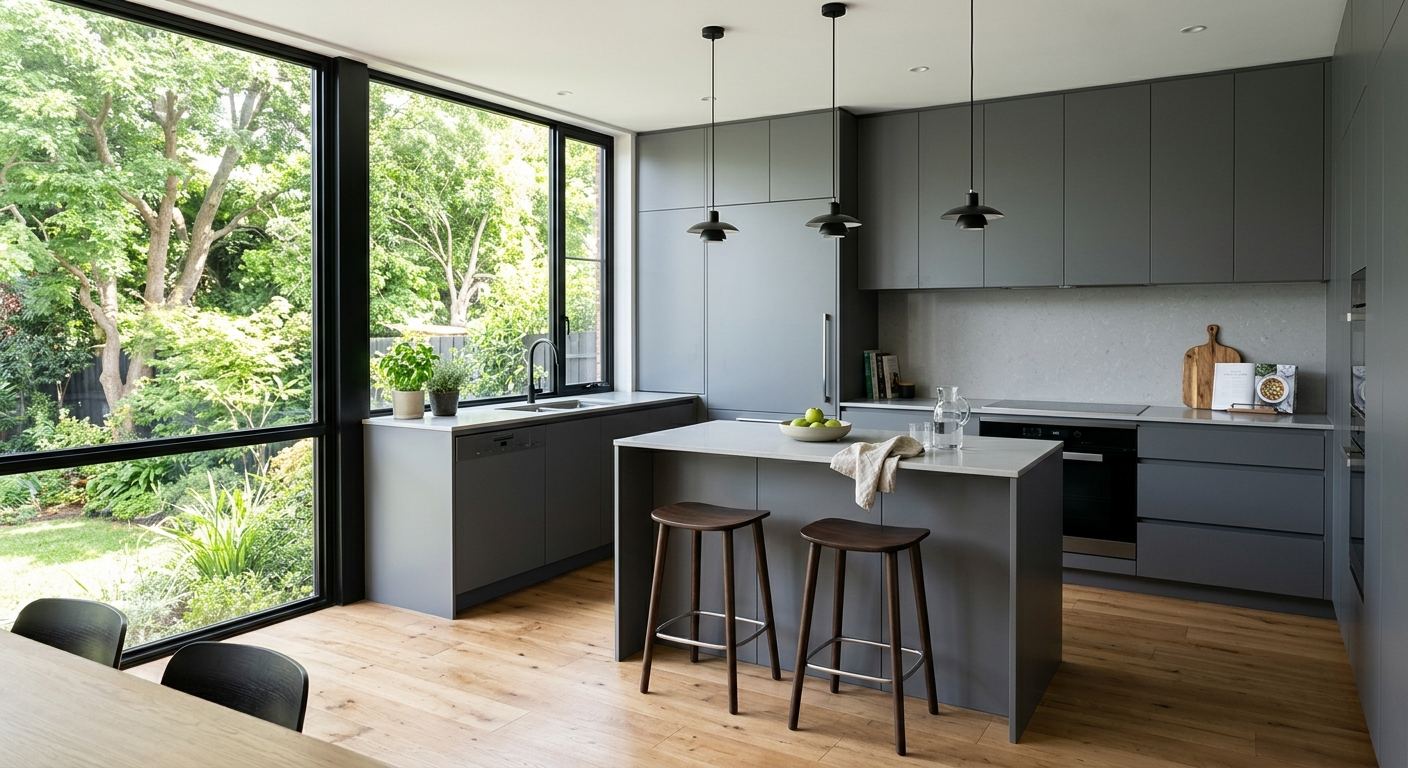
Kitchen renovation options and costs in Lendrum Place
Lendrum Place, Alberta residents typically see kitchen renovation options fall into three practical lanes: a cosmetic refresh for the quickest impact, a mid-range full renovation for the “everything feels new” goal, and a high-end redesign when you want layout changes plus premium finishes. While Lendrum Place is a smaller community (population 1,887, Statistics Canada, 2021 Census), homeowners still tap into the wider Calgary market for installers, stone fabricators, and cabinet suppliers. In this region, renovation choices often track household buying expectations more than weather—especially because Calgary’s resale market rewards modern, durable surfaces such as quartz or natural stone and clean, integrated lighting.
How quickly a project can be priced also depends on demand. In Calgary’s stronger-demand pockets—especially around the inner-city and established commercial-residential corridors where trades rotate between occupied homes—kitchen crews book out faster in warmer months, and stone template appointments can compress timelines. Alberta’s winters also influence cost indirectly: material deliveries must be protected on site, and crews factor in scheduling around heating, ventilation, and drying for tile and paint work. The result is that the same kitchen can land at very different totals when one scope includes layout and utility changes versus staying “like-for-like.”
Below is a practical comparison of renovation tiers you’ll see in Calgary-area quotes, including budget ranges that align with the typical full-kitchen band of $25,000–$100,000. Use this table to map your goals to a realistic starting point, then we’ll break down what drives the final number.
| Renovation Tier |
What's Included |
Typical Duration |
Price Range |
| Cosmetic refresh (paint, hardware, new appliances only) |
Cabinet hardware swap, repainting cabinets/walls, new appliance set (no plumbing or vent relocation), minor caulking/trim touch-ups |
5–10 working days |
$8,000–$22,000 |
| Mid-range full renovation (new cabinets, counters, sink, tile) |
Semi-custom or quality stock cabinets, new countertops, new sink + faucet, backsplash tile (to standard height), flooring refresh (often underlay/replace in wet zones) |
3–5 weeks |
$25,000–$65,000 |
| High-end full renovation (custom cabinets, stone counters, island) |
Custom cabinetry, premium stone counters with waterfall/edge options, island (including electrical and/or gas considerations), upgraded backsplash (often full-height sections), lighting and appliance integration |
5–10 weeks |
$70,000–$100,000 |
| Cabinet refacing only (new doors + drawer fronts, same boxes) |
Refaced cabinetry with new doors/drawers, upgraded hardware, re-leveling where needed, repaint/finish touch-ups; counters and plumbing typically unchanged |
1–2.5 weeks |
$8,000–$35,000 |
| Countertop swap only (laminate to quartz or stone) |
Demolition of old surface, new countertop install, sink cut-outs/fit (if reusing sink), caulking, basic backsplash tie-in (not a full tile job) |
3–7 working days |
$3,000–$12,000 |
| Backsplash tile installation only |
Surface prep, tile set and grout, caulking at edges, allowance for outlet trimming; countertop must be installed/finished or protected |
3–6 working days |
$2,500–$8,000 |
Prices are estimates only and vary by project scope, site access and material selection.
What affects the price of kitchen renovation in Lendrum Place
In Lendrum Place and the wider Calgary region, homeowners often see quote differences of 30–50% for what appears to be the “same” kitchen. That spread usually comes from finish tier, how much of the work is truly like-for-like, and whether utilities and layout are changing—not from Alberta climate itself. In higher-value Calgary-area pockets, many owners default to quartz or stone counters and semi-custom cabinetry because the renovation cost is easier to justify on resale. In more modest scenarios, laminate and stock cabinets dominate since they deliver a visible upgrade without pushing totals toward the $25,000–$100,000 full-kitchen band.
Climate does affect cost indirectly in Alberta: cold-weather scheduling can slow curing and drying for tile and finishes, and contractors need tighter coordination for deliveries and on-site protection of materials. However, the bigger cost swing is layout and utility work. For example, moving a sink location adds plumbing labour and wall repairs; adding an island can require new electrical circuits and sometimes a venting or gas line re-route. Those items are unpredictable because they depend on what’s behind walls and how older homes were built.
Two concrete cost examples that commonly show up in Lendrum Place quotes: (1) if you keep your existing cabinet footprint and only upgrade counters, you can often stay near the $3,000–$12,000 countertop-swap band; (2) if you move plumbing/gas to support an island, the job typically jumps toward mid-range full renovation totals, even before you choose a higher cabinet tier. On the delivery side, Alberta’s active construction market means skilled labour in Calgary often runs around 90–140 per hour, so design time, project management, and rework risk can meaningfully change the final number.
| Price Factor |
Why It Matters |
Cost Impact |
| Cabinet tier — stock vs. semi-custom vs. fully custom millwork |
Custom box builds, door styles, and internal organization change labour time and material cost |
Often shifts project by $8,000–$30,000+ depending on scope |
| Countertop material — laminate vs. quartz vs. granite vs. stone |
Material price, fabrication complexity, and edge/waterfall details vary widely |
Can add $2,000–$20,000+ to the same layout |
| Layout change — wall removal, island add, plumbing/gas move |
Utilities, structural assessment, and patching drive labour and schedule risk |
Typically the largest swing; $5,000–$40,000+ |
| Appliance package tier — builder vs. mid-range vs. pro-grade |
Power requirements, trims, and integration (panel-ready, vents) can change labour |
Commonly $1,500–$15,000 difference for comparable “like” installs |
| Flooring — refinish existing vs. full replacement |
Subfloor condition and matching existing finishes can force broader replacement |
$1,000–$12,000 depending on extent |
| Backsplash — ceramic tile vs. marble vs. full-height slab |
Stones require tighter tolerances, sealing, and more specialized installs |
$500–$8,000+ for the same wall area |
| Electrical — new circuits for island, under-cabinet lighting |
Additional wiring, boxes, and fixtures increase trade hours and coordination |
Often $800–$6,000+ depending on complexity |
| Permit fees and licensed trade requirements |
When required, licensed trades must schedule inspections and document work |
Can add $300–$2,500+ plus schedule impacts |
Permits & regulations in Alberta
In Alberta, homeowners are often surprised that not every kitchen change triggers a permit. Cabinet and countertop swaps typically do not require a permit when you’re keeping the same locations and utilities—so a straight cabinet refacing, new doors/drawer fronts on existing boxes, or a countertop replacement that doesn’t alter plumbing/gas connections is usually straightforward. Likewise, replacing a sink in the same position without moving supply/drain lines generally stays within “no permit” territory.
Where permits do come into play is when you change services or structural elements. Moving plumbing supply or drain lines, relocating gas (for a stove/range), removing a load-bearing wall, or adding new electrical circuits for things like island outlets or under-cabinet lighting all require permits and must be performed by the proper licensed trades. Gas work must be done by a licensed gas fitter, and electrical work must be done by a licensed electrician; both usually involve inspections.
For a homeowner in Lendrum Place, the verification process should be in writing and completed before you sign:
1) Ask the contractor for licence numbers and proof of liability insurance; 2) request WSIB/WCB coverage information (or the appropriate proof of coverage/clear letter, depending on the contractor’s business setup); 3) confirm what permits are being pulled by whom; and 4) keep copies of certificates for your records. Then, when you receive the contractor’s contract, verify that permit responsibility is spelled out—don’t assume it’s “included.”
Cabinets, countertops and layout decisions in Lendrum Place
When you renovate a kitchen in Lendrum Place, three decisions drive most of the cost and—more importantly—how satisfied you’ll be six months after install: (1) cabinet tier, (2) countertop material, and (3) whether you change the layout. Cabinet tier determines both the look and the fit: stock cabinets are fastest and cheapest; semi-custom is the most popular mid-range path because it balances variety with speed; fully custom millwork is the highest-cost option but gives a built-in fit to awkward spaces. Countertops then set the “daily experience” through durability and maintenance. Laminate is budget-friendly, while quartz gives a consistent, low-maintenance surface; granite/natural stone adds character but typically needs more care.
Layout changes are where Calgary pricing can jump. Removing a wall or adding an island may be worth it if it improves circulation and creates functional zones for cooking and entertaining—something buyers notice in resale. But adding an island also usually means new electrical, and sometimes moving gas/plumbing, which pushes you out of “refresh” budgets and into full redesign territory. For a dollar example: if your current cabinets are staying put and you only replace laminate with quartz, many projects land in the $3,000–$12,000 countertop-swap band. If you keep that cabinet footprint but add an island with electrical and rework the adjacent wall, that same countertop choice often ends up inside a mid-range full renovation total closer to the $25,000–$65,000 band.
Because Calgary homes vary in age and service runs, older kitchens can hide surprises (old shutoffs, undersized rough-ins, uneven walls). In those cases, the best ROI decision is usually to invest where wear shows most: cabinetry hardware, counter edge durability, and good lighting—rather than over-upgrading every element.
| Option |
Durability |
Maintenance |
Best For |
Price Range |
| Stock cabinets (big-box) |
Solid for everyday use; limited size/customization can reduce “perfect fit” |
Routine cleaning; hardware upgrades can refresh wear points |
Fast timelines and budget-conscious refreshes |
$8,000–$22,000 |
| Semi-custom cabinets (local dealer) |
Better storage options and door/style choices; strong stability for long-term use |
Standard wipe-down; adjust/align as needed during install |
Most Lendrum Place mid-range renovations |
$15,000–$45,000 |
| Custom cabinets (local millwork shop) |
Best fit to your space; higher build quality and specialized storage |
Standard cleaning; premium finishes last longer with proper care |
Unusual layouts, ceiling-height builds, maximum storage and brand-specific look |
$30,000–$70,000+ |
| Laminate countertop |
Good for light/moderate use; edges can wear if not detailed well |
Wipe clean; avoid prolonged standing water at seams |
Budget upgrades when cabinets are the main focus |
$3,000–$6,500 |
| Quartz engineered countertop |
Highly durable for daily cooking; resists stains and typical household wear |
Low maintenance; minimal sealing needs |
Families that want a “set it and forget it” surface in a resale-friendly look |
$5,500–$12,000 |
| Granite / natural stone countertop |
Very durable; each slab has unique veining and heat tolerance |
May require periodic sealing; care for specialty stones |
Homeowners who want natural variation and premium stone appeal |
$8,000–$18,000 |
| Butcher block countertop |
Durable but can dent/scratch; best with proper oiling |
Oil regularly; wipe and dry quickly after wet tasks |
Warm, traditional looks and true “food prep” use |
$4,000–$10,000 |
| Marble countertop |
Premium look; more susceptible to etching/staining than quartz |
More maintenance; requires careful cleaning habits |
Low-heat, design-led kitchens where appearance is the priority |
$10,000–$22,000+ |
How to choose a kitchen renovation contractor in Lendrum Place
Choosing a contractor in Lendrum Place is mostly about proof and clarity. In Alberta, verify the contractor’s licensing where applicable (especially for electrical and gas-related scope), plus liability insurance and WSIB/WCB coverage. How to check: ask for certificate of insurance (liability) and the insurer details, request WSIB/WCB clearance documentation, and confirm licence information for the trades they sub-contract. A reputable builder will provide these documents without hesitation and will also name which permits (if any) they pull.
Next, get 2–3 written, itemised quotes—not lump sums. You want a labour + materials breakdown that shows what you’re paying for: cabinetry supply, demolition, install labour, countertop fabrication, tile set and grout, electrical scope, and waste disposal. Read the scope like a checklist: what is excluded (e.g., replacing drywall, patching behind new cabinets, subfloor repair, relocating a vent hood), is permit pulling included, and is dumpster/disposal included?
Warranty matters too. Ask for the workmanship warranty length, what products have manufacturer warranties, and whether warranties are transferable if you sell. Payment should be staged: never pay more than 10–15% upfront, and hold back a portion until the job is complete and items are signed off.
Finally, timeline should be concrete—start date and completion estimate in writing, including realistic allowance for stone fabrication and cabinet lead times in Alberta’s active construction season.
- Confirm insurance certificate date and ask for the named insured.
- Request WSIB/WCB clearance or proof of coverage before work starts.
- Insist on itemised pricing for labour and materials (no vague allowances).
- Clarify who pulls permits and who schedules inspections.
- Verify licensed trade responsibility for electrical and gas scope.
- Ask for a written start date and completion target (with contingencies).
- Get a demolition plan: dust control, protection of flooring, and staging.
- Confirm disposal: dumpster, haul-away, and recycling practices.
- Review warranty: workmanship duration and process for warranty calls.
- Ask whether product warranties transfer to you/the next owner.
- Confirm payment schedule (10–15% max upfront) and holdback terms.
- Confirm final walkthrough items and punch-list resolution timeline.
Red flags I commonly see around kitchen renos in Lendrum Place: refusing to provide insurance/WSIB/WCB proof, offering only lump-sum numbers without a scope breakdown, claiming “no permits needed” while also describing plumbing/gas/electrical moves, vague warranty language, and pushing large upfront payments beyond 10–15%.
Frequently asked questions — kitchen renovation in Lendrum Place
What order do kitchen renovation steps happen in?
In Lendrum Place and across Calgary, the order is designed to protect your new surfaces and keep trades from working over each other. Typically, you start with measurements, final cabinet/counter approvals, and any required inspections/permits (only when your scope changes utilities or structure). Next comes demolition and rough-in work—plumbing/electrical adjustments—then drywall patching and surface prep. After that, install cabinets, then countertops (fabrication first, then template and install), followed by sink/faucet hookups. Tile and backsplash come after cabinets are set and level, while final painting/finishing and hardware install is done near the end. If flooring is being replaced, it’s usually handled after demo but before the “final build” steps, depending on whether cabinets sit on flooring or on a toe-kick finish.
Can I live at home during a kitchen renovation in Lendrum Place?
Often yes, but it depends on how intrusive the work is. For a cosmetic refresh or a countertop-only swap, most families in Alberta can stay home because the kitchen can still function with temporary setups. For a mid-range or full renovation (commonly within the $25,000–$65,000 range when cabinets, counters, sink, and tile are included), you’ll typically need a short-term plan for cooking—like a microwave, kettle, and fridge in a separate room—especially during rough-in and tile work. Contractors can use dust control and plastic containment, but active demolition and countertop install mean noise and limited access. If you’re moving plumbing/gas or adding electrical for an island, the work periods may be longer, and it’s smarter to plan for a “kitchen-off” phase. Your contractor should lay out a day-by-day approach and specify when your kitchen will be usable.
Should I renovate my kitchen before selling in Lendrum Place?
It depends on your current condition and how your neighbours’ homes present. In Lendrum Place, where kitchens in established Calgary housing stock can vary widely by age, buyers tend to notice durable finishes first: solid cabinet function, modern counter surfaces, and good lighting. A cost-effective approach is usually targeted upgrades—like swapping counters to quartz or stone and updating hardware—rather than a full redesign if your layout still works. If you’re planning a full rebuild, the logic is: choose finishes that match resale expectations. Calgary-region projects often cluster into the mid five-figures to six-figure range when layouts change or premium stone and custom cabinetry are selected. That means you should time the renovation to your listing window, confirm product lead times, and avoid over-customizing. As a starting point, consider whether a refresh is enough to prevent buyers from discounting the home over worn counters or dated cabinetry.
What's the most popular kitchen style in Lendrum Place right now?
Homeowners in Alberta right now commonly lean toward clean, modern transitional designs: simple shaker-style fronts, neutral palettes, and bright, layered lighting. On counters, quartz dominates because it delivers a consistent look with low maintenance—important for everyday cooking and resale. Islands remain a major draw where space allows, often with an overhang for seating and integrated lighting. Backsplashes tend to be understated but refined, such as large-format ceramic or stone-look tile, with better grout and more precise trims than older builds. While styles vary by neighbourhood preferences within the Calgary area, the consistent theme is “durable and easy to live with,” which aligns with the typical price tier where homeowners invest in cabinetry and countertops rather than purely cosmetic changes. Your best match is the style that still feels current even when buyers scan online photos.
How do I know if I need to update my kitchen plumbing in Lendrum Place?
You may need updates if you’re seeing leaks, poor drainage, frequent shutoff issues, or corrosion around supply lines and under-sink fittings. Another trigger is scope: if you’re moving the sink, dishwasher, or adding a new island with plumbing, you’ll likely need to open walls and address rough-in quality. Even when you’re not moving fixtures, older homes can have valves that won’t shut fully, undersized supply lines, or drain sections that don’t meet how newer drain components are routed. A contractor should inspect shutoffs, check slope and venting considerations where applicable, and confirm what can be reused. If the quote includes plumbing work, ensure it’s itemised and that licensed trade responsibility is clear. When plumbing changes are part of the plan, permit requirements and inspections become part of the schedule, regardless of whether your cabinet and counter choices are budget-friendly or premium.
What is the difference between a galley and open-concept kitchen?
A galley kitchen is typically a narrow layout with counters on two parallel walls, which can be efficient for cooking but may feel enclosed. Open-concept kitchens remove barriers between the kitchen and living areas, improving sightlines and making the space more social—often accomplished by removing a wall or reconfiguring the dining/living connection. In Lendrum Place, the cost difference usually shows up when you change structure and utilities: open-concept work can involve higher demolition and potentially permit and licensed-trade scope, while a galley renovation is often easier to keep within the “like-for-like” approach. Because layout changes add unpredictability, it’s common for open-concept redesigns to move toward the higher end of typical renovation budgets, especially once you add an island and new electrical circuits.