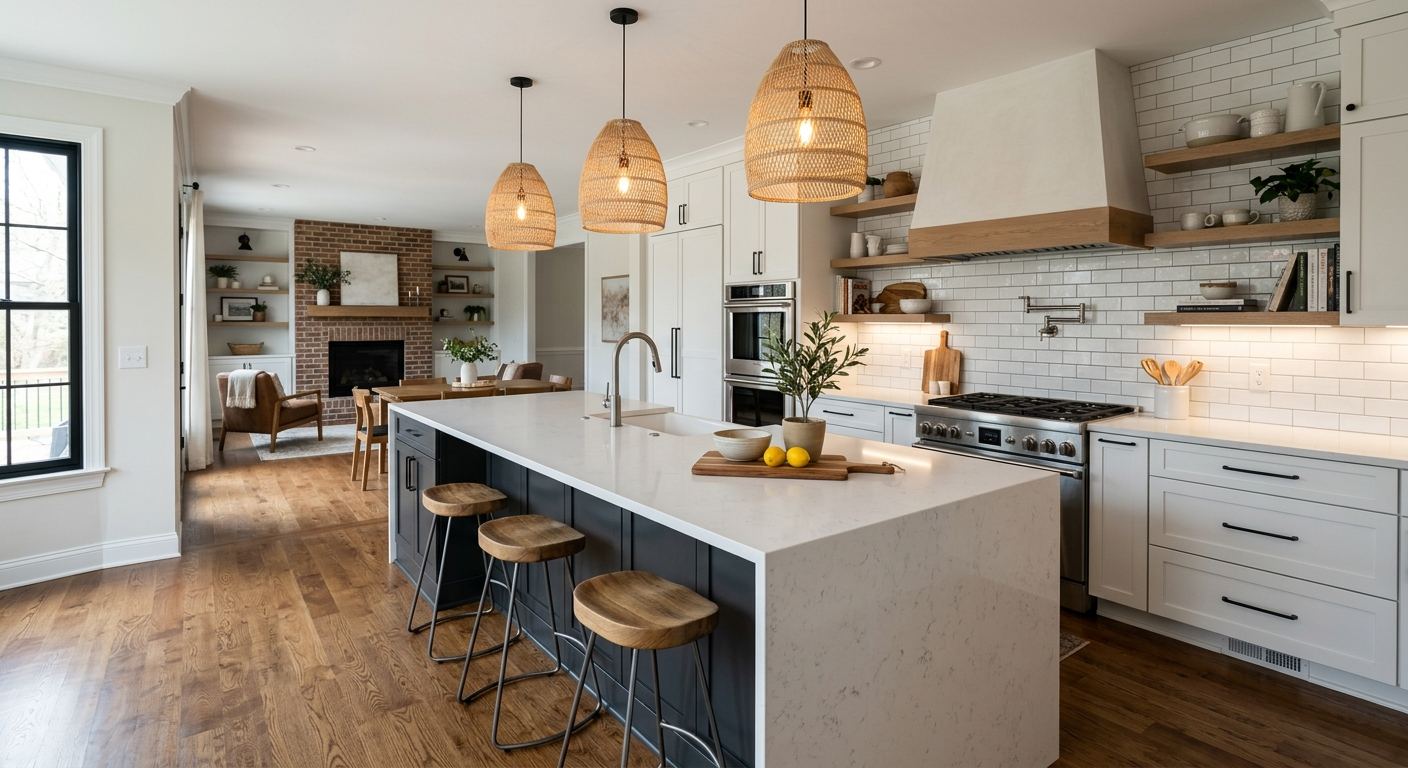
Kitchen renovation options and costs in Fort McMurray
Kitchen renovation in Fort McMurray is usually budgeted around how your finishes match the value of your home—and in a market of 66,573 residents (Statistics Canada, 2021 Census), there’s no shortage of homeowners planning upgrades as households settle into long-term community life. In Wood Buffalo–Cold Lake, the pricing pattern tracks more closely with local home values and buyer expectations than with kitchen square footage alone. Higher-value pockets in Fort McMurray often target quartz or natural stone countertops, custom or semi-custom cabinetry, and upgraded appliance packages, which is why full projects commonly land in the mid to upper range of the regional budgets. By contrast, homeowners renovating in more modest value bands often choose stock cabinetry and laminate or entry-level quartz to keep overall spend closer to the lower end.
Wood Buffalo–Cold Lake’s climate does matter, but it typically influences what you choose rather than how much labor costs. Kitchens here see heavy seasonal temperature swings and long periods of heating, so cabinet installation quality, moisture-tolerant finishes, and properly sealed countertops edges become more important. The local contractor market is strongest where higher-end upgrades are frequent—especially around popular established areas like Thickwood Heights and older neighbourhoods closer to downtown—because those homes tend to be renovated more often as owners update flooring, lighting, and cabinet hardware together.
To help you compare options, below are the most common renovation tiers and what they typically include, plus realistic timelines for planning with your contractor.
| Renovation Tier |
What's Included |
Typical Duration |
Price Range |
| Cosmetic refresh (paint, hardware, new appliances only) |
New cabinet hardware, paint/stain refinishing, appliance swap (no major plumbing/electrical changes), and basic cleaning/caulking |
3–7 days |
$18,000–$28,000 |
| Mid-range full renovation (new cabinets, counters, sink, tile) |
Semi-custom or quality stock cabinets, countertop install, sink and faucet swap, backsplash/tile, ventilation check (as needed), and plumbing/electrical tie-ins within existing locations |
3–5 weeks |
$29,000–$48,000 |
| High-end full renovation (custom cabinets, stone counters, island) |
Custom cabinetry, quartz or natural stone countertops, island built-in or expanded seating, upgraded ventilation, advanced lighting (under-cabinet and/or pendants), and broader layout changes |
5–9 weeks |
$49,000–$70,000 |
| Cabinet refacing only (new doors + drawer fronts, same boxes) |
Door/drawer/front replacement, re-hardware, hinge adjustments, and touch-ups where needed; boxes remain in place and are levelled as required |
1–2 weeks |
$6,000–$16,000 |
| Countertop swap only (laminate to quartz or stone) |
Removal of existing counters, new countertop template/fabrication, install and seal, and a backsplash touch-up if required |
1–3 weeks |
$6,000–$12,000 |
| Backsplash tile installation only |
Tile supply and install, prep/surface waterproofing where required, grouting/sealing, and trim at outlets |
3–7 days |
$2,500–$9,000 |
Prices are estimates only and vary by project scope, site access and material selection.
What affects the price of kitchen renovation in Fort McMurray
In Wood Buffalo–Cold Lake, two homeowners can request the “same” kitchen change and still see quotes that vary by 30–50% once finish tier, cabinet construction, and hidden site conditions are accounted for. The biggest swing usually isn’t the climate—it’s the value band of the home and what buyers in that band tend to expect at resale. In higher-value pockets in Fort McMurray and parts of Cold Lake, homeowners commonly default to quartz or natural stone counters and semi-custom cabinetry because the renovation cost is easier to recover when the finish matches the neighbourhood. In more modestly priced homes, laminate surfaces and stock cabinetry often dominate because they deliver the look upgrade without carrying the full premium.
Layout changes add the most unpredictable cost regardless of finish level. Removing a wall to open the kitchen, adding an island, or moving plumbing and gas lines can require extra rough-in work, patching, and sometimes permitting and additional inspections—so even a project starting at a basic tier can climb quickly. For example, switching from mid-range countertops around the provincial range (commonly within the $3,500–$12,000 countertop installation band) to higher stone options can be justified, but relocating a sink by even a small distance can cost far more than the material upgrade itself because of drain slope and supply line routing.
Local conditions also influence cost outcomes. Older homes in Fort McMurray may have out-of-square walls or dated electrical locations, which forces labour time to prep properly before cabinetry goes in. Meanwhile, high seasonal indoor heating means sealing and edge finishing for quartz/stone must be done carefully to avoid call-backs—good installers build that into the labour plan. If you’re aiming for a full renovation budget in the neighbourhood of $18,000–$70,000, the finish tier and whether you move services will typically explain the largest share of that spread.
| Price Factor |
Why It Matters |
Cost Impact |
| Cabinet tier — stock vs. semi-custom vs. fully custom millwork |
Construction quality, door styles, interior options, and fit/finish tolerance determine installation labour and upgrade value at resale |
Can shift project cost by the largest margin within the same renovation scope (often tens of thousands) |
| Countertop material — laminate vs. quartz vs. granite vs. stone |
Material pricing, fabrication complexity, seam placement and transport/install requirements impact labour and total cost |
Typically the second biggest swing; countertop installation budgets often land in $3,500–$12,000 |
| Layout change — wall removal, island add, plumbing/gas move |
Rough-in changes add trades, patching, and coordination; cost is less predictable than materials |
Often adds the highest contingency to full kitchen renovations |
| Appliance package tier — builder vs. mid-range vs. pro-grade |
Pricing, ventilation compatibility, and electrical/gas rough-in requirements vary by tier |
Can add noticeable cost without changing cabinet/counter budgets |
| Flooring — refinish existing vs. full replacement |
Whether subfloor repairs are needed affects demo time and installation complexity around cabinets |
Flooring swaps can increase labour time and materials even if the kitchen footprint stays the same |
| Backsplash — ceramic tile vs. marble vs. full-height slab |
Pattern matching, stone cutting, waterproofing and edge finishing drive labour and waste |
Backsplashes alone commonly run $2,500–$9,000 |
| Electrical — new circuits for island, under-cabinet lighting |
New lighting and receptacles require licensed work and can trigger design changes |
Raises cost unpredictably when moving locations |
| Permit fees and licensed trade requirements |
Permits, inspections, and licensed trades can be required when services or structure change |
Adds both direct fees and schedule time |
Permits & regulations in Alberta
In Alberta, a simple cabinet and countertop swap usually doesn’t need a permit because you’re keeping the existing plumbing, gas, electrical locations and any structural elements as-is. You typically do not need a permit for things like replacing cabinets, installing new countertops, updating trim, or putting in a backsplash when you’re not altering the building systems.
Where projects commonly do require permits is when you change the systems or structure. You generally need a permit (and licensed trade involvement) for moving plumbing supply or drain lines, relocating a gas stove/range, modifying a range hood setup tied to gas/venting, removing a load-bearing wall, and adding new electrical circuits (for example, new island outlets or additional under-cabinet lighting tied into new junctions). Gas work must be done by a licensed gas fitter, and electrical work must be done by a licensed electrician—both need inspections as required by the permit conditions.
Step-by-step verification for a homeowner in Fort McMurray:
- Ask the contractor for their Alberta licence numbers (and license details for the specific trades doing the work).
- Confirm liability insurance and request a certificate of insurance showing coverage for the project.
- Verify WSIB/WCB coverage (proof of coverage or clearance letter, depending on the contractor’s documentation approach).
- Check that the contract states who is pulling permits and who pays permit/inspection costs.
- Match the permit scope to the work: if plumbing/gas/electrical locations move, require the permit details in writing.
Cabinets, countertops and layout decisions in Fort McMurray
For most Fort McMurray kitchen renovations, three decisions drive long-term satisfaction and resale appeal: (1) cabinet tier, (2) countertop material, and (3) whether you change the layout by removing a wall, adding an island, or relocating plumbing/gas. In Wood Buffalo–Cold Lake, buyers tend to expect kitchens that feel “complete,” with durable surfaces that handle daily use and reliable cabinet alignment. That matters in a climate where long heating seasons mean kitchens stay in active rotation, and finishes see temperature and humidity shifts—so installation quality and edge sealing are more than details; they prevent issues.
Cabinet tier choices typically follow a budget logic. Stock cabinets are the fastest and cheapest, but semi-custom cabinets are the most popular mid-range option because you get better door/drawer styling and more flexible sizing to accommodate real wall conditions. Custom cabinets are the highest cost because of bespoke millwork, but they pay off when you need tight fit, unique storage, or an island that matches the rest of the kitchen precisely.
Countertops should align with how you use your kitchen. Laminate is budget-friendly, quartz offers a balance of appearance and easy maintenance, and granite/stone adds a premium look. If you’re spending in the $29,000–$48,000 mid-range renovation tier, a quartz countertop is often the best “visible upgrade” per dollar. A marble countertop can look outstanding, but it can be more maintenance-heavy depending on your household’s habits.
Layout changes are justified when they create real space gains—like opening a cramped kitchen or improving circulation. However, moving a gas line or relocating plumbing can add substantial labour and coordination cost, and that’s true regardless of whether your cabinets are stock or custom. As a concrete example: upgrading from laminate to quartz within the countertop installation window (commonly $3,500–$12,000) can be worth it, while changing the sink location often costs more than simply choosing a better surface because it requires additional rough-in work and patching.
| Option |
Durability |
Maintenance |
Best For |
Price Range |
| Stock cabinets (big-box) |
Solid when installed correctly; limited flexibility for unusual wall dimensions |
Low day-to-day care; relies on good hinges and proper leveling |
Quick refreshes and cost-conscious homeowners |
$10,000–$18,000 |
| Semi-custom cabinets (local dealer) |
Good durability with better storage options and more sizes to fit |
Low maintenance; easier to adjust and align than many stock layouts |
Most Fort McMurray renovations targeting strong resale value |
$18,000–$30,000 |
| Custom cabinets (local millwork shop) |
Highest fit and finish; tailored storage and fit around off-square conditions |
Low maintenance; requires quality installation for best performance |
Unique layouts, islands, and tight-space storage solutions |
$30,000–$45,000+ |
| Laminate countertop |
Good for everyday use; seams and edges need careful sealing |
Easy clean; avoid excessive heat and heavy impacts near seams |
Budget-focused kitchens in the lower renovation band |
$3,500–$7,000 |
| Quartz engineered countertop |
Very durable and consistent; resists staining better than many natural options |
Minimal maintenance; wipe clean with standard products |
Mid-range and high-end homes wanting a “premium” look with practicality |
$6,500–$10,500 |
| Granite / natural stone countertop |
Hard-wearing and heat-tolerant; character varies by slab |
Typically needs periodic sealing depending on the stone and finish |
High-value finishes and homeowners who like natural variation |
$8,000–$12,000 |
| Butcher block countertop |
Durable but can show wear and requires correct care |
Needs regular oiling/surface maintenance; avoid prolonged water exposure |
Casual, warm styles where homeowners commit to upkeep |
$5,000–$9,500 |
| Marble countertop |
Premium appearance; can be softer and more prone to etching and staining |
More care required (pH-neutral cleaners, sealing schedule, immediate wipe-ups) |
Showpiece kitchens where aesthetics lead and maintenance is manageable |
$9,000–$14,000+ |
How to choose a kitchen renovation contractor in Fort McMurray
Choosing the right contractor in Fort McMurray comes down to verification, clarity, and scheduling realism—especially because kitchen projects often overlap cabinets, countertops, tile, and licensed trades. Start with proof of Alberta licensing for the trades involved, and don’t be shy about asking for documentation. For liability insurance, request a current certificate of insurance and confirm it covers the work being performed at your address. For WSIB/WCB, ask for proof of coverage or a clearance letter; this matters for labour risk on renovation sites and helps keep your project compliant. The best contractors can provide this quickly because it’s standard practice.
Next, get 2–3 itemised written quotes. You want a breakdown that separates labour from materials and shows quantities (cabinet line items, countertop fabrication/installation, tile amount, under-cabinet lighting, disposal, and any adjustments). Avoid “lump sum” quotes that don’t explain what’s included—especially for permits, patching, and debris removal. Read the scope carefully: is permit pulling included, who pays for inspections, and is jobsite protection and waste disposal included?
Warranty also needs specifics. Ask about workmanship warranty length, how the product/manufacturer warranty is handled, and whether it transfers if you sell your home. For payment schedules, never agree to more than about 10–15% upfront; use a holdback until the job is complete and verified. Finally, confirm the start date and completion estimate in writing, along with how delays (like countertop fabrication lead times) are communicated.
- Ask for Alberta licence numbers for relevant trades and confirm they match the quoted scope.
- Request a certificate of liability insurance and verify the coverage term is current.
- Provide WSIB/WCB clearance letter or proof of coverage for the contractor doing the work.
- Get 2–3 itemised quotes (labour + materials), not a single lump sum.
- Confirm disposal/haul-away is included for demo and packaging.
- Ask who is responsible for permits and inspections (and ensure it’s written in the contract).
- Confirm countertop template timing and what happens if measurements change after demo.
- Check warranty terms: workmanship length and manufacturer warranty documentation.
- Require a payment schedule with 10–15% max upfront and a holdback for final completion.
- Ensure the scope states what’s excluded (lighting fixtures? trim? caulking? appliance hookups?)
- Get a written timeline that includes cabinet and countertop fabrication lead times.
- Ask for past project photos in Fort McMurray or similar Northern Alberta climates (for installation quality).
Red flags to watch for in Fort McMurray kitchens: contractors who won’t provide insurance/WSIB documentation up front, quotes that omit disposal and permit responsibilities, promises like “we’ll start next week for custom cabinets” without lead-time explanation, schedules with no allowance for countertop templating/fabrication, and contracts that use vague scopes (“as required”) without itemized exclusions.
Frequently asked questions — kitchen renovation in Fort McMurray
Custom vs stock cabinets — is custom worth it?
In Fort McMurray, custom cabinets are usually worth it when your kitchen layout has challenges: off-square walls, an unusual corner, a tight island footprint, or you want a very specific storage pattern (pantry size, appliance garages, or integrated appliance bays). If your goal is primarily an aesthetic refresh, stock cabinets can be a smart way to keep costs closer to the lower end of a kitchen project, especially compared with a full high-end renovation budget (for example, projects often track into the $18,000–$70,000 range depending on finish tier). Semi-custom is often the best middle ground in Wood Buffalo–Cold Lake because it delivers better fit and style options than stock without the full millwork premium of custom.
How do I choose a kitchen contractor in Fort McMurray?
Start by verifying Alberta licensing for the trades involved (gas and electrical in particular), then confirm liability insurance and WSIB/WCB coverage. In practice, a reliable contractor in Fort McMurray can provide documentation quickly: a certificate of insurance for the job, proof of WSIB/WCB coverage, and licence details tied to the work they’re claiming. Then request 2–3 itemised quotes so you can compare cabinet tier, countertop material, tile scope, disposal, and whether permits are included. A good contractor will also give you a clear timeline for cabinet delivery and countertop templating, because delays there can affect the entire job sequence and completion date.
What order do kitchen renovation steps happen in?
Most Fort McMurray projects follow a logical sequence. After design finalization and measurements, demolition happens first, then rough-ins (plumbing/electrical/gas tie-ins) occur if any locations are changing. Next, walls are prepped and any framing/patching is completed, followed by flooring decisions (either subfloor repairs or new flooring before cabinets). Cabinets come in, then countertop templating and fabrication, then countertop install. After that, you finish with backsplash tile, trim/caulking, paint touch-ups, and appliance hookups. If you’re doing a countertop swap only, the timeline still includes templating and install sequencing—countertops can’t be “rushed” without risking fit and seam placement.
Can I live at home during a kitchen renovation in Fort McMurray?
Often yes, but it depends on how invasive your scope is. Cosmetic refreshes (paint/hardware/appliances only) are usually easiest to live through because plumbing and electrical disruptions are minimal. For mid-range full renovations—new cabinets, counters, and tile—many homeowners create a temporary “safe kitchen” setup with a microwave, kettle, and access to a sink area if plumbing remains in place. If you’re moving plumbing or gas, or installing an island with additional electrical circuits, it becomes harder to function normally for a few days. The key is planning: protect floors, decide where your temporary appliances will go, and schedule noisy/demo work for blocks of time. A good contractor will coordinate access and explain the no-go periods in the written schedule.
Should I renovate my kitchen before selling in Fort McMurray?
It often helps, but only if the upgrades match what buyers expect in your Wood Buffalo–Cold Lake resale band. In many Fort McMurray listings, kitchens that look complete—clean cabinet lines, modern hardware, durable counters, and a cohesive backsplash—tend to photograph well and support buyer confidence. However, over-improving beyond your neighbourhood’s value can be wasteful. If you’re aiming for a budget refresh, many sellers choose mid-range updates rather than a fully custom build. For example, a mid-range full renovation tier often falls in the $29,000–$48,000 window, which can be a safer bet than going straight to the top end of $49,000–$70,000 unless the house value and buyer profile can support it. Your realtor can help you calibrate finish tier and materials.
What's the most popular kitchen style in Fort McMurray right now?
Right now, many Fort McMurray homeowners are gravitating toward clean, modern transitional designs: shaker-style cabinetry in light neutrals or warm greys, quartz countertops in stone-like patterns, and a backsplash that adds texture without looking busy. This style is popular because it works with Northern Alberta lighting and helps kitchens feel brighter during long winter seasons. Many upgrades also feature practical storage—pantry pull-outs, soft-close hardware, and better task lighting—because families use kitchens heavily year-round. Finish choices often align with resale expectations: quartz and semi-custom cabinetry are common where buyers want a premium look without the maintenance demands of more sensitive natural stones.