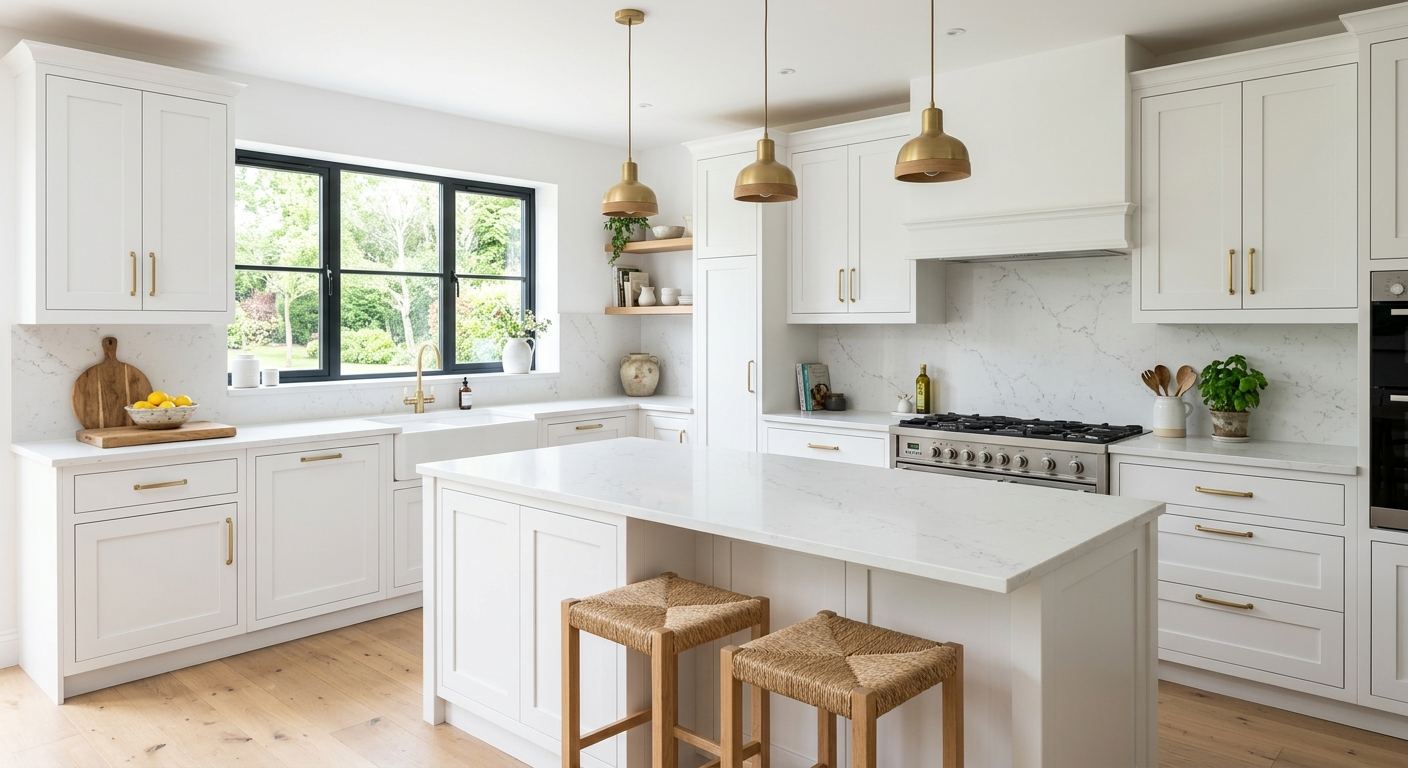
Kitchen renovation options and costs in Collingwood
Kitchen renovations in Collingwood, Alberta usually start with a simple question: what level of change do you want—paint-and-appliances, a refreshed layout, or a full redesign? Since Collingwood is a small community (population 2,290, Statistics Canada, 2021 Census), many trades and suppliers pull from the wider Calgary economic region, which can affect scheduling and pricing. In practice, homeowners here tend to choose finishes that match the resale expectations across the region—especially when kitchens are the focal point for buyers.
In higher-value markets around Calgary, many upgrades are justified because renovation spend is treated as recoverable value. That’s why you’ll see budgets that commonly land in the mid five-figures for full kitchen renovations and can move higher when walls come down, islands are added, or premium stone is selected. Alberta’s construction market is also active, so skilled labour often runs around 90–140 per hour in Calgary, meaning labour, design, and project management are a significant part of total cost even for “basic” upgrades. The climate matters differently than most people expect: kitchen costs aren’t driven by weather performance as much as by material handling (temperature swings and curing times for coatings) and by how often homeowners choose long-lasting finishes to reduce maintenance.
In Collingwood, trades are especially in demand around the town’s more established residential pockets and older housing stock where cabinets and surfacing are due for replacement—notably in areas such as the downtown and surrounding residential streets. From there, the decision usually becomes a clear comparison between renovation tiers.
| Renovation Tier |
What's Included |
Typical Duration |
Price Range |
| Cosmetic refresh (paint, hardware, new appliances only) |
Paint (walls/ceiling), cabinet hardware swap, new appliance set (no cabinet or countertop changes) |
3–7 days |
$8,000–$18,000 |
| Mid-range full renovation (new cabinets, counters, sink, tile) |
New semi-custom or good-stock cabinetry, new countertops, sink + faucet, backsplash tile, labour + basic plumbing tie-ins |
3–6 weeks |
$25,000–$60,000 |
| High-end full renovation (custom cabinets, stone counters, island) |
Custom cabinetry, premium quartz or natural stone, island (with electrical/plumbing coordination), full backsplash or slab detail |
6–12 weeks |
$65,000–$100,000 |
| Cabinet refacing only (new doors + drawer fronts, same boxes) |
Door/drawer replacement, new hardware, light surface prep, matching reveals to existing layout |
1–3 weeks |
$8,000–$28,000 |
| Countertop swap only (laminate to quartz or stone) |
Remove old counters, template + install new quartz/stone, seam refinishing, basic backsplash touch-up as needed |
3–10 days |
$3,000–$12,000 |
| Backsplash tile installation only |
Tile supply and install (often includes prep, waterproofing where required, grout + caulk) |
2–7 days |
$2,500–$8,000 |
Prices are estimates only and vary by project scope, site access and material selection.
What affects the price of kitchen renovation in Collingwood
Even when two homeowners ask for “the same kitchen,” the quotes can swing by 30–50% across Calgary and Alberta. The biggest drivers aren’t climate—they’re finish expectations, the scope of trades required, and how much the layout changes. In higher-value Calgary-area neighbourhoods and acreage-adjacent communities, homeowners often target quartz or natural stone and semi-custom cabinetry because the renovation cost is easier to justify on resale. In more modest approaches, laminate and stock cabinets dominate, keeping budgets closer to the lower end of the bands (for example, full renovations often start around $25,000).
Layout changes are where the unpredictability lives. Removing a wall, adding an island, or moving a gas line or plumbing supply can turn a straightforward build into something that needs permits, more coordination, and extra labour hours—so cost rises regardless of whether you pick laminate or premium stone. In Collingwood, older homes and the common “original cabinet” kitchens can also create hidden costs: uneven walls mean more shimming and labour, and outdated rough-ins can require partial rework before new cabinetry can sit correctly.
Two local examples we see often: (1) kitchens retrofitted into older framing may require additional electrical runs for under-cabinet lighting or an island receptacle, which can add cost even if finishes stay mid-range; (2) if your existing countertop cut-outs don’t line up with the new sink model, installers may need additional template adjustments—especially when moving from laminate to quartz. Finally, while Alberta’s temperature changes don’t directly determine the counter price, they do affect drying/curing timelines for finishes and caulking, which can shift schedule and labour allocation during installs.
| Price Factor |
Why It Matters |
Cost Impact |
| Cabinet tier — stock vs. semi-custom vs. fully custom millwork |
Custom boxes and built-ins take more shop time, detailing, and installation labour |
Often the largest difference between mid-range ($25,000–$60,000) and high-end projects ($65,000–$100,000) |
| Countertop material — laminate vs. quartz vs. granite vs. stone |
Material cost, fabrication complexity, and seam/edge requirements drive the price |
Countertop-only can range around $3,000–$12,000, while premium stone on a full rebuild pushes higher |
| Layout change — wall removal, island add, plumbing/gas move |
More trades, coordination time, and permitting requirements |
Commonly adds the most “unpredictable” cost even when cabinet finishes stay the same |
| Appliance package tier — builder vs. mid-range vs. pro-grade |
Power requirements, ventilation specs, and trim/fit to cabinetry |
Can shift budgets by thousands, especially when ventilation changes are needed |
| Flooring — refinish existing vs. full replacement |
Kitchen renos often require partial demo or matching new flooring to existing adjacent rooms |
Refinish tends to be cheaper; full replacement can add materially to mid-range builds |
| Backsplash — ceramic tile vs. marble vs. full-height slab |
Premium materials need more precise cutting, support, and finishing |
Tile installations commonly sit within $2,500–$8,000 |
| Electrical — new circuits for island, under-cabinet lighting |
Receptacles, dedicated circuits, and safe spacing drive electrician time |
Costs rise sharply with new circuits vs. reusing existing runs |
| Permit fees and licensed trade requirements |
Permits, inspections, and trade scheduling add overhead and timing risk |
Usually modest compared with structural changes, but can still materially affect the final total |
Permits & regulations in Alberta
In Alberta, not every kitchen update requires a permit, but several common changes do. Generally, cabinet and countertop swaps (replacing cabinets in the same footprint, swapping counters with the same sink locations, etc.) typically do not require permits because you’re not altering services. However, moving plumbing supply or drain lines, relocating a gas stove or range connection, removing a load-bearing wall, or adding new electrical circuits for an island or dedicated lighting are the types of work that usually require permits and licensed trades, with inspections.
Gas work must be done by a licensed gas fitter, and electrical work must be performed by a licensed electrician. If you’re adding a hood with different venting requirements or changing from one stove location to another, expect the project to involve gas and/or electrical coordination rather than just “carpentry and stone.”
Step-by-step verification for Collingwood homeowners: (1) Ask for the contractor’s Alberta licence numbers and the names of the subcontractors they use for gas and electrical. (2) Check proof of liability insurance—request a current certificate of insurance showing the correct business name and jobsite coverage. (3) Confirm workers’ compensation coverage (WSIB/WCB) by requesting documentation; you should see the coverage tied to the company doing the work, not just a general claim. (4) Where required, ensure you receive any clearance paperwork after electrical/gas inspections. Finally, confirm in writing who pulls each permit—this responsibility should be clearly stated in your contract before you sign.
Cabinets, countertops and layout decisions in Collingwood
When homeowners in Collingwood plan a kitchen reno, three decisions create most of the difference in cost and satisfaction: (1) the cabinet tier (stock, semi-custom, or custom), (2) the countertop material (laminate, quartz, granite, butcher block, or marble), and (3) whether you change the layout (open-concept wall removal, island addition, or plumbing/gas relocation). In the Calgary resale market, buyers typically expect clean lines, durable surfaces, and good lighting—so the most value is usually in choices that are visible and high-touch: cabinet finish, counter wear resistance, and how the kitchen “flows.”
Cabinet selection is the foundation. Stock cabinets are fastest and cheapest; semi-custom is the most common mid-range sweet spot because you can adjust configurations without paying full custom millwork. Custom cabinets shine when you’re working with awkward corners or want a built-in appliance wall, but they’re where budgets move toward the top of the band (often closer to $65,000–$100,000 once an island and premium finishes are included). For counters, quartz is a common “best overall” choice in Alberta because it offers a consistent look and strong daily durability, typically more predictable than natural stone in terms of maintenance habits.
Layout decisions are where you can’t cut corners. If you add an island, you’re often triggering electrical work (receptacles and lighting) and sometimes plumbing, which is why the cost can’t be judged only by aesthetics. A concrete example: choosing quartz over laminate might add a few thousand dollars, but if it lets you avoid repeated resealing/repairs in a high-traffic kitchen, that difference is often justified. On the other hand, paying for marble in a busy family kitchen may not be the best ROI if you’re not prepared for more careful maintenance.
| Option |
Durability |
Maintenance |
Best For |
Price Range |
| Stock cabinets (big-box) |
Durable for everyday use; limited size/custom fit |
Minimal; keep hardware tight and address humidity-related swelling early |
Fast refreshes and budget-sensitive renovations |
$8,000–$20,000 |
| Semi-custom cabinets (local dealer) |
Strong build; better options for layout details and storage |
Routine cleaning and occasional hardware adjustment |
Most Collingwood projects targeting a resale-friendly look |
$20,000–$45,000 |
| Custom cabinets (local millwork shop) |
Excellent fit and finish; made for your exact space |
Standard care; higher expectation for installation precision |
Built-ins, odd spaces, and premium redesigns |
$45,000–$75,000 |
| Laminate countertop |
Good daily durability but more prone to damage at seams/edges |
Easy clean-up; avoid cutting directly if you want long life |
Budget refreshes and rental-leaning upgrades |
$3,000–$6,000 |
| Quartz engineered countertop |
Highly durable; consistent and more stain-resistant for daily use |
Wipe-clean routine; resealing usually not needed |
Families who want low-fuss performance and a modern look |
$6,000–$12,000 |
| Granite / natural stone countertop |
Very durable with natural character; thickness and seam quality matter |
Often benefits from periodic sealing depending on stone selection |
Homeowners aiming for upscale visuals |
$7,000–$14,000 |
| Butcher block countertop |
Durable but can show wear and needs care for longevity |
Regular oiling; protect from standing water |
Warm, traditional kitchens and planned maintenance routines |
$4,500–$10,000 |
| Marble countertop |
Beautiful but more susceptible to etching and staining |
Higher upkeep; requires careful cleaning and protection |
Statement kitchens where care standards are realistic |
$10,000–$20,000 |
How to choose a kitchen renovation contractor in Collingwood
Choosing the right contractor in Collingwood is mostly about verification and clarity. Start with Alberta licensing: ask for the contractor’s Alberta business licence details and, for gas and electrical work, confirm the licensed trades they’ll use. For liability insurance, request a current certificate of insurance showing coverage limits and that the policy is active for the work you’re hiring them to do. For WSIB/WCB (workers’ compensation), ask for proof that the company performing the work is covered—then keep it with your contract documents. If anything is missing, treat it as a stop sign.
Get 2–3 itemised quotes, not lump sums. You want a breakdown for labour and materials (cabinets, counters, tile, demolition, disposal, plumbing/electrical line items). Read the scope line by line: what’s excluded (flooring beyond the kitchen footprint, appliance delivery/installation, patching/paint after cabinet install)? Is disposal included? Will they cover permit pull if one is required? Ask for a written start date and a realistic completion estimate.
Warranty matters: confirm workmanship warranty length (and what it covers), plus product/manufacturer warranty details for cabinets, countertops, and tile or grout. Also check whether warranties are transferable if you sell the home. Payment schedule should be conservative: never pay more than 10–15% upfront; use a holdback until the job is complete and punch-listed. Finally, a good contractor will schedule site visits to measure accurately and prevent expensive “change orders” late in the build.
- Request proof of Alberta licensing and confirm gas/electrical subcontractor credentials.
- Provide a current certificate of liability insurance with the correct business name.
- Verify WSIB/WCB clearance documents before demo begins.
- Insist on itemised labour + materials pricing (no all-in numbers only).
- Confirm whether permits are included and who is responsible for pulling them.
- Ask if disposal of cabinets/old counters is included in the quote.
- Clarify what’s included for patching, drywall finishing, and repainting.
- Get a finish schedule (cabinet colour/hinge style, counter edge profile, tile grout type).
- Confirm template and measurement process dates for countertops.
- Require a written schedule with start date, milestone dates, and estimated completion.
- Review warranty terms: workmanship duration, exclusions, and transferability.
- Use a payment schedule with a holdback until punch list completion.
Red flags to watch for: vague scopes (“kitchen renovation as discussed”); no insurance/WSIB proof; quotes that omit disposal and drywall/paint patching after install; a payment request beyond 10–15% upfront; and promises of start dates without confirming material lead times for cabinets and stone.
Frequently asked questions — kitchen renovation in Collingwood
How do I budget for a kitchen renovation?
Budgeting in Collingwood (and across Alberta) comes down to picking a tier and planning for the “unknowns” that appear after demo. Start by matching your goal to a realistic band: a cosmetic refresh can begin around $8,000–$18,000, while a mid-range full renovation is often in the $25,000–$60,000 range. The bigger swings usually come from layout changes (moving plumbing or adding an island) and from cabinet/counter tiers. Alberta’s strong trades market also means labour and coordination are a meaningful cost share, so ask for itemised labour and permit/licensed trade line items. Finally, leave a contingency for out-of-level walls or dated rough-ins—especially in older homes where cabinet replacement often requires more prep.
Can I move my kitchen sink or stove?
Yes, you can move a kitchen sink or stove in Alberta, but moving either usually increases scope and may require permits and licensed trades. A sink move typically involves adjusting plumbing supply and drain lines, which can require permits and inspection. Moving a stove is more complex if it involves gas relocation; gas work must be done by a licensed gas fitter, and it typically triggers permit steps. In many Collingwood renovations, homeowners keep plumbing “in the footprint” to avoid the unpredictability—meaning they replace cabinets and countertops without shifting the rough-in locations. If you do move the sink or stove, make sure your contractor confirms who pulls the permits in writing before work starts.
What's the most cost-effective kitchen upgrade?
The most cost-effective upgrade is usually the one that changes the kitchen’s look with minimal disruption to plumbing and wiring. For many Collingwood homeowners, that’s a cosmetic refresh or a targeted surfaces upgrade—new hardware plus paint and a backsplash, or a countertop swap where the sink cut-outs can be reused accurately. If your existing layout is working, switching countertops can refresh the kitchen quickly; countertop-only projects commonly land around $3,000–$12,000. If you want a bigger jump in perceived value without fully rebuilding the kitchen, consider mid-range cabinets and counters while keeping the plumbing footprint stable. The key is to avoid layout changes unless you’re gaining clear function (more storage, better traffic flow, or a usable island).
Custom vs stock cabinets — is custom worth it?
Custom cabinets can be worth it in Collingwood when you have an awkward space, want specific built-ins, or need a perfect fit around uneven walls and older framing. Stock cabinets are fastest and usually cheaper, but they may limit how well you can maximize storage or create seamless details. Semi-custom is often the best “middle” because it gives better configuration options without the full shop-time cost of fully custom millwork. In Calgary-region resale expectations, custom looks strong—yet ROI depends on whether the rest of the reno supports that upgrade (good counters, durable finishes, and sensible lighting). If your budget is closer to $25,000–$60,000, semi-custom plus quartz often beats overspending on cabinets alone.
How do I choose a kitchen contractor in Collingwood?
Start by verifying Alberta compliance and coverage. Ask the contractor for proof of Alberta licensing (and confirm which licensed trades they use for gas and electrical). Request a current certificate of liability insurance and confirm WSIB/WCB coverage documentation before demo. Then compare quotes: get 2–3 itemised proposals so you can see labour, materials, demolition/disposal, and any permit-related items. Make sure the scope includes what happens after cabinet install (patching, drywall finishing, paint touch-ups if promised). Confirm warranty terms for workmanship and products, including whether warranties are transferable if you sell. Finally, keep payment conservative (generally no more than 10–15% upfront) and use a holdback until the punch list is complete.
What order do kitchen renovation steps happen in?
A kitchen renovation follows a practical sequence so rough-ins and measurements don’t get missed. Typically: (1) final measurements and shop drawings for cabinets; (2) demolition and site protection; (3) rough plumbing/electrical work if needed (and inspections where permits apply); (4) wall prep/repairs so cabinets sit properly; (5) cabinet installation; (6) countertop templating and fabrication; (7) counter installation and seam work; (8) backsplash/tile install and finishing details; (9) trim, caulking, and final touch-ups; (10) appliance install and final walkthrough/punch list. If you’re swapping only counters or backsplash, the sequence compresses, but the logic stays the same. In Alberta’s seasonally variable conditions, scheduling also matters—drying/curing times for patching and finishes can affect when installs are ready.