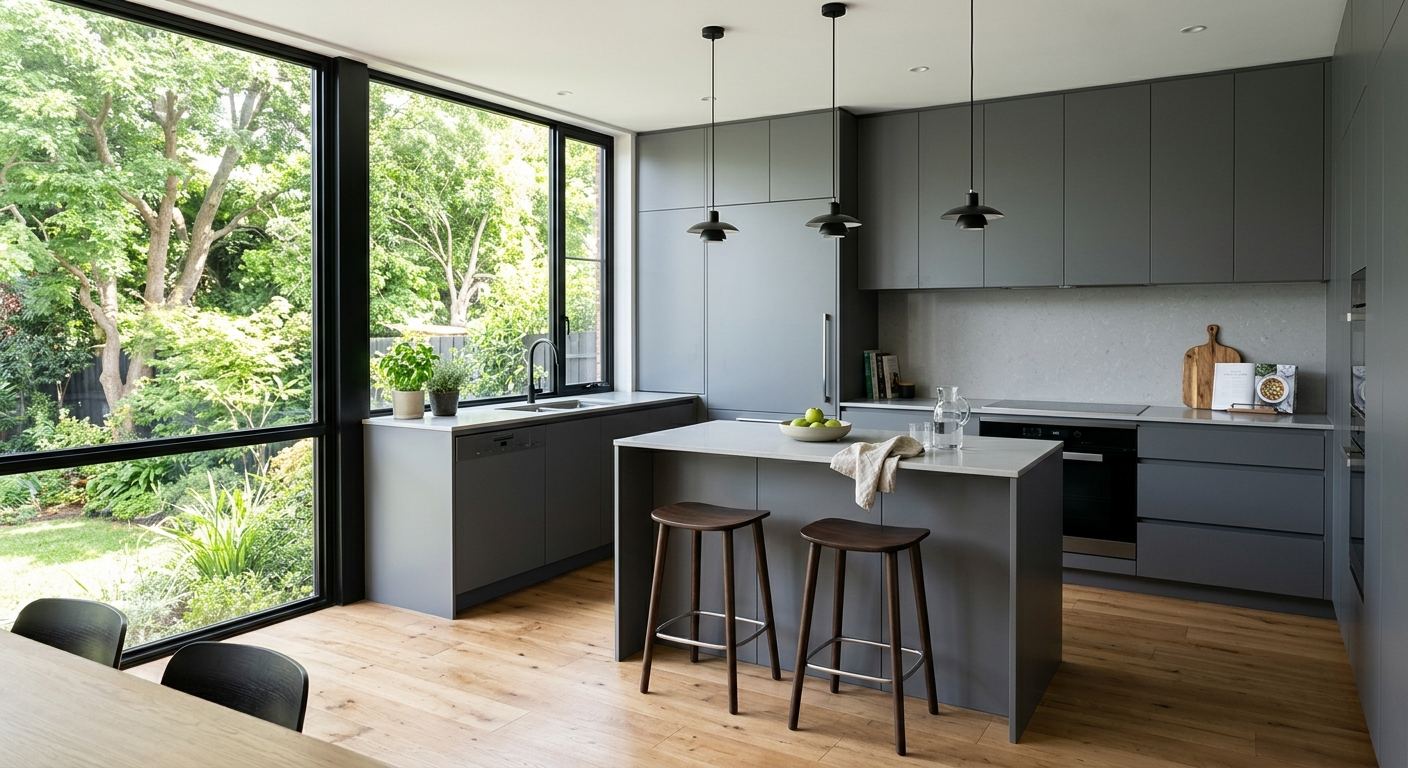
Kitchen renovation options and costs in Carrington
Carrington homeowners typically have a wide range of kitchen renovation options, but the pricing ladder follows the same pattern every time: finishes and millwork expectations rise with local economic capacity. Carrington’s population is 2,750 (Statistics Canada, 2021 Census), so most projects are supported by Calgary-area trades, which is helpful when scheduling but can tighten availability during peak renovation months. In practice, renovation budgets in the Calgary economic region are strongly linked to household spending power and local home values, and that’s why you’ll see more quartz, natural stone, and semi-custom cabinetry choices than you might in lower-value markets. Marketwide, contractors often plan their crews around the same demand cycles that influence what homeowners can justify on resale—especially when upgrades are expected to read “turn-key.”
Alberta’s climate doesn’t usually drive kitchen costs directly the way it affects roofs or exterior siding, but it does affect sequencing: drying times after drywall repair, ventilation needs during paint and refinishing, and how quickly materials can be handled indoors once trades arrive. During colder stretches, consistent indoor conditions matter for flooring adhesives, cabinet installation tolerances, and countertop templating schedules. In Carrington, trade demand is especially high for cabinet and counter installs on newer development corridors connected to the broader Calgary commute—so booking early helps you avoid price changes from schedule pressure.
Below is a practical comparison of renovation “tiers” you’ll see in Carrington quotes, so you can decide which level matches your timeline and budget before you compare itemized proposals.
| Renovation Tier |
What's Included |
Typical Duration |
Price Range |
| Cosmetic refresh (paint, hardware, new appliances only) |
Cabinet paint/stain or touch-up, new pulls/knobs, paint prep; replace appliances (fridge, range, hood) without moving plumbing or electrical; optional new sink only if it’s a like-for-like swap; labour for installation and basic countertop care |
1–2 weeks |
$6,000–$18,000 |
| Mid-range full renovation (new cabinets, counters, sink, tile) |
New semi-custom or quality stock cabinetry; countertop installation; sink and faucet swap; backsplash tile; selected flooring updates (partial) and new electrical fixtures like under-cabinet lighting (if already planned) |
3–6 weeks |
$25,000–$65,000 |
| High-end full renovation (custom cabinets, stone counters, island) |
Custom cabinetry/millwork; premium stone or upgraded engineered surfaces; island with electrical/plumbing (where applicable); full backsplash to ceiling or slab feature; enhanced lighting layout; coordinated appliance package; higher-finish flooring and trim details |
6–10 weeks |
$65,000–$110,000 |
| Cabinet refacing only (new doors + drawer fronts, same boxes) |
Refacing veneer/panel system, new doors and drawer fronts; updated hardware; paint/finish touch-ups to surrounding trim; removal and reinstall of some components as needed for fit |
1–2.5 weeks |
$8,000–$35,000 |
| Countertop swap only (laminate to quartz or stone) |
Old surface removal (and careful protection of adjacent cabinetry); templating; fabrication and install for quartz/stone; sink and faucet re-set if compatible; new countertop seam planning; basic finishing cleanup |
1–2 weeks |
$6,000–$22,000 |
| Backsplash tile installation only |
Surface prep; tile layout and setting; grout; caulking at transitions; removal of existing backsplash (if included) or careful install over prepared substrate |
3–7 days |
$2,500–$8,000 |
Prices are estimates only and vary by project scope, site access and material selection.
What affects the price of kitchen renovation in Carrington
In Carrington, quotes for what sounds like the “same” kitchen can land 30–50% apart across the Calgary economic region and the broader Alberta market. The reason isn’t climate—it’s the combination of finish tier, trade labour availability, and how much the scope changes once you start moving services. In higher-value Calgary-area neighbourhoods, homeowners often default to quartz or natural stone counters and semi-custom cabinetry because the investment is easier to justify on resale. In more modest pockets, laminate and stock cabinets dominate because they deliver a similar visual refresh for less money, while still improving usability and cleanliness. In other words, local home values and household spending capacity shape the typical finish tier far more than weather.
Layout changes create the biggest unpredictability regardless of finish: removing a wall, adding an island, or relocating a gas line for a cooktop or converting ventilation. A simple “swap” can become a rough-in and inspection project. For example, cabinetry moving away from a wall often triggers drywall replacement, new toe-kick details, and patching that can nudge labour even if you keep the same countertop material. On the Calgary labour side, skilled trades frequently price around 90–140 per hour, so design time and project management show up clearly in itemized quotes.
Two concrete Carrington scenarios that commonly swing cost: (1) if your home was built with older electrical pathways, adding under-cabinet lighting or an island circuit often means new runs and junction work—pushing you toward the mid-band of $25,000–$65,000 for a “typical” full renovation; (2) if you’re chasing a premium look with stone counters and custom millwork, the project naturally trends toward the upper full-kitchen band of $65,000–$110,000. Alberta’s cold winters also affect sequencing—adhesives and finishes need stable indoor conditions, and crews may prioritize ventilation and cure times, which adds planning labour rather than “material inflation.”
| Price Factor |
Why It Matters |
Cost Impact |
| Cabinet tier — stock vs. semi-custom vs. fully custom millwork |
Higher tiers improve fit, storage layout, soft-close hardware, and finish quality; custom also changes lead times and complexity |
Can swing the budget by roughly 20–45% within the same “full kitchen” scope |
| Countertop material — laminate vs. quartz vs. granite vs. stone |
Materials differ in fabrication cost, seam planning, and installation difficulty; stone can require more precise templating and finishing |
Typically adds several thousand dollars (often $3,000–$12,000+ for installs depending on material) |
| Layout change — wall removal, island add, plumbing/gas move |
Changing layout forces rough-in, patching, and inspection coordination; islands also add electrical and sometimes plumbing |
Most unpredictable; can add $5,000–$25,000+ |
| Appliance package tier — builder vs. mid-range vs. pro-grade |
Higher tiers usually require better ventilation, more complex cutouts, and stronger installation requirements |
Often $1,500–$10,000+ difference depending on package |
| Flooring — refinish existing vs. full replacement |
If floors are removed and re-laid, you’re paying for subfloor patching and coordination around cabinet installs |
Can add $2,500–$8,000+ in labour and materials |
| Backsplash — ceramic tile vs. marble vs. full-height slab |
Premium tile or slab needs more prep, careful layout, and slower setting/finishing |
Commonly varies within a $2,500–$8,000 range (or more for slab features) |
| Electrical — new circuits for island, under-cabinet lighting |
New circuits trigger licensed work and inspections; lighting planning affects labour and parts |
Can add $1,000–$6,000+ |
| Permit fees and licensed trade requirements |
Permits plus inspection scheduling add admin cost and force licensed trade participation for specific work |
Can add hundreds to several thousand dollars depending on scope |
Permits & regulations in Alberta
For kitchen work in Alberta, not every upgrade needs a permit. Cabinet and countertop swaps typically do not require a permit when you’re not changing the underlying plumbing, gas, or electrical systems. However, permits are usually required when you’re modifying the building systems—especially when you move plumbing supply or drain lines, relocate gas connections for a stove/range, remove a load-bearing wall, or add new electrical circuits. Gas work must be completed by a licensed gas fitter, and any electrical changes must be done by a licensed electrician; both require inspections after the work is completed.
Here’s a homeowner-friendly way to verify compliance in Carrington before you sign: (1) ask your contractor for their Alberta licences relevant to the trades they’re coordinating (or subtrades performing the gas/electrical); (2) request a current certificate of insurance showing liability coverage and confirm it matches the project address; (3) confirm WSIB/WCB coverage where required for the workers involved; and (4) ask who will pull permits and who is responsible for inspections. Look for the paper trail in the written contract: permit responsibility, inspection scheduling, and what’s excluded.
Step-by-step, you can also verify licences by using the appropriate online licence registry and matching the certificate name to the company/subcontractor listed on the contract. If your contractor can’t provide licence and insurance documentation up front, treat that as a scope and risk red flag.
Cabinets, countertops and layout decisions in Carrington
In a Carrington kitchen renovation, three decisions usually determine 80% of your cost and long-term satisfaction: (1) cabinet tier, (2) countertop material, and (3) layout changes. Cabinet tier affects speed and fit. Stock cabinets are the fastest and cheapest option because they’re typically standard sizes and readily available. Semi-custom cabinets are usually the sweet spot for Calgary-area resale appeal—more storage options and better finishes, with manageable lead times. Custom cabinets deliver the tightest fit and best storage tailoring, but they’re where budgets climb, especially when you add an island or unusual ceiling heights.
Countertops are next. Laminate is budget-friendly and forgiving on installation, but it can show wear faster with heavy daily use. Quartz is popular in the Calgary market because it’s consistent, generally low-maintenance, and handles family cooking patterns well. Granite and other natural stones offer premium character but can require more care around sealing and maintenance routines. Butcher block brings warmth and is friendly for meal prep; it needs attentive sealing and protection from prolonged moisture. Marble is beautiful and bright, but it’s more sensitive to etching from acidic spills and heavy household cooking.
Layout changes are where cost justification must be clear. Removing a wall or adding an island can pay off if it improves traffic flow and adds functional work zones—especially if your current kitchen feels cramped during real use. If you’re only replacing surfaces without changing the footprint, you’ll typically stay within the mid-band of $25,000–$65,000. If you’re moving plumbing/gas, adding an island, and selecting stone and custom details, a full project commonly aligns with $65,000–$110,000. For example, spending an extra $6,000–$10,000 on an island can be justified when it replaces a narrow work path and creates room for seating and better appliance staging; if the island doesn’t improve flow, it’s hard to recoup that spend through function alone.
| Option |
Durability |
Maintenance |
Best For |
Price Range |
| Stock cabinets (big-box) |
Good for everyday use; limited storage customization |
Low; occasional hardware tightening |
Fast turnarounds and budget-conscious refreshes |
$8,000–$20,000 |
| Semi-custom cabinets (local dealer) |
Very good; improved finishes and options like soft-close and better interior storage |
Low; wipe-and-care based on finish |
Most Carrington homeowners seeking resale-friendly upgrades |
$18,000–$40,000 |
| Custom cabinets (local millwork shop) |
Excellent; tailored fit for quirks in older homes and unique layouts |
Low to moderate; follow manufacturer care |
Complex layouts, tall storage, integrated details, islands |
$35,000–$70,000 |
| Laminate countertop |
Good but more susceptible to edge damage and wear over time |
Easy daily cleaning; protect seams and edges |
Budget renovations that prioritize a clean look |
$3,000–$8,000 |
| Quartz engineered countertop |
Very good; resistant to staining and daily abuse |
Low; no routine sealing |
Busy households that want durability with a modern look |
$5,000–$12,000 |
| Granite / natural stone countertop |
Excellent; heat tolerant and naturally strong |
Moderate; sealing schedule and careful spill cleanup recommended |
Premium look and unique stone veining |
$7,000–$16,000 |
| Butcher block countertop |
Good; can scar but often looks better as it ages |
Higher; regular oiling and moisture management |
Prep-focused kitchens and homeowners who enjoy upkeep |
$4,500–$10,500 |
| Marble countertop |
Moderate to good; softer surface can mark with heavy use |
Higher; needs careful cleaning and stain/etch prevention |
Low-to-moderate cooking households prioritizing appearance |
$8,000–$20,000 |
How to choose a kitchen renovation contractor in Carrington
Choosing the right contractor in Carrington comes down to proof, clarity, and coordination. Start by verifying Alberta trade licensing for any contractor or subcontractors performing regulated work. Ask for liability insurance documentation and confirm coverage aligns with the project scope. For worker coverage, request WSIB/WCB proof (depending on the employer structure and trade involvement) so you’re not left holding risk if injuries occur on-site. Don’t accept verbal assurances—get the certificates as part of your quote package.
Next, request 2–3 itemised written quotes. You want a breakdown that separates labour and materials, including cabinet supply, install labour, countertop templating and fabrication, electrical/plumbing allowances (if any), demolition, disposal, and finishing touches like caulking and trim. Make sure the scope is complete: confirm whether the contractor includes permit pulling (when required), whether disposal and recycling are included, and what protection is used for floors and adjacent rooms during a kitchen demo.
Warranty matters too. Ask for workmanship warranty length and confirm how it’s handled if subcontractors performed the work. Also clarify manufacturer warranties for cabinets, countertops, and appliances—then ask whether warranties are transferable to a new owner if you sell.
Finally, align payment with progress. In Alberta renovations, never pay more than 10–15% upfront; hold back a portion until the job is complete and punch-list items are addressed. Get a start date and completion estimate in writing, including a plan for material lead times (especially for cabinetry and stone).
- Confirm Alberta licence and permit responsibility for regulated work (gas/electrical/walls as applicable)
- Request certificate of liability insurance naming the correct insured and address
- Provide WSIB/WCB documentation for involved employers/workers
- Get itemized quotes: labour, materials, and allowances separated
- Verify inclusions: demolition, disposal, dust protection, and patch/paint scope
- Check exclusions: appliance connections, flooring under cabinets, and trim finishing
- Confirm countertop details: seam plan, sink cut-out, and edge profile
- Ask about lead times and get a schedule tied to those dates
- Review warranty: workmanship duration and manufacturer warranty terms
- Ensure warranty claims process is in writing and not “best effort” only
- Agree on payment schedule (10–15% max upfront; holdback until completion)
- Request a clear punch-list walkthrough date before final payment
Red flags I see in Carrington-area kitchen renos: (1) quotes that are “lump sum” with no allowances, (2) contractors who won’t provide insurance/licence certificates, (3) vague answers on permits for plumbing/gas/electrical changes, (4) no written warranty terms, and (5) asking for large deposits early without a clear construction schedule.
Frequently asked questions — kitchen renovation in Carrington
How do I know if I need to update my kitchen plumbing in Carrington?
In Carrington and across the Calgary region, you often don’t “need” plumbing updates unless you’re changing fixtures or your current system shows risk. Start by checking supply lines for age, corrosion, or staining around shutoffs and under the sink; watch for recurring leaks, slow drains, or gurgling that suggests venting issues. If you’re moving the sink, dishwasher, or adding an island with plumbing, you should assume the rough-in will need inspection and possibly replacement to meet current expectations. If you’re replacing cabinets and counters but keeping the same sink location, plumbing updates may be limited to shutoffs, valves, and connection checks. If you’re seeing moisture issues in older cabinetry, plan a more thorough scope, because hidden damage can add significant labour and materials.
What is the difference between a galley and open-concept kitchen?
A galley kitchen is a narrow, corridor-style layout with counters on two opposite walls, typically with little separation between prep, cooking, and cleanup zones. An open-concept kitchen removes walls or uses partial separation so the kitchen flows into living/dining space—often improving sightlines and day-to-day traffic during busy evenings. In Carrington renovations, open-concept projects frequently cost more because removing or modifying walls can involve permits and licensed trade work when services are affected, plus extra patching and electrical planning. If your goal is better function without structural changes, a galley can be improved by reworking cabinet storage, adding better lighting, or swapping to durable countertops like quartz. Those changes commonly fit within mid-range budgets such as $25,000–$65,000, while true open-concept redesigns with service relocations often push you toward higher full-renovation tiers.
How do I get accurate kitchen renovation quotes in Carrington?
To get accurate quotes in Carrington, bring your contractor a clear scope and insist on itemized pricing. Ask for a breakdown that separates labour and materials: demolition, cabinet supply and install, countertop templating and fabrication, backsplash tile, sink/faucet, and any electrical/plumbing allowances. Confirm whether disposal is included and what happens with protective measures for floors and nearby rooms during demolition. Also ask who pulls permits when plumbing lines, gas connections, electrical circuits, or load-bearing walls are affected. For apples-to-apples comparisons, get at least two quotes that list the same cabinet tier (stock vs semi-custom vs custom), the same countertop material (laminate vs quartz vs stone), and whether you’re changing the layout. If one quote is “cheaper” but excludes permits, disposal, or electrical work, it’s usually not a fair comparison.
What's the best countertop material for a busy Carrington kitchen?
For busy kitchens in Carrington and the wider Calgary market, quartz is usually the best balance of durability and convenience. It’s resistant to staining from common household foods, generally doesn’t require sealing like many natural stones, and it holds up well to everyday cleaning routines. If you prefer a budget approach, laminate can deliver a clean look quickly, but you’ll want to be more careful around edges and seams over time. Natural stone like granite is also a strong choice if you like unique veining and want heat tolerance, but it may require maintenance habits such as periodic sealing depending on the stone. Butcher block is great for meal prep and warmth, but it demands more attentive oiling and moisture management, especially in winter when indoor humidity swings. In many projects, quartz options land within typical countertop install expectations that align with the broader renovation bands (often helping keep a full kitchen in the $25,000–$65,000 range).
How do I add an island to my Carrington kitchen?
Adding an island is all about planning clearance, services, and flow. First, confirm the available space for a comfortable walking path around the island—your kitchen should still work during peak use (morning coffee, cooking, cleanup). Next, decide whether the island will be purely surface-based (no plumbing or gas) or whether it needs a sink, dishwasher integration, or a cooktop. If you plan plumbing or gas relocation, that’s where permits and licensed trades come in; electrical work for island outlets and under-cabinet lighting also requires a licensed electrician. A practical way to keep cost under control is to start with an island that doesn’t require moving gas lines, then upgrade later if you want. If your island is part of a broader design with service relocations and premium finishes, it commonly aligns with higher full-kitchen budgets such as $65,000–$110,000.
How much does a kitchen renovation cost in Carrington?
In Carrington, kitchen renovation costs typically cluster in the mid five-figures for full updates and can reach six figures for layout changes and premium materials. Based on Calgary-area pricing tiers, a full cosmetic refresh is often far less than a full redesign; mid-range full renovations with new cabinetry, counters, sink, and backsplash commonly fall into $25,000–$65,000. If you’re doing custom millwork, stone counters, and adding an island with electrical or plumbing changes, projects often trend toward $65,000–$110,000. Smaller scopes can still have a big impact: cabinet refacing is commonly around $8,000–$35,000, countertop swaps can be $3,000–$12,000 for installs depending on material, and backsplash tile installation only is often $2,500–$8,000. The most reliable way to estimate your total is to define whether you’re changing layout and moving plumbing/gas/electrical before you compare quotes.