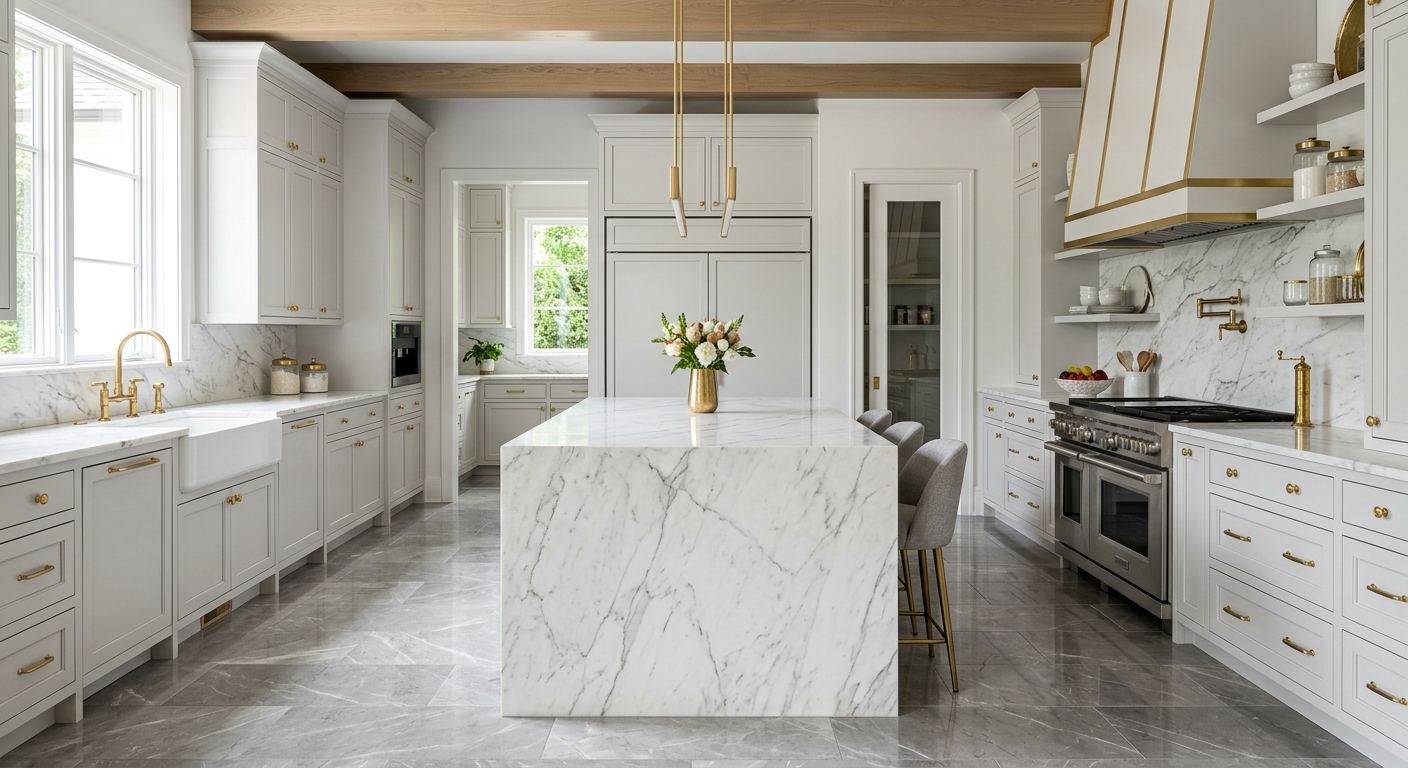
Kitchen renovation options and costs in Country Hills
Country Hills homeowners typically have a few clear paths for a kitchen renovation, and the right one depends on how much you’re changing: finishes only, a mid-range refresh, or a full redesign. With Country Hills sitting at 3,660 residents (Statistics Canada, 2021 Census), the market is smaller than Calgary proper, but trades still come in frequently from the broader Calgary area—so availability is generally good. That matters because labour is a big part of the budget in Alberta; when scheduling is tight, timelines and premium labour rates can push costs upward, even for “cosmetic” work. At the same time, local buyer expectations tied to the broader Calgary economic region commonly lean toward modern, durable finishes that hold value on resale, especially in higher-value pockets where homeowners often recover upgrades more easily.
In our area, climate doesn’t usually drive the pricing the way it does exterior envelope work; kitchens are mainly interior, so temperature swings impact materials indirectly (glue/adhesives curing, caulking consistency, and humidity-related wood movement). Instead, Calgary-region market conditions shape costs more strongly: for the same layout, a project targeting quartz counters and semi-custom cabinetry usually lands in the $25,000–$100,000 full-renovation range, while simpler work—like refacing or a countertop swap—stays in lower bands. If you’re in the Country Hills or Silverado-style convenience zones where homeowners want updated kitchens for everyday family use, demand for installers and cabinet crews tends to be steady.
Below is a practical comparison of typical scopes, timelines, and price bands, so you can align expectations before you contact contractors.
| Renovation Tier |
What's Included |
Typical Duration |
Price Range |
| Cosmetic refresh (paint, hardware, new appliances only) |
Cabinet paint or stain touch-up where feasible, new hardware, new appliance set (dishwasher/range/hood/refrigerator as selected), existing layout retained |
1–2 weeks |
$8,000–$22,000 |
| Mid-range full renovation (new cabinets, counters, sink, tile) |
New cabinet installation (semi-custom or good stock), new countertop (quartz or upgraded solid surface), sink + faucet swap, backsplash tile, flooring touch-ups or partial replacement |
3–6 weeks |
$35,000–$65,000 |
| High-end full renovation (custom cabinets, stone counters, island) |
Custom millwork, natural stone or premium engineered stone, island with electrical/integrated lighting, upgraded backsplash (often to ceiling-height or feature wall), higher-end appliance package |
6–12 weeks |
$70,000–$100,000 |
| Cabinet refacing only (new doors + drawer fronts, same boxes) |
Remove/replace doors and drawer fronts, new veneer face, adjust hardware, re-caulk and polish seams; countertops typically retained unless damage or change is requested |
1–3 weeks |
$8,000–$35,000 |
| Countertop swap only (laminate to quartz or stone) |
Remove existing top (and backsplash edge as needed), template, fabricate and install new quartz/stone, new sink cut-out as required; limited backsplash work if included |
3–10 days (plus template/fabrication lead time) |
$3,000–$12,000 |
| Backsplash tile installation only |
Surface prep, install ceramic/porcelain tile or similar, grout/seal, caulk at changes of plane; includes cut-outs around outlets and minor edge finishing |
3–7 days |
$2,500–$8,000 |
Prices are estimates only and vary by project scope, site access and material selection.
What affects the price of kitchen renovation in Country Hills
In Country Hills, you can see quote-to-quote differences of 30–50% for the same “kitchen renovation” description, even when homeowners think the scope is identical. The biggest driver is that contractors price to finish tiers—cabinet and countertop choices—then add labour and project management based on how complex the layout and services are. In Calgary’s broader economic region, local home values and household purchasing power often determine what homeowners choose: in higher-value markets, buyers are used to quartz or natural stone counters and semi-custom cabinetry, so renovations trend toward those finishes because they’re easier to justify on resale. In more modest buying situations, laminate and stock cabinetry dominate because the renovation still feels “new” without pushing the total into premium territory.
Layout changes add the most unpredictable cost regardless of finish level. Removing a wall, adding an island, or moving a gas line or plumbing supply/drain tends to create the biggest swing in price bands—one contractor may budget for simple rework while another includes more extensive electrical, soffit/ceiling modifications, and inspection requirements. Alberta’s strong construction labour market also matters: skilled labour in Calgary commonly runs around $90–$140 per hour, so any extra day on site or rework can quickly change your total.
Concrete examples we commonly see in Country Hills: older homes with dated plumbing runs can force extra subfloor or wall access when you relocate a sink; existing cabinets that are out of square may require more base modification for a tight semi-custom fit; and if you upgrade from laminate to quartz as part of a “refresh,” the countertop swap can add on support changes, sink cut-outs, and sometimes electrical detailing for under-cabinet lighting. These are why many projects cluster in the $25,000–$100,000 full-renovation range, while countertop-only work typically stays closer to the $3,000–$12,000 band—if the plumbing and backsplash aren’t being changed.
| Price Factor |
Why It Matters |
Cost Impact |
| Cabinet tier — stock vs. semi-custom vs. fully custom millwork |
Higher tiers improve fit/finish, storage planning, and longevity; custom also drives build time and detailing |
Often shifts the budget by the largest margin within a “full” project |
| Countertop material — laminate vs. quartz vs. granite vs. stone |
Material density, edge options, seam layout, and thickness change both fabrication and installation time |
May move you from lower $10,000s into higher $20,000s+ on bigger kitchens |
| Layout change — wall removal, island add, plumbing/gas move |
Services relocation triggers demolition, new rough-ins, inspections, and sometimes ceiling/soffit work |
Can add multiple days of labour and trades, often outpacing finish upgrades |
| Appliance package tier — builder vs. mid-range vs. pro-grade |
Cabinet sizing, ventilation requirements, and install complexity vary by model and configuration |
May add noticeable cost even if your layout stays the same |
| Flooring — refinish existing vs. full replacement |
Kitchen renos often disturb adjacent flooring; matching existing becomes harder with age |
Replacement is usually a larger incremental cost than homeowners expect |
| Backsplash — ceramic tile vs. marble vs. full-height slab |
Premium materials require more careful prep and specialized install methods |
Full-height installs can jump the backsplash portion significantly |
| Electrical — new circuits for island, under-cabinet lighting |
Island outlets, lighting, and microwave/hood ventilation often change electrical rough-in scope |
Commonly adds both labour and material/permit-related steps |
| Permit fees and licensed trade requirements |
Where permits apply, the coordination burden increases and adds administrative steps and inspection scheduling |
Can move a project schedule and total cost more than expected |
Permits & regulations in Alberta
In Alberta, many purely cosmetic kitchen updates do not require permits—for example, swapping cabinet doors/ drawer fronts (refacing), replacing like-for-like countertops, or repainting and hardware changes. However, permits and licensed trades become necessary when you change the building systems. Specifically, the work that typically does require a permit includes moving plumbing supply lines or drain lines, relocating gas appliances (including making changes to stove/range setup) and any gas work that affects connections, removing a load-bearing wall, and adding new electrical circuits (commonly for island outlets, under-cabinet lighting, or added ventilation controls). Electrical and gas work also require licensed professionals and inspections.
For a homeowner in Country Hills, the practical step-by-step verification is: (1) ask your contractor which permits are required for your exact scope and who will obtain them; (2) request proof of Alberta licence for the trades performing gas and electrical; (3) confirm liability insurance and the relevant worker coverage (WSIB/WCB) for the company and/or trades; and (4) review the contract so permit responsibility is stated in writing, including inspection timelines and who pays permit fees if they apply.
To check credentials, use the official online registry for trade licensing, verify the certificate of insurance (it should match the legal entity on the contract), and look for clearance letters or coverage documentation that confirms the contractor and subcontractors are properly insured for work on-site. If any of that is missing, don’t assume it’s “handled”—you want it confirmed before demolition starts.
Cabinets, countertops and layout decisions in Country Hills
When you’re planning a kitchen renovation in Country Hills, the biggest outcomes usually come from three decisions: cabinet tier, countertop material, and whether you’re changing the layout. First, cabinet tier sets the pace and look. Stock cabinets are fastest and cheapest, but fit and storage planning can be less precise. Semi-custom cabinets are the most popular mid-range option because you get better storage layouts and finish choices without the higher lead time of fully custom millwork. Custom cabinets deliver the best fit and can make tricky spaces feel built-in—but they cost more and typically require more design coordination.
Second, countertop material affects both daily life and buyer appeal in the Calgary market. Laminate is budget-friendly but generally less durable for heavy knife use and high heat exposure. Quartz gives homeowners a “set it and forget it” surface that resists stains and day-to-day wear, while granite/natural stone adds character and heat tolerance, with more attention to sealing and maintenance routines. Butcher block can be great for family cooking and warmth, but it needs consistent sealing and care to prevent staining and swelling with moisture.
Third, layout changes—open-concept wall removal, island addition, or plumbing/gas relocation—are justified when they create meaningful space for movement and storage. An island can add storage and seating, but it usually triggers electrical for outlets/lighting and sometimes changes the ventilation or gas plan. As a realistic dollar example: upgrading from laminate to quartz on a kitchen that stays the same layout often fits within the $3,000–$12,000 countertop swap band. But if you change the sink position and add an island at the same time, the project can quickly move into the $35,000–$65,000 mid-range full renovation range because plumbing, electrical, and backsplash detailing expand the scope.
Because Alberta kitchens are mostly interior, cold-weather doesn’t “wear out” cabinets the way exterior exposure does; instead, the resale-driven finish expectations and the interior trade coordination around stone fabrication and electrical details are what govern your final cost.
| Option |
Durability |
Maintenance |
Best For |
Price Range |
| Stock cabinets (big-box) |
Good for everyday use; limited adjustability if your room is uneven |
Low; wipe-clean surfaces, protect from standing water |
Fast timelines and straightforward layouts |
$12,000–$25,000 |
| Semi-custom cabinets (local dealer) |
Very solid build quality and improved storage planning |
Low; occasional hardware tightening and routine cleaning |
Most Country Hills renovations aiming for value and longevity |
$20,000–$45,000 |
| Custom cabinets (local millwork shop) |
Highest fit/finish; excellent for unique angles and ceiling heights |
Low; same basic care as other finished cabinetry |
People who want a built-in look and optimized storage |
$35,000–$70,000 |
| Laminate countertop |
Moderate; can chip at edges and wear with heavy impact |
Easy cleaning; avoid prolonged heat and sharp impact |
Budget-focused refreshes without layout changes |
$3,000–$6,000 |
| Quartz engineered countertop |
High; resists stains and everyday wear when properly installed |
Low; clean with mild soap, avoid abrasive pads |
Busy kitchens and resale-minded upgrades in the Calgary region |
$6,000–$12,000 |
| Granite / natural stone countertop |
High for impact and heat; performance varies by stone |
Moderate; periodic sealing and careful stain management |
Homeowners wanting natural variation and premium character |
$7,000–$15,000 |
| Butcher block countertop |
Moderate to high with proper oiling and board use |
Higher; regular sealing/oiling and protection from standing water |
Frequent cooking and a warm, traditional look |
$5,000–$10,000 |
| Marble countertop |
Beautiful but softer; can etch or stain more easily |
Higher; requires careful cleaning and sealing discipline |
Low-to-moderate daily wear households seeking a luxury look |
$10,000–$20,000 |
How to choose a kitchen renovation contractor in Country Hills
Choosing the right contractor in Country Hills starts with verifying Alberta credentials and coverage—not just “good reviews.” First, confirm that the company (and key subcontractors) carry liability insurance with limits that make sense for renovations, and that worker coverage is in place (WSIB/WCB). For licensed trade work, you should be able to see proof that gas fitters and electricians are licensed for the specific tasks on your scope. If you’re told “we handle permits” without documents, you’re taking on risk you don’t need.
Second, request 2–3 itemised written quotes, not a lump sum that hides assumptions. You want a breakdown separating labour, demolition, cabinets, countertops, backsplash, plumbing/electrical rough-ins (where applicable), disposal, and any design or project management fees. Read the scope carefully: what’s excluded (subfloor repairs, drywall patching, venting upgrades), whether permit pulling is included, and whether waste disposal is part of the contract. Warranty matters too—ask for the workmanship warranty term, what manufacturers warrant on products, and whether warranty coverage transfers if you sell the home.
Third, set a sensible payment schedule. Avoid heavy deposits; as a rule of thumb, never pay more than 10–15% upfront, and use a holdback until key milestones are complete. Finally, lock in timeline details: get a written start date, key delivery dates for cabinets/stone, and a completion estimate that reflects fabrication lead times. In Alberta, schedule slips are often caused by cabinet and stone production—not demolition—so your contract should show sequencing clearly.
- Ask for contractor legal name, trade licence numbers (where required), and proof of liability insurance before signing.
- Verify WSIB/WCB coverage documents for the company and subcontractors.
- Get 2–3 itemised quotes showing labour and materials separately.
- Ensure quotes list exclusions (damage repairs, drywall, subfloor, extra plumbing/electrical).
- Confirm permit responsibility and whether permit fees are included.
- Check that disposal/hauling is included (or budgeted as a separate line item).
- Confirm countertop fabrication lead times and who handles templating.
- Ask about cabinet tolerances and how they’ll address out-of-square walls.
- Require a workmanship warranty with a stated duration and coverage details.
- Confirm product warranties and whether they’re transferable to a new homeowner.
- Use a milestone-based payment schedule with a holdback until completion.
- Get a written schedule with start date, key inspection points, and completion target.
Red flags I commonly see around Country Hills reno proposals: (1) no written scope or “allowances” that are too vague to price accurately; (2) refusal to provide insurance/coverage documents; (3) lump-sum quotes that don’t break out labour vs materials; (4) promises of impossible timelines (especially for quartz/stone fabrication) with no delivery plan; and (5) vague warranty language such as “we’ll fix it” without a defined term.
Frequently asked questions — kitchen renovation in Country Hills
How do I get accurate kitchen renovation quotes in Country Hills?
To get accurate kitchen renovation quotes in Country Hills, start by giving contractors the same information: your measurements, a clear list of changes (refresh vs full redesign), and photos of your current kitchen. Ask for 2–3 itemised quotes that split labour and materials (cabinets, counters, tile, disposal, and any electrical/plumbing rough-ins). If you’re targeting finishes commonly chosen in the Calgary region—like quartz or semi-custom cabinetry—tell them your material tier so the quote isn’t built on assumptions. Also, don’t skip the “hidden scope” questions: who fixes drywall and subfloor after demo, is permit pulling included where required, and is there allowance for uneven floors/walls? Finally, confirm timeline realities for stone templating and fabrication, since delays are a common cause of budget creep. (Statistics Canada, 2021 Census)
What's the best countertop material for a busy Country Hills kitchen?
For a busy Country Hills kitchen, quartz is often the best balance of durability and low maintenance. It resists stains and holds up well to everyday use, which matters for active family schedules and frequent cooking. If you want a premium natural look, granite can also be a great choice because it’s hard and heat-tolerant, but you’ll need to stay on top of sealing and stain care. Laminate is the most budget-friendly, but it can show wear sooner at seams and edges, especially in high-traffic homes. In practical pricing terms, a countertop swap typically fits within the $3,000–$12,000 band—while going to higher-end quartz/stone for a larger footprint can push toward the top end. Choose quartz when you want performance consistency without extra maintenance routines in Alberta’s interior conditions.
How do I add an island to my Country Hills kitchen?
Adding an island is usually more than “set a countertop in the middle.” In Country Hills, you’ll want to confirm the clearances for walking paths, the planned storage (drawers/pantry), and how the island will affect lighting and ventilation. Most islands also require electrical planning for outlets and often under-cabinet lighting or pendant fixtures, which means additional electrical rough-in work. If your kitchen uses gas appliances, the hood/venting strategy also needs careful coordination so you’re not creating awkward air flow or code issues. If the island placement changes the sink location, you may also be relocating plumbing supply/drain lines—this is typically permit-relevant work. Budget-wise, an island addition can shift a simple renovation into mid-range territory, often landing in the $35,000–$65,000 mid-range full renovation band when services and custom cabinetry changes are included.
How much does a kitchen renovation cost in Country Hills?
In Country Hills, kitchen renovation cost depends mainly on cabinet tier, countertop material, and whether you’re changing the layout. For a cosmetic refresh—paint, hardware, and new appliances only—projects commonly start around $8,000–$22,000. If you’re doing a mid-range full renovation with new cabinets, counters, a sink, and tile, many homes land in the $35,000–$65,000 range. High-end redesigns with custom cabinetry, premium stone, and an island can move toward $70,000–$100,000, especially when electrical and plumbing changes are part of the plan. Because labour in Calgary commonly runs around $90–$140 per hour, schedule complexity and coordination among trades can significantly influence final pricing. Even in Alberta’s interior climate, the biggest cost swings are usually design choices and service relocations—not temperature effects.
How long does a kitchen renovation take in Country Hills?
Typical timelines in Country Hills depend on scope and, critically, material lead times. Cosmetic refreshes are often the fastest—around 1–2 weeks—since the layout and major systems stay in place. Mid-range full renovations usually take about 3–6 weeks, assuming cabinets and countertops arrive on schedule and rough-ins aren’t unexpectedly complicated. High-end custom work can stretch to 6–12 weeks because custom millwork and stone fabrication take longer and often require more detailed coordination. Countertop swaps can be quick in active install time, but templating and fabrication lead time still matters, so plan around several weeks from start to finish. To avoid surprises in Alberta’s trade market, lock in delivery dates early and ensure your contract reflects sequencing (demo, rough-in, cabinet install, templating, then stone install). That’s how you keep schedule risk under control.
Quartz vs granite countertops — which is better?
“Better” depends on how you cook and how much maintenance you want. Quartz is usually the better choice for a busy kitchen because it’s generally low maintenance and resists stains effectively without the same sealing routines you need for many natural stones. Granite is also durable and offers unique natural variation and character, and it typically performs very well for heat resistance—but it’s often more maintenance-focused (sealing and stain management) to keep it looking its best. For many Country Hills homeowners aiming for strong resale appeal in the Calgary region, quartz tends to be the safest performance/value selection, especially in high-traffic households. Cost-wise, both can fit within the broader $3,000–$12,000 countertop swap band depending on size and edge/seam complexity, but premium natural stone selection can push higher. If you want a consistent look with minimal upkeep, choose quartz; if you want natural movement and are willing to care for it, choose granite.