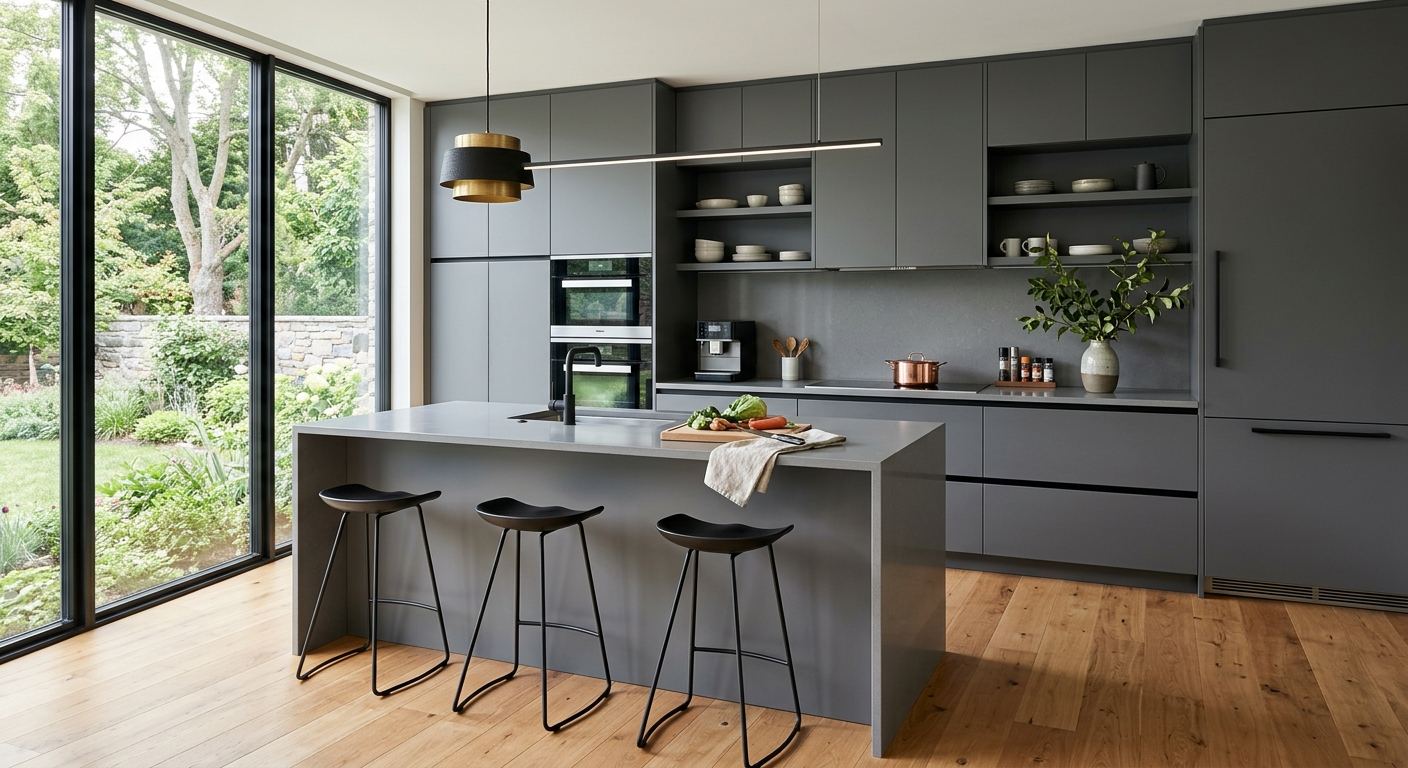
Kitchen renovation options and costs in Albany
Albany, Alberta is a small community (Population 2021: 1,776, (Statistics Canada, 2021 Census)) where many homeowners plan kitchen work as a “value update” rather than a full rebuild. In the Calgary economic region, renovation budgets also tend to rise and fall with local housing value and household expectations—because buyers see kitchens as a daily-use upgrade. That matters: when homeowners choose higher-end finishes, the project cost is easier to justify on resale, which is why you’ll commonly see quartz or natural stone counters and upgraded cabinetry in move-in-ready homes.
Even though Alberta’s winter weather doesn’t directly change the price of cabinets or countertops, it does shape schedules and site conditions. Trades often need extra coordination for delivery timing, indoor protection during demo, and dry-in steps so flooring and finishes cure properly. On top of that, Calgary’s active construction market means labour availability can tighten during peak months—pushing “quick turnarounds” toward weekends, longer lead times, or more expensive scheduling windows.
In Albany, kitchen renovation demand is especially noticeable around the older residential pockets off the main service routes, where many homes were built before modern storage layouts and electrical standards. If that sounds like your place, the next step is matching your goals to a renovation tier—then comparing apples to apples in the table below.
| Renovation Tier |
What's Included |
Typical Duration |
Price Range |
| Cosmetic refresh (paint, hardware, new appliances only) |
Cabinet paint or restain (if applicable), new pulls/knobs, new backsplash-where-needed caulking, and new appliances (no cabinet or counter changes) |
1–3 weeks |
$6,000–$15,000 |
| Mid-range full renovation (new cabinets, counters, sink, tile) |
Semi-custom cabinetry, new countertop (quartz or solid-surface), sink and faucet, backsplash tile, standard plumbing fit-up, and select flooring/tile updates |
3–7 weeks |
$25,000–$65,000 |
| High-end full renovation (custom cabinets, stone counters, island) |
Custom millwork, natural stone counters (granite/stone), larger island with integrated lighting/outlets, upgraded tile package, revised layout, and more electrical/plumbing coordination |
6–12+ weeks |
$70,000–$110,000 |
| Cabinet refacing only (new doors + drawer fronts, same boxes) |
New door/drawer fronts, new hardware, limited prep, repaint/stain as needed, optional interior re-lining and soft-close upgrades |
2–5 weeks |
$8,000–$35,000 |
| Countertop swap only (laminate to quartz or stone) |
Remove existing tops, template, install new quartz or natural stone, new sink or reuse depending on fit, edge profile updates |
1–2.5 weeks |
$3,000–$12,000 |
| Backsplash tile installation only |
Surface prep, tile install, trim/caulking, and matching around outlet covers (no major appliance or cabinet changes) |
3–10 days |
$2,500–$8,000 |
Prices are estimates only and vary by project scope, site access and material selection.
What affects the price of kitchen renovation in Albany
In Albany and across the wider Calgary economic region, homeowners often see quote swings of 30–50% for what looks like the same kitchen—same “size,” same general style—because the cost drivers aren’t cosmetic. The biggest levers are finish tier (cabinets and counters) and whether the renovation stays “surface-level” or crosses into layout and systems changes. Labour also plays a major role in this region; skilled trade rates in Calgary are commonly around 90–140 per hour, so design, project management, and installation time can materially change your total budget.
Local housing value and typical household income steer the finish tier far more than climate. In higher-value Calgary-area pockets, homeowners commonly default to quartz or natural stone counters and semi-custom cabinetry because those materials feel durable on day one and photograph well at resale. In more modest upgrades, laminate and stock cabinetry dominate because they deliver a visible improvement for less money. Either way, climate isn’t the deciding factor on materials—but Alberta’s winter does affect staging, heating/drying during flooring and tile work, and how quickly trades can access your home without moisture issues.
In Albany specifically, two conditions often move costs up or down. First, older homes may have dated electrical and drain routing, which can add cost when new under-cabinet lighting or a new island outlet requires electrical and coordination. Second, if you’re changing countertop edges and sink placement to suit your new cabinet plan, template adjustments can add time. Those system touches are why even a “mid-range” project that starts around the $25,000–$65,000 band can climb, while a countertop swap band like $3,000–$12,000 stays predictable when plumbing doesn’t move.
| Price Factor |
Why It Matters |
Cost Impact |
| Cabinet tier — stock vs. semi-custom vs. fully custom millwork |
Materials, build quality, internal options (drawers, organisers), and lead time differ by tier |
Stock often keeps projects closer to the lower end; semi-custom and custom can push budgets toward full redesign pricing |
| Countertop material — laminate vs. quartz vs. granite vs. stone |
Material cost, fabrication complexity, and durability/edge options affect price and timeline |
Laminate is lowest; quartz and natural stone typically add substantial cost—especially with islands |
| Layout change — wall removal, island add, plumbing/gas move |
Design complexity plus framing, mechanical routing, and inspections change the scope unpredictably |
Can be the largest swing factor; it’s where budgets commonly jump out of “refresh” expectations |
| Appliance package tier — builder vs. mid-range vs. pro-grade |
Cut-outs, ventilation requirements, and finish matching can add labour and cabinet adjustments |
Upgrading brands can add cost even if cabinets/counters stay the same |
| Flooring — refinish existing vs. full replacement |
Demo waste, subfloor condition, and matching transitions can require more than expected |
Refinishing keeps cost contained; replacement can raise total project spend |
| Backsplash — ceramic tile vs. marble vs. full-height slab |
Material density, installation time, and finishing (grout lines, sealing, trimming) differ |
Ceramic stays more budget-friendly; stone/large-format can add meaningful labour and material cost |
| Electrical — new circuits for island, under-cabinet lighting |
New wiring, load calculations, and fixture placement add trade hours and coordination |
Often adds cost beyond “cosmetic” plans, especially when outlets don’t align |
| Permit fees and licensed trade requirements |
Permits and inspection schedules can affect scope and scheduling |
Not all work needs permits, but the work that does can add both time and administrative costs |
Permits & regulations in Alberta
For kitchen renovations in Alberta, cabinet and countertop swaps typically don’t require permits. You can usually replace cabinets, refinish fronts/doors, and install new counters without pulling permits—as long as you aren’t changing plumbing, gas, load-bearing structure, or adding electrical work beyond what your contractor handles under their trade scope. In Albany (and across the Calgary region), the cost surprises most often come from “adjacent” work: moving the sink, relocating a dishwasher, changing a vent route, or adding new circuits for an island.
Here’s the practical split. Work that often does require permits and licensed trades includes: moving plumbing supply or drain lines (sink, dishwasher, fridge water connections), relocating gas (stove/range location and any gas-related venting changes), removing a load-bearing wall, and adding new electrical circuits for under-cabinet lighting or an island outlet. Gas work must be completed by a licensed gas fitter, and electrical work by a licensed electrician—both with inspections.
To protect yourself before signing in Albany, verify three things step-by-step:
- Ask for the contractor’s Alberta licence details and trade registrations (for trades they will subcontract).
- Request a current certificate of insurance showing liability coverage for the work.
- Confirm WSIB/WCB coverage documentation (or equivalent coverage status) for workers performing the renovation.
- Ask who pulls permits for the specific items in your scope, and get it in writing—permit responsibility should never be assumed.
- If permits are required, confirm the inspection milestones in the written schedule.
Always read the contract scope line-by-line so you’re not stuck later with permit delays you didn’t plan for.
Cabinets, countertops and layout decisions in Albany
In an Albany kitchen renovation, three decisions drive most of your cost and your long-term satisfaction: (1) cabinet tier, (2) countertop material, and (3) whether you change the layout. Cabinet tier sets the baseline for storage quality and install time. Stock cabinets are typically the fastest and cheapest. Semi-custom is the sweet spot for most renovations—better drawer options, improved sizing, and a wider range of styles while keeping budgets in the $25,000–$65,000 full-renovation band. Custom cabinets create the best fit for older home dimensions and unusual corners, but they’re the highest-cost path and often push full redesign projects toward the $70,000–$110,000 range when paired with premium surfaces.
Countertops are the second big driver. Laminate is budget-friendly but can show wear around high-use zones. Quartz is usually the pragmatic mid-to-higher option: it’s durable, low-maintenance, and fits well with the resale expectations you’ll see in the Calgary market. Natural stone like granite looks premium but typically costs more and needs more careful handling and sealing schedules. Butcher block can be beautiful and warm, but it requires sealing and thoughtful maintenance in a busy household.
Layout changes are the “justification” decision. Opening an interior wall for a more modern flow, adding an island, or relocating a plumbing/gas line can be worth it if it improves function, traffic patterns, or storage. If you’re mostly updating finishes without moving plumbing, your budget stays far steadier. For example, upgrading counters only can often stay within the $3,000–$12,000 band; but adding an island and relocating plumbing typically moves you into a full redesign budget because the work includes electrical coordination, framing adjustments, and trade scheduling.
| Option |
Durability |
Maintenance |
Best For |
Price Range |
| Stock cabinets (big-box) |
Solid for everyday use; limited custom fit in awkward spaces |
Low; regular cleaning and tightening hinges as needed |
Quick refreshes and budget-conscious full installs |
$8,000–$22,000 |
| Semi-custom cabinets (local dealer) |
Better build quality and hardware; improved storage layouts |
Low; same basic care, with more organizer options |
Most Albany renovations aiming for resale-ready quality |
$18,000–$45,000 |
| Custom cabinets (local millwork shop) |
Best fit and highest craftsmanship; handles unique footprints |
Low to moderate; premium finishes benefit from careful cleaning |
Homes with older dimensions, special storage needs, and high-end remodels |
$35,000–$80,000 |
| Laminate countertop |
Good in most kitchens; can chip or wear at edges over time |
Low; avoid prolonged heat and sharp impacts |
Cost-controlled upgrades and short-term “style refresh” plans |
$3,000–$7,000 |
| Quartz engineered countertop |
Very durable and consistent; resists staining better than many natural options |
Low; routine cleaning, minimal sealing |
Busy households and buyers expecting modern, low-maintenance surfaces |
$5,000–$12,000 |
| Granite / natural stone countertop |
High durability and premium appearance; variations in hardness by stone |
Moderate; requires periodic sealing and careful stain management |
Premium looks and homeowners willing to follow maintenance guidance |
$7,000–$18,000 |
| Butcher block countertop |
Impact- and knife-friendly; needs protection from water and heat |
Moderate; sealing/oiling schedule and mindful use |
Warm, casual kitchens and homeowners prepared for ongoing care |
$4,000–$10,000 |
| Marble countertop |
Elegant and high-end but can etch and stain more easily than quartz |
Higher; needs sealing and careful cleaning habits |
Statement kitchens where appearance matters most |
$10,000–$25,000 |
How to choose a kitchen renovation contractor in Albany
Choosing a contractor in Albany is about verifying credibility before you compare price. In Alberta, confirm the contractor and their subcontract trades are properly licensed for the scope they’ll do. Ask for proof of liability insurance (certificate of insurance) and documentation for WSIB/WCB coverage so you’re not exposed if a worker is injured on your property. If the renovation includes gas or electrical work, the licensed trades should provide their own evidence and work must align with inspection requirements.
Next, get 2–3 itemised written quotes—not a single “lump sum” number. Look for line items that clearly separate labour and materials, including specific cabinet and counter allowances, plumbing/electrical work, demolition, disposal, and any tile/backspash labour. Read the scope exclusions carefully: confirm whether permits are included (when required), whether disposal and recycling are included, and whether floor protection and dust control are part of the plan. A clear quote reduces the chance of mid-project change orders.
Warranty matters. Ask for a workmanship warranty length (how long they stand behind installation), plus the manufacturer warranty for cabinets, counters, and appliances—then confirm whether the warranty is transferable if you sell your home. For payment schedule, keep upfront deposits modest: never pay more than 10–15% upfront, and hold back a portion until key completion points are confirmed. Finally, require a start date and completion estimate in writing so winter lead times don’t turn into open-ended delays.
- Provide Alberta licence details and show subcontract licensing where applicable.
- Confirm liability insurance certificate before work starts.
- Verify WSIB/WCB coverage documentation for workers.
- Get 2–3 itemised quotes with labour and materials breakdowns.
- Ensure permit responsibility is stated in the contract for required work.
- Confirm disposal/removal of demo materials is included or priced.
- Ask who protects floors/doorways and how dust control is handled.
- Check what “countertop allowance” includes (edge profile, sink cut-out style).
- Ask about change-order process and approval in writing.
- Confirm cabinet warranty and installer workmanship warranty terms.
- Use a payment schedule with 10–15% maximum deposit and a holdback.
- Get a written schedule with start date and target completion date.
Red flags I commonly see in Albany kitchen projects include: vague scopes that don’t list permits or exclusions, “cash deal” pricing with no insurance/coverage proof, missing appliance/cabinet/counter allowances that later become change orders, a warranty that’s only mentioned verbally, and start dates that aren’t tied to confirmed material lead times.
Frequently asked questions — kitchen renovation in Albany
What’s the most cost-effective kitchen upgrade?
The most cost-effective upgrade in Albany is usually a targeted “surface” improvement that doesn’t change plumbing or electrical. In practice, homeowners get the best bang for the buck with a cosmetic refresh—new hardware and paint—or a backsplash update, because labour is straightforward and material waste is lower. If you want a bigger visual impact without full demo, a countertop swap is often the next best option; many projects can land in the $3,000–$12,000 band when the sink and plumbing stay where they are. When budgeting in the Calgary region, this approach keeps you closer to a refresh tier rather than triggering layout work. Also, because Alberta winters can slow scheduling, choosing a contained scope helps you avoid extended downtime.
Custom vs stock cabinets — is custom worth it?
Custom cabinets are worth it when your Albany kitchen has an awkward footprint, unusual ceiling heights, or you need built-ins that stock boxes can’t handle. If you have standard dimensions and want quick install, stock cabinets are typically the best value and can keep your spend down within a practical refresh plan. For most households aiming for resale-readiness in the Calgary economic region, semi-custom often delivers the “best fit per dollar” because you get better drawers and storage options without the highest lead times and millwork complexity. Custom becomes a strong buy if you’re already investing in a high-end renovation where finishes and layout changes pair naturally with premium millwork. If you’re trying to stay near $25,000–$65,000 for a full renovation, custom can still fit—but it usually means tightening the countertop or layout scope to avoid ballooning.
How do I choose a kitchen contractor in Albany?
Start by verifying Alberta requirements and coverage. Ask for proof of liability insurance (certificate of insurance) and confirmation that subcontractors are properly licensed for gas or electrical work. Then check WSIB/WCB coverage documentation for the workers who will be on-site. Next, request 2–3 itemised written quotes with a clear labour/material breakdown—especially allowances for cabinets, countertops, tile, and any demolition/disposal work. The quote should also specify whether permits are included for any work that typically needs them (like moving plumbing lines or adding electrical circuits for an island). Finally, confirm workmanship warranty length and whether any manufacturer warranties are transferable. A good contractor in Albany won’t avoid these details; they’ll explain them upfront and put responsibilities into the contract.
What order do kitchen renovation steps happen in?
While every job is different, a kitchen renovation in Albany usually follows a predictable order. First comes design confirmation and measurements (including countertop templating timelines). Then you schedule demolition and rough-in work if you’re moving plumbing/gas or adding electrical circuits. After rough-ins are complete, you install cabinets, then countertops are templated and fabricated. Next typically comes backsplash installation and finishing trades like painting and trim work. Finally, you reinstall appliances, connect fixtures, and complete punch-list items. Your timeline can stretch if you’re waiting on stone/cabinet lead times, which is common in Alberta’s strong construction market. If your project is in the “countertop swap only” category ($3,000–$12,000), the process is often faster because you can skip demolition and many rough-in steps.
Can I live at home during a kitchen renovation in Albany?
Yes, many Albany homeowners live in the home during renovation, especially for cosmetic refreshes and smaller scope work. For cosmetic updates, the job is often contained enough that you can keep using key areas with good dust control. For a mid-range full renovation, you can sometimes stay home by setting up a temporary kitchen in another room and protecting floors and pathways, but it will depend on demolition intensity and whether plumbing/electrical work requires longer shut-down periods. For high-end redesigns that involve wall changes, island builds, and multiple trades, many homeowners choose to stay elsewhere for comfort and safety. Whatever you choose, discuss dust control, waste removal, and access routes in writing—Alberta winter conditions make it especially important to control moisture and keep entryways safe.
Should I renovate my kitchen before selling in Albany?
In Albany, you should renovate before selling if the project improves what buyers notice first: layout functionality, storage, counters, and overall finish cleanliness. Many renovations in the Calgary region are budgeted in mid five-figures for a reason—kitchens heavily influence buyer perception and appraisal conversations. If you can deliver a contained upgrade (for example, a countertop swap in the $3,000–$12,000 band or a backsplash/tile refresh), it often gives a good return without forcing a long disruption period. If you’re considering a full renovation, ensure your finish choices match local resale expectations—quartz/natural stone and semi-custom cabinetry often resonate better than bare-bones laminate and stock-only storage. If you’re short on time, talk to your contractor about a staged approach so you can minimize downtime while still presenting a cohesive, modern kitchen.