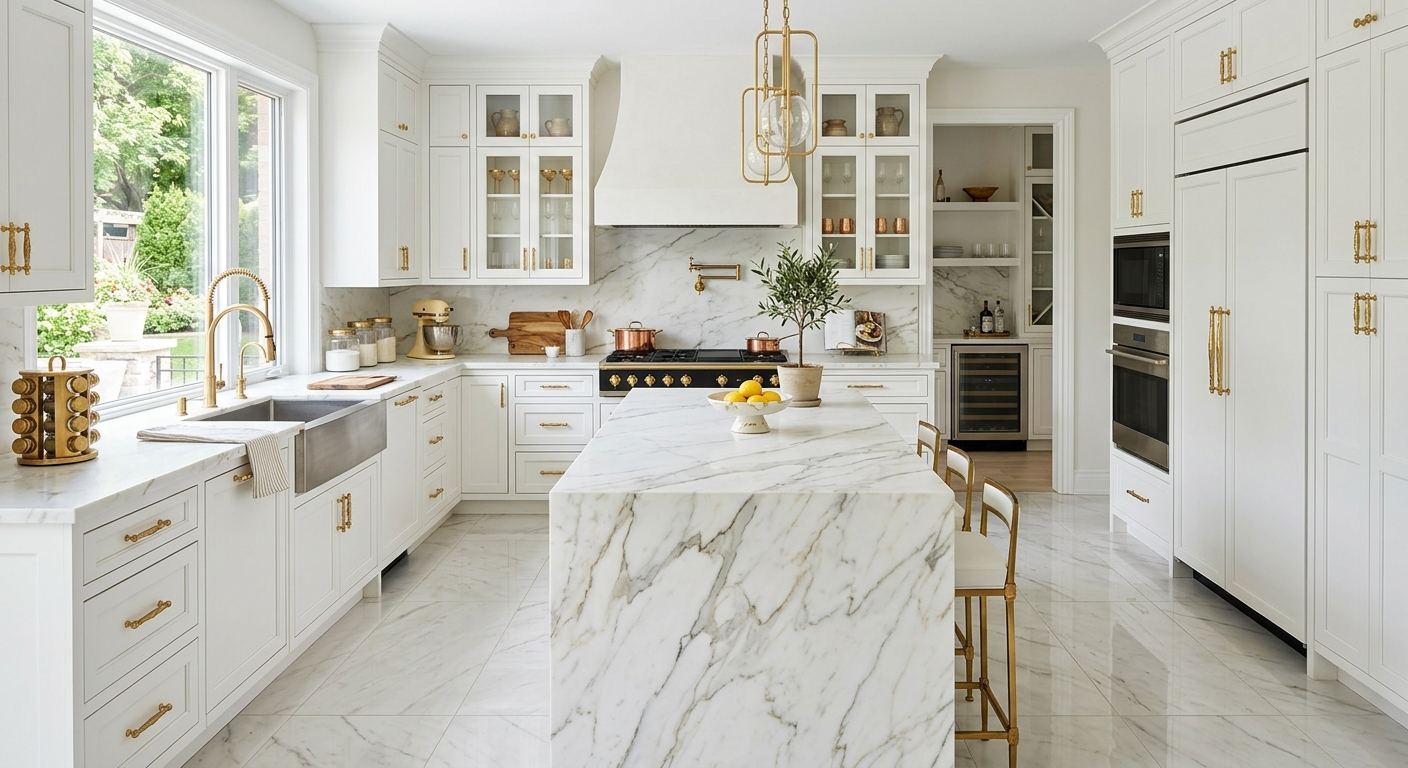
Kitchen renovation options and costs in Hillhurst
In Hillhurst, Alberta, most homeowners start their kitchen plan with one big question: “What can we actually afford, and what will it change?” With Calgary’s overall housing mix and a fairly compact neighbourhood footprint, projects are often priced around material choices and labour intensity rather than weather alone. Hillhurst has a small local population (5,475 people recorded in the 2021 Census), but kitchens are busy because Calgary’s core demand keeps trade availability high. That matters for scheduling, especially when you want cabinet installation plus countertop templates completed quickly.
Home values and household expectations typically line up—when buyers see a renovated kitchen with modern finishes, they expect durable surfaces, clean lines, and dependable storage. In the Calgary area, the practical reality is that many upgrades cluster in the mid five-figure range (and climb toward six figures when layout changes, walls move, or you add integrated lighting and a premium stone package). Contractors also see budgets influenced by the broader Calgary economic region: skilled labour commonly runs about $90–$140 per hour, so the design, carpentry, electrical, and project management pieces can be a substantial share of your total.
Alberta’s strong construction market means more competition for skilled crews in peak months; if you miss material lead times, your timeline can stretch regardless of the finish tier. Neighbourhood demand is especially steady around the 10th Avenue corridor, where many renovations blend older bungalow layouts with updated open-plan expectations.
Below is a practical comparison of renovation tiers to help you align scope with a realistic Hillhurst budget.
| Renovation Tier |
What's Included |
Typical Duration |
Price Range |
| Cosmetic refresh (paint, hardware, new appliances only) |
New cabinet hardware, paint/stain refresh, appliance swap, minor caulking/trim touch-ups |
1–3 weeks |
$8,000–$18,000 |
| Mid-range full renovation (new cabinets, counters, sink, tile) |
Semi-custom or upgraded stock cabinetry, new countertops, sink + faucet, backsplash tile, disposal/trim, basic plumbing/electrical hookups |
6–10 weeks |
$35,000–$70,000 |
| High-end full renovation (custom cabinets, stone counters, island) |
Custom millwork, quartz or natural stone counters, island (often with additional electrical), premium backsplash, expanded lighting/finishes |
10–16 weeks |
$75,000–$110,000 |
| Cabinet refacing only (new doors + drawer fronts, same boxes) |
Door/drawer front replacement, new hardware, cabinet surface refinishing, new backsplash tie-in (optional) |
3–6 weeks |
$8,000–$30,000 |
| Countertop swap only (laminate to quartz or stone) |
Template + install for new counters, new sinks/cut-outs if selected, seam/edge upgrade, basic cleanup and minor trim adjustments |
1–3 weeks |
$6,000–$15,000 |
| Backsplash tile installation only |
Tile supply allowance (if chosen), surface prep, waterproofing where required, tile install to design height, grout/seal |
1–2 weeks |
$2,500–$8,000 |
Prices are estimates only and vary by project scope, site access and material selection.
What affects the price of kitchen renovation in Hillhurst
Even when two Hillhurst homeowners describe the “same kitchen renovation,” quotes can land 30–50% apart because Calgary pricing is driven by how much work gets triggered by the details: cabinet tier, stone choice, electrical scope, and layout changes. In practice, neighbourhood-by-neighbourhold tends to cluster around home value expectations—many households in higher-value pockets typically default to quartz or natural stone and semi-custom cabinetry, while more budget-focused projects lean toward laminate counters and stock solutions. Climate rarely controls the price here; Alberta’s construction demand and trade rates do. Skilled labour in Calgary commonly runs $90–$140 per hour, so the labour intensity of removing, rebuilding, and re-trimming matters as much as the material sticker price.
Two concrete Hillhurst examples I see often: first, older bungalow kitchens may have uneven base cabinets or out-of-square walls. That adds hours to prep and can push a “simple cabinet install” toward mid-range labour realities. Second, if you’re upgrading from laminate to quartz, many homeowners also want thicker edges and fewer seams; templating and fabrication complexity can add cost even before you choose a premium slab. On the budget end, a countertop swap band of $3,000–$12,000 can be realistic; once you add a new island with new circuits and plumbing tie-ins, you quickly step into mid-range full renovation pricing of $25,000–$100,000.
Layout changes are the biggest unpredictable element regardless of finish tier. Removing a wall, adding an island, or moving a gas line usually triggers additional design time, more trades, and inspection steps. That’s why homeowners who want a predictable budget often start by keeping plumbing “in the same footprint” and spend the savings on better cabinets and counters.
| Price Factor |
Why It Matters |
Cost Impact |
| Cabinet tier — stock vs. semi-custom vs. fully custom millwork |
Different build quality, fit/finish, hardware options, and ability to match odd-wall geometry |
Can swing a project by tens of thousands; stock supports the lowest total cost |
| Countertop material — laminate vs. quartz vs. granite vs. stone |
Material cost, thickness/edge options, fabrication difficulty, and seam planning |
Laminate is typically lowest; quartz/stone increases both material and install complexity |
| Layout change — wall removal, island add, plumbing/gas move |
Triggers framing, electrical/plumbing work, potential permits, and inspection scheduling |
Often the largest variance driver; can add significant labour + subcontractor time |
| Appliance package tier — builder vs. mid-range vs. pro-grade |
Electrical requirements, venting needs, and cabinetry integration tolerances |
Higher tiers can raise the budget quickly, especially when panels and ventilation change |
| Flooring — refinish existing vs. full replacement |
Prep levels and transition trims; under-cabinet removals can affect adjacent flooring |
Refinishing usually cheaper; full replacement increases demo and materials |
| Backsplash — ceramic tile vs. marble vs. full-height slab |
Labour intensity, substrate prep, and material fragility/weight |
Full-height or natural stone typically increases both tile and installation costs |
| Electrical — new circuits for island, under-cabinet lighting |
New outlets, lighting, and dedicated circuits require licensed work and inspections |
Adds cost via electrician time and material for wiring, boxes, and lighting |
| Permit fees and licensed trade requirements |
Work that affects plumbing/gas structure, electrical circuits, or load-bearing changes needs approvals |
Can add direct fees and scheduling time; trades may bill differently when permitting applies |
Permits & regulations in Alberta
In Alberta, cabinet and countertop swaps are usually straightforward from a permitting standpoint: replacing cabinets, installing new countertops, or updating a backsplash generally does not require a building permit. However, once your project touches systems—plumbing supply/drain, gas, load-bearing structure, or new electrical circuits—permits and licensed trades become part of the job. In Hillhurst, many kitchens in older homes have to make careful choices about how much to relocate. Moving a sink’s water lines or drain, relocating a gas stove connection or modifying a range hood venting path, removing a load-bearing wall, or adding electrical for an island typically requires permits and inspection involvement. Gas work must be done by a licensed gas fitter, and electrical work must be done by a licensed electrician; both typically require the contractor to coordinate inspections.
The homeowner-friendly approach is to verify responsibility before you sign. Step 1: ask your contractor to list which tasks require permits in writing (not just verbally). Step 2: confirm who pulls the permit and who schedules the inspections. Step 3: ask for proof of licensing and coverage—your contractor should provide current licence details, a certificate of insurance showing general liability, and WSIB/WCB clearance letters or equivalent proof of coverage where applicable. Step 4: keep a signed scope that spells out what’s included (permit fees, disposal, and who handles inspections). If anything is unclear, treat it as a red flag and get it clarified on the contract.
Cabinets, countertops and layout decisions in Hillhurst
For a Hillhurst kitchen renovation, there are three decisions that determine most of your cost and your long-term satisfaction. First is cabinet tier: stock cabinets are fastest and cheapest, semi-custom is usually the sweet spot for fit and storage, and custom cabinetry delivers the best fit for tight layouts and older wall conditions common in Calgary’s inner neighbourhood housing stock. Second is countertop material: laminate is budget-friendly, quartz is popular for durability and low maintenance, granite/natural stone offers premium aesthetics, and butcher block adds warmth but requires more care. Third is layout: open-concept wall removal, island additions, or plumbing/gas relocation are the changes that often cost the most—but can be justified if they improve flow, seating, and day-to-day storage.
Calgary resale expectations tend to reward visible durability: quartz or natural stone counters and clean, properly installed cabinetry are common “must-haves” at higher price points, while value-focused buyers still respond well to good cabinet function even if the countertop is laminate. Alberta’s climate doesn’t usually penalize kitchen surfaces directly, but fluctuating indoor humidity can be a factor with real wood products like butcher block—so it’s important to choose the right seal and maintain it.
Here’s a practical dollar example: if you’re choosing between laminate and quartz, a countertop swap band of $3,000–$12,000 can be realistic. If that upgrade helps you avoid a bigger layout change (like moving plumbing to support an island you aren’t ready for), you often get better ROI than spending extra just to relocate fixtures.
| Option |
Durability |
Maintenance |
Best For |
Price Range |
| Stock cabinets (big-box) |
Good for standardized sizes; finish quality varies by line |
Low to moderate; hinges/hardware wear depends on brand |
Fast timelines and tighter budgets |
$8,000–$22,000 |
| Semi-custom cabinets (local dealer) |
Consistent construction; better options for storage and fit |
Low; regular cleaning and hardware checks |
Most Hillhurst renovations seeking a balance of quality and cost |
$18,000–$40,000 |
| Custom cabinets (local millwork shop) |
Highest fit and detail; best for irregular walls and bespoke layouts |
Low to moderate; quality hardware and proper cleaning protect finish |
Premium redesigns, islands, and complex storage needs |
$35,000–$70,000 |
| Laminate countertop |
Resists staining; can chip/peel at edges if impacted |
Easy; avoid heat directly on surface and protect seams |
Budget upgrades and rental-friendly renewals |
$3,000–$6,000 |
| Quartz engineered countertop |
High scratch and stain resistance; uniform surface |
Very low; wipe-clean routine and avoid extreme heat |
Busy households and resale-focused renovations |
$6,000–$12,000 |
| Granite / natural stone countertop |
Very durable; performance varies by stone type |
Moderate; periodic sealing may be recommended |
Premium look with unique veining |
$8,000–$15,000 |
| Butcher block countertop |
Durable when maintained; susceptible to burns and prolonged water exposure |
Moderate; oiling and prompt drying are key |
Warm, traditional kitchens and prepared-food kitchens |
$5,000–$10,000 |
| Marble countertop |
Elegant but softer; can etch/stain more easily than quartz |
Higher; requires careful sealing and prompt cleaning |
Statement kitchens where aesthetics outweigh hard-use concerns |
$10,000–$20,000 |
How to choose a kitchen renovation contractor in Hillhurst
Choosing a contractor in Hillhurst comes down to proof, clarity, and how they manage the steps that cost money when they’re done poorly. In Alberta, verify that the contractor and their subs are properly licensed and insured: ask for their current licence details, a certificate of insurance (general liability is the baseline), and WSIB/WCB clearance evidence where applicable. You should also confirm that gas work and electrical work are being handled by the correct licensed trades—licensed gas fitters for gas modifications and licensed electricians for circuit work—because this affects both safety and inspection outcomes.
Next, don’t accept a “lump sum” that hides labour and material assumptions. Get 2–3 itemised written quotes showing labour and materials breakdown, including cabinet supply, install, countertop template/fab/installation, plumbing changes, electrical changes, disposal, and any allowance items (like tile or fixture upgrades). Read the scope carefully: what is excluded (old flooring removal, drywall patching, painting, and venting changes), is permit pulling included, and is there a separate line item for disposal/dump fees? Warranty matters too: confirm the length of workmanship warranty, what the product/manufacturer warranty covers, and whether coverage is transferable to future owners (important for resale in Calgary’s competitive market).
For payment, plan for a realistic schedule and holdbacks. In renovations, never pay more than about 10–15% upfront, and build in a holdback until the job is complete and deficiency items are corrected. Finally, lock in the timeline in writing—start date, key milestones (demo, rough-in, cabinet install, countertop template, final trim), and a completion estimate.
- Ask for licence verification and coverage paperwork before work begins
- Request an itemised quote (labour + materials, not just one total)
- Confirm who pulls permits and schedules inspections, if required
- Make sure countertop templating timing is included in the schedule
- Clarify exclusions: drywall repairs, painting, flooring transitions, and backsplash prep
- Confirm disposal and dump fees are included or quoted separately
- Verify lead times for cabinets and stone; don’t assume “in stock”
- Check warranty terms for workmanship and product coverage
- Confirm whether warranties are transferable for resale
- Use a payment schedule with a holdback until punch list completion
- Ensure change orders are in writing with updated pricing and timelines
- Get a written start date and completion target, with milestone dates
In Hillhurst, I see these red flags often: vague scope that doesn’t say who handles permits, a quote that excludes electrical/plumbing rough-in but assumes “minor adjustments,” no proof of insurance or coverage, unrealistic timelines that ignore cabinet/stone lead times, and pressure to pay most of the job upfront. If any of these show up, pause and ask for written clarification.
Frequently asked questions — kitchen renovation in Hillhurst
How do I add an island to my Hillhurst kitchen?
Adding an island in Hillhurst usually costs more than people expect because the island changes the “behind-the-wall” work. If you’re moving or adding plumbing and vents (for a sink or dishwasher) or adding electrical (for outlets or under-cabinet lighting), plan for licensed electrical and likely permits depending on the scope. If your island is mostly cabinetry with no new plumbing, you may stay closer to cabinetry and countertop bands—but if you’re relocating gas or adding new circuits, costs rise quickly. In Calgary, skilled labour is commonly priced around $90–$140 per hour, so the electrician and carpenter time matter. A typical island add can sit inside mid-range full renovation budgets (often in the $35,000–$70,000 range) when it includes cabinetry, new counters, and electrical.
How much does a kitchen renovation cost in Hillhurst?
Kitchen renovation cost in Hillhurst generally tracks the same tiers you see across Calgary: cosmetic upgrades are usually the least expensive, while full redesigns with layout changes push the budget upward. For example, a cosmetic refresh (paint, hardware, new appliances only) often falls around $8,000–$18,000 if plumbing/electrical stays untouched. A mid-range full renovation with new cabinets, counters, sink, and tile commonly lands in the $35,000–$70,000 range. If you add custom millwork, premium stone, and an island (especially with new electrical or plumbing), you’re more likely in the high-end band around $75,000–$110,000. The two biggest drivers are finish tier (stock vs semi-custom vs fully custom) and whether you change the layout or move gas/plumbing lines.
How long does a kitchen renovation take in Hillhurst?
Timelines in Alberta are often driven by scheduling trades and waiting on cabinet and countertop lead times. A cosmetic refresh can be as fast as 1–3 weeks when appliances and hardware are ready. A typical mid-range full renovation is often 6–10 weeks, assuming cabinets are available and the countertop template/fabrication slot is scheduled promptly. High-end full renovations with custom cabinets and island work are commonly 10–16 weeks. Older Hillhurst homes can add a week or two if walls need shimming, patching, or if you uncover rough-in issues during demo. If you’re also adding new circuits or moving plumbing, permit/inspection timing can add delays—so ask your contractor to provide a written milestone plan, not just a start-and-end date.
Quartz vs granite countertops — which is better?
Quartz is usually the “best for most households” choice in Hillhurst because it’s consistent, very low maintenance, and resists stains well without the extra sealing routines some natural stones need. Granite/natural stone offers dramatic, unique veining and a premium look, but performance can vary by stone type and may require periodic sealing to maintain stain resistance. For budgeting, countertop swaps sit in a band of $3,000–$12,000 depending on material and complexity; choosing quartz often fits that mid-range sweet spot, while granite can land at the higher end when you add slab character, edge profiles, and seam planning. If you entertain often or want predictable maintenance, quartz usually wins. If you prioritize natural pattern and don’t mind a bit more care, granite can be worth it.
Should I reface or replace my cabinets?
Refacing can be the right move when your cabinet boxes are solid, square, and not sagging, and when you mainly want a new door/drawer look and updated hardware. In Hillhurst renovations, refacing also tends to be a budget-friendly option because it reduces demo and disposal compared to replacement. Cabinet refacing only commonly lands in the $8,000–$30,000 range, depending on door styles and whether you also add a new backsplash or adjust finishes. Full replacement usually becomes the better choice when boxes are damaged by moisture, poorly installed, or when you want major storage changes, corner solutions, or new layouts. If you’re also upgrading counters to quartz and want a “fully rebuilt” look, replacement often makes the transition cleaner.
Do I need a permit for a kitchen renovation in Alberta?
In Alberta, many kitchen cosmetic upgrades don’t require a permit—cabinet and countertop swaps typically fall into the “no permit” category, and a backsplash installation is usually straightforward. But permits and licensed trade work are typically required when you move plumbing supply/drain lines, relocate gas connections, remove load-bearing walls, or add new electrical circuits (including many island outlet and lighting changes). For Hillhurst homeowners, the key is to confirm what triggers permitting before you sign. Ask your contractor to identify permit-required scopes in writing, and then verify coverage and licences: electricians must be licensed for electrical work, and gas fitters must be licensed for gas-related modifications. Also confirm who pulls the permit and schedules inspections so the project doesn’t stall during inspection windows.