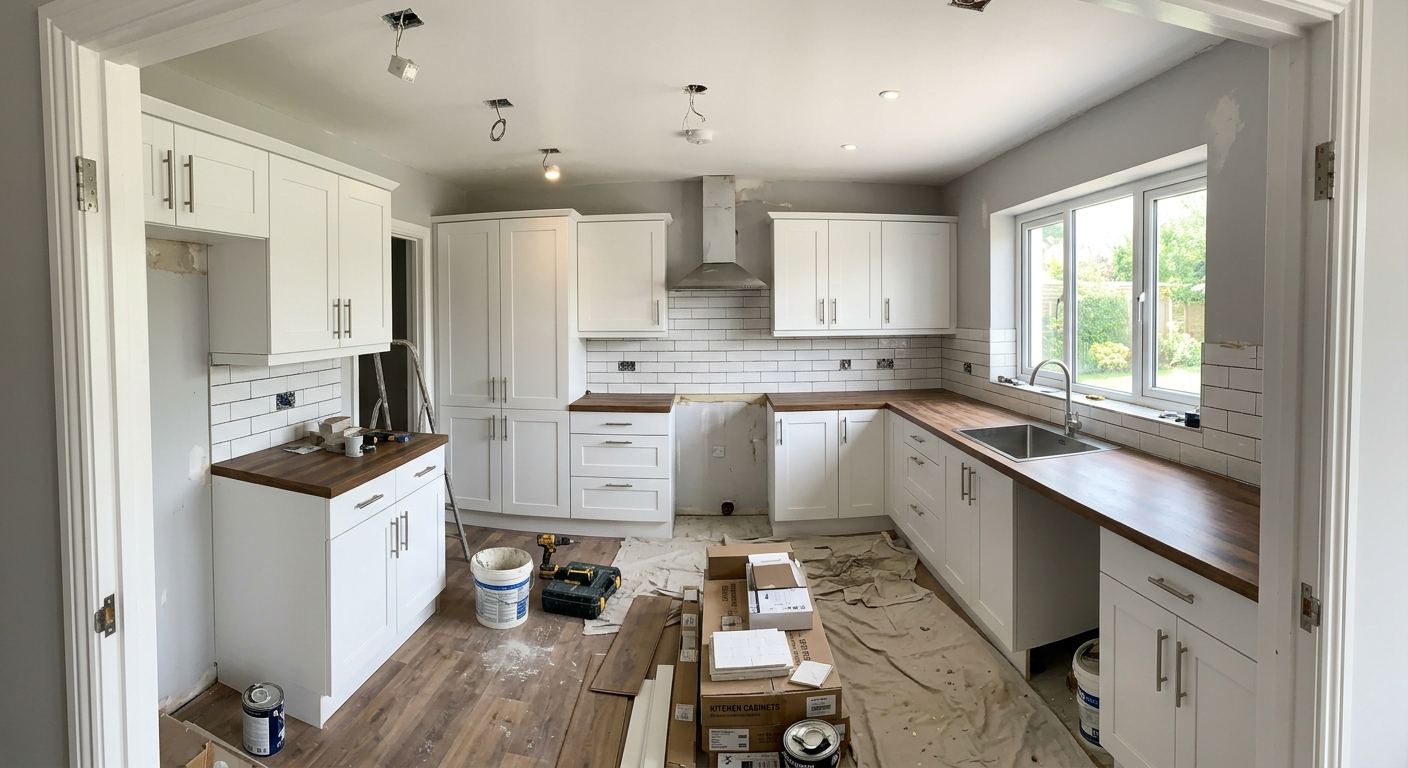
Kitchen renovation options and costs in Downtown
In Downtown, Alberta, homeowners usually start by choosing how much they want to change visually versus how much they’re willing to rebuild function. With a Downtown population of 12,423 (Statistics Canada, 2021 Census), the area sees steady demand from condo owners and older infill homes that need upgrades for resale value. In Calgary’s broader economic region, kitchen expectations often rise with household spending power and local home values, which is why many projects trend toward mid-range finishes even when budgets start in the “refresh” category. Contractors also see quick turnarounds here because trades availability is strongest near established routes and commercial corridors (instead of waiting for longer-distance sub-trades).
Even though Alberta’s winters are real, Calgary kitchen costs don’t swing as much from climate as they do from material tiers and the construction market. Alberta’s strong building pace keeps skilled labour demand high, commonly placing skilled labour around $90–$140 per hour, so design time, project management, and demolition sequencing meaningfully impact the final total. In Downtown, you’ll find the trade especially in demand around the inner-city core where older housing stock is more common and owners want faster updates without disrupting daily routines. Neighbourhoods in the downtown core (including central redevelopment zones) tend to generate the most scheduling pressure for cabinets, countertops, and tile crews.
Use the table below to compare typical scope and budget bands, then we’ll break down the biggest drivers of price so you can plan a renovation that matches your resale goals and timeline.
| Renovation Tier |
What's Included |
Typical Duration |
Price Range |
| Cosmetic refresh (paint, hardware, new appliances only) |
Cabinet paint/stain (or touch-up), new pulls/hinges, new appliances (no plumbing/gas moves), light cleaning and minor caulking |
1–2 weeks |
$8,000–$20,000 |
| Mid-range full renovation (new cabinets, counters, sink, tile) |
Semi-custom or quality stock cabinets, new countertops, sink and faucet swap, backsplash tile, under-cabinet prep, flooring spot repairs |
3–6 weeks |
$25,000–$60,000 |
| High-end full renovation (custom cabinets, stone counters, island) |
Custom cabinets, quartz or natural stone counters, island (with electrical coordination), upgraded backsplash (tile or slab look), higher-end appliance package |
6–12 weeks |
$65,000–$100,000 |
| Cabinet refacing only (new doors + drawer fronts, same boxes) |
Doors/drawers replacement, hardware upgrade, new trim/backsplash prep surfaces, paint or finish matching, optional minor rail adjustments |
2–4 weeks |
$8,000–$35,000 |
| Countertop swap only (laminate to quartz or stone) |
Remove old tops, install new countertops, cut-outs for sink/cooktop, seam/edge finishing, caulking and backsplash caulk line |
2–5 days (plus fabrication time) |
$3,000–$12,000 |
| Backsplash tile installation only |
Tile supply and install, surface prep, grout/caulking, layout planning and small patching |
3–7 days |
$2,500–$8,000 |
Prices are estimates only and vary by project scope, site access and material selection.
What affects the price of kitchen renovation in Downtown
In Downtown, Alberta, two homeowners can receive quotes that differ by 30–50% for what looks like the “same” kitchen because the real drivers are scope uncertainty, finish tier, and how much the layout and services change. Calgary’s market tends to push clients toward quartz or natural stone and semi-custom or custom cabinetry, which raises baseline budgets even when floors and appliances remain. This is also why typical full-kitchen renovations often cluster in the mid five-figures (and can move toward six figures when islands, wall moves, or premium stone are involved).
Local home values and household incomes shape which finish tier buyers expect at resale more than climate does. In higher-value pockets of the Calgary economic region, homeowners often default to quartz or stone counters and semi-custom cabinetry because the investment is easier to recoup. In more modest markets, laminate and stock boxes still offer strong ROI. In Downtown specifically, many kitchens start in older homes where cabinet boxes may be fine but layout constraints are real—so the cheapest option (“refinish or refresh only”) can become more expensive once you correct undersized lighting, awkward storage, or electrical placement for modern appliances.
Concrete examples: (1) If your kitchen has an older electrical setup and you want under-cabinet lighting plus new outlets near the island, the electrical scope can add meaningful labour beyond the countertop cost range of $3,000–$12,000. (2) If you move plumbing to improve workflow, the job shifts from a mid-range full renovation budget of $25,000–$60,000 toward the upper band because trades coordination and wall access increase demo and repair time. (3) Downtown condos or tight-access homes can require careful protection and slower demolition pacing, which affects labour hours even when materials stay similar.
Ultimately, finish upgrades change the look; layout and service changes change the schedule and the trades count—so they’re the true sources of variation in Downtown quotes.
| Price Factor |
Why It Matters |
Cost Impact |
| Cabinet tier — stock vs. semi-custom vs. fully custom millwork |
Higher tiers cost more in materials, require longer lead times, and often demand more precise fitting and finishing |
Commonly moves you across renovation tiers by tens of thousands |
| Countertop material — laminate vs. quartz vs. granite vs. stone |
Material cost plus install complexity (seams, edges, thickness, fabrication) affects both budget and schedule |
Laminate tends to sit low; quartz/stone can push budgets toward mid five-figures |
| Layout change — wall removal, island add, plumbing/gas move |
Changes structural and service scope, increases demolition, repairs, and coordination with licensed trades |
Often the largest swing factor in total cost, regardless of finish |
| Appliance package tier — builder vs. mid-range vs. pro-grade |
Higher-end units may require different clearances, venting plans, and electrical requirements |
Can add cost without improving usable storage, unless tied to the layout |
| Flooring — refinish existing vs. full replacement |
Cabinet installation reveals uneven floors and gaps; replacements usually add prep underlayment and labour |
Partial repairs cost less, but full replacement can add a noticeable bump |
| Backsplash — ceramic tile vs. marble vs. full-height slab |
Complex patterns, larger format tile, and slab installs require more precise substrates and skilled setters |
“Tile only” budgets can stay within $2,500–$8,000; slabs can exceed it quickly |
| Electrical — new circuits for island, under-cabinet lighting |
Modern layouts need dedicated circuits and proper placement for outlets and lighting |
May add several thousand dollars depending on how much wiring changes |
| Permit fees and licensed trade requirements |
When plumbing, gas, electrical, or structural work is involved, permitting and inspections are required |
Introduces admin time and trade scheduling that increases overall cost |
Permits & regulations in Alberta
In Alberta, most simple cosmetic work—like painting cabinets, swapping hardware, installing a backsplash, or replacing countertops—typically doesn’t trigger permits. A cabinet and countertop swap alone is generally straightforward from a regulatory standpoint. However, Downtown homeowners should plan for permits when the renovation touches plumbing supply/drain lines, gas connections, electrical circuits, or structural components. Specifically, moving plumbing for a new sink, relocating a stove (or changing the range/hood venting plan), relocating gas lines, removing a load-bearing wall, or adding electrical circuits for an island or upgraded lighting usually requires permits and licensed trades.
Gas work must be completed by a licensed gas fitter, and electrical work must be completed by a licensed electrician, with inspections required as part of the process. That means your contractor should coordinate the licensed trades and include it in the written scope, not treat it as an “afterthought.”
Step-by-step verification for homeowners in Downtown: (1) Ask for a copy of the contractor’s liability insurance certificate and confirm the project address is covered. (2) Confirm WSIB/WCB coverage: request proof of coverage (or acceptable exemption documentation, where applicable) before work starts. (3) Verify licensed trades: check the electrician and gas fitter credentials through the appropriate online provincial registries. (4) Ensure the contract clearly states who pulls permits and who pays permit-related fees. (5) Confirm inspections are scheduled and that documentation will be provided at close-out.
Cabinets, countertops and layout decisions in Downtown
In a Downtown, Alberta kitchen renovation, three decisions determine most of your budget and the satisfaction you feel after move-in: cabinet tier, countertop material, and whether you change the layout. Cabinet tier sets how quickly the job goes and how closely the kitchen fits your storage needs. Stock cabinets are the fastest and usually the lowest cost, semi-custom is the most popular mid-range choice for better sizing and finishes, and custom cabinets provide the best fit for awkward Downtown spaces—but at the highest cost and longest lead times.
Countertop material affects both durability and day-to-day maintenance. Laminate is cost-effective and easy to replace, but it can be more vulnerable to chips and heat damage. Quartz is the common “busy kitchen” choice because it resists staining and holds up well to everyday use. Granite and other natural stones offer a premium look but typically require periodic sealing depending on the product. Butcher block brings warmth and can handle scratches well, yet it needs regular oiling and more attention around spills—especially with Alberta’s hard water and higher countertop cleaning frequency.
Layout changes are where budgets swing. Removing a wall for open concept, adding an island, or relocating plumbing/gas can be justified when it creates usable circulation and adds storage or seating buyers want. For example, if you’re already targeting a mid-range renovation of $25,000–$60,000, upgrading to quartz may be an easy trade. But if you’re trying to shift from $25,000–$60,000 toward a full redesign near $65,000–$100,000 by adding an island and moving services, make sure the space gain is real—otherwise you can spend premium money without increasing function.
Design around what Downtown buyers expect: efficient storage, reliable surfaces, modern lighting, and a layout that works with how families live through Alberta winters—when kitchens become the command centre for cooking, prep, and gathering.
| Option |
Durability |
Maintenance |
Best For |
Price Range |
| Stock cabinets (big-box) |
Good daily durability with limited size flexibility |
Low; depends on finish quality and proper installation |
Fast refreshes and tighter budgets |
$8,000–$20,000 |
| Semi-custom cabinets (local dealer) |
Very good durability with better configuration options |
Low to moderate; hinges and soft-close components vary by line |
Most Downtown renovations balancing cost and fit |
$20,000–$45,000 |
| Custom cabinets (local millwork shop) |
Excellent durability with precise fit and upgraded build details |
Low; high-quality finishes reduce wear visibility |
Odd layouts, premium resale targets, and full lifestyle upgrades |
$45,000–$80,000 |
| Laminate countertop |
Moderate; can chip at edges if impacts occur |
Low; avoid heat directly on surface |
Budget-conscious updates that prioritize speed |
$3,000–$6,000 |
| Quartz engineered countertop |
High; strong stain resistance and consistent surface |
Low; wipe-clean routine is typically enough |
Busy Downtown households and resale-friendly finishes |
$6,000–$10,000 |
| Granite / natural stone countertop |
High; durable but varies by stone and edge profile |
Moderate; often requires sealing per manufacturer |
Premium look seekers who want natural variation |
$8,000–$14,000 |
| Butcher block countertop |
Medium to high; resistant to scratches but needs care |
Moderate; regular oiling and careful spill management |
Casual warmth and frequent prep (with maintenance commitment) |
$4,500–$9,000 |
| Marble countertop |
Medium; can be sensitive to etching and staining |
Higher; needs diligent cleaning and protection |
Showpiece kitchens where you accept upkeep |
$10,000–$18,000 |
How to choose a kitchen renovation contractor in Downtown
Choosing the right contractor matters in Downtown because kitchens involve multiple trades, tight timelines, and a lot of finish coordination. Start by verifying Alberta licensing for any trade work required in your scope: electricians for electrical circuits, gas fitters for any gas relocation, and the overall project management responsibilities tied to your contract. Next, confirm liability insurance and WSIB/WCB coverage. You should be able to request certificates of insurance and proof of coverage before work starts. For licensed trades, look for credible online registry entries that show the appropriate licence/registration status.
When you request quotes, don’t ask only for a price—ask for itemised breakdowns. Get 2–3 itemised written quotes with labour and materials clearly separated (cabinets, counters, tile, plumbing/electrical allowances, demolition, disposal, and any site protection). Read the scope carefully: what’s excluded (framing repairs, drywall finishing levels, subfloor prep, vanity/floor transitions, appliance installation)? Is permit pulling included, and who pays permit fees? Confirm disposal and protection are in the plan, especially in Downtown units where access is limited.
Warranty is another differentiator. Ask for the workmanship warranty length and whether it’s transferable if you sell the home. Also confirm product/manufacturer warranties for cabinets, countertops, and appliances. Payment should be tied to progress—never more than about 10–15% upfront—and a holdback until substantial completion is typical.
Finally, get a start date and completion estimate in writing so you can plan around cabinet lead times and stone fabrication scheduling.
- Ask for a written scope of work with exclusions listed line-by-line.
- Request an itemised quote showing labour hours, material allowances, and fixtures included.
- Confirm who pulls permits and schedules licensed inspections.
- Verify the contractor’s liability insurance certificate and coverage for your address.
- Confirm WSIB/WCB coverage (or approved exemption documentation where applicable).
- Check the electrician/gas fitter licences for your specific scope before demolition.
- Require proof of disposal plan (haul-away) and site protection for Downtown traffic.
- Ask about drywall finishing level (skim, sanding, texture match) and repaint responsibilities.
- Clarify countertop fabrication responsibility and how seams/edges are handled.
- Confirm lead times in writing for cabinets, countertops, tile, and appliances.
- Use a payment schedule with milestones and a holdback at completion.
- Get warranty details in writing: workmanship, product coverage, and transferability.
Red flags to watch for in Downtown kitchens: vague “all-in” pricing with no itemised scope; no proof of insurance or WSIB/WCB coverage; promises to “start tomorrow” without a realistic lead-time plan for cabinets and stone; missing answers on who pulls permits; and requests for large deposits upfront (well beyond 10–15%) with no holdback until completion.
Frequently asked questions — kitchen renovation in Downtown
What is the difference between a galley and open-concept kitchen?
In Downtown, Alberta, a galley kitchen runs cabinets along two parallel walls, usually with a narrow corridor between. It can be efficient for cooking and cleanup, especially in older infill or compact layouts, but it offers less natural seating and limited “social” space. An open-concept kitchen removes barriers so the kitchen blends into the living/dining area, which often makes the home feel larger and can improve resale appeal when buyers are looking for entertaining-friendly layouts. The key cost difference is that open-concept designs frequently involve structural review and possibly electrical, plumbing, or gas coordination, which can push a renovation toward the higher end of the mid five-figures and beyond. If you’re staying within a $25,000–$60,000 budget, a galley refresh with improved storage is usually the safer path than a wall move.
How do I get accurate kitchen renovation quotes in Downtown?
Accurate quotes in Downtown start with a clear scope and site measurements. Bring a layout plan (even a hand sketch) and list what you want changed: cabinets, countertops, backsplash, sink, appliances, and whether you want an island. Then ask for itemised written estimates: labour + materials allowances, demolition and disposal, electrical/plumbing/gas allowances if any services change, and finish details like drywall patching and tile layout. If you’re considering a countertop upgrade—say from laminate up to quartz—get the fabricator/installer line item specified so you understand the $3,000–$12,000 countertop installation band you’re likely to land in. Also confirm what’s excluded (underlayments, subfloor repairs, permit fees if applicable, appliance hookup, or product warranty handling). Finally, insist on a realistic schedule that accounts for cabinet and countertop lead times.
What's the best countertop material for a busy Downtown kitchen?
For most busy households in Downtown, Alberta, quartz is the most balanced option because it’s durable and generally low-maintenance. It resists staining well and handles daily cooking messes better than softer surfaces, without the periodic sealing that many natural stones require. Laminate can work if you’re aiming for the lower end of the range, but it’s more sensitive to heat and can chip at edges if cookware gets dropped. Granite/natural stone offers premium visuals and strong durability, but you may need to follow sealing schedules and cleaning practices to protect the surface. If you’re renovating around the $25,000–$60,000 mid-range tier, quartz often fits naturally with semi-custom cabinetry and a modern backsplash. If you want to go more premium, stone slabs can look exceptional—but they can push countertop and overall budget upward depending on fabrication and edge profiles.
How do I add an island to my Downtown kitchen?
Adding an island in a Downtown kitchen starts with space planning: you need clearance for walkways and doors, plus room for electrical, plumbing (if adding a sink), and ventilation (if adding a hood). The decision to add an island is often justified when it improves storage, adds seating, or creates a more natural work triangle. Cost-wise, the island itself can be manageable, but the unpredictable part is the services coordination: adding new electrical circuits for outlets and under-cabinet lighting can increase labour, and relocating plumbing or gas for a cooktop/hood can move your renovation higher than a simple refresh. In Alberta, electrical and any gas-related changes typically require licensed trades and inspections. Many homeowners still keep the island within a broader renovation budget by choosing quartz within typical countertop installation bands and using semi-custom cabinetry instead of fully custom millwork.
How much does a kitchen renovation cost in Downtown?
In Downtown, Alberta, kitchen renovation costs commonly fall within the broader Calgary economic-region bands, with most full renovations landing in the mid five-figures and some moving toward six figures when layout changes or premium materials are included. As a practical baseline, full kitchen renovation budgets often range from $25,000–$100,000 depending on cabinet tier, countertop material, and whether you move plumbing/gas or add an island. Cosmetic refreshes can start far lower when you’re doing paint, hardware, and new appliances only. If you’re changing cabinets and counters but keeping the layout mostly intact, many projects sit in the $25,000–$60,000 range. If you’re doing custom cabinetry and stone counters with major work like walls moving, island installation, and coordinated electrical/plumbing, budgets can approach the $65,000–$100,000 higher end.
How long does a kitchen renovation take in Downtown?
Timelines in Downtown vary mainly by lead times and whether permits and licensed trades are needed. Cosmetic refreshes (paint, hardware, appliance-only swaps) can often be done in about 1–2 weeks. Mid-range full renovations typically take 3–6 weeks when cabinets and countertops are ordered early enough and the layout remains mostly unchanged. High-end builds with custom millwork and stone counters can be 6–12 weeks due to longer fabrication and more complex site sequencing, especially when there’s an island and service changes. If plumbing or electrical circuits are being added, scheduling licensed trades and inspections can extend the calendar even if labour hours stay similar. Always ask for a written start date, a completion estimate, and a dependency list—cabinet fabrication, countertop fabrication, and inspection dates—so you’re not surprised by Downtown scheduling constraints.