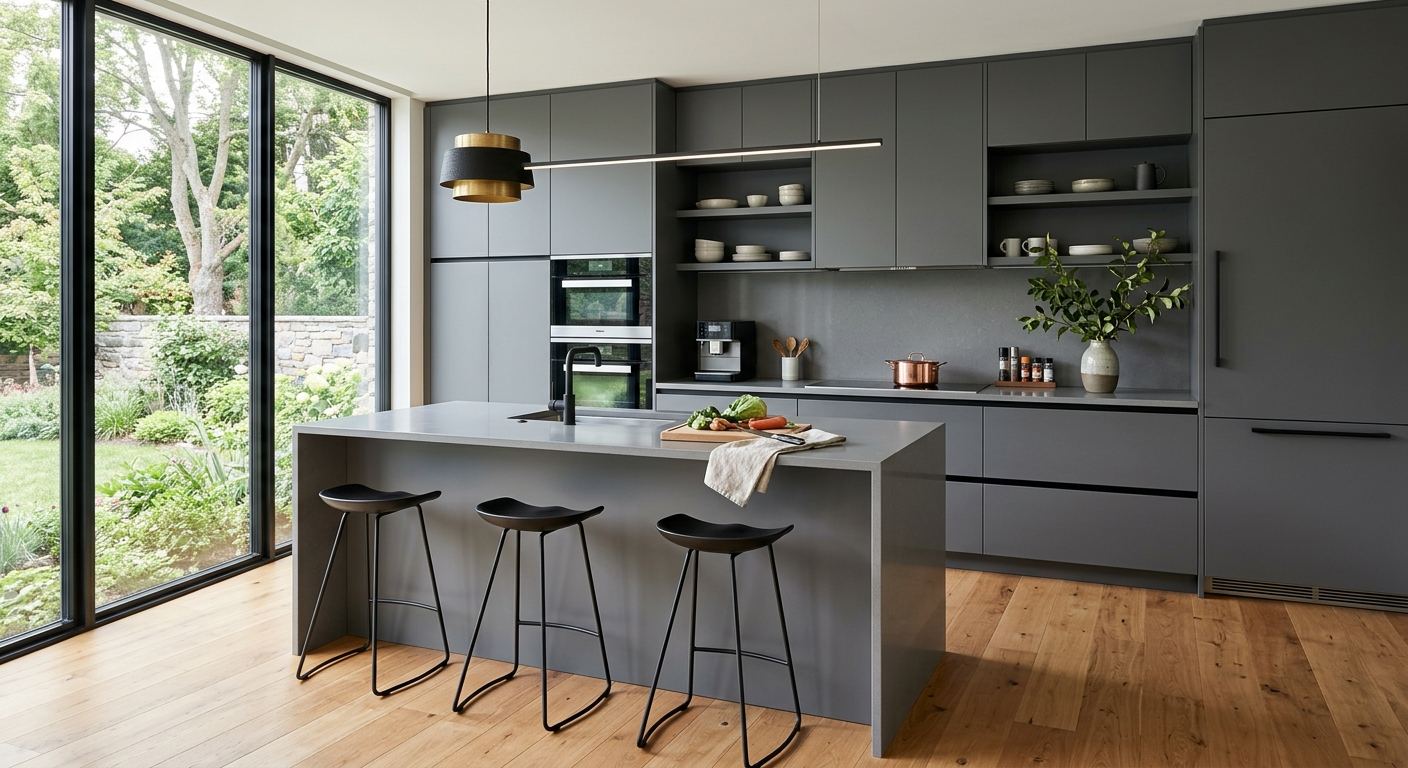
Kitchen renovation options and costs in Belmead
Belmead homeowners usually pick a kitchen renovation approach based on how “finish-forward” they want the space to feel when it comes time to sell. In the Calgary economic region, the market tends to support higher-end upgrades because incomes and housing values are strong—Belmead has a population of 4,602 (Statistics Canada, 2021 Census), and Calgary-area buyers often expect durable, modern materials that photograph well and hold up to daily use. That’s why many projects shift from basic paint-and-hardware to semi-custom cabinetry and solid-surface counters even when the homeowner’s intent is “just a refresh.”
Cost in Alberta still moves more with materials and labour than with weather performance. Calgary’s building trade demand is high, so skilled labour commonly runs around $90–$140 per hour, and design/project management can become a bigger share of your budget. Even though Belmead’s climate doesn’t force special kitchen coatings the way exterior work can, Alberta winters can drive supply-chain and installation sequencing (for example, when multiple trades are booked back-to-back). If you’re renovating an older home and opening walls, you may also run into dated wiring or subfloor repairs—small surprises that add up.
In Belmead and nearby rural pockets, many crews are especially busy when residents update kitchens in established communities close to Calgary’s service corridor, where homeowners often want the “mid-range, resale-friendly” look. Once you’ve decided which path you’re on—cosmetic, full renovation, or partial work—the table below helps you compare typical durations and budget ranges.
| Renovation Tier |
What's Included |
Typical Duration |
Price Range |
| Cosmetic refresh (paint, hardware, new appliances only) |
Cabinet paint or refinish, new hardware/trim, appliance swap (no layout changes) |
1–3 weeks |
$6,500–$18,000 |
| Mid-range full renovation (new cabinets, counters, sink, tile) |
Semi-custom cabinets, new countertops, sink/faucet, backsplash tile, new flooring in work area |
4–8 weeks |
$25,000–$65,000 |
| High-end full renovation (custom cabinets, stone counters, island) |
Custom cabinets, premium stone counters (quartz/stone), island (electrical/plumbing as needed), upgraded lighting, tile upgrades |
8–14 weeks |
$70,000–$110,000 |
| Cabinet refacing only (new doors + drawer fronts, same boxes) |
Door/drawer replacement, veneer/face changes, hardware, full paint touch-ups |
2–5 weeks |
$8,000–$35,000 |
| Countertop swap only (laminate to quartz or stone) |
Remove old countertop, install new counters, basic sink cut-out, caulking and seam finishing |
3–7 days |
$3,000–$12,000 |
| Backsplash tile installation only |
Tile supply/setting, grout/seal where applicable, cleanup and finish at countertops |
3–8 days |
$2,500–$8,000 |
Prices are estimates only and vary by project scope, site access and material selection.
What affects the price of kitchen renovation in Belmead
For the same kitchen job, quotes across the Calgary economic region can swing by 30–50% because contractors price for two things homeowners often underestimate: finish expectations in higher-value pockets and the amount of hidden work uncovered once walls come open. In Alberta, the kitchen is where resale psychology meets craftsmanship—so labour and project management costs (often in the $90–$140 per hour range for skilled trades) become a significant portion of your total, especially when timelines are tight.
Local home values and household income shape the finish tier far more than climate. In high-value markets around Calgary, homeowners more often choose quartz or natural stone counters and semi-custom cabinetry because the renovation cost can be recovered more readily on resale; you’ll typically see budgets cluster toward the mid five-figure range and climb quickly if an island or layout change is involved. In more modest-value areas, laminate and stock cabinets dominate because they deliver a noticeable visual upgrade with less cash outlay.
Layout changes add the most unpredictable cost regardless of finish level. Removing a wall, adding an island, or moving a gas line can trigger additional framing, venting changes, electrical planning, and permit work—each step is labour-intensive and can require inspections. For example, if your current kitchen layout needs a new plumbing route to free up counter space, the job can move from the $25,000–$65,000 band into the $70,000–$110,000 range even if the cabinets stay “mid-tier.” On the other hand, if you’re staying put and only swapping counters within the $3,000–$12,000 range, the cost stays far more predictable.
In Belmead, many homes reflect earlier building styles; if your kitchen is older, plan for subfloor flattening, outdated outlets, or knob-and-tube-era remnants behind walls. Those fixes can be relatively small in dollars, but they still add labour time and coordination, which is why two quotes can differ so sharply.
| Price Factor |
Why It Matters |
Cost Impact |
| Cabinet tier — stock vs. semi-custom vs. fully custom millwork |
Determines material quality, hinge/soft-close details, box construction, and fit/finish |
Can shift a full renovation by roughly 15–40% |
| Countertop material — laminate vs. quartz vs. granite vs. stone |
Material price, fabrication complexity, and seam/edge options |
Often moves countertop-only budgets by 2–4x |
| Layout change — wall removal, island add, plumbing/gas move |
Creates structural work, reroutes supply/drain, and adds inspections and coordination |
Typically one of the biggest drivers; can add thousands to tens of thousands |
| Appliance package tier — builder vs. mid-range vs. pro-grade |
Power requirements, ventilation needs, finishes, and installation detailing |
Can add several thousand dollars and change electrical scope |
| Flooring — refinish existing vs. full replacement |
How much of the floor is removed to install cabinetry and underlayment |
May range from minimal touch-up to a full-material add |
| Backsplash — ceramic tile vs. marble vs. full-height slab |
Labour intensity, pattern matching, and materials that require additional sealing |
Can move backsplash tile installation beyond the mid-band |
| Electrical — new circuits for island, under-cabinet lighting |
Creates licensed work, potential panel load checks, and wiring runs |
Often adds meaningful cost even in “cosmetic” projects |
| Permit fees and licensed trade requirements |
Required when relocating plumbing/gas, adding electrical circuits, or changing structure |
Costs vary but can meaningfully affect schedule and total |
Permits & regulations in Alberta
In Alberta, a straight cabinet or countertop swap typically doesn’t require a permit because you’re not altering the building services (no moving drains/supplies, no new gas lines, no new major electrical circuits). For example, replacing laminate with quartz and installing new sink fixtures under the existing plumbing outline is usually treated as a like-for-like kitchen finish upgrade. Similarly, swapping cabinet doors, drawer fronts, or hardware generally falls under finish work.
Permits and licensed trades become necessary when you change the building’s services or structure. You’ll typically need permits (and inspections) for moving plumbing supply or drain lines, relocating a gas stove or gas-related venting, removing a load-bearing wall, or adding new electrical circuits—especially for an island (new outlets, task lighting, or a higher-load appliance).
Here’s how a Belmead homeowner can verify a contractor before signing:
- Request the contractor’s Alberta licence information and confirm it applies to the scope (ask specifically for gas/electrical trades where relevant).
- Ask for a current certificate of insurance (liability) showing adequate coverage for your project.
- Confirm WSIB/WCB coverage for the workers who will be on your site.
- When gas or electrical is included, request proof that the trades are licensed for those scopes and that inspections are included in the schedule.
- Ensure permit responsibility is spelled out in writing (who pulls the permit, what’s covered, and who pays fees).
- Verify the product warranties and that workmanship coverage is documented for the installation work.
Always confirm permit responsibility in the contract—it protects you if something gets delayed or corrected after the fact.
Cabinets, countertops and layout decisions in Belmead
Your kitchen renovation in Belmead is usually won or lost on three decisions: cabinet tier, countertop material, and whether you change the layout. (1) Cabinets: stock units are fastest and cheapest, semi-custom is the most popular “best balance” option, and fully custom millwork delivers the tightest fit and the most design flexibility. (2) Countertops: laminate is the budget leader, quartz offers strong stain resistance with straightforward maintenance, granite/natural stone adds visual depth, and butcher block brings warmth but needs periodic care. (3) Layout: opening an area by removing a wall, adding an island, or relocating plumbing/gas can unlock real daily-use improvements—if the kitchen’s shape and traffic flow justify the cost.
Calgary-area resale expectations tend to reward durable materials and clean lines at mid-to-upper price points. In renovations clustered around the $25,000–$65,000 range, semi-custom cabinetry plus quartz is common because it looks current and withstands a busy household without special treatments. If you push into the $70,000–$110,000 range, buyers often expect an island, integrated lighting, and premium stone and hardware—because those details read as “renovated” at a glance.
For a concrete example: if you’re tempted to move plumbing to add an island, you might pay an additional several thousand dollars in labour and coordination. That move is justified when it meaningfully improves workflow—like creating a true prep zone and adding seating—rather than when it only makes the kitchen look slightly different. If you keep plumbing in place and choose quartz over laminate, you can often stay closer to a predictable budget band while still getting a resale-friendly upgrade.
On maintenance: Alberta’s winter indoor conditions can be dry; butcher block can benefit from regular sealing/oil, while quartz requires less upkeep. That’s why many Belmead homeowners favour quartz or sealed stone for everyday durability, especially when families want a low-fuss kitchen.
| Option |
Durability |
Maintenance |
Best For |
Price Range |
| Stock cabinets (big-box) |
Good for regular household use; limited customization |
Low maintenance; styles may be less flexible |
Fast timelines and tighter budgets |
$8,000–$20,000 |
| Semi-custom cabinets (local dealer) |
Very durable; better storage options and finish quality |
Low to moderate; depends on hardware and finish |
Most Belmead renovations targeting resale appeal |
$18,000–$45,000 |
| Custom cabinets (local millwork shop) |
Highest fit and build quality; tailored to your layout |
Low maintenance; built for longevity |
Complex spaces, unique storage needs, premium finishes |
$35,000–$70,000 |
| Laminate countertop |
Moderate; seams can be vulnerable if poorly installed |
Simple daily care; avoid sustained heat exposure |
Budget-first upgrades and faster installs |
$3,000–$6,000 |
| Quartz engineered countertop |
High durability; resistant to staining and chipping |
Very low maintenance; wipe-clean |
Busy households wanting a “set it and forget it” surface |
$6,000–$12,000 |
| Granite / natural stone countertop |
Very durable; unique variations; generally scratch-tolerant |
Needs sealing and careful stain management |
Homeowners who want natural character and premium look |
$7,000–$15,000 |
| Butcher block countertop |
Durable with care; susceptible to moisture/heat without maintenance |
Regular oiling/sealing and prompt drying |
Casual warmth with a homeowner willing to maintain |
$4,500–$10,000 |
| Marble countertop |
Beautiful but softer; can etch/scuff |
Higher maintenance—seal and avoid acidic spills |
Low to moderate kitchen wear and statement kitchens |
$9,000–$20,000 |
How to choose a kitchen renovation contractor in Belmead
Start with Alberta licensing, then verify coverage, then compare scopes. For licensing, ask the contractor which trades they will use for gas work and electrical work; those trades must be licensed for their specific scope, and the homeowner should be able to confirm credentials on request. For insurance, request a current certificate of liability insurance that matches the risk level of your project (cabinet install alone is different than work that includes demolition and service changes). For worker protection, confirm WSIB/WCB coverage—no coverage, no work.
Next, get 2–3 itemised written quotes rather than a single lump sum. A solid quote lists labour and materials separately (demo, framing adjustments, cabinet supply, countertop fabrication/installation, tile setting, electrical/plumbing allowances, disposal and cleanup). Confirm what’s excluded: old cabinet removal, subfloor repair, disposal fees, permit pulling, and any required structural engineering or inspection prep.
Warranty matters in kitchen renovations because cabinets, countertops, and installation details all behave differently. Confirm the workmanship warranty length and what it covers (for example, tile lippage, countertop seam issues, cabinet door alignment). Also ask about product/manufacturer warranties and whether you can transfer them if you sell.
Payment schedule should be conservative: never pay more than 10–15% upfront, and use a holdback until the job is complete and punch list items are addressed. Finally, insist on a written start date and completion estimate, including key milestones (demo complete, cabinets delivered, counter templating, final trim and caulking).
- Ask for their Alberta licence details and confirm coverage applies to your scope.
- Request certificate of insurance (liability) and confirm the effective dates.
- Verify WSIB/WCB clearance for the workers who will be on your site.
- Get itemised quotes showing labour, materials, and allowances separately.
- Confirm whether permits are pulled by the contractor and who pays fees.
- Check disposal and dumpster costs are included or clearly listed.
- Make sure electrical/plumbing scopes are listed if you’re adding an island.
- Confirm countertop templating timing and who covers re-fabrication risk.
- Verify tile scope: backer board, waterproofing method (if required), and grout type.
- Review cabinet warranty details and hinge/soft-close component coverage.
- Use a payment plan with a maximum 10–15% upfront deposit and a holdback.
- Require a written timeline with start date, milestones, and completion target.
Red flags I often see in Belmead-area kitchen bids: vague “allowances” that aren’t tied to specific product lines, missing permit language in the contract, refusal to provide insurance/WSIB/WCB proof, a lump-sum quote with no demolition/disposal/repair scope, and promises of “exactly two weeks” for a full renovation without stating material lead times and inspections.
Frequently asked questions — kitchen renovation in Belmead
What's the most popular kitchen style in Belmead right now?
In Belmead, the most requested look typically sits in the modern farmhouse-to-contemporary lane: flat or softly recessed cabinet fronts, warm wood tones paired with brighter whites or light greige, and quartz countertops that keep the design clean and easy to maintain. For many homes, semi-custom cabinetry is the sweet spot because it delivers more storage and better finish consistency than stock units, while still fitting many mid-range budgets. It’s common to see renovations targeting the $25,000–$65,000 range where owners choose quartz and upgrade backsplash tile to something more updated than the original builder-grade setup. Because Belmead sits in Alberta’s wider Calgary housing market, resale expectations matter—buyers tend to respond well to durable finishes, not just trendy colours.
How do I know if I need to update my kitchen plumbing in Belmead?
Plumbing updates usually become necessary when you’re changing the layout, dealing with drainage issues, or replacing fixtures that reveal older supply problems. If you’re keeping your sink in the same location and doing a countertop swap only, you may not need major plumbing work—but it’s smart to have a quick inspection of shutoffs, supply lines, and the drain trap area. Warning signs include slow drains, water staining under the sink, recurring odours, loose faucet function, or corroded supply lines. If you’re moving plumbing for an island or relocating a wall, plumbing work becomes part of the renovation scope and often triggers permits and licensed trade requirements in Alberta. Budget-wise, it’s the “hidden behind the walls” work that can push a mid-range project toward the upper bands even when your finishes stay moderate.
What is the difference between a galley and open-concept kitchen?
A galley kitchen is narrow and typically has cabinets on two parallel walls, with little or no direct view into the living area. An open-concept kitchen removes or reduces barriers so the cooking zone is visible from the main living/dining space, often making the kitchen feel larger and improving sightlines. In Belmead, many older homes lean galley due to earlier layouts, while newer builds and some remodels shift toward open flow. The cost difference can be significant: open-concept layouts may require wall removal, electrical rework, ventilation planning, and sometimes permit steps—so expenses can jump quickly into full-renovation territory rather than a cosmetic refresh. If you want more usability without major structural work, upgrades like adding toe-kick lighting, improving storage, and choosing a better work triangle can still feel like a “layout win.”
How do I get accurate kitchen renovation quotes in Belmead?
Accurate quotes come from clear scope and product selections. Start by deciding which tier you’re pursuing (cosmetic, mid-range full, or high-end full) and then provide your contractor with measurements, photos, and a short list of “must-haves” (for example: quartz, soft-close drawers, a specific backsplash look). Ask for 2–3 itemised quotes that separate labour from materials and clearly list allowances for cabinets, countertops, and tile. Confirm what’s included for demolition, disposal, patching/paint, and any electrical/plumbing work. If permits are needed due to gas or electrical changes, ensure that responsibility is written in the contract. As a benchmark, if your goal is a full redesign, many Calgary-region projects land in the $25,000–$100,000 range depending on cabinet and stone choices—so ask how your selections shift you within that band.
What's the best countertop material for a busy Belmead kitchen?
For most busy households in Belmead, quartz is the practical “best all-around” choice: it’s durable, resistant to staining, and easy to wipe clean without the extra sealing routines some natural stones require. Compared with laminate, quartz typically feels more premium and holds up better to daily use—while still fitting many mid-range renovation budgets. Many homeowners also choose quartz in the $6,000–$12,000 countertop-only range because it pairs well with semi-custom cabinetry and modern lighting, and it generally requires less maintenance than marble or butcher block. If you love natural character and want to maintain it, granite or natural stone can work—but plan for periodic sealing and more careful stain management. For a family kitchen where time matters, quartz usually reduces headaches.
How do I add an island to my Belmead kitchen?
Adding an island starts with spacing and services. First, measure for comfortable circulation (you don’t want the island to crowd traffic between fridge, sink, and range). Next, decide whether the island is purely for prep/storage or if it needs power, an overhang for seating, and/or plumbing or a gas cooktop. In Alberta, adding outlets and lighting to an island often means electrical work that should be handled by a licensed electrician, and moving plumbing or gas typically requires permits and licensed trades with inspections. From a budgeting standpoint, an island is one of the quickest ways to move from a predictable refresh into a full renovation scope—especially if you’re relocating plumbing or upgrading ventilation. Plan to coordinate countertop templating early, because island countertop fabrication often dictates the schedule more than cabinet delivery.