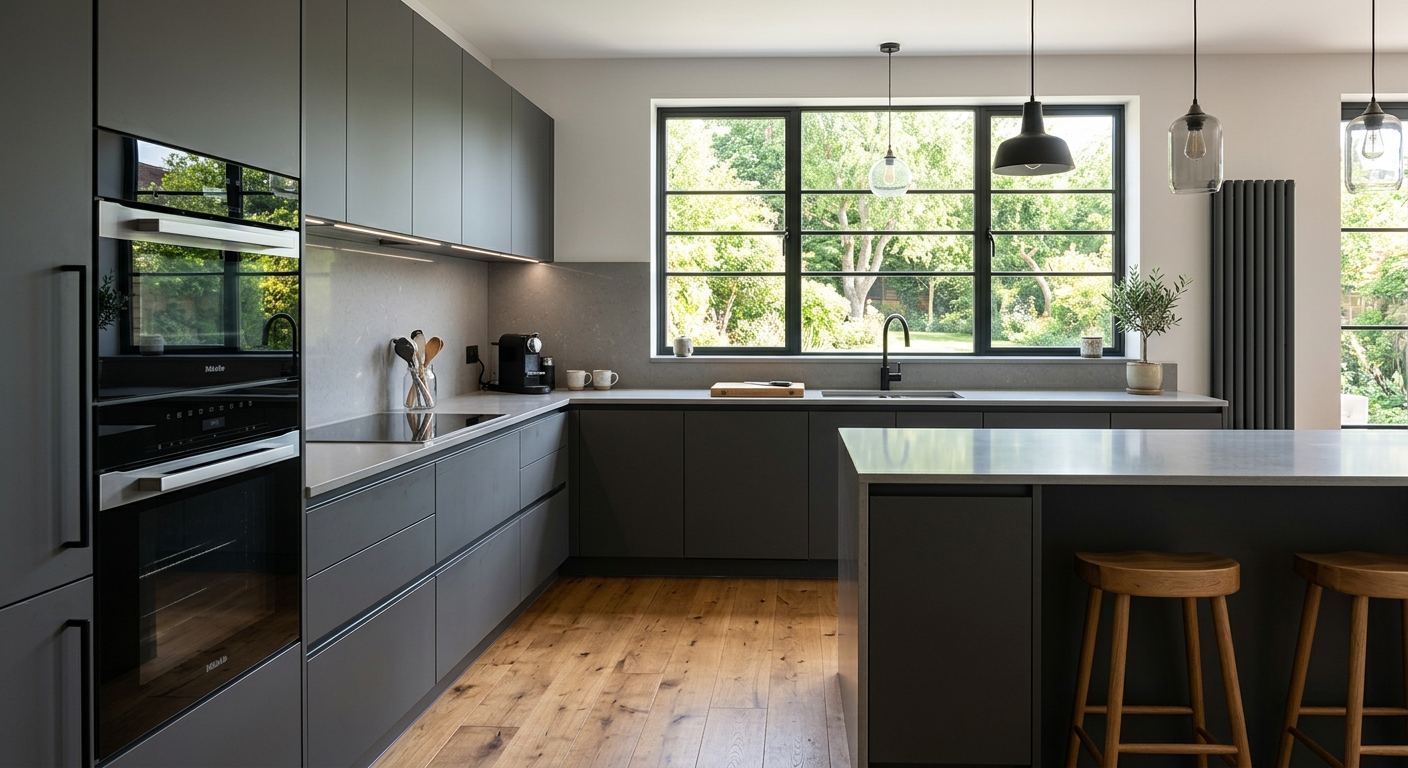
Kitchen renovation options and costs in Cliff Bungalow
In Cliff Bungalow, Alberta, homeowners typically start their kitchen project by choosing how “fresh” they want the room to feel versus whether they’re truly redesigning the layout. Because the area sits within the Calgary economic region, expectations often track with the wider market: in 2021, the population of Cliff Bungalow was 1,805 (Statistics Canada, 2021 Census), and that smaller local base pushes many trades to schedule work carefully—so timing and lead times can swing a job’s total cost. In higher-value Calgary-area homes, finishes skew upward more readily; that’s why many renovations land in the mid five-figures and climb quickly once you add an island, upgrade cabinetry, or change countertops.
Calgary’s market is also shaped less by weather performance and more by what buyers pay for on resale. Contractors plan around a strong construction cycle in Alberta, and skilled labour demand in the Calgary region is a major driver—labour, design, and project management often account for a big share of the budget at 90–140 per hour. Climate still matters in the practical sense: moisture control and ventilation are critical in basements and older inner-city homes, and that influences tile, sealants, and fan ducting decisions.
In Cliff Bungalow, trade demand can be especially concentrated near the commercial core and busier streets where older bungalow homes and infill properties are common—homeowners there frequently refresh kitchens to keep pace with modern buyer expectations. From there, the smartest next step is to compare renovation tiers side-by-side, so you can see what each dollar range actually buys.
| Renovation Tier |
What's Included |
Typical Duration |
Price Range |
| Cosmetic refresh (paint, hardware, new appliances only) |
Paint, new pulls/handles, minor caulking, replace appliances (no plumbing changes), and basic countertop/sink preservation where possible |
3–7 days |
$3,500–$12,000 |
| Mid-range full renovation (new cabinets, counters, sink, tile) |
Semi-custom or quality stock cabinets, new countertops, new sink and faucet, backsplash/tile, updated ventilation planning as needed |
2–4 weeks |
$25,000–$60,000 |
| High-end full renovation (custom cabinets, stone counters, island) |
Fully custom millwork, stone counters (quartz or natural stone), island with improved lighting and appliance integration, upgraded backsplash detail |
4–7 weeks |
$65,000–$100,000 |
| Cabinet refacing only (new doors + drawer fronts, same boxes) |
Reface with new door/drawer profiles, hardware, repaint/restore cabinet boxes, and optional matching trim/side panels |
1–2 weeks |
$8,000–$25,000 |
| Countertop swap only (laminate to quartz or stone) |
Remove existing surface, install new countertop, cut-outs for sink/fixtures (if staying in the same location), edge profile upgrade |
3–7 days |
$3,000–$12,000 |
| Backsplash tile installation only |
Tile install (ceramic/porcelain), waterproofing measures, grout/sealer, neat transitions at outlets and corners |
2–5 days |
$2,500–$8,000 |
Prices are estimates only and vary by project scope, site access and material selection.
What affects the price of kitchen renovation in Cliff Bungalow
In Cliff Bungalow and across the Calgary economic region, you can see the same “kitchen renovation” quoted 30–50% apart because contractors are pricing different risk levels and different choices. Even with identical square footage, quotes diverge when layout changes, when trades need to open walls for plumbing/venting, or when homeowners choose a higher finish tier that also drives design and procurement time. In Calgary, home value and household purchasing behaviour tend to steer what people install: higher-value markets commonly default to quartz or natural stone counters and semi-custom cabinetry, while more modest refreshes lean toward laminate and stock boxes. That means your finish tier can be the difference between a $25,000–$60,000 project and a $65,000–$100,000 project, even before any structural work starts.
Local conditions also create cost swings. First, Cliff Bungalow’s mix of older housing stock often means walls and floors aren’t perfectly level—straightening for cabinetry can add labour, especially if you’re upgrading from laminate counters to stone. Second, if your renovation includes a sink or dishwasher that’s out of plane or has older shutoffs, we often plan for replacement parts and plumbing labour. Third, appliance choices matter: pro-grade hood systems and integrated appliance packages usually increase both material and installation time.
As a realistic budgeting anchor, cabinetry and counters are usually the “big rocks” (think $25,000–$60,000 for many mid-range full renovations), while layout changes and electrical upgrades are where surprises live. Removing a wall, adding an island, or moving gas and plumbing can push costs upward regardless of whether you pick laminate or quartz—because it changes what’s behind the walls and what permits and licensed trades are required.
| Price Factor |
Why It Matters |
Cost Impact |
| Cabinet tier — stock vs. semi-custom vs. fully custom millwork |
Custom sizing, profiles, and materials increase shop time and install complexity |
Often shifts total budget by several tens of thousands; a mid-range job can become high-end quickly |
| Countertop material — laminate vs. quartz vs. granite vs. stone |
Material cost and fabrication/installation requirements vary widely |
Can move countertop swaps from the low range (about $3,000–$12,000) into higher full-reno territory |
| Layout change — wall removal, island add, plumbing/gas move |
Creates demolition, patching, electrical/plumbing rework, and schedule risk |
Typically the largest unpredictable cost driver, regardless of finish tier |
| Appliance package tier — builder vs. mid-range vs. pro-grade |
Electrical/venting needs and integration complexity increase with higher-end appliances |
Can add noticeable cost even when cabinetry/counters stay similar |
| Flooring — refinish existing vs. full replacement |
Kitchen renos often trigger subfloor/underlay fixes; full replacement adds labour and materials |
May add moderate-to-significant budget depending on what’s exposed |
| Backsplash — ceramic tile vs. marble vs. full-height slab |
Higher-end surfaces require more precise templating and careful finishing |
Can broaden the backsplash line item from about $2,500–$8,000+ |
| Electrical — new circuits for island, under-cabinet lighting |
Licensed electrical work and permit requirements increase cost and coordination time |
Commonly a mid-range add-on that can snowball if not planned early |
| Permit fees and licensed trade requirements |
Work involving gas, major plumbing relocation, structural changes, or electrical upgrades triggers permitting |
Raises total cost via fees, inspections, and scheduling lead time |
Permits & regulations in Alberta
In Alberta, a straight cabinet or countertop swap typically does not require a permit, because you’re not changing the building’s services or structure. If you’re keeping your sink and stove locations and only replacing surfaces (for example, a countertop swap or adding backsplash tile), that’s usually treated as a renovation to finishes. However, once you start moving plumbing supply/drain lines, relocating a gas appliance (such as the stove), removing or altering a load-bearing wall, or adding electrical circuits (especially for an island or upgraded lighting), permits and licensed trades usually come into play.
Gas work must be completed by a licensed gas fitter, and electrical work must be completed by a licensed electrician. Those trades typically coordinate inspections as required. The key for homeowners in Cliff Bungalow is contract clarity: always confirm who is responsible for permits, inspections, and any required documentation before you sign—this belongs in the written scope and payment schedule.
To verify a contractor in Alberta, follow a simple step-by-step routine. First, request their Alberta licence details and check them using the appropriate online registry entries (or have the contractor provide verification links). Second, ask for a current certificate of insurance showing general liability coverage and the job’s named insured details. Third, confirm WSIB/WCB coverage by requesting proof of clearance or coverage documentation. If a contractor won’t provide documentation up front, treat it as a serious risk and get a second quote.
Cabinets, countertops and layout decisions in Cliff Bungalow
For most Cliff Bungalow homeowners, there are three decisions that determine both the look and the long-term value: (1) cabinet tier, (2) countertop material, and (3) layout changes. Cabinet tier is the biggest structural decision. Stock cabinets are the fastest route and usually the lowest cost, but they’re more standardized. Semi-custom cabinets are the most popular mid-range choice in Calgary-area kitchens because they balance price with better sizing and options. Custom cabinets cost more, but they allow the best fit for older footprints, awkward corners, and integrated storage that buyers notice.
Countertops should be picked for durability and maintenance in Alberta daily life. Laminate is budget-friendly, but it’s more prone to damage at seams and edges. Quartz is a common “sweet spot” because it’s non-porous, durable, and performs well with typical kitchen use—often aligning with the $3,000–$12,000 countertop swap band when you keep the layout. Natural stone like granite looks premium and has heat resistance, but it can require periodic sealing depending on the stone and finish. Butcher block and marble bring character; butcher block needs careful sealing and marble is more maintenance-heavy (and can be more vulnerable to etching).
Layout changes are where costs can jump fast. Removing a wall, adding an island, or moving plumbing/gas lines can be justified when you gain meaningful space for circulation and seating—especially in homes where the current kitchen bottlenecks. A practical example: upgrading from laminate to quartz might be a moderate increase within a countertop-only plan, but if you’re already in the walls for plumbing and electrical, the incremental cost to upgrade finishes is usually more reasonable than doing it later.
Plan with Calgary resale expectations in mind: buyers increasingly look for cohesive cabinetry/stone colours, clean lighting, and functional islands, especially in higher-value neighbourhoods and homes where kitchen updates are a key selling feature.
| Option |
Durability |
Maintenance |
Best For |
Price Range |
| Stock cabinets (big-box) |
Good durability with standard-grade materials; limited flexibility for odd spaces |
Low day-to-day effort; installation accuracy matters for long-term alignment |
Quick timelines and lower budgets |
$8,000–$22,000 |
| Semi-custom cabinets (local dealer) |
Very good durability; better door/drawer options and sizing flexibility |
Moderate care; hinges/rollers depend on chosen hardware quality |
Most Cliff Bungalow remodels that aim for a “modern buyer-ready” look |
$15,000–$45,000 |
| Custom cabinets (local millwork shop) |
Excellent durability; tailored construction for your exact footprint |
Low care; workmanship quality affects longevity |
Homes with challenging layouts or homeowners prioritizing maximum fit and storage |
$35,000–$75,000+ |
| Laminate countertop |
Good for everyday use but less forgiving at edges and seams |
Keep edges sealed; avoid prolonged standing water |
Budget-focused renovations and rentals |
$3,000–$7,000 |
| Quartz engineered countertop |
Very durable, resistant to staining and typical kitchen wear |
Low maintenance; routine cleaners only |
Best overall balance for Calgary-area resale expectations |
$6,000–$12,000 |
| Granite / natural stone countertop |
High durability and heat resistance |
May require sealing depending on stone and finish |
Premium look without the full cost of bespoke millwork |
$7,000–$14,000 |
| Butcher block countertop |
Durable with care; can show wear with heavy use |
Needs oiling/regular maintenance; protect from water/heat |
Casual, warm design styles |
$4,500–$10,000 |
| Marble countertop |
Beautiful but softer; can scratch/etch depending on finish and use |
Higher maintenance; careful with acids and sealing |
High aesthetic priorities and lighter-use households |
$10,000–$20,000+ |
How to choose a kitchen renovation contractor in Cliff Bungalow
Choosing the right contractor in Cliff Bungalow comes down to verifying Alberta compliance, getting clear pricing, and making sure the scope matches the way you actually want the kitchen to function. Start with Alberta licensing and coverage. Ask for proof of their Alberta trade registration where applicable, and request certificate of insurance (general liability) for the project. For WSIB/WCB, don’t accept a verbal assurance—ask for documentation or a clearance letter/proof of coverage that matches your job timeline. A contractor who can’t produce these documents quickly is taking unnecessary risk on your project.
Next, get 2–3 itemised written quotes. You want a breakdown of labour and materials—not a single lump sum. A good quote separates cabinetry, countertops, tile, demolition, disposal, electrical/mechanical scope, and any allowances for fixtures. Read the exclusions carefully: disposal included or not, demo included or not, permit pull included or not, and whether wall repair/patching is included when services are opened.
Warranty matters too. Confirm workmanship warranty length (not just product warranty), whether it’s transferable, and what “warranty service” means if something goes wrong with installation. Keep payment sensible: never pay more than 10–15% upfront; use progress payments tied to milestones, and hold back a portion until the job is complete and any punch-list items are addressed. Finally, insist on a start date and completion estimate in writing so scheduling delays don’t become budget creep.
- Request itemised quotes with labour, materials, allowances, and tax clearly listed.
- Confirm who pulls permits and who pays permit/inspection fees.
- Verify general liability insurance and request the certificate before work starts.
- Provide proof of WSIB/WCB coverage (clearance letter or equivalent documentation).
- Check that gas work is scheduled with a licensed gas fitter and electrical with a licensed electrician.
- Ask for a detailed demolition/disposal plan (what’s removed, where it goes, and who hauls it).
- Require written specs for cabinets and countertop fabrication (thickness, edge, colour codes, seam locations).
- Confirm backsplash waterproofing approach and underlay details behind tile.
- Clarify floor protection and dust control methods during demo and install.
- Review warranty terms for both workmanship and products; ask if warranties transfer to new owners.
- Set a milestone-based payment schedule with a holdback until final punch list is done.
- Get a schedule with start date, key milestones, and a written completion target.
Red flags I frequently see in Cliff Bungalow kitchen projects include: (1) no ability to provide insurance/WSIB/WCB documentation, (2) lump-sum quotes with no breakdown of labour vs materials, (3) vague scope language like “as required” without allowances, (4) schedules that rely on you “choosing later” after demolition (a frequent cause of delays and cost increases), and (5) pushing for large upfront payments beyond 10–15%.
Frequently asked questions — kitchen renovation in Cliff Bungalow
Do I need a permit for a kitchen renovation in Alberta?
In Alberta, many kitchen finish changes do not require a permit—cabinet replacements and countertop swaps typically fall under routine renovations when you’re not altering services or structure. However, in Cliff Bungalow, permits are usually required when you move plumbing supply/drain lines, relocate gas appliances, remove/alter a load-bearing wall, or add electrical circuits (for example, wiring under an island or new under-cabinet lighting circuits). Also, gas work must be done by a licensed gas fitter and electrical work by a licensed electrician, with inspections as required. The simplest way to stay safe is to require your contractor to state permit responsibility in the contract and list exactly which items trigger permits before demolition begins.
What's the ROI on a kitchen renovation?
ROI in Alberta is strongest when your renovation matches what local buyers expect for the home type and price tier. In the Calgary economic region, many homeowners target a kitchen update that improves function and finish quality without overbuilding beyond the home’s value. Practically, a full kitchen renovation often lands in the mid five-figures to six figures (for example, $25,000–$60,000 for a mid-range full scope), and the resale impact tends to be best when cabinetry and counters look consistent and modern. A costly layout overhaul without a need for space can reduce ROI even if the work is high quality. The best approach is to pick finishes that align with buyer preferences at your likely resale price point—then keep plumbing/gas and structural changes to what truly improves daily use.
How do I budget for a kitchen renovation?
Budgeting in Cliff Bungalow starts with choosing your tier and then planning for the “unknowns” that come from older walls, floors, and ducting. For example, if you’re aiming for a mid-range full renovation, many projects fall into the $25,000–$60,000 range when you’re keeping the layout relatively similar. If you’re doing a high-end redesign with custom cabinets and stone plus an island, budgets often move to $65,000–$100,000. A good rule is to separate your plan into cabinets, counters, tile/backsplash, plumbing/electrical scope, and contingency. Site access, material lead times, and whether walls need opening for plumbing/gas and electrical upgrades can swing costs noticeably. Your contractor should also include realistic allowances so your final invoice doesn’t surprise you.
Can I move my kitchen sink or stove?
Yes, you can move a kitchen sink or stove, but it’s one of the most cost-sensitive decisions in Alberta kitchens. Moving a sink typically involves new plumbing supply/drain routing, which often means opening walls and coordinating rough-in trades; moving a stove that uses gas involves licensed gas work and additional coordination for venting and appliance hookups. In Cliff Bungalow, the exact cost depends on how far you move the fixtures, whether there’s room to run plumbing/drain lines, and whether subfloor or basement access makes it easier. Because these changes commonly trigger permits and inspections, the smartest move is to have your contractor confirm feasibility and permit requirements in writing before you commit to demolition or cabinet ordering.
What's the most cost-effective kitchen upgrade?
The most cost-effective upgrade is usually one that gives the biggest visual change while minimizing changes behind the walls. In many Cliff Bungalow homes, that’s a countertop swap and hardware refresh combined with a well-done backsplash—especially if you keep your sink and layout in place. For instance, a countertop-only upgrade can often fall around $3,000–$12,000 depending on material choice (laminate to quartz/stone). Pairing that with a backsplash tile installation only (commonly $2,500–$8,000) can refresh the whole kitchen look without the heavy costs of rerouting plumbing or electrical. If your cabinets are structurally sound, refacing can also be economical versus full replacement, typically running $8,000–$25,000. The key is avoiding layout moves unless you truly need the functional change.
Custom vs stock cabinets — is custom worth it?
Custom cabinets can be worth it in Alberta when your kitchen layout is challenging or you want maximum storage and a perfect fit—especially in older Cliff Bungalow homes where walls and corners aren’t always “builder perfect.” Stock cabinets are the fastest and lowest-cost option, but they can leave gaps or compromise storage efficiency in awkward spaces. Semi-custom often hits the sweet spot for most homeowners aiming for resale-friendly quality without paying full custom pricing. As a practical budgeting comparison, stock cabinet installs may start around $8,000–$22,000, semi-custom may land roughly $15,000–$45,000, and fully custom can move well above that (often $35,000–$75,000+). If you don’t need custom sizing, spending the extra on custom millwork may not be as impactful as investing in countertops and a thoughtful layout within a $25,000–$60,000 mid-range full renovation.