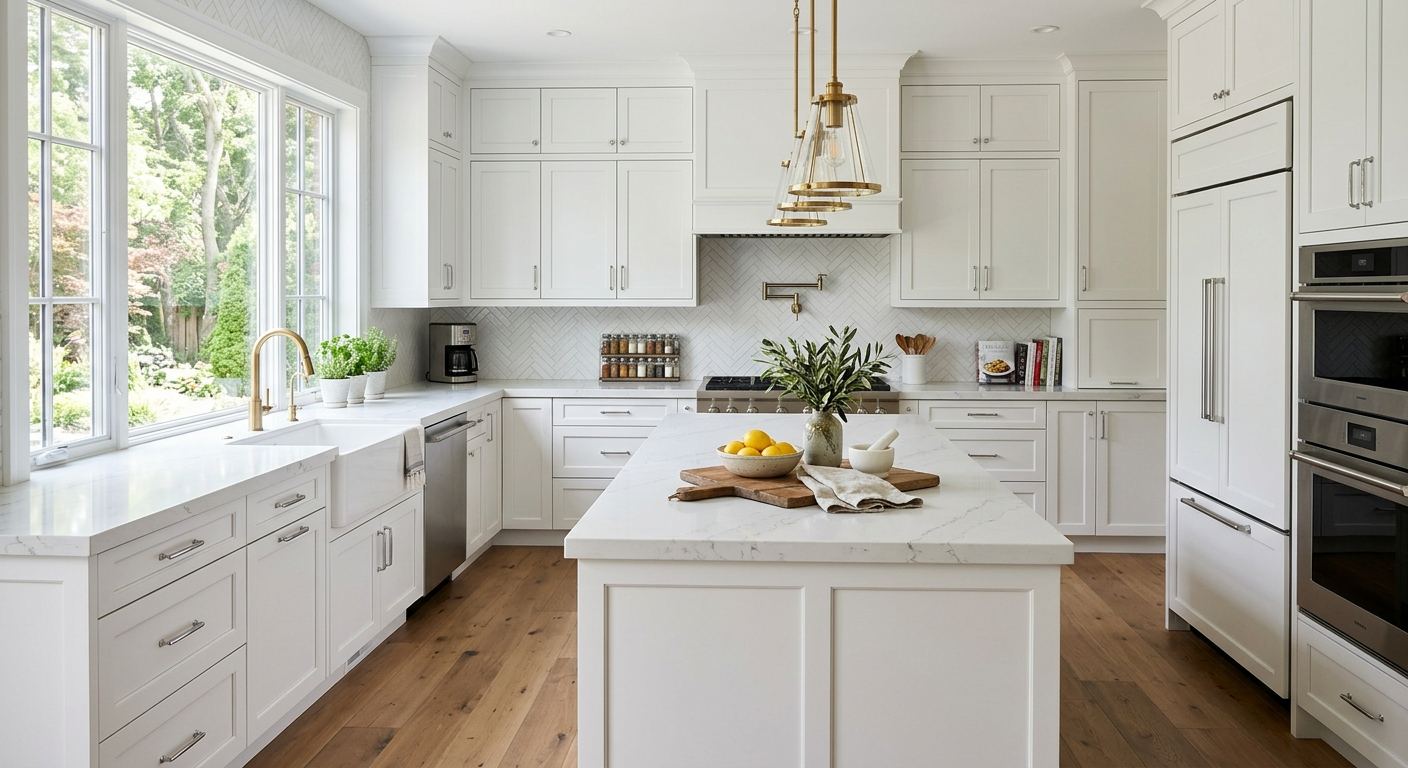
Kitchen renovation options and costs in Kenilworth
Kitchen renovations in Kenilworth, Alberta usually start with a simple goal—refresh the look without overhauling the whole house. The total cost, though, depends more on finish expectations and resale logic than on weather itself. In Kenilworth’s wider Calgary economic region, renovation budgets tend to track local home values and household incomes; with the community’s population at 2,489 (Statistics Canada, 2021 Census), contractors still see demand concentrated around livable, turn-key upgrades rather than one-off cosmetic changes. In practice, higher-value Calgary-area homes commonly steer homeowners toward quartz or natural stone counters and semi-custom cabinetry because those choices are easier to justify at resale. Where budgets are tighter, laminate and stock boxes can deliver a solid ROI.
While Alberta’s climate doesn’t directly “raise” your cabinet or counter material costs, it does affect construction planning: winter scheduling, interior humidity swings, and drying time after flooring and tile work can extend timelines if the project starts too late. Labour availability also matters—Calgary’s busy trades market means skilled kitchen crews often price projects with higher design and project-management effort, especially when timelines overlap other renovations. In Kenilworth and nearby rural acreages, trades sometimes get called in from Calgary and Airdrie corridors, and that impacts how quickly the shop-to-site workflow can move.
If you’re comparing options, the quickest way is to look at typical renovation tiers side by side—then match your scope to the tier that fits your budget and lifestyle.
| Renovation Tier |
What's Included |
Typical Duration |
Price Range |
| Cosmetic refresh (paint, hardware, new appliances only) |
Cabinet paint or stain refresh, new hardware pulls/knobs, lighting tweaks, new appliances (no plumbing/gas relocation), basic caulking and touch-ups |
3–7 days |
$6,000–$18,000 |
| Mid-range full renovation (new cabinets, counters, sink, tile) |
New cabinetry (stock or semi-custom), countertop install, sink and faucet swap (same rough-in), backsplash tile, floor protection/spot repairs, removal and disposal |
3–6 weeks |
$25,000–$60,000 |
| High-end full renovation (custom cabinets, stone counters, island) |
Custom or fully custom cabinetry, natural stone (or premium engineered) counters, island build, under-cabinet lighting, upgraded backsplash (tile or slab), possible layout updates, coordinated electrical |
6–10 weeks |
$70,000–$100,000 |
| Cabinet refacing only (new doors + drawer fronts, same boxes) |
New door/drawer fronts, new edging, matching interior updates where feasible, hardware, paint to walls, backsplash patching, countertop typically unchanged |
2–4 weeks |
$8,000–$35,000 |
| Countertop swap only (laminate to quartz or stone) |
Remove existing counters, template and install new countertops, sink cut-out and reseal where applicable, basic countertop-level backsplash touch-ups |
4–10 days |
$3,000–$12,000 |
| Backsplash tile installation only |
Surface prep, tile layout and install, grout and caulking, electrical outlet finishing, cleanup and disposal of tile debris |
3–6 days |
$2,500–$8,000 |
Prices are estimates only and vary by project scope, site access and material selection.
What affects the price of kitchen renovation in Kenilworth
In Kenilworth and the broader Calgary economic region, you can see quote differences of 30–50% for what looks like the “same” kitchen. The biggest drivers are usually local finish expectations and how much trades time is needed for design, coordination and problem-solving—not climate. Calgary-area homeowners often have the option to recover costs more easily on resale, so in higher-value pockets many projects shift toward quartz or natural stone counters and semi-custom cabinetry. That typically pushes a full renovation toward the mid five-figures and can rise into the high end when layouts change. In more modest markets, laminate counters and stock cabinets keep costs controlled and still deliver a meaningful refresh.
Two practical examples that commonly swing pricing in Kenilworth: first, if your kitchen needs a plumbing move—like relocating the sink to a new island position—there’s not just pipework cost; there’s drywall patching, cabinet re-fitting, and extra labour time for coordination. Second, older housing stock in the area often hides surprises behind cabinets: out-of-square walls, outdated venting runs, or incorrect prior rough-ins. Those issues can add days and material costs even if you’re staying within a similar “tier,” whether that’s a mid-range full renovation around $25,000–$60,000 or a countertop-focused upgrade around $3,000–$12,000.
Even though Alberta’s winters are not the same as mould-prone climates, temperature swings still affect drying time for mudding, tile thin-set curing, and paint. When projects start during colder months, scheduling trades back-to-back can become harder, which increases overhead and labour scheduling rates. The result: finish choices explain the “how much,” while layout and hidden site conditions explain the “why this quote is higher.”
| Price Factor |
Why It Matters |
Cost Impact |
| Cabinet tier — stock vs. semi-custom vs. fully custom millwork |
Pricing changes with material quality, door styles, internal organization (soft-close, pull-outs), and how well cabinets fit uneven walls |
Stock often keeps you in the lower end; semi-custom and custom can move a full renovation into higher five-figures |
| Countertop material — laminate vs. quartz vs. granite vs. stone |
Material cost, edge profiles, cut-outs and template/installation complexity vary widely |
Quartz/stone is usually a meaningful premium over laminate; natural stone can add cost for slabs and labour |
| Layout change — wall removal, island add, plumbing/gas move |
Structural changes and new rough-ins drive permit needs, scheduling, and additional trades coordination |
Typically the largest unpredictable swing regardless of finish tier |
| Appliance package tier — builder vs. mid-range vs. pro-grade |
Power requirements, venting style, finish matching, and fit with cabinetry affect installation time and accessories |
Upgrading appliances can add several thousand dollars and sometimes requires electrical/vent changes |
| Flooring — refinish existing vs. full replacement |
Protecting existing floors is not always possible; tile and subfloor conditions can force removal |
Full replacement increases both demo and install time |
| Backsplash — ceramic tile vs. marble vs. full-height slab |
Harder materials demand more labour for cutting, sealing and alignment |
Full-height or marble-style installs usually push backsplash costs toward the upper band |
| Electrical — new circuits for island, under-cabinet lighting |
Adding outlets and lighting requires licensed electrical work and often new wiring runs |
Can add significant cost compared with “no electrical changes” scenarios |
| Permit fees and licensed trade requirements |
Work involving plumbing/gas, electrical additions, or load-bearing changes typically requires permits and inspections |
Adds direct permit costs and scheduling overhead; should be planned early |
Permits & regulations in Alberta
For Alberta kitchen renovations, cabinet and countertop swaps typically do not need permits when you’re keeping the existing rough-ins and structural elements unchanged. If you’re only replacing cabinets in place, swapping laminate for quartz, or installing a new backsplash on the existing wall surface, permits are usually not the main issue. The permit and licensed-trade triggers start when you change services or structure.
Work that does typically require permits and licensed trades includes: moving plumbing supply or drain lines (for example, relocating a sink or dishwasher to a new position), relocating natural gas lines or gas appliances (including changes related to a gas stove or a gas-rated range hood setup), removing a load-bearing wall or making structural changes, and adding new electrical circuits (like extra receptacles for an island or upgrading lighting that needs new wiring). Gas work must be done by a licensed gas fitter; electrical work must be done by a licensed electrician, and both typically involve inspections.
To verify a contractor in Kenilworth step-by-step: (1) Ask for their Alberta licence or registration reference for the relevant trades they perform or coordinate; check the appropriate online registry information they provide and confirm the trade category matches your scope. (2) Request a current certificate of insurance (liability coverage) naming the project/contractor entity; verify the effective dates. (3) Confirm WSIB/WCB coverage for their workers—ask for clearance documentation or proof. (4) Make sure the contractor clearly states in writing what permits they will pull (or whether you must). In kitchen renos, permit responsibility should sit in the contract, not “assumed” at invoice time.
Cabinets, countertops and layout decisions in Kenilworth
The three biggest decisions in a Kenilworth kitchen renovation are: (1) cabinet tier, (2) countertop material, and (3) whether you’ll change the layout. Start with cabinets. Stock boxes are the fastest path to a refreshed look, but they can be less forgiving if your kitchen is out of square. Semi-custom cabinets are usually the sweet spot in Calgary-area resale expectations—more door style choice and better storage options without the full cost of bespoke millwork. Fully custom cabinets can be excellent for odd angles, tall pantry walls and integrated features, but they’re a bigger investment.
Second is countertops. Laminate is practical and often the lowest-cost option, with durability tied to surface care. Quartz is popular because it resists everyday staining and handles busy household use well. Granite and natural stone add high-end visual depth but require more careful sealing and selection. Butcher block can be warm and modern, yet it demands ongoing maintenance to stay resistant to spills and impacts—especially in households that cook often.
Third is layout. Adding an island, removing a wall for open concept, or relocating plumbing/gas is when costs become less predictable. These changes can be worth it when they improve workflow and provide genuine space gain—but they’re not justified just to chase a trend. For a concrete example: if you swap countertops only, you may stay in the $3,000–$12,000 range. If the same project also relocates a sink and adds electrical for pendant lighting, you can quickly move toward a mid-range full renovation budget around $25,000–$60,000 because the work expands beyond surfaces into rough-ins and coordination.
In Calgary’s resale-focused market, buyers often expect clean lines, durable counters, and good task lighting. That means your cabinet and countertop choices should align with your target price tier, while layout changes should be driven by how the space will function day to day—not just appearance.
| Option |
Durability |
Maintenance |
Best For |
Price Range |
| Stock cabinets (big-box) |
Good for everyday use; fit can be limited on older walls |
Low—focus on proper installation and finishing |
Fast timeline, tighter budgets, straightforward layouts |
$8,000–$20,000 |
| Semi-custom cabinets (local dealer) |
Very solid; better storage and improved door/style options |
Low—warranty and soft-close hardware reduce wear |
Most Kenilworth homeowners aiming for resale-ready finishes |
$18,000–$40,000 |
| Custom cabinets (local millwork shop) |
Excellent fit and finish; optimized for unusual spaces |
Low—built to specs with robust hardware |
Odd angles, integrated fridge/pantry walls, premium styling |
$35,000–$70,000 |
| Laminate countertop |
Moderate; can chip or scratch with heavy abuse |
Low daily care; avoid excessive heat and standing water on seams |
Budget-conscious refreshes with a style upgrade |
$3,000–$6,000 |
| Quartz engineered countertop |
High durability; strong stain resistance for daily living |
Low—routine cleaning; minimal sealing |
Busy households and buyers expecting “maintenance-light” counters |
$6,000–$10,000 |
| Granite / natural stone countertop |
High; excellent performance with proper sealing |
Medium—periodic sealing and careful stain management |
Premium look and unique stone variation |
$7,000–$12,000 |
| Butcher block countertop |
Medium to high with regular care; susceptible to deep water damage if neglected |
Higher—oil/condition regularly; wipe spills promptly |
Warm, casual styles and homeowners who like maintenance |
$4,000–$9,000 |
| Marble countertop |
Moderate—beautiful but more prone to etching/staining |
Higher—needs sealing and gentle cleaning habits |
Lower-heat, lighter-use kitchens and strong design focus |
$8,000–$14,000 |
How to choose a kitchen renovation contractor in Kenilworth
Choosing a contractor in Kenilworth starts with verifying what they can legally do and whether they’re protected if something goes wrong. For licensing, ask whether they’re performing the trades in scope (carpentry, electrical coordination, gas-related work, etc.) and request the relevant proof for the specific work. For insurance, get a current liability certificate and check the effective dates and project name/contractor entity. For worker protection, confirm WSIB/WCB coverage—ask for clearance documentation or proof of coverage before work begins.
Next, get 2–3 itemised written quotes rather than one lump sum. You want labour and materials separated so you can compare like-for-like: cabinet supply vs install labour, countertop fabrication and install, plumbing/electrical allowances, permit pulls, disposal, and any “allowances” for upgrades. Read exclusions carefully—does the quote include demolition and hauling, protected flooring, drywall repairs, plumbing cap-off, or permit fees? A good quote spells out whether permits are included and who pulls them.
Warranty matters. Ask for the workmanship warranty length and what it covers (for example, cabinet alignment adjustments, sealant rework, tile grout issues). Also request product/manufacturer warranty details for cabinets, counters and hardware, and confirm whether warranties are transferable to future owners. For payments, never agree to more than 10–15% upfront—hold back a portion until completion and punch-list sign-off. Finally, require a written start date and a realistic completion estimate, including allowances for countertop templating and fabrication lead times.
- Ask for licence/registration info for each trade they claim to perform or directly coordinate
- Request liability insurance certificate and verify project coverage and dates
- Confirm WSIB/WCB clearance or proof of coverage for workers
- Get 2–3 itemised quotes (labour, materials, allowances, and permits clearly separated)
- Confirm who pulls permits and whether permit fees are included
- Verify disposal is included (dump fees, hauling, and construction debris removal)
- Check scope exclusions: flooring repairs, drywall patching level, and plumbing/electrical tie-ins
- Ensure countertop and backsplash include templates, sealing, and edge finishing details
- Ask about schedule impacts from winter timelines and confirmation lead times for cabinets/counters
- Confirm warranty coverage: workmanship length, manufacturer warranty, and transferability
- Use a payment schedule with a holdback until punch-list completion
- Require drawings/renderings or a cabinet layout with clear measurements before ordering
In Kenilworth, red flags I see too often include: a contractor who won’t provide itemised quotes; pushing for large upfront payments beyond 10–15%; vague wording like “permits by others” without a written plan; missing or outdated proof of insurance/WSIB/WCB; and unclear warranty terms (especially for installation and sealing around sinks). If you spot more than one, it’s worth switching quotes before you sign.
Frequently asked questions — kitchen renovation in Kenilworth
What's the most cost-effective kitchen upgrade?
For most homeowners in Kenilworth, the best cost-effective upgrade is usually a cosmetic refresh plus one “high impact” replacement—most commonly new hardware, a paint refresh on cabinets, and either appliance swaps or a targeted backsplash. If your layout and service lines are already working, you can often avoid the biggest cost drivers (rough-in changes and permit-required work) and still get a noticeable transformation. In budget terms, a cosmetic refresh with new appliances only can land around $6,000–$18,000, while a backsplash-only install typically sits in the $2,500–$8,000 range. If your counters are dated, a countertop swap can also be a strong value move without a full kitchen redesign.
Custom vs stock cabinets — is custom worth it?
Custom cabinets can be worth it in Kenilworth when your kitchen has challenging dimensions (out-of-square walls, awkward corners, tall pantry requirements) or when you want integrated features like appliance panels, specialized storage, or a very specific door style that matches the rest of the home. If your layout is straightforward and you’re trying to control cost, stock cabinets usually deliver the fastest path to a refresh. Semi-custom is often the practical middle ground for resale-focused buyers: better options for hardware and storage while staying more predictable than fully custom millwork. Price-wise, stock cabinets commonly fall around $8,000–$20,000, semi-custom often around $18,000–$40,000, and custom can climb substantially. If your goal is budget-to-results, custom is rarely the first step—upgrade where it solves a real fit or function problem.
How do I choose a kitchen contractor in Kenilworth?
Start by confirming the contractor’s ability to do the work they’re proposing. In Alberta, countertop and cabinet swaps are generally simpler, but if the scope includes moving plumbing, relocating gas appliances, removing load-bearing walls, or adding electrical circuits, the contractor must coordinate permits and licensed trades correctly. Ask for insurance and WSIB/WCB clearance before you sign, and require an itemised quote with labour and materials separated—no vague lump sums. For Kenilworth homeowners, I also recommend making sure disposal and site protection are in writing, plus that there’s a clear payment schedule with a holdback. A competent contractor will provide a written start date and completion estimate, including lead times for cabinets and counter templating. If the quote is hard to understand or skips permits/planning details, that’s a common predictor of cost creep.
What order do kitchen renovation steps happen in?
A typical sequence in Kenilworth starts with final measurements and design approval, then ordering cabinets and scheduling countertop templating. Once demolition begins, the crew usually removes old cabinets, counters and backsplash first, then addresses any drywall, plumbing/electrical rough-ins and subfloor/flooring prep if your layout changes. After rough-ins are confirmed and inspections are handled where required, install cabinet bases and walls, set the sink and plumbing connections at the correct stage, and then move to counters once templating and fabrication are complete. Tile/backsplash usually goes after cabinets are level and secured, so lines are straight and outlet locations match. Finally, install appliances, complete trim/caulking, touch up paint, and finish with a punch-list walkthrough. This staging reduces rework and helps control drying times—important in Alberta where winter schedules can affect curing and paint timelines.
Can I live at home during a kitchen renovation in Kenilworth?
Often you can live at home during part of a renovation in Kenilworth, but it depends on scope and your tolerance for a temporary kitchen setup. If you’re doing a backsplash or countertop-only project (often within the $2,500–$8,000 backsplash band or $3,000–$12,000 countertop band), many homeowners keep using the rest of the kitchen with a small workaround. With a mid-range full renovation—commonly around $25,000–$60,000—daily cooking may be difficult once cabinets and counters are removed, especially if plumbing is disconnected. High-end redesigns with layout changes can disrupt most routines. The practical solution is to plan a temporary safe prep area (microwave, kettle, basic food storage), confirm water access during plumbing work, and ask the contractor about noise hours and dust containment. A written timeline helps you decide whether partial living is realistic.
Should I renovate my kitchen before selling in Kenilworth?
Renovating before selling can make sense in Kenilworth when your current kitchen is turning buyers off—outdated counters, worn cabinets, poor lighting, or layout constraints that prevent modern use. In the Calgary economic region, buyers commonly expect durable counters and clean, consistent finishes. If you renovate strategically with a budget-aligned finish tier, you can improve perceived value without overspending on features that won’t be appreciated on resale. A countertop swap or a mid-scope refresh can be a smart entry point; a full redesign is usually justified only when it corrects functional issues (workflow, storage, or a needed island). Also remember that any permit-requiring work (electrical circuit additions, plumbing/gas moves, or structural changes) should be completed with proper documentation—this protects your sale. If you’re unsure, I’d recommend getting a quote for both a “refresh” and a “full kitchen” path so you can compare how close each option gets to buyer expectations.