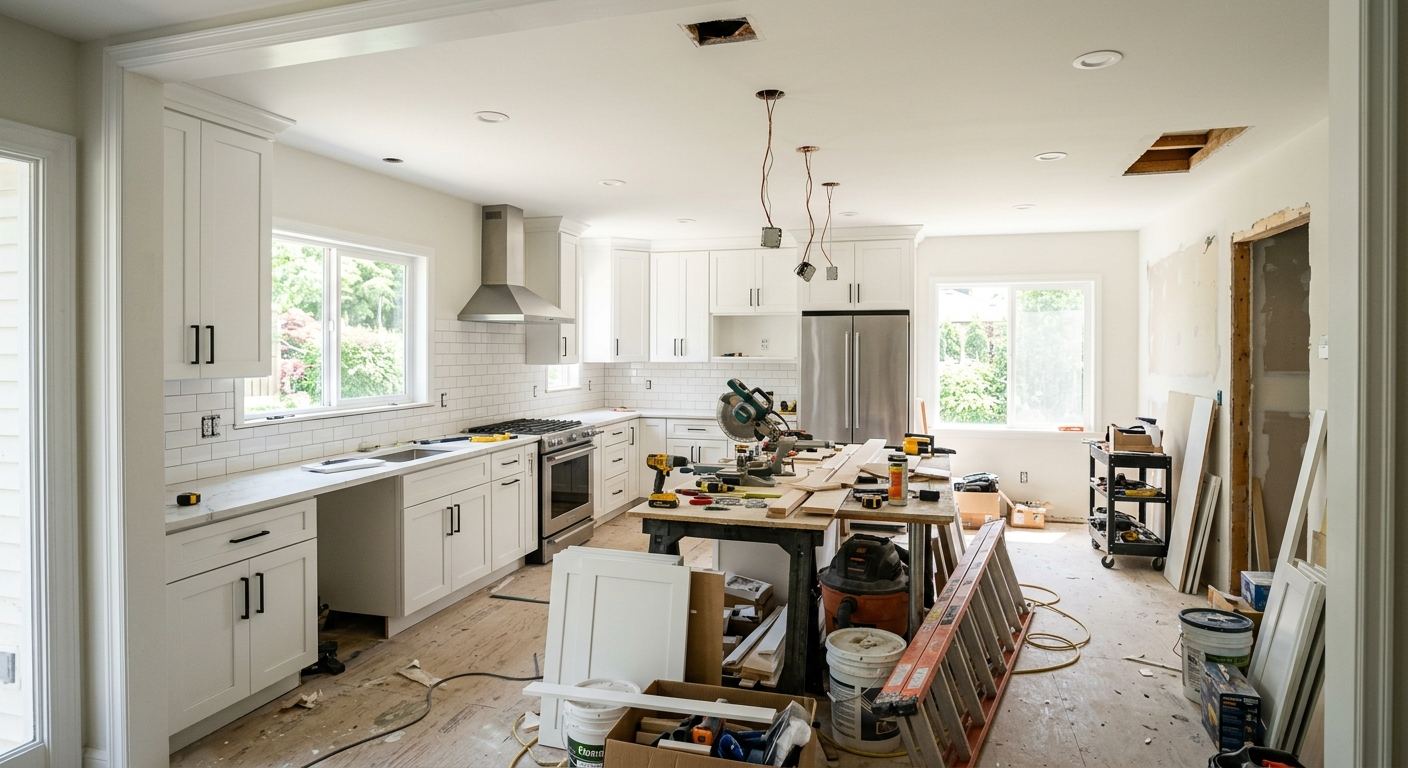
Kitchen renovation options and costs in Chinatown
In Chinatown, Alberta, most homeowners start their kitchen plans around lifestyle needs and resale expectations—then adjust for what the local trades can deliver on schedule. With a small neighbourhood population (2,250 residents in 2021) and Calgary’s active buyer market, renovations here tend to favour practical upgrades that photograph well and hold up to everyday cooking. In higher-value pockets of the Calgary economic region, many projects target finishes that “show” at inspection: homeowners commonly move toward quartz or natural stone and semi-custom cabinetry because the kitchen cost is easier to recover when the home sells. (Statistics Canada, 2021 Census.)
Chinatown-specific cost pressure usually comes from the broader Calgary demand cycle rather than weather. In Alberta, the construction market is busy, and skilled labour in Calgary commonly lands around $90–$140 per hour, so design work and project management can make a noticeable share of your budget. That’s why two kitchens with identical cabinets can price 30–50% apart when one includes electrical updates, a layout change, and upgraded counter/backsplash materials. Availability also affects timelines: when cabinet shops and stone fabricators are booked out, crews schedule around those lead times.
Demand is especially steady around the core commercial-adjacent streets where older homes are common and homeowners refresh kitchens to keep rentals and condos competitive; in these areas, trades are often most booked for spring and summer starts. From there, the easiest way to compare options is to look at common renovation tiers side-by-side in the table below.
| Renovation Tier |
What's Included |
Typical Duration |
Price Range |
| Cosmetic refresh (paint, hardware, new appliances only) |
Cabinet paint or refinishing where approved by the cabinet system, new hardware, paint touch-ups, appliance swap (dishwasher/range/microwave-hood where existing hookups allow), minor caulking and countertop polish/cleaning, no cabinet box changes |
3–7 days |
$10,000–$25,000 |
| Mid-range full renovation (new cabinets, counters, sink, tile) |
Semi-custom or upgraded stock cabinets, new countertop, new sink and faucet, backsplash (tile), flooring spot repair or partial replacement as needed, plumbing connections as required, basic electrical allowances, disposal and jobsite protection |
3–5 weeks |
$25,000–$60,000 |
| High-end full renovation (custom cabinets, stone counters, island) |
Fully custom millwork, premium natural stone or higher-end engineered stone, island (often with power and ventilation coordination), upgraded backsplash (including feature wall options), lighting integration, higher-end appliance package allowances, potential wall adjustments and more complex trades coordination |
6–12 weeks |
$65,000–$100,000 |
| Cabinet refacing only (new doors + drawer fronts, same boxes) |
Door and drawer-front replacement, new pulls/handles, sanding and bonding as needed, matching trim, touch-up paint where required, backsplash refresh may be separate depending on scope |
1–3 weeks |
$8,000–$35,000 |
| Countertop swap only (laminate to quartz or stone) |
Template and install of new countertop, cut-outs for sink/cooktop as needed, basic edge and backsplash transition, disposal for existing surface where included |
5–10 days |
$3,000–$12,000 |
| Backsplash tile installation only |
Wall prep, tile supply allowance coordination, waterproofing where required, grout/seal, trim at outlets, re-caulking and finishing |
2–5 days |
$2,500–$8,000 |
Prices are estimates only and vary by project scope, site access and material selection.
What affects the price of kitchen renovation in Chinatown
In Calgary and across Alberta, quotes for what looks like the same kitchen job can swing by 30–50% because the “hidden” scope differs—especially when cabinets, countertops, and trade work intersect. Home value and household income largely determine the finish tier homeowners choose, and that choice drives material pricing. In higher-value markets around the Calgary region, many renovators move toward quartz or natural stone counters and semi-custom cabinetry because buyers can immediately see the improvement and recover value on resale. In more modest markets, laminate and stock cabinets are often selected to keep the project inside the core value range—so the return stays closer to the renovation spend.
Layout changes are the big wildcard regardless of finish: removing a wall, adding an island, or moving a gas line or plumbing line usually adds the most uncertainty because you’re not just upgrading surfaces—you’re changing building systems. In Chinatown, older home setups sometimes mean supply lines or drain routing don’t line up neatly with a new island footprint, and that can add labour and coordination time.
Two concrete Chinatown-style examples: (1) if your current kitchen has an older peninsula with limited outlet spacing, adding an island lighting run and additional receptacles can quickly shift a “mid-range full renovation” into a higher budget even when cabinet tier stays the same; (2) swapping from laminate to quartz without changing the sink opening can be relatively straightforward, but going to stone with a waterfall edge and a custom backsplash detail often pushes you toward the higher end of countertop installation budgets.
These same drivers show up in the common price bands: many full renovations land from $25,000–$60,000 when the scope is well planned, while more complex redesigns with islands and premium finishes often approach $65,000–$100,000.
| Price Factor |
Why It Matters |
Cost Impact |
| Cabinet tier — stock vs. semi-custom vs. fully custom millwork |
Cabinet systems differ in fit, finish, hardware options, internal storage features, and lead times |
Often the largest material swing; custom millwork can move a project up a whole tier |
| Countertop material — laminate vs. quartz vs. granite vs. stone |
Material price, fabrication complexity (edges, thickness), and seam planning affect total cost |
Can add thousands for upgrades; premium stone plus special edges increases labour and template time |
| Layout change — wall removal, island add, plumbing/gas move |
Forces coordination between trades, may require permits, and changes rough-in work |
Typically the biggest unpredictable cost driver; commonly the source of 30–50% quote variation |
| Appliance package tier — builder vs. mid-range vs. pro-grade |
Higher tiers cost more and can require different electrical/venting specifications |
Can shift budgeting by several thousand, especially for vented hoods and pro-style ranges |
| Flooring — refinish existing vs. full replacement |
Kitchen flooring ties into cabinet installation and underlayment prep; older subfloors can need corrections |
Partial repair is cheaper; full replacement adds demo, underlayment, and finishing time |
| Backsplash — ceramic tile vs. marble vs. full-height slab |
Premium materials are heavier, need more careful installation, and may require additional transitions |
Full-height or marble features can add meaningful labour and material cost |
| Electrical — new circuits for island, under-cabinet lighting |
Lighting and outlets drive licensed electrician scope and sometimes permit requirements |
Can add thousands depending on circuit count and where power must run |
| Permit fees and licensed trade requirements |
Work that touches plumbing/gas/electrical or structural changes needs proper approvals and inspections |
Adds direct costs and coordination time; reduces “surprise” delays when planned early |
Permits & regulations in Alberta
In Alberta, many simple kitchen upgrades don’t need a permit—but several common “upgrades” do once you touch building systems. A cabinet swap or countertop swap typically does not require a permit, as long as you’re not relocating the sink plumbing, changing venting/ducting, or altering structural elements. Likewise, replacing cabinet doors, drawer fronts, or adding a backsplash with no electrical or plumbing modifications usually stays within standard renovation scope.
What often does require permits and licensed trades in Alberta: moving plumbing supply or drain lines, relocating a gas stove or any gas-fed appliance connections, removing a load-bearing wall, adding electrical circuits, and installing any new island circuits or ventilation modifications that change how power or fuel is delivered. Gas work must be completed by a licensed gas fitter, and electrical work by a licensed electrician, both with required inspections.
For a Chinatown homeowner verifying a contractor, do it step-by-step before signing: (1) confirm the contractor has liability insurance (request a certificate of insurance) and that it matches your job location; (2) ask for WSIB/WCB coverage clearance—if they’re the employer of record for trades on site, this should be documented; (3) verify provincial licences where applicable for gas and electrical trades (your contractor can’t substitute for licensed coverage); (4) confirm who will pull permits—your contract should clearly name responsibility. Where possible, request the permit number(s) once applied so your job doesn’t stall waiting on approvals.
Most disputes in Alberta happen when homeowners assume “it’s just a kitchen”—so protect yourself with written scope, inspection responsibility, and a clear permit plan.
Cabinets, countertops and layout decisions in Chinatown
In Chinatown, the three most consequential decisions in a kitchen renovation are cabinet tier, countertop material, and layout changes. Cabinet tier controls how quickly you can start and how “built-in” the finished look feels. Stock cabinets are the fastest and cheapest, but they can look less tailored. Semi-custom is the most common mid-range choice because it balances lead time and storage flexibility. Custom cabinets cost more, yet they solve awkward corners, ceiling-to-floor height planning, and matching existing structural details typical of older neighbourhood homes.
Countertops decide durability and maintenance. Laminate is budget-friendly but can chip at edges if abused. Quartz is a strong daily-choice in Calgary’s active households because it’s stain-resistant and doesn’t require sealing like many natural stones. Granite/natural stone is beautiful and durable but can need periodic sealing, and it’s usually pricier once you include custom edges and seam layout. Butcher block can add warmth, but it needs regular care to avoid water damage around sink areas.
Layout changes are where cost becomes justified only if the space gain supports your daily workflow and resale market expectations. Removing a wall or adding an island can transform traffic flow and create seating or prep space—but it’s also when plumbing/gas relocation and electrical rough-ins can push budgets upward. For example, a countertop-only upgrade (often $3,000–$12,000) may be the smart move if your layout and plumbing are already functional; trying to add an island in the same project can move you into full renovation territory because of electrical and ventilation coordination and potential rough-in changes. If you want a premium finish look without redesign complexity, consider upgrading cabinets to semi-custom while keeping the existing footprint.
| Option |
Durability |
Maintenance |
Best For |
Price Range |
| Stock cabinets (big-box) |
Good for normal use; hinges and finishes vary by line |
Low; wipe-clean surfaces and routine tightening as needed |
Budget-focused refreshes with minimal layout work |
$8,000–$20,000 |
| Semi-custom cabinets (local dealer) |
Excellent daily durability; better storage options and better fit |
Low; regular cleaning and handle/hardware upkeep |
Most Chinatown homeowners aiming for a resale-friendly upgrade |
$20,000–$45,000 |
| Custom cabinets (local millwork shop) |
Highest durability with tailored components and fit to the room |
Low; occasional inspection of hardware and wood finishes |
Complex layouts, ceiling-height builds, and premium storage |
$45,000–$75,000 |
| Laminate countertop |
Moderate; edges are the most vulnerable area |
Low; avoid soaking seams and protect from impact |
Shorter budget timelines and rental-friendly updates |
$3,000–$6,000 |
| Quartz engineered countertop |
High; resistant to stains and everyday wear |
Low; wipe clean, no sealing required |
Busy families wanting a “premium” look with minimal upkeep |
$7,000–$11,000 |
| Granite / natural stone countertop |
High; very hard surface but seam and edge details matter |
Moderate; often needs periodic sealing depending on stone |
Homeowners prioritizing natural variation and upscale aesthetics |
$8,000–$12,000 |
| Butcher block countertop |
Moderate to high; can dent, but repairs are possible |
Higher; regular oiling and careful water management at sink |
Warm, casual kitchens and homeowners who maintain surfaces |
$4,000–$8,000 |
| Marble countertop |
Moderate; beautiful but more sensitive to etching and staining |
Higher; protect from acidic foods and seal if required by installer |
Low-to-moderate cooking households focused on luxury finishes |
$9,000–$14,000 |
How to choose a kitchen renovation contractor in Chinatown
Choosing a contractor in Chinatown means you’re balancing workmanship, speed, and how well they manage trades. Start by verifying Alberta licensing where relevant: ask for proof of the contractor’s company liability insurance (certificate of insurance), and confirm whether their employees and subcontractors are covered by WSIB/WCB—request a clearance letter or documentation they can provide. For gas and electrical work, don’t assume coverage: insist on seeing the correct licensed trade credentials for those scopes.
Next, get 2–3 itemised written quotes. You want labour and materials broken out (cabinets, counters, backsplash, demo, plumbing/electrical allowances, disposal, and any design fees), not a single “lump sum” number. Read the scope carefully for exclusions: who is responsible for permit pulls, what happens if old plumbing is corroded, and whether disposal and protection are included. A good contract also states tolerances for cabinetry installation, backsplash layout standards, and who handles template revisions for stone.
Warranty matters: confirm the workmanship warranty length and whether it covers call-backs, plus the manufacturer warranty for cabinets and countertops. Ask if warranties are transferable if you sell the home—especially important for resale in Calgary-area markets. Payment should be staged; never pay more than 10–15% upfront, and hold back until key milestones are complete. Finally, timelines must be in writing with a start date, lead-time assumptions (cabinet/stone), and a completion estimate.
- Ask for Alberta insurance certificate and confirm jobsite coverage limits.
- Request WSIB/WCB clearance documentation before work starts.
- Verify licence alignment for gas and electrical scopes with the trades assigned.
- Get 2–3 quotes that are itemised by line, not lumped.
- Confirm who pulls permits and what permits are expected for your specific work.
- Ensure disposal/dump fees are included or explicitly excluded.
- Ask how site protection and dust control will be handled (especially in occupied homes).
- Confirm cabinet lead times and stone templating dates are scheduled in the plan.
- Read the exclusions: what happens with rotten subfloor, old wiring, or unexpected plumbing repairs.
- Get workmanship warranty terms in writing (coverage length, process, and exclusions).
- Require a detailed payment schedule tied to milestones, with a holdback.
- Ensure the contract lists delivery dates, change-order process, and who approves variations.
Red flags we commonly see with less reliable kitchen renovators in Chinatown include: quotes that ignore electrical/gas/plumbing allowances even when an island is planned; contracts that don’t specify permit responsibility; “too-low” pricing that omits disposal and patching/trim work; vague timelines without cabinet/stone lead time assumptions; and warranty language that’s limited to product only with no workmanship coverage.
Frequently asked questions — kitchen renovation in Chinatown
What's the most popular kitchen style in Chinatown right now?
Right now in Chinatown, Alberta, the most requested look is a clean-lined modern transitional kitchen: flat-panel or simple shaker doors in warm whites, soft greys, or natural wood tones, paired with a quartz countertop and a simple, neat backsplash (often full-height only behind key features). Homeowners also favour practical lighting—under-cabinet LED strips or recessed runs—because it makes smaller older-room layouts feel brighter. That finish direction aligns with how Calgary-area buyers shop: kitchens in the mid-range tier commonly aim for a polished, durable look rather than highly decorative materials. Many projects start around $25,000–$60,000 for a full renovation when cabinets and counters are upgraded without major structural changes. In busier households, quartz plus easy-clean finishes tends to be the sweet spot.
How do I know if I need to update my kitchen plumbing in Chinatown?
In Chinatown kitchens, plumbing updates are usually worth considering when you notice performance issues or when you’re changing the layout. Look for signs like slow drains, recurring leaks under the sink, low water pressure at the faucet, or corrosion around shutoff valves. If you’re planning a new sink, adding an island, or moving the dishwasher, your renovation is a good time to evaluate supply and drain routing—older homes may have dated piping or constraints that only show up once demo begins. Plumbing changes generally require permits and licensed work in Alberta, so confirm scope before the cabinets and counters are ordered. If you keep the existing footprint and do a countertop-only upgrade, a project can often stay closer to $3,000–$12,000. But if you’re moving lines, budget as a mid-range or higher full renovation because trade coordination and inspection steps increase labour.
What is the difference between a galley and open-concept kitchen?
A galley kitchen is a narrow, efficiency layout with counters along two parallel walls; it typically needs thoughtful storage, good lighting, and careful clearance so traffic doesn’t feel tight. An open-concept kitchen removes barriers so the cooking area connects visually and sometimes physically to the living space, which usually improves social flow and resale appeal for many buyers. In Chinatown, older homes sometimes start as galley or semi-closed layouts, so switching to open-concept often triggers higher costs when structural or rough-in work is involved. If you remove a wall, that can require permits and inspections in Alberta. The upside is space gain and a more modern buyer look—but it’s not always justified. If your primary goal is durability and aesthetics, upgrading cabinets and counters while keeping the footprint can keep you in the $25,000–$60,000 range rather than pushing toward island/wall-adjust redesign budgets.
How do I get accurate kitchen renovation quotes in Chinatown?
Accurate quotes in Chinatown come from detailed scoping and clear assumptions. Start by having your measurements taken (and photos of existing conditions) and decide early whether you’re doing cosmetic refresh, a full renovation, or a higher-end redesign. Then request itemised quotes with line-by-line breakdowns for labour and materials, including allowances for electrical, plumbing, and disposal—so you can compare apples to apples. Clarify whether permits are included and who is responsible for pulling them. Ask how the contractor handles unexpected issues like older plumbing connections or subfloor repairs once walls are open. For Alberta, the contractor should identify which tasks trigger permits and licensed trades (gas/electrical/plumbing or structural changes). Also be wary of quotes that omit lead-time assumptions for cabinets and stone. If you want a quick comparison point, keep your target aligned with the typical bands: cosmetic refresh often starts well under mid-range, while full renovations commonly land around $25,000–$60,000 depending on scope and finish tier.
What's the best countertop material for a busy Chinatown kitchen?
For busy households in Chinatown, quartz is usually the best balance of looks, durability, and low daily maintenance. It resists stains and handles normal cooking messes well, and it doesn’t require sealing the way many natural stones do. That makes it practical for families and renters who want “premium” performance without a maintenance schedule. If you love natural variation, granite/natural stone is also durable, but you’ll want to confirm sealing expectations and care routines with your installer. Laminate can work for a tighter budget, but it’s more sensitive to chips at the edges if you’re rough on cookware or frequently impact the surface. Marble is stunning but tends to be less forgiving with acidic spills and etching for high-traffic kitchens. In budgeting terms, quartz upgrades often land in the typical countertop installation band of $7,000–$11,000, while laminate can be closer to the lower end of that same countertop swap range.
How do I add an island to my Chinatown kitchen?
Adding an island is usually more than a countertop and cabinet change—it’s a layout and systems project. Start by confirming clearances for walkways and how the island will impact the galley or semi-closed flow typical in older Chinatown homes. Next, plan the island’s electrical and (if gas cooking is involved) ventilation strategy: any new circuits for outlets or under-cabinet lighting require a licensed electrician, and gas-related modifications require a licensed gas fitter in Alberta. Plumbing relocation—if you’re adding a sink at the island—also triggers permit/inspection steps. Because of these requirements, island projects often shift budgets upward compared with countertop-only upgrades. A practical approach is to keep cabinets in their existing footprint and use the island to create storage and seating, then upgrade finishes to match the new focal point. Many full redesigns with islands land in the mid to higher bands; you’ll typically see full renovation budgets cluster from $25,000–$60,000 and can reach $65,000–$100,000 when walls move or premium stone and custom cabinetry are included.