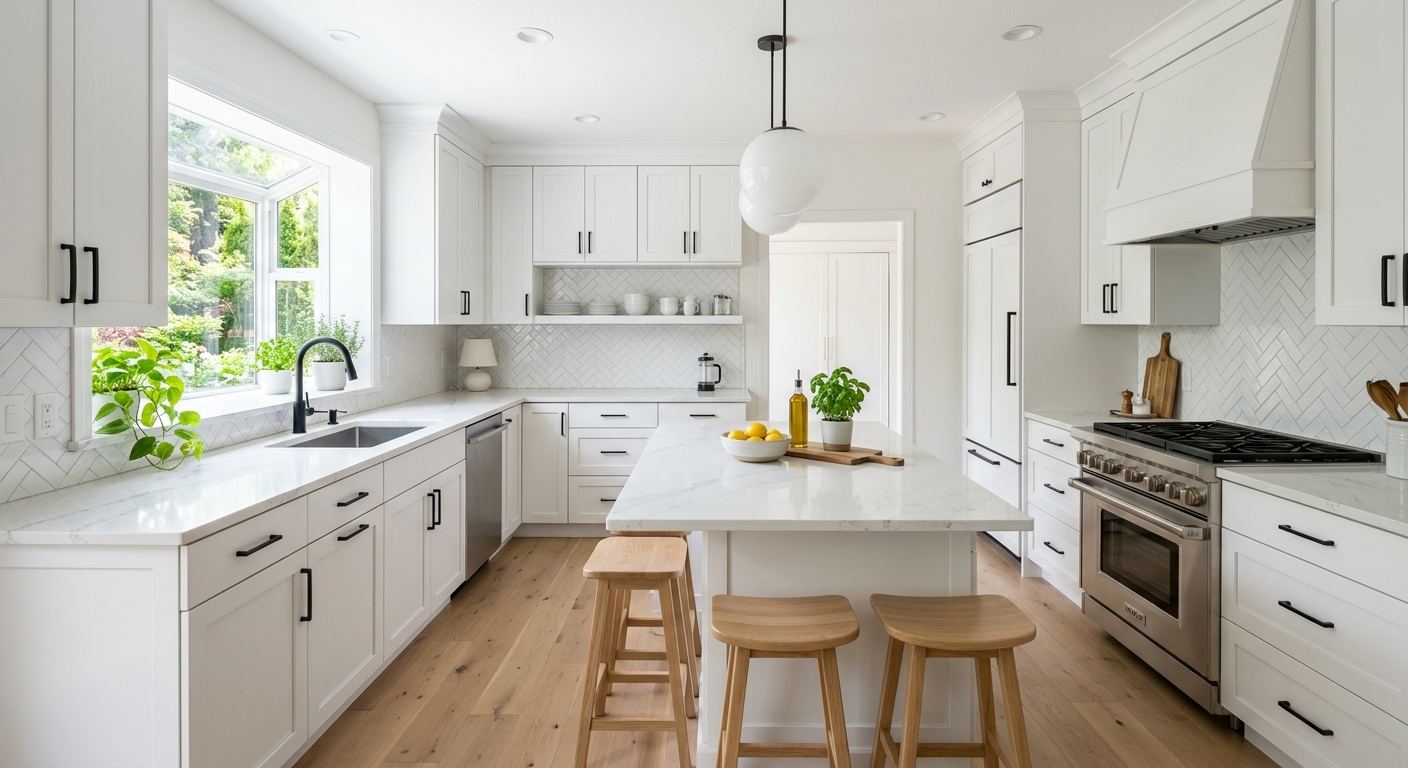
Kitchen renovation options and costs in Central McDougall
In Central McDougall, Alberta, kitchen renovation costs usually start with your finish choices and only then follow the layout. With a 2021 population of 4,694 in the community (Statistics Canada, 2021 Census), most projects are smaller and schedule-dependent, which is why timelines and availability can matter as much as the material selection. In the Calgary economic region, homeowners often aim for a kitchen that matches the resale expectations of surrounding neighbourhoods, and that typically means budgeting for durable surfaces and kitchen-grade cabinetry rather than “temporary” upgrades. Because the Calgary region has a strong housing market, many buyers expect kitchens that look updated and feel solid—especially in higher-value areas where renovations can be recovered on resale (Statistics Canada, 2021 Census).
Calgary’s climate doesn’t usually drive the core labour costs the way it would in more freeze-thaw extreme regions, but it does affect how contractors plan ventilation, moisture management, and the protection of finishes during the build. In Alberta’s active construction market, skilled trades are in steady demand, and labour in Calgary often runs about $90–$140 per hour, so design time, project management, and install sequencing carry real weight in the final budget. For many homeowners around Central McDougall, especially near older housing pockets where kitchens are dated, trade demand is especially high in practical corridors that keep crews busy between cabinet install and countertop templating.
Below is a realistic comparison of common renovation tiers you’ll see in Central McDougall quotes, followed by the key variables that swing the price.
| Renovation Tier |
What's Included |
Typical Duration |
Price Range |
| Cosmetic refresh (paint, hardware, new appliances only) |
Cabinet paint or refinish (where applicable), new hardware, new appliances, minor countertop cleaning/spot service, basic caulking and trim touch-ups |
3–7 days (plus appliance lead times) |
$2,500–$8,500 |
| Mid-range full renovation (new cabinets, counters, sink, tile) |
Semi-custom or quality stock cabinets, countertops (often quartz), sink and faucet, backsplash tile, new flooring sectioning as needed, electrical updates as required for new appliances |
2–4 weeks |
$25,000–$65,000 |
| High-end full renovation (custom cabinets, stone counters, island) |
Fully custom cabinetry or upgraded semi-custom, premium stone counters (granite/marble/selected quartz), island with integrated power, custom backsplash, coordinated lighting upgrades, design support and layout refinements |
4–8 weeks |
$65,000–$100,000 |
| Cabinet refacing only (new doors + drawer fronts, same boxes) |
Door/drawer replacement, new hardware, optional box upgrades if needed, repaint/stain on existing boxes, touch-up trim |
1–3 weeks |
$8,000–$35,000 |
| Countertop swap only (laminate to quartz or stone) |
Remove and dispose old surface, template, install new countertops (including edge profiles), sink cut-out adjustments, basic sealant/caulk refresh, often minimal plumbing touch-up |
4–10 days (plus template/production time) |
$3,000–$12,000 |
| Backsplash tile installation only |
Tile supply and labour, backer preparation, grout and sealing, edging/trim, outlet finishing |
3–7 days |
$2,500–$8,000 |
Prices are estimates only and vary by project scope, site access and material selection.
What affects the price of kitchen renovation in Central McDougall
In Central McDougall, the same “kitchen refresh” can land 30–50% apart from one contractor to another, even before you change materials. Most of that variance comes from how each quote handles scope details, trade sequencing, and the finish tier homeowners choose in Calgary’s broader market. Local home value and household income patterns tend to influence the default finish level far more than climate: in higher-value Calgary-area markets, many homeowners move toward quartz or natural stone counters and semi-custom cabinetry because the cost is easier to justify on resale. In more modest value bands, laminate and stock cabinets often win on ROI and speed. The weather mostly affects how long protections and drying periods need to be respected—more on build logistics than core pricing.
Layout change is where budgets become unpredictable. Removing a wall, adding an island, or moving a gas line can add significant labour, design coordination, and inspection steps—often swinging the project into the mid five-figures (for example, around $25,000–$65,000) or pushing toward high-end redesigns (near $65,000–$100,000) when electrical and plumbing moves are extensive.
Concrete examples you’ll notice in Central McDougall: (1) older kitchens with dated rough-ins can require extra work behind the walls for proper cabinet leveling and safe under-cabinet lighting runs; (2) if you’re upgrading from laminate to quartz, the templating and sink cut-outs may reveal cabinet box or counter overhang issues, creating “hidden” adjustment labour; (3) homes with tight access (stairs, narrow hallways, limited staging room) can increase crew time for cabinet delivery and countertop installation. In short, pricing tracks finish tier and build complexity first, then local scheduling and trade capacity.
| Price Factor |
Why It Matters |
Cost Impact |
| Cabinet tier — stock vs. semi-custom vs. fully custom millwork |
Custom sizes, upgraded components, and better door/drawer engineering drive material and labour time |
Often shifts a full project by about $10,000–$35,000 depending on scope and layout |
| Countertop material — laminate vs. quartz vs. granite vs. stone |
Material cost, weight handling, and fabrication complexity increase with natural stone |
Commonly a $3,000–$12,000 swing for countertop-only swaps; larger variance in full kitchens |
| Layout change — wall removal, island add, plumbing/gas move |
Triggering trades coordination, demolition, and inspection requirements |
Can add $5,000–$25,000+ even if finishes stay mid-tier |
| Appliance package tier — builder vs. mid-range vs. pro-grade |
Built-in fit, venting, and electrical/gas requirements vary by model |
Can move $1,500–$8,000+ depending on whether appliances are standard or built-in |
| Flooring — refinish existing vs. full replacement |
Cabinet base removal and underlayment decisions affect prep and labour |
Often adds $2,500–$10,000 when replacement is full and includes subfloor work |
| Backsplash — ceramic tile vs. marble vs. full-height slab |
Premium materials increase cutting time, waste, and detail work around outlets |
Typical delta of $2,500–$6,000+ for backsplash-only changes |
| Electrical — new circuits for island, under-cabinet lighting |
New circuits and lighting upgrades require licensed work and careful load planning |
Often $1,000–$6,000+ depending on number of circuits and lighting zones |
| Permit fees and licensed trade requirements |
Permits, inspection scheduling, and licensed subcontractors add coordination and admin costs |
Typically $500–$3,500+ on top of trade labour when scope triggers permits |
Permits & regulations in Alberta
In Alberta, not everything in a kitchen renovation triggers permits. Typically, cabinet and countertop swaps alone do not require permits—so a straight cabinet install or a countertop replacement (including templating and installation) is usually handled as a renovation without municipal permit paperwork. However, once you start changing how utilities connect to the kitchen, permits and licensed trades usually come into play. Moving plumbing supply or drain lines, relocating a gas stove or making changes related to gas appliances (including certain range hood configurations), removing a load-bearing wall, and adding new electrical circuits all require the right permits and inspections.
For a Central McDougall homeowner, the verification process should be straightforward and documented. Step one: confirm the contractor’s business details and licence status for the scope they’re providing (they should list the appropriate trades involved or subcontractors for licensed work). Step two: request a copy of their liability insurance certificate and confirm it covers the scope of work at your address. Step three: for trades that typically require coverage like WCB/WSIB, ask for clearance or proof of coverage; don’t rely on verbal assurances—get it in writing. Step four: if a permit is required, ensure the contractor (or the licensed trade pulling it) identifies who is responsible and schedules inspections. Always confirm permit responsibility with the contractor before you sign, and ensure it’s spelled out in the written contract.
If something sounds unclear—like “we’ll relocate the sink” or “we’ll move the hood”—ask immediately whether a permit will be required and which licensed trades will be doing that work.
Cabinets, countertops and layout decisions in Central McDougall
For most Central McDougall kitchens, three decisions control the outcome more than anything else: (1) cabinet tier, (2) countertop material, and (3) layout changes. Cabinet tier sets your fit and longevity. Stock cabinets are the fastest and cheapest, but they can be less flexible in matching awkward wall lines common in older homes. Semi-custom cabinets are the “most popular mid-range” choice because you can get better dimensions and more finishes without the premium of full custom millwork. Custom cabinets offer the tightest fit and the best storage planning, but they carry the largest cost and longest lead times.
Countertops are the second major driver. Laminate is budget-friendly and easy to replace, but it’s less resistant to heat and deep staining. Quartz engineered counters are the most common upgrade in Calgary kitchens because they handle daily wear well with low maintenance and minimal sealing. Granite and other natural stones provide prestige and unique colour variation, but they can require more maintenance planning. Butcher block adds warmth and is forgiving for some homeowners, while marble is visually striking yet more sensitive to etching and requires disciplined care.
Layout decisions are where Calgary builders typically spend the most time planning. Open-concept wall removal and island additions can be worth it when they improve flow and create real workspace—especially in kitchens that feel closed off. But the price can jump quickly when plumbing or gas relocation is required, because it triggers trade coordination and inspections. For example, if you’re choosing between sticking in the existing sink footprint and moving it, that decision alone can push you from a mid-range renovation toward the high-end band—without necessarily upgrading finishes.
| Option |
Durability |
Maintenance |
Best For |
Price Range |
| Stock cabinets (big-box) |
Durable for everyday use; limited flexibility for irregular spaces |
Low day-to-day care; hinges/hardware quality depends on brand |
Speed, budget control, straightforward layouts |
$8,000–$20,000 |
| Semi-custom cabinets (local dealer) |
High durability with improved hardware, better door/drawer options |
Low to moderate; keep hardware tightened and clean product edges |
Most Central McDougall homeowners balancing look and value |
$20,000–$45,000 |
| Custom cabinets (local millwork shop) |
Excellent durability; best fit for storage planning and specialty spaces |
Low; careful cleaning around detailed finishes |
Unusual walls, maximum storage, long-term “forever home” plans |
$45,000–$75,000+ |
| Laminate countertop |
Good for light-to-medium cooking; vulnerable to heat and heavy impact |
Easy daily wipe-down; replace if edges chip or delaminate |
Budget upgrades and fast turnarounds |
$3,000–$7,000 |
| Quartz engineered countertop |
Very durable for stains and everyday wear; consistent colour |
Low maintenance; wipe clean and avoid harsh abrasives |
High-traffic kitchens and resale-friendly finishes |
$6,000–$12,000 |
| Granite / natural stone countertop |
Highly durable and heat-tolerant; longevity varies by stone and sealer |
Periodic sealing and careful cleaning to maintain performance |
Homeowners who want unique natural patterning |
$7,000–$14,000 |
| Butcher block countertop |
Durable with proper care; dents are repairable but requires conditioning |
Oil and re-seal as recommended; protect from prolonged water exposure |
Warm look, prep-focused cooking, homeowners committed to upkeep |
$4,000–$10,000 |
| Marble countertop |
Beautiful but more prone to etching and staining than quartz/most stones |
Higher maintenance; use gentle cleaners and protect from acidic spills |
Low-spill cooking households or statement kitchens |
$8,000–$16,000 |
How to choose a kitchen renovation contractor in Central McDougall
Choosing the right kitchen renovation contractor in Central McDougall is mostly about verifying coverage and clarifying scope. Start with Alberta licensing and trades competence: if the contractor is providing work that involves gas appliances, confirm a licensed gas fitter is involved for any gas-related changes. For electrical, make sure a licensed electrician will do the work—especially if you’re adding island circuits or under-cabinet lighting. Next, request proof of liability insurance (certificate of insurance showing your project address or coverage period). For worker coverage, ask for WSIB/WCB documentation or a clearance letter where applicable. Don’t accept a photo of a certificate that doesn’t match the coverage term—ask for current documents.
Get 2–3 itemised written quotes, ideally with a labour + materials breakdown rather than a single lump sum. You want line items for demolition, cabinet install, countertop templating and fabrication, electrical/plumbing allowances, tile/backer prep, and disposal. Read exclusions carefully: is permit pulling included? Is debris removal and disposal included, or does it fall on you? Also confirm what happens if demolition reveals concealed damage—what allowance is included for subfloor repair or patching?
Warranty matters too. Ask for the workmanship warranty length, the manufacturer warranty on cabinets/counters, and whether warranties are transferable if you sell the home. For payment schedule, don’t pay more than 10–15% upfront, and ask to hold back a portion until closeout items (touch-ups, caulking, final cleaning) are complete. Finally, get a start date and completion estimate in writing so you can plan around lead times for cabinets and stone.
- Ask for current liability insurance and verify dates match the project window
- Confirm the licensed trades for gas and electrical (who pulls permits and who does inspections)
- Request WSIB/WCB clearance or coverage documentation in writing
- Require itemised labour/materials—no vague allowances without ranges
- Check whether demolition and disposal are included or billed separately
- Confirm countertop templating timing and who pays for remakes due to fabrication errors
- Verify cabinet measurement responsibility (who measures on site and when)
- Ask how they protect floors/walls during cabinet delivery and tile work
- Make sure the quote states paint finish method (spray vs brush) and sheen level
- Clarify backsplash scope (waterproofing/backer prep and outlet finishing)
- Confirm electrical scope (is under-cabinet lighting included, and how many fixtures)
- Get a written timeline with key milestones: demo, rough-ins (if any), install, templating, final
Red flags in Central McDougall kitchens include: refusing to provide current insurance/coverage documents; quoting with only a lump sum and no itemisation; promising “we handle permits” without stating who pulls them and who performs licensed work; lowball pricing that relies on major allowances with no ranges; and a vague warranty clause that doesn’t clearly separate workmanship from product warranties.
Frequently asked questions — kitchen renovation in Central McDougall
Can I move my kitchen sink or stove?
Yes, you can move a sink or stove in Central McDougall, Alberta, but it’s where renovation costs and timelines can jump. Moving a sink typically involves changes to plumbing supply and drain lines; moving a stove can involve gas supply considerations and sometimes venting changes depending on the setup. In Alberta, these utility relocations commonly require permits and the work must be done by the appropriate licensed trades. That means your contractor should coordinate inspections and schedule trade availability, which can add days or even a couple of weeks. Budget-wise, even a solid “mid-range” kitchen can become more expensive when plumbing/gas and electrical updates are required.
What's the most cost-effective kitchen upgrade?
For many homeowners in Central McDougall, the most cost-effective upgrade is either a cabinet facelift (refacing) or a countertop swap—if your layout and boxes are already functional. If your cabinets are structurally sound, refacing is often cheaper than replacing everything, and you can still get a modern door style and hardware. If you want a high visual impact with less disruption, swapping laminate for quartz can deliver a major “new kitchen” look while keeping demolition limited; countertop-only projects commonly fall around the $3,000–$12,000 band. If you’re trying to stay near a refresh budget, this approach can also help you avoid the permit/inspection steps that come with major plumbing or gas changes.
Custom vs stock cabinets — is custom worth it?
Custom cabinets are worth it when you need a precise fit, unusual dimensions, or maximum storage planning that stock boxes can’t accommodate. In Central McDougall, older homes sometimes have out-of-square walls or awkward corners, and custom solutions can reduce visible gaps and improve usability. That said, the cost difference is real: many kitchens move from the mid-range band toward the higher end when fully custom millwork is included, especially if you also change the layout. If your priority is a fast, resale-friendly upgrade, semi-custom cabinets often provide the best balance. A practical rule: if your design can be achieved with semi-custom within your target budget, custom may be the “nice-to-have” rather than the “must-do.”
How do I choose a kitchen contractor in Central McDougall?
Start with documentation and clarity. In Alberta, confirm that the contractor will use licensed trades for gas and electrical work, and request proof of liability insurance plus WSIB/WCB coverage (clearance letter or equivalent) before any work begins. Then, request 2–3 itemised quotes so you can compare labour and materials line-by-line—especially allowances for tile, electrical, disposal, and any countertop fabrication steps. Pay attention to the scope: does the quote include permit pulling (when required) and inspection scheduling, or is that excluded? Finally, verify warranty terms: workmanship length, product manufacturer warranty, and whether warranties are transferable if you sell. For payment, keep upfront deposits modest (10–15%) and hold back until closeout items are complete.
What order do kitchen renovation steps happen in?
Typically in Central McDougall, the process goes: site protection and scheduling, demolition, rough-ins (electrical/plumbing/gas) if you’re relocating utilities, permit inspections where required, then cabinet installation foundations and layout checks, followed by countertop templating. After that, counters go in, the backsplash and flooring tie-ins are completed, and finally trim/paint touch-ups and caulking/finishing are done. Appliances are usually installed toward the end, once power and venting requirements are verified. If you’re staying in a simpler scope—like a countertop swap or backsplash-only project—the order is shorter, but templating and fabrication lead times still drive the schedule. This is why your contractor should provide a milestone-based timeline in writing, not just a single “completion date.”
Can I live at home during a kitchen renovation in Central McDougall?
Sometimes, yes—but it depends on the scope and how your contractor phases the work. If you’re doing a cosmetic refresh or a backsplash-only install, many homeowners can remain at home with minimal disruption. For countertop-only or cabinet refacing, you may be able to manage daily routines, though the kitchen area will be temporarily unusable. For mid-range full renovations—often in the $25,000–$65,000 band—living at home is possible for some households if there’s a secondary cooking setup (microwave, BBQ, or temporary appliance area) and good dust control. If you’re relocating plumbing/gas or doing wall removal, the job becomes louder and more invasive, so many families choose to stay off-site for part of the timeline. In all cases, ask your contractor about worksite containment, garbage removal frequency, and how they protect floors and adjacent rooms during cabinet delivery and stone installation.